*This article may contain affiliate links. For full information, please see the disclaimer here.
So, you’re ready to finally tackle that new language? Awesome! But with so many options out there, it can feel overwhelming.
Two of the biggest names in the game (and two of my favorites) are Pimsleur and Babbel. Both promise to get you speaking quickly, but they take very different approaches. Pimsleur is all about spaced repetition and memorization, while Babbel focuses on conversational skills and cultural insights.

In this “Pimsleur vs Babbel” comparison, we’ll break down the key benefits and differences, so you can decide which one is the better fit for your learning style and goals.
Pimsleur vs Babbel: A head-to-head comparison
Pimsleur and Babbel are two of the most popular language learning apps. Both promise to improve your conversational skills and are designed to keep you on track, but they have very distinct personalities. Pimsleur is your no-nonsense drill sergeant, while Babbel is your encouraging cheerleader.
When choosing a language learning app, it’s important to consider what the apps offer and what you actually need. An app that matches your goals and needs (and budget, don’t forget that)—that’s the dream.
To give you a better idea of the things you’ll need to consider when choosing between Babbel and Pimsleur, here’s a quick comparison chart:
| Points of comparison | Pimsleur | Babbel |
| Languages offered | 51 languages | 14 languages |
| Learning methods | Mainly audio-based, with a focus on conversational skills and pronunciation; emphasizes active recall and spaced repetition | Combines interactive exercises (games, flashcards, writing) with audio and visual content; Teaches grammar, vocabulary, and basic reading/writing through spaced repetition |
| Course structure | Structured, linear progression; Daily lessons are 30 minutes long and follow a specific order. | Structured courses covering beginner to advanced levels; thematic lessons and review sessions with listening, speaking, writing, and reading exercises |
| Pricing | $14.95/month for Audio-Only; $19.95/month for Premium (with Bonus Materials); $20.95/month for All Access; lifetime access varies per language; 7-day free trial | 3-, 6-, and 12-month subscription plans at varying prices; lifetime access to all languages for a one-time payment of $599 (Check here for Babbel discounts) |
| Free features | Limited free trial | Free introductory lesson in each language course |
| Other features | Driving mode for learning on the go; supplementary reading and writing lessons (depending on the course) | Games and podcasts (vary per course) |
While the above chart gives you a glimpse of the apps’ features and benefits, a closer look is needed for an informed decision. Let’s dive deeper, shall we?
Babbel vs Pimsleur: Languages offered
One of the most obvious deciding factors when choosing a language learning app is this: what language do you want to learn?
Babbel focuses on 14 of the most in-demand languages. These include Spanish, French, German, Italian, Portuguese, Russian, Danish, Dutch, Indonesian, Norwegian, Polish, Swedish, Turkish, and English.

While this might seem limiting at first, it has allowed Babbel to really hone in on these languages and create high-quality, well-rounded, and engaging courses.
Pimsleur, on the other hand, boasts an impressive library of over 51 languages, covering everything from the most popular choices like Spanish and French to more niche options like Ojibwe and Urdu. From the familiar to the exotic, Pimsleur’s got you covered.
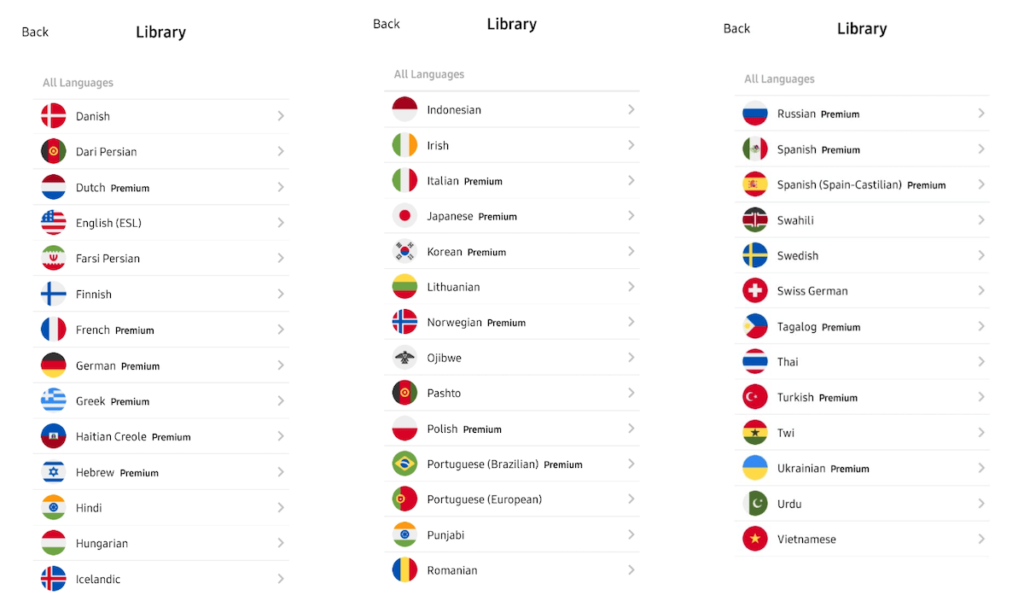
That said, the question remains—which language are you eager to learn? If you’re planning to study less popular languages such as Swahili or Tagalog, go for Pimsleur. All of Babbel’s language offerings are currently available on Pimsleur as well. So if you’re aiming to learn any of those 14 languages, continue reading.
Pimsleur’s learning methods and course structure
Pimsleur teaches languages through 30-minute audio lessons that are designed to be consumed daily. These lessons are carefully structured, building upon each other in a linear progression. This means you can’t really skip around—you need to follow the order to ensure you’re building a solid foundation.


Each level, which typically takes around 15-16 hours to complete, focuses on a specific set of vocabulary and grammatical concepts. Most language courses consist of three to five levels, providing a gradual and comprehensive learning experience.
A key aspect of Pimsleur is its emphasis on conversational skills and pronunciation. You’ll learn through dialogues spoken by native speakers, allowing you to become accustomed to natural speech patterns and accents.
New vocabulary is introduced within these dialogues and then reinforced through spaced repetition techniques. This spaced repetition, known as “graduated interval recall,” is Pimsleur’s signature method. It strategically reviews previously learned material at increasing intervals, maximizing retention and long-term recall. Grammar, on the other hand, is taught implicitly, integrated within the context of real-life conversations rather than presented as abstract rules.

While the core focus is on audio-based learning, some Pimsleur courses offer supplementary materials to enhance the learning experience. These often include reading lessons, flashcards, and interactive games like “Quick Match” and “Speed Round.” These extra features provide additional opportunities for practice and reinforcement.
Check out this Pimsleur review if you want a more detailed breakdown of its features and benefits.
Babbel’s learning methods and course structure
Unlike Pimsleur’s audio-centric structure, Babbel takes a more multifaceted approach to language learning, combining interactive exercises with audio and visual content.
You’ll find yourself engaged in a variety of activities, from fun games and flashcards to writing exercises and engaging dialogues. The focus is on making learning enjoyable and interactive, keeping you motivated and actively involved in the process.

Babbel’s courses are structured to guide you from beginner to advanced levels, with each level building upon the previous one. However, you can also choose a starting point. You simply have to take the placement test to determine your level. And if at any point, you feel that the lesson is too easy, you can jump to more advanced lessons.
Babbel lessons are organized thematically, exploring topics like travel, food, and daily life. Within each lesson, you’ll encounter new vocabulary and grammar structures introduced in manageable chunks with clear explanations, native-speaker pronunciations, and often accompanied by helpful illustrations. Babbel also incorporates cultural information into the lessons, giving you a deeper understanding of the target language and the people who speak it.
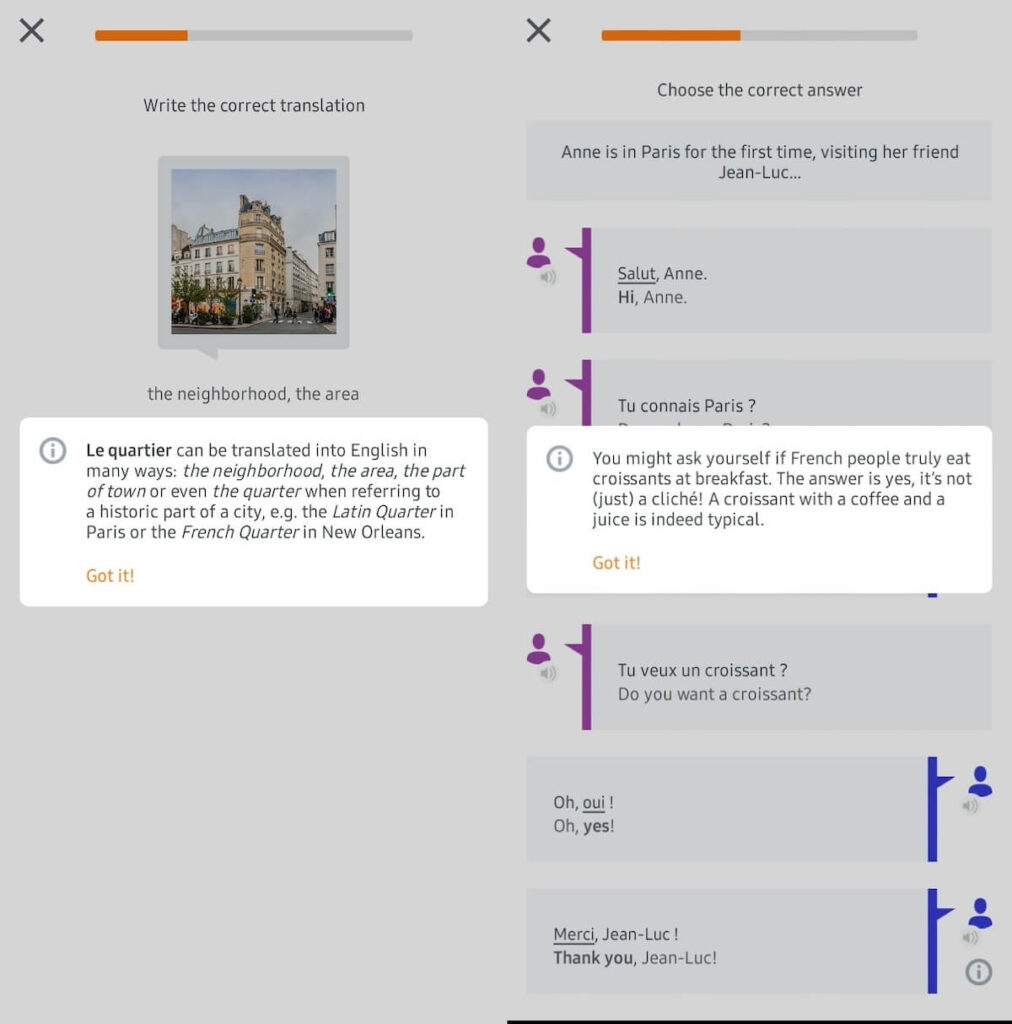
Spaced repetition is a core element of Babbel’s learning methodology. You’ll encounter regular review sessions throughout the course, reinforcing previously learned material at optimal intervals to maximize retention. In addition to the main course material, some Babbel courses offer supplementary features like standalone games and podcasts for a more immersive experience.
Pimsleur vs Babbel: Pricing and free features
Both Pimsleur and Babbel operate on a subscription model. Pimsleur offers a few different subscription tiers. Its Audio-Only plan, at $14.95 per month, gives you access to the core audio lessons. If you want bonus materials like reading lessons and flashcards, you’ll need to upgrade to the Premium plan, which costs $19.95 per month.
For the most comprehensive experience, you can opt for the All Access plan, granting you access to all 51 languages for $20.95 per month. Pimsleur also offers lifetime access options for individual languages, though the pricing varies depending on the number of levels included. To test the waters, Pimsleur provides a 7-day free trial for its premium subscription.
Babbel, on the other hand, offers tiered subscriptions available for 3, 6, and 12 months. The cost per month decreases as you commit to a longer subscription, with the most significant savings coming with the annual plan.
For instance, the 3-month plan starts at $9.95 per month, while the annual plan can be as low as $6.95 per month. Babbel also offers a lifetime access option that grants you access to all available languages on the platform. This can be a great value if you plan to learn multiple languages or continue your language learning journey long-term. Babbel often offers discounts on its plans as well.
As a nice touch, Babbel also awards you with an official certificate upon completion of each level, which can be a great motivator and a tangible reminder of your progress.
In terms of free trials, Babbel’s is more limited. While Pimsleur offers a 7-day free trial, Babbel only allows you to try the first lesson of each language course for free. This gives you a taste of the platform, but it doesn’t provide as much time to truly experience the full range of features and decide if it’s the right fit for you.
Pimsleur: Pros and cons
Pimsleur has a lot going for it. I really love that the audio-based lessons train my listening skills so effectively. Not all of us can fly to the country where our target language is spoken but as far as immersion goes, this isn’t bad at all. The audio quality is top-notch, and the native speakers sound incredibly natural and authentic, even nailing subtle nuances of accent.
Despite its audio-only approach, Pimsleur keeps you engaged. The lessons are designed to be interactive, with plenty of listen-and-repeat exercises and call-and-response patterns that keep you actively involved. I also appreciate the way Pimsleur incorporates spaced repetition. The lessons are carefully timed to review previous material at optimal intervals, which helps with retention.
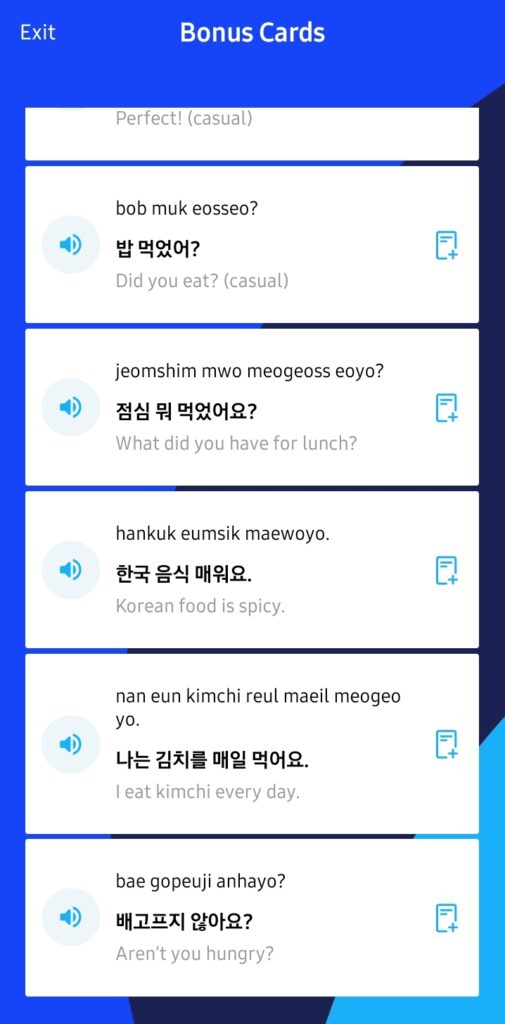
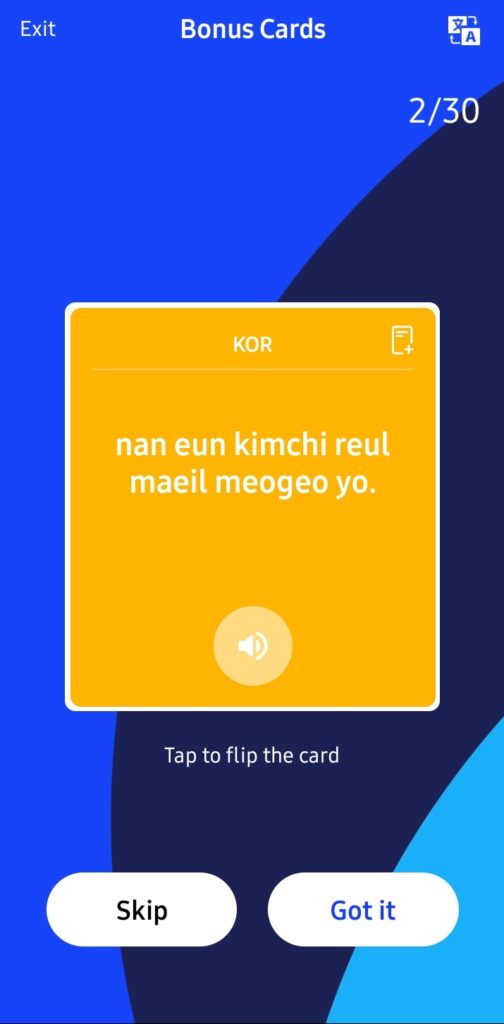
One thing I particularly like is how Pimsleur handles polite speech in languages that have honorific systems (e.g., Korean). It’s something that other methods often overlook, but it’s crucial for navigating social situations in those cultures.
However, Pimsleur does have some limitations. The biggest drawback for me is the complete lack of dedicated writing lessons. This can be a significant issue, especially for languages with non-Latin alphabets.
Another minor drawback is the absence of explicit grammar explanations. While Pimsleur teaches grammar through context, some learners might benefit from more direct instruction.
Finally, the pace of the lessons can feel a bit slow for some people. If you’re eager to progress quickly and learn a lot of new words, you might find yourself wanting to move through the material faster.
Babbel: Pros and cons
First off, I appreciate that Babbel’s lessons are bite-sized and manageable. You can easily squeeze in a lesson during your commute or while waiting for your coffee. But despite their brevity, the lessons are packed with high-quality content and focus on practical, real-world situations.
I also love how Babbel approaches language learning holistically. Each vocabulary item or grammar concept is introduced through a variety of exercises, including reading, writing, listening, and speaking. These exercises are challenging enough to keep you engaged, but there’s no penalty for making mistakes, which makes the learning process feel less intimidating.
Babbel doesn’t shy away from grammar, which I find incredibly helpful. It explains grammatical concepts clearly and provides ample opportunities to practice applying them in different contexts. I also enjoy the subtle cultural tidbits woven into the lessons. It adds a layer of depth and makes learning feel more immersive.
And let’s not forget about the speech recognition software. It’s accurate and almost ruthless, but in a good way! It forces you to pay attention to pronunciation and won’t let you move on until you get it right. This rigorous feedback is essential, especially if your goal is to improve your accent and fluency.
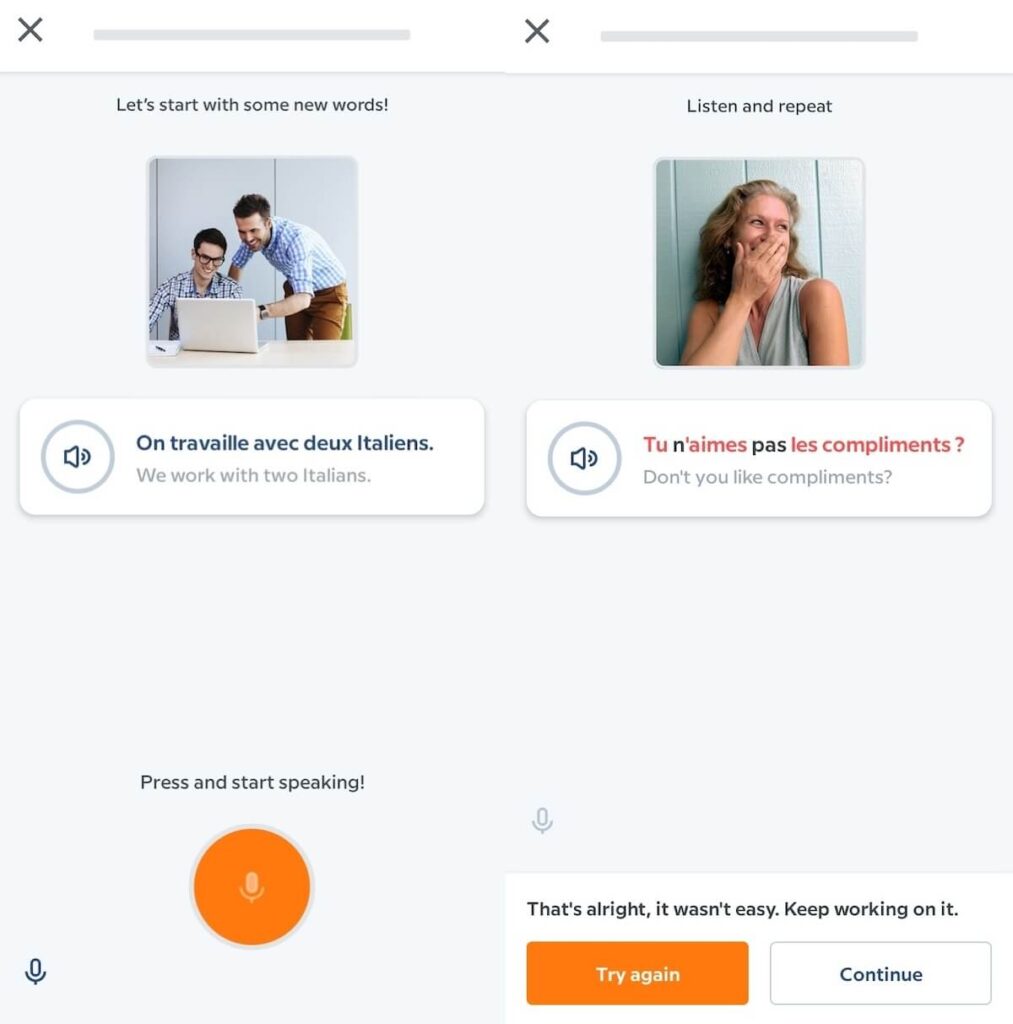
Not to be outdone, Babbel also has an effective spaced repetition system. It’s not just about rote memorization; it actually feels a bit like a game. Words or phrases can be “promoted” to higher levels as you master them, which provides a sense of accomplishment and keeps you motivated.

However, Babbel isn’t without its shortcomings. The quality of the courses can vary significantly depending on the language. Some languages like German and French have more developed courses with a wider range of exercises and more engaging content, while Russian and Indonesian aren’t as comprehensive.
Another limitation is the relatively small number of languages offered compared to Pimsleur. While Babbel covers many popular languages, it lacks some of the more niche options. This can be a significant drawback if you’re interested in learning less common languages.
Babbel vs Pimsleur: Which is better?

Choosing between Pimsleur and Babbel boils down to your individual needs and preferences. Factors like your target language(s), preferred learning style, specific goals, and budget will all play a significant role in your decision.
Both apps share some common ground. Both effectively mimic real-life dialogues, helping you train your conversational skills. They also help build a solid foundation of essential vocabulary.
Pimsleur excels at immersive listening and speaking practice. If you thrive in an environment with minimal distractions and want to prioritize developing strong pronunciation and fluency, Pimsleur might be the better choice for you.
On the other hand, Babbel offers a more well-rounded approach, incorporating reading, writing, and grammar exercises into its curriculum. If you want a more balanced language learning experience and need to develop all four core language skills, this is the better option. Plus, Babbel boasts a sophisticated speech recognition software that provides immediate and accurate feedback on your pronunciation.
From a purely financial standpoint, Babbel generally offers more affordable subscription options. However, Pimsleur provides access to a significantly wider range of languages, which can be a major plus if you plan to study more languages.
It’s important to remember that while both apps are valuable tools, they are not a magic bullet for fluency. Consistent effort and dedication are essential for language learning success. While both Pimsleur and Babbel provide a strong foundation, supplementing your studies with other resources like books, tutor-led courses, and conversations with native speakers is crucial for achieving true fluency.
Depending on your goals, you can also check out these resources:
- For comprehensive and well-structured lessons, Rocket Languages.
- For gamified lessons and chatbot conversations, try Ling or Mondly.
- For tailor-fit instruction and speaking practice, hire tutors on Preply or italki.
- For self-paced online courses, try Cudoo, Coursera, or Skillshare.
Ultimately, the “better” app is subjective and depends entirely on your individual needs and learning style. I encourage you to take advantage of the free trials offered by both platforms to experience their methods firsthand and see which one resonates with you more.
Pimsleur vs Babbel: FAQ
Is Pimsleur better than Babbel?
Pimsleur excels at improving your listening and speaking skills. Babbel offers a more holistic approach that covers reading, writing, listening, speaking, and grammar. Babbel is often cheaper, but Pimsleur offers more languages. Choose Pimsleur for focused audio, Babbel for a wider skillset.
Can you become fluent with Pimsleur?
Pimsleur, with its “graduated interval recall” spaced repetition, can build a strong foundation for speaking. It excels at pronunciation and conversational skills. While not a guarantee of fluency, Pimsleur provides a structured approach that, when combined with other methods, can significantly improve your language abilities.
Can Babbel make you fluent in a language?
Babbel’s holistic approach, combining reading, writing, listening, and speaking exercises, can significantly improve language skills. Its spaced repetition technique aids review, reinforcing learned material. While fluency requires consistent effort, Babbel provides a strong foundation for building conversational skills.
How does Pimsleur compare to Babbel?
Pimsleur focuses on audio-based lessons, emphasizing speaking and listening skills through spaced repetition. Babbel, on the other hand, offers a more comprehensive approach, incorporating interactive exercises, grammar explanations, and cultural insights. It covers reading, writing, and speaking skills, providing a well-rounded learning experience.
How much is Babbel’s lifetime plan?
Babbel’s lifetime plan typically costs $599, but it often goes on sale, sometimes even at 50% off. This one-time payment grants you lifelong access to all available languages on the platform.
Which is better, Duolingo or Pimsleur?
Duolingo excels at making language learning fun with its gamified lessons, offering a low barrier to entry. Pimsleur, on the other hand, prioritizes audio-based learning, effectively training listening and speaking skills. Choose Duolingo for casual, gamified learning, and Pimsleur for focused audio-based training. Find out how they stack up against each other in this detailed comparison of Pimsleur and Duolingo.
Is Babbel good for beginners?
Yes, Babbel is an excellent choice for beginners. Its structured courses, starting at the absolute basics, make it easy to grasp fundamental grammar and vocabulary. The interactive exercises, combined with clear explanations and native speaker audio, keep you engaged. Babbel’s focus on real-life conversations also helps you build confidence in speaking.
Can I use Pimsleur offline?
Yes, you can use Pimsleur offline. You can download lessons directly to your device, making it convenient for learning while traveling or in areas with limited internet connectivity. This feature allows for uninterrupted learning even when you’re offline.
How many Pimsleur lessons should you study in a day?
Pimsleur recommends completing one lesson per day. Each lesson is designed to be 30 minutes long and builds upon the previous one. This approach helps you effectively absorb and retain the information presented in each lesson. Completing more than one lesson per day can overload your brain and hinder your ability to effectively learn and retain the material.