*This article may contain affiliate links. For full information, please see the disclaimer here.
So, you’re thinking about learning a new language? Awesome! This is a fantastic goal. But then the research begins, and you’re bombarded with apps, courses, and methods.
Two heavy hitters you’ll inevitably encounter are Duolingo and Pimsleur. They’re both well-known, but they couldn’t be more different in their approach. One is gamified and visually driven, and the other focuses on audio and practical conversation. Which one’s right for you?

This “Duolingo vs Pimsleur” comparison will dive into the details, looking at everything from course structure and languages offered to pricing and the overall user experience, to give you a clear picture of what each platform offers.
Duolingo vs Pimsleur: A head-to-head comparison
Duolingo and Pimsleur are both popular language learning platforms, but they take very different approaches.
Duolingo is known for its gamified, bite-sized lessons and fun features, making it an accessible option for casual learners. Pimsleur, on the other hand, focuses on spoken fluency and pronunciation through spaced repetition and audio-based lessons, giving a more structured and intensive experience.
The choice ultimately depends on your learning style and goals – do you crave variety and gamification, or prioritize spoken fluency and a structured approach?
Here’s a quick comparison of Duolingo and Pimsleur based on their language offerings and features:
| Points of comparison | Duolingo | Pimsleur |
| Languages offered | 42 languages, including fictional languages | 51 languages |
| Learning methods | Gamified lessons with points, streaks, and rewards; focus on vocabulary, reading, writing, listening, and speaking; heavy use of translation and repetition | Primarily audio-based, focusing on conversational skills and pronunciation; emphasizes active participation and recall through prompt and response |
| Course structure | Thematic lessons and units with linear path; alphabet lessons for non-Latin languages; review lessons; daily/weekly/monthly challenges | Structured, sequential lessons that build upon each other; each lesson focuses on a specific conversation or scenario |
| Pricing | Free model with ads; $12.99/month for Super Duolingo; 14-day free trial | $14.95/month for Audio-Only; $19.95/month for Premium (with Bonus Materials); $20.95/month for All Access; lifetime access varies per language; 7-day free trial |
| Free features | All content is available for free with a limit on mistakes; practice exercises | Typically offers the first lesson of many courses for free as a trial. |
| Other features | Alphabet charts, leaderboards, friend connections, stories, podcasts, AI-powered features (available on Duolingo Max) | Driving mode for learning on the go; supplementary reading materials (depending on the course) |
The above chart gives you a glimpse of which app fits your needs best, but an in-depth look at each feature should help you make a more informed decision. Let’s get to it, shall we?
Duolingo vs Pimsleur: Languages offered
Choosing between Duolingo and Pimsleur starts with a simple question: what language are you eager to learn?
Duolingo boasts an impressive 42 languages, from the ubiquitous Spanish and French to lesser-known gems like Welsh and Hawaiian. It also offers constructed languages like Esperanto and Klingon. This diverse selection caters to a wide range of interests.
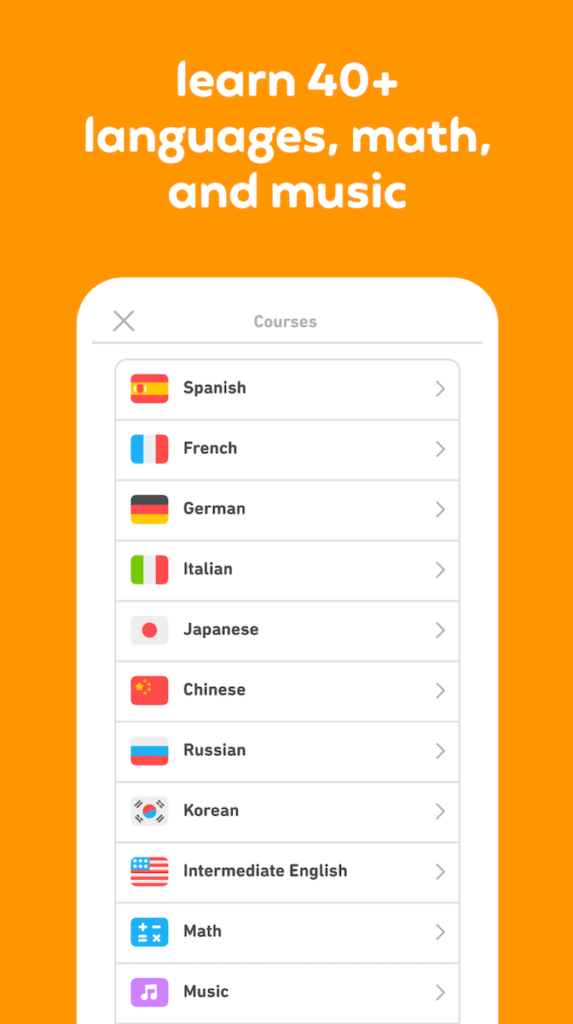
Pimsleur, on the other hand, has a roster of 51 languages and dialects. It has a good combination of widely spoken languages and less spoken ones like Ojibwe, Twi, and Haitian Creole. Interestingly, unlike Duolingo, Pimsleur offers courses for dialects of Arabic, Chinese, Portuguese, and Spanish.

Knowing which languages are available on each platform is crucial. If your heart is set on learning a less common language like Irish Gaelic or Navajo, Duolingo might be your best bet. However, if your goal is to master a specific dialect like Egyptian Arabic or European Spanish, Pimsleur might provide a more focused and effective curriculum.
Ultimately, your language goals should guide your platform selection.
Duolingo’s learning methods and course structure
Duolingo makes language learning feel like a fun game. You’ll encounter a cast of quirky characters (Duo the Owl, Lily, Zari, Vikram, Eddy, and more) and earn points and rewards as you progress. Each lesson is short and sweet, usually around 3-5 minutes, making it easy to squeeze learning into your daily routine.
The app focuses on a well-rounded approach, covering all the key language skills: reading, writing, listening, and speaking. While grammar isn’t explicitly taught, you can learn it through context and repetition in various exercises. Many exercises involve translating sentences, but you’ll also get a lot of listening and speaking exercises.

The learning path is structured with themed units and a linear progression. Although you can sometimes skip ahead to the next unit (if you manage to ace a lot of the lessons), you normally need to finish a lesson before moving to the next one. Review lessons are woven into the course, ensuring you retain what you’ve learned.
Duolingo shines best at gamification. Aside from the game-like lessons, there are gamified elements like points, streaks, quests with friends, timed challenges, and rewarding animations. Duolingo also offers immersive features like Stories, Podcasts, and Adventure. If you sign up for Duolingo Max, you can even have AI-powered video calls with the characters.

It’s also worth noting that for languages with non-Latin alphabets, Duolingo provides dedicated alphabet lessons to help you master the writing system.
PImsleur’s learning methods and course structure
Pimsleur is all about conversation. The core of the program is a series of audio-based lessons, each around 30 minutes long. These lessons introduce new vocabulary and phrases through engaging dialogues and spaced repetition techniques.

Pimsleur’s strength particularly lies in this spaced repetition technique called “graduated interval recall,” which involves reviewing learned vocabulary at increasingly longer intervals. For example, a newly introduced word might be tested every few seconds initially, then every few minutes, then every few hours, and eventually, every few days.
This strategic spacing allows your brain to consolidate the information and move it from short-term to long-term memory more effectively. By gradually increasing the intervals between reviews, Pimsleur ensures that you retain the information for the long haul.
Pimsleur also focuses on “internalizing” a core set of essential words and phrases, rather than overwhelming you with massive amounts of vocabulary. The lessons are designed to be highly structured, with a focus on gradual learning and consistent practice. You’ll learn in a conversational context, mimicking real-life interactions.
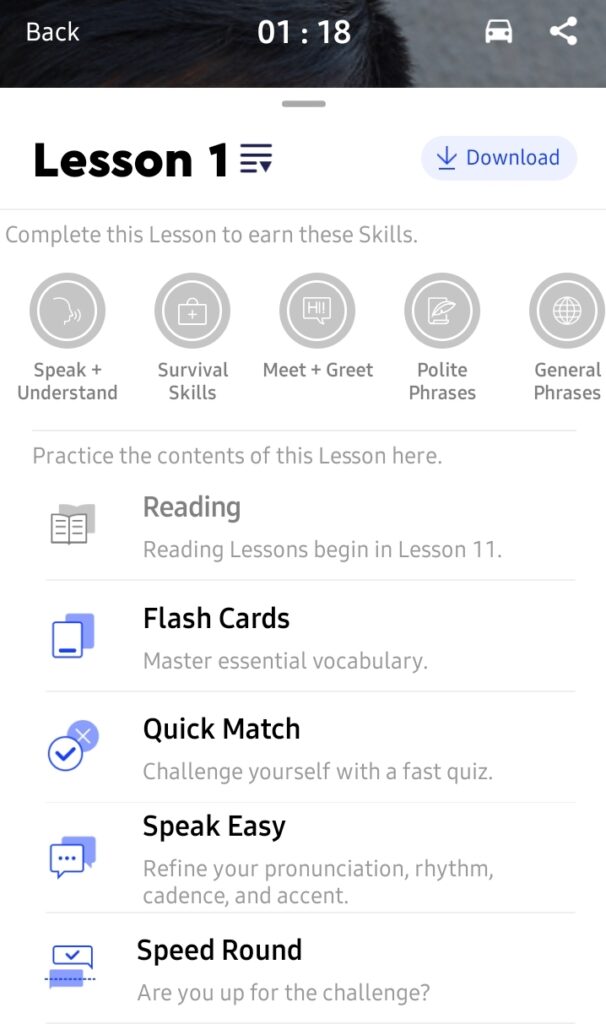
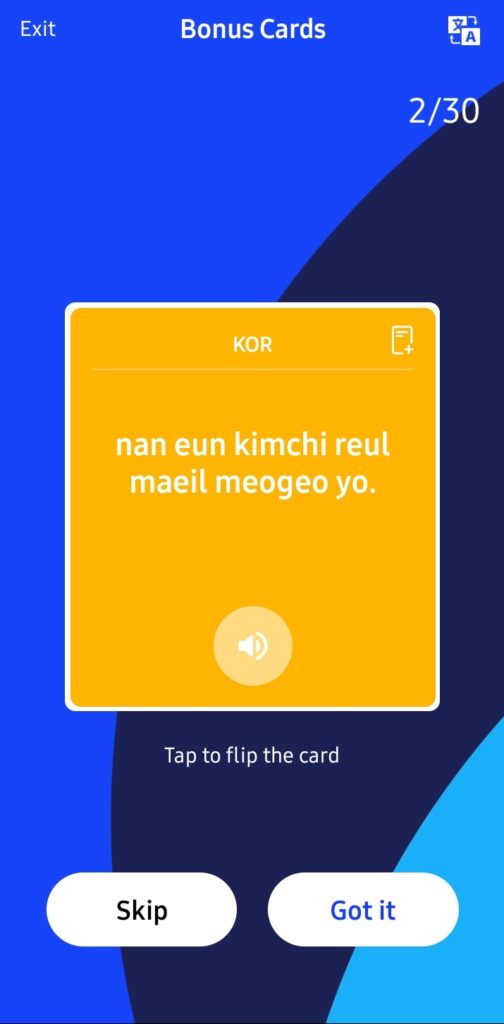
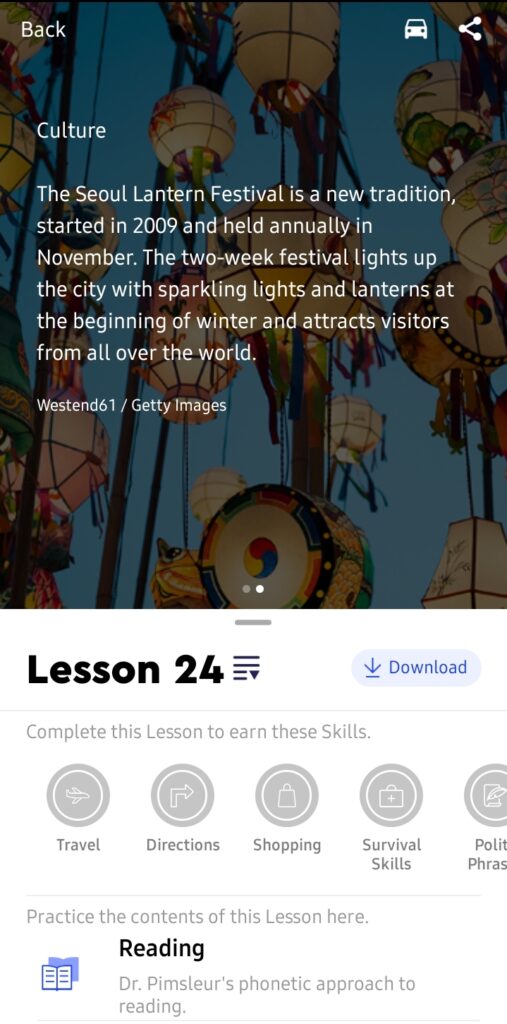
Most courses consist of three to five levels, each building upon the previous one. A level usually takes 15 or 16 hours to complete, but the platform encourages you to repeat lessons as needed. To reinforce learning, Pimsleur also includes bonus materials like Reading lessons, Flashcards, and games like Quick Match and Speed Round. You can also earn “Skills” – badges that unlock as you progress through the lessons.


Interested in learning more? This review of Pimsleur takes you deeper into its features and how it works to help you learn languages.
Duolingo vs Pimsleur: Pricing and free features
Duolingo is incredibly accessible, with a completely free version that offers most of the app’s features. These features come with limited “hearts” though, which means you have limited chances of committing mistakes. If your heart runs out, you’ll have to wait for a few hours for it to be replenished.
Upgrading to Super Duolingo costs $12.99/month or $83.99/year ($6.99/month), which will not only give you unlimited hearts but also an ad-free experience. You also get exclusive features like practice modes and mistake review, as well as unlimited attempts at Legendary levels and timed challenges.
Super Family, which allows you to share a Super subscription with five other users, costs $9.99/month or $119.99/year. Duolingo Max, which has more AI-powered features, starts at $30/month.
Pimsleur is a bit more investment-oriented. You’ll need a subscription to access their structured audio lessons.
The Basic plan ($14.95/month) gives you the core audio lessons, while the Premium plan ($19.95/month) unlocks bonus materials like Reading lessons and interactive games. The All Access subscription ($20.95/month) is a great option if you’re interested in learning multiple languages and unlocking all the bonus materials.
Both platforms offer free trials, allowing you to test the waters before committing. Duolingo gives you 14 days to explore Super Duolingo, while Pimsleur offers a 7-day trial to experience its unique learning approach.
Duolingo: Pros and cons
I’ve been using Duolingo for a while now, and I have to say, it’s a lot of fun! If you’re like me and you love earning points, leveling up, and chasing those daily streaks, Duolingo’s gamified approach will appeal to you. The app really makes learning feel like a game, which can be a real game-changer if you’re easily distracted.
I also loved Duolingo’s interactive and immersive features, especially the Stories and Adventure. The Stories use level-appropriate language applied in conversation context so I get a better feel of how words are supposed to be used. Adventure, on the other hand, makes it feel like a real game. The interface is also user-friendly and easy to navigate. And of course, the fact that it’s mostly free is a huge plus!

However, Duolingo has its limitations. I found that it doesn’t dive deeply enough into grammar. While it introduces concepts, it doesn’t provide comprehensive explanations or exercises to solidify understanding.
I also felt that it lacked cultural context. Learning a language is about more than just vocabulary and grammar; it’s about understanding the culture behind it. Unfortunately, Duolingo doesn’t really capture that aspect.
Another thing that sometimes bothered me was the impractical sentences. You know, the ones that sound robotic and like they were written by a machine. I often wondered when I would ever actually use phrases like “The blue bird flies in the sky” in a real-life conversation. This is especially true in the Korean course.

While the repetition can help reinforce concepts, it can also become repetitive and even a bit monotonous. I sometimes found myself getting bored with some of the exercises, especially when they kept repeating the same patterns.
Pimsleur: Pros and cons
One of the things that resonated with me about Pimsleur was the emphasis on listening. As someone who thrives on auditory learning, it was a total game-changer. Hearing those native speakers, with their authentic accents and natural speech patterns, helped me internalize the language.
I also appreciated how Pimsleur focuses on teaching vocabulary within the context of sentences. This approach felt much more natural than memorizing isolated words. It helped me understand how the language is actually used in real-life situations.
Although Pimsleur isn’t really gamified, I found that it’s still interactive. The listen-and-repeat exercises kept me actively engaged and involved in the learning process. It felt less like passive listening and more like a dynamic conversation. The flashcards and games help too!
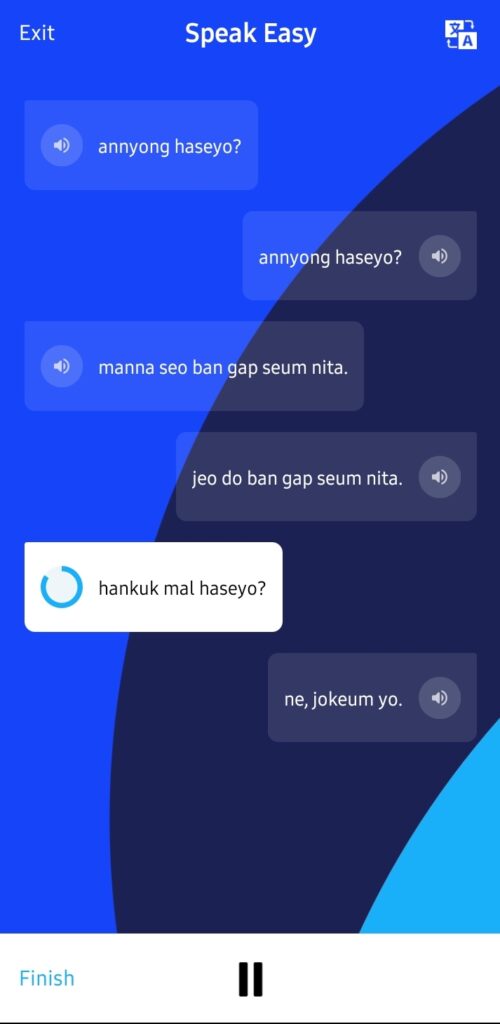
Pimsleur’s spaced repetition system is also quite clever. It strategically revisits the material at just the right moments, ensuring that you retain the information without feeling bombarded.
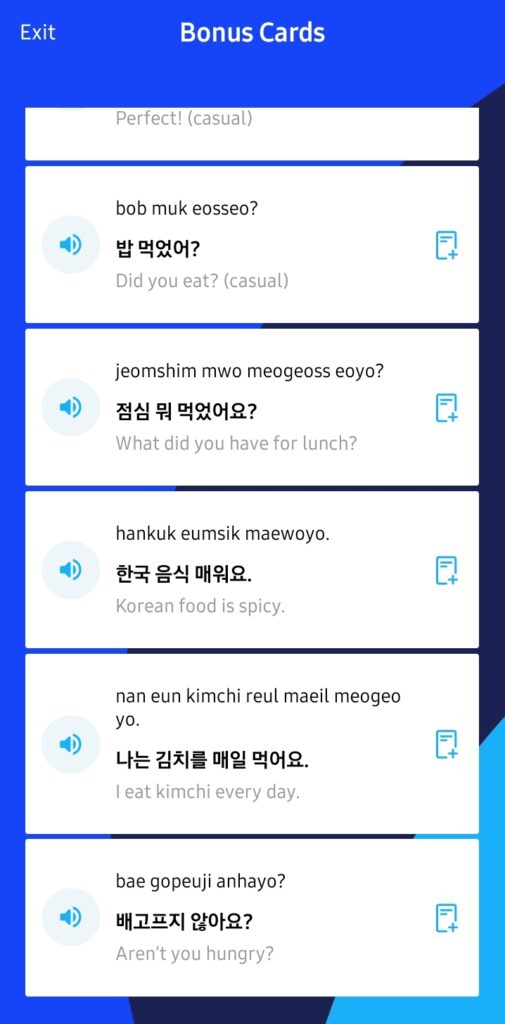
For certain languages, like Korean, Pimsleur even includes lessons on polite speech and honorifics. This is a valuable addition, as it helps you navigate social situations with confidence and respect. This, and the cultural insights, make it great for getting a deeper understanding of the language.
Alas, no app is perfect. First and foremost, Pimsleur has no writing component. If you’re aiming for fluency in reading and writing, you’ll need to find other resources to fill that gap.
Also, while the repetition is effective, it can sometimes feel a bit restrictive. You might find yourself yearning for more variety in the vocabulary. If you’re on a mission to build a massive vocabulary quickly, Pimsleur might feel a tad slow for your liking.
Duolingo vs Pimsleur: Which is better?

Choosing between Duolingo and Pimsleur really boils down to your learning style, your goals, and your budget. There’s no one-size-fits-all answer.
Neither app is going to turn you into a fluent speaker overnight. That takes time, consistent effort, and real-life immersion. But between the two, I think Pimsleur does a better job of mimicking real-life conversations. The focus on listening and speaking, combined with the natural dialogue, helps you internalize the language in a way that feels more authentic.
Duolingo is undeniably fun. The gamified approach is incredibly motivating, and it’s a fantastic way to build basic vocabulary and get a feel for the language. However, it doesn’t go deep into grammar, and the speaking practice is somewhat limited.
Pimsleur, on the other hand, is a powerhouse for listening and speaking skills. You’ll get used to the rhythm and flow of the language, and you’ll develop a decent speaking foundation. However, don’t expect to become a writing or reading whiz with Pimsleur alone. You’ll need to find other resources to complement your studies.
If budget is a concern, Duolingo’s free version is a fantastic option. You get access to a wide range of languages and a fun, engaging learning experience. But if you’re serious about your language learning and want high-quality audio lessons with a science-backed SRS, a Pimsleur subscription might be the better investment.
Depending on your goals, you can also check out these resources:
- For extensive grammar lessons, try Babbel or Rocket Languages.
- For practicing with a chatbot, try Ling or Mondly.
- For personalized instruction and speaking practice, hire tutors on Preply or italki.
- For well-structured online courses, try Cudoo, Coursera, or Skillshare.
That said, don’t limit yourself to just one resource. Supplement your language learning with books, podcasts, and other resources for a well-rounded approach. Remember, the ideal journey involves a mix of tools and personalized methods. Embrace the process, experiment, and discover the path that best suits your learning style to achieve fluency!
Pimsleur vs Duolingo: FAQ
What’s the main difference between Pimsleur and Duolingo?
Pimsleur focuses on immersive listening & speaking with native-speaker audio and spaced repetition. Duolingo emphasizes gamified lessons with a focus on reading, writing, & vocabulary. Also, Pimsleur is subscription-based, while Duolingo has a free tier with optional paid features.
Is Pimsleur better than Duolingo?
Pimsleur focuses on spaced repetition and pronunciation, emphasizing natural conversation through audio-based lessons. Duolingo, on the other hand, uses gamified exercises and visual aids for vocabulary and sentence formation. If your goal is to improve your speaking and listening skills, Pimsleur is the better option.
Is Pimsleur just audio?
Pimsleur is primarily an audio-based language learning method, but the Pimsleur app has expanded beyond just listening exercises. It now includes supplementary resources like reading materials, flashcards, some quick games to reinforce vocabulary, and cultural insights to enhance your understanding of the target language and its speakers.
What’s better, Duolingo or Pimsleur?
Pimsleur and Duolingo offer distinct approaches to language learning. Pimsleur excels in pronunciation and conversational fluency through spaced repetition and audio-based lessons. Duolingo’s gamified lessons are ideal for vocabulary building and casual reading, listening, and speaking practice. The best choice depends on your learning style and priorities.
Can you become fluent with Duolingo?
Duolingo can be a good introductory app. Its gamified lessons make learning engaging. However, fluency requires more than just app-based exercises. It demands consistent practice, real-life conversations, and immersion in the target language. Duolingo provides a solid foundation, but it’s crucial to supplement it with other resources and actively seek opportunities to use the language.
Can you become fluent with Pimsleur?
Pimsleur’s audio-based approach emphasizes active recall, making it an effective method for vocabulary (and some grammar) acquisition. But while Pimsleur can significantly improve your language skills, true fluency often requires additional practice. Engaging in real-life conversations, reading, and writing in the target language are essential for developing fluency and confidence.
Can you skip levels on Pimsleur?
No, it is not currently possible to skip levels on Pimsleur. The program is designed as a sequential learning experience, with each lesson building upon the previous one. This is so that there are no gaps in your understanding and to ensure a strong foundation in the language.
What’s the best language learning app?
The “best” language learning app is subjective and depends on your specific needs and preferences. For example, Babbel and Rocket Languages are popular choices for structured lessons covering various aspects of language learning. Pimsleur excels in speaking practice, while Mondly and Ling offer quick and engaging lessons. For personalized instruction, Preply and italki provide access to language tutors.