*This article may contain affiliate links. For full information, please see the disclaimer here.
Swahili, known as Kiswahili to its speakers, is a vibrant language that paints a rich tapestry of East African culture and history. Originating from the coastal regions of Kenya and Tanzania, this melodic language has spread across the African continent, becoming a lingua franca for millions.
Today, Swahili is spoken by over 200 million people in Tanzania, Kenya, Uganda, the Democratic Republic of Congo, Burundi, and other East African countries. It is also recognized as a prominent international language, with UNESCO declaring July 7th as Swahili Language Day, making it the first African language to be honored by the UN. Even outside Africa, Swahili is gaining popularity.

You’d think its importance would merit inclusion in Babbel, one of the most popular language-learning apps online. But sadly, there’s no Babbel Swahili course.
The good news is, there are several Swahili learning apps that you can explore. And in this article, I’m going to take you through the three best options.
What is Babbel?
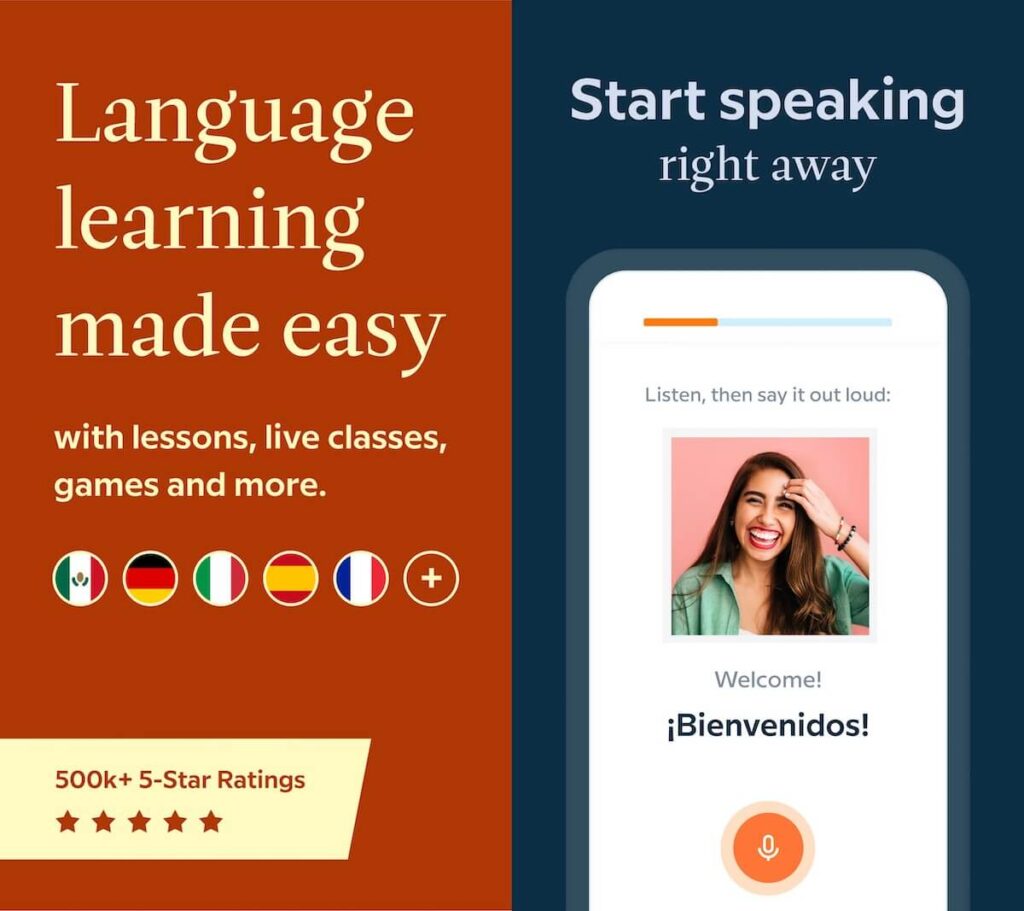
First off, what is Babbel, and why is it so popular among language enthusiasts?
Babbel is a language learning application with over 10 million downloads from users worldwide. It offers a well-rounded approach to language learning, focusing on improving reading, writing, speaking, and listening skills.
The app differentiates itself from others through the quality of its content, its sleek design, and the accuracy of its speech recognition technology. Since it teaches up-to-date vocabulary and uses sound bites of native speakers, it’s pretty immersive.
Babbel has courses for learners of all levels. It also has various features available for selected languages, including podcasts and practice games. You can find out more about its features in my review of the app.
However, Babbel is not without its drawbacks. Perhaps its biggest flaw is that it offers only 14 languages including Spanish, French, Turkish, and Indonesian. The app misses out on Tagalog, Czech, Afrikaans, and Greek. And like I said earlier, there’s no Swahili on Babbel.
The best Babbel alternatives for learning Swahili
Thanks to these Babbel alternatives, you can conveniently learn Swahili anytime, anywhere, on any device.
1. Pimsleur
While many people learn languages for fun, most of us want to learn languages so we can converse with native speakers. If this is your motivation for learning Swahili, I highly recommend Pimsleur.
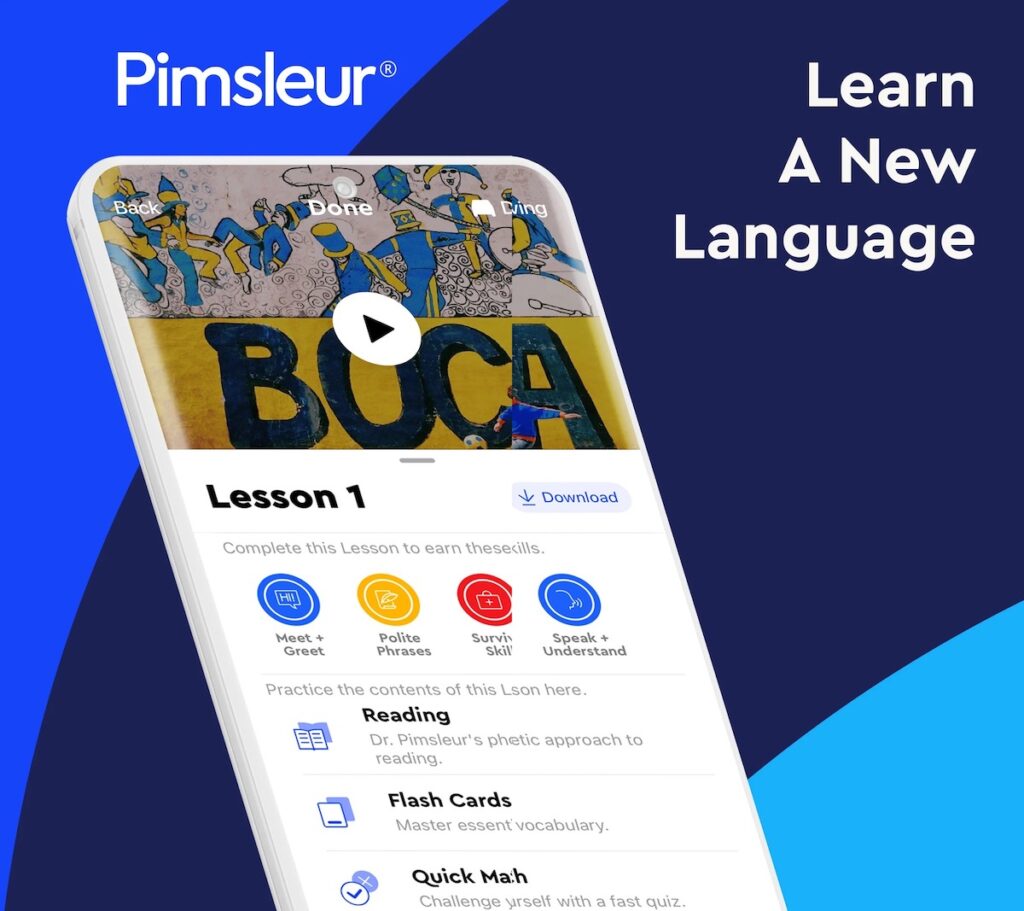
The Pimsleur Swahili course provides 30 minutes of spoken language practice, with dialogues featuring a native speaker, relevant vocabulary, and grammar in context. Since the core lessons are in audio format, you can learn Swahili on the go, whether you’re commuting to work or running errands.
The premium course also includes reading lessons, digital flashcards, a Quick Match interactive phrase game, practice conversations, and cultural info. By the end of the course, you’ll be able to understand and participate in conversations with native speakers, and you’ll have a solid foundation in Swahili!
Key features:
- 30-minute audio lessons to improve your conversational skills
- Native speakers teach accurate pronunciation and accents
- Proven method for establishing recall
2. uTalk

If you’re looking to pick up Swahili without getting buried in grammar charts, uTalk is a great start. It’s built for the traveler or the casual learner who wants to start speaking immediately rather than just checking off boxes on a skill tree (wink wink).
This app focuses on “first words” and essential phrases using a listen-and-repeat style that feels more like a digital phrasebook than a formal classroom. It’s particularly useful for Swahili because it emphasizes the melody and rhythm of the language, helping you get the hang of those Bantu sounds right from day one.
The methodology is simple: you see a picture, hear a native speaker, and then record yourself to compare the two. There aren’t any long-winded explanations about noun classes or verb conjugations; instead, you play memory games and “recall” challenges to make the vocabulary stick.
Key features:
- Audio recorded by male and female native speakers
- Voice recording feature to fine-tune your pronunciation
- Gamified lessons covering over 2,500 words and phrases across 60+ topics
3. Glossika
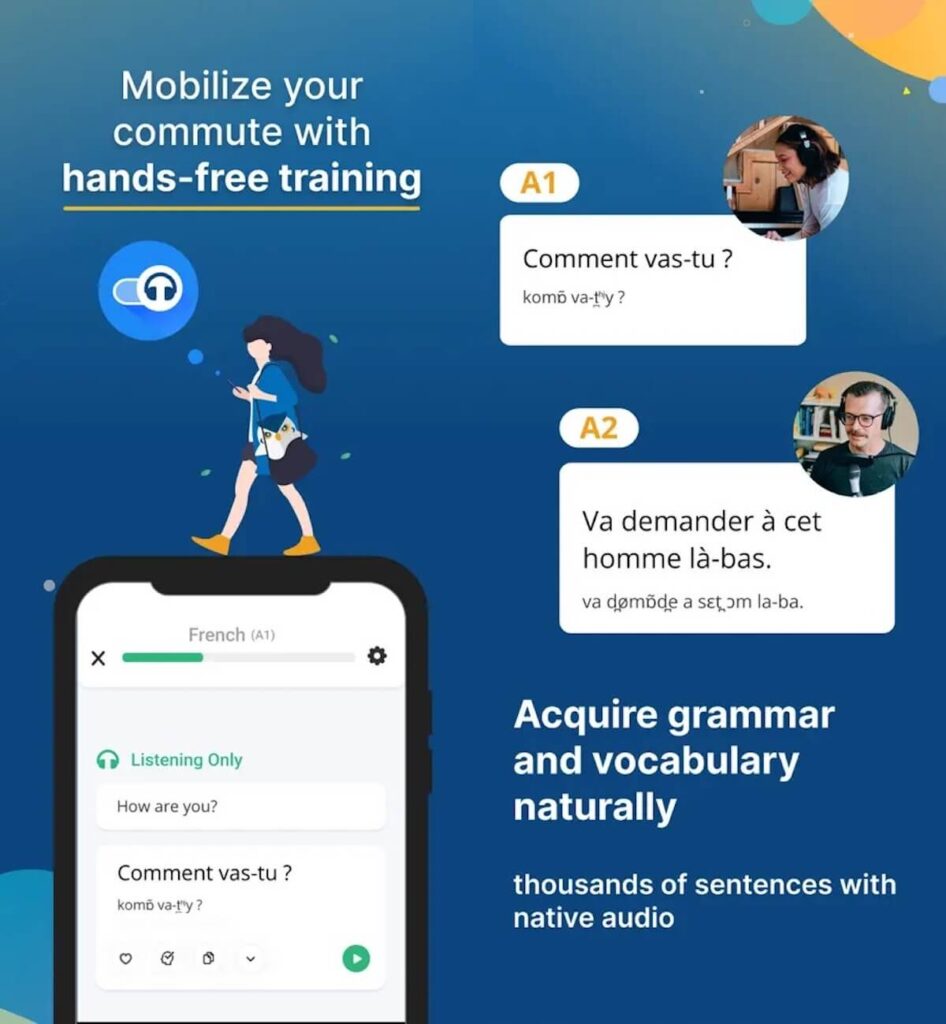
By now, you’re probably seeing a pattern here — my recommended apps, while comprehensive, are mostly geared toward improving your conversational skills. Glossika, another top-notch app, does this through its immersive audio training.
With Glossika, you can learn thousands of sentences. This gives you full context and allows you to absorb the language naturally. Each sentence also comes with audio featuring a native speaker so you get to hear the correct pronunciation and accent.
Glossika uses spaced repetition to help you remember what you learned. Plus, the program is designed to gradually increase in difficulty, so you can challenge yourself without feeling overwhelmed.
Key features:
- Thousands of Swahili sentences to learn from
- Audio featuring real native speakers
- Challenging exercises to improve all core skills
Other great resources to learn Swahili
Pimsleur, uTalk, and Glossika should be enough to get you started in your Swahili learning journey. But they are not the only resources available to you. Check out these great options too!

italki: Learn Swahili online with expert tutors on italki. This platform offers a range of lessons and courses tailored to your proficiency level, learning needs, schedule, and budget!
Preply: As of writing, there are around 30 Swahili tutors on Preply. You can select a tutor based on your preferences and budget, and learn Swahili at your own pace. If, for some reason, you’re not entirely happy with your tutor, Preply also offers free tutor replacement.

Cudoo: This platform provides comprehensive courses in Swahili grammar, vocabulary, and culture. The courses are self-paced, mobile-compatible, and come with a certificate of completion upon finishing. There’s even a Business Swahili course, which could be useful if you’re learning Swahili for professional reasons.
LingChat: This app makes Swahili feel less like a chore and more like a hangout. It pairs you with AI characters for low-pressure speaking practice and connects you with a global community to swap tips and chat in real-time.
Talkpal: Instead of rigid drills, this AI-powered app focuses on interactive conversations that adapt to your specific level and interests. Whether you’re role-playing a scenario or debating a topic, the app provides instant feedback on your grammar and pronunciation.

Mango Languages: This comprehensive course offers a personalized approach focusing on grammar, vocabulary, pronunciation, and cultural nuances. It also provides interactive exercises and real-life conversations to enhance learning. It’s a great tool for learning Swahili from the basics to advanced concepts.
Duolingo: This free app is great for beginners but can also be used as a refresher for advanced learners. The course is designed to be fun, engaging, and effective, with bite-sized lessons that can be completed in just 5 minutes a day.


Learn Swahili Quickly and Easily: This beginner-friendly book aims to teach Swahili simply and effectively. Its first section is designed to help readers understand the way the language works without using any grammatical terms. The second section covers more advanced topics in Swahili grammar, vocabulary, and culture. It comes with downloadable audio files too.
Learn Swahili Now: For quality courses that target fluency, check out LSN’s Swahili courses. You’ll find programs at various price points. You can also access the Android and iOS apps for mini-courses, challenges, bonus content, and discounts.

Lonely Planet Swahili Phrasebook & Dictionary: This robust guide includes a 5000-word two-way dictionary, pronunciation guide, and phrase-building section. The book also offers practical phrases for common and emergency travel situations, making it a great resource for travelers looking to interact with locals and immerse themselves in East African culture.
Udemy: This site is a goldmine for Swahili learners who want a structured, classroom feel without the hefty price tag. You can choose from various video-based courses taught by native speakers, covering everything from basic survival phrases to advanced grammar.
SwahiliPod101: This multimedia resource is dedicated not only to teaching the Swahili language but also to the culture. It offers a variety of learning materials including audio and video lessons, a daily podcast, a YouTube channel, and a newsletter.
Conclusion

Swahili may not be on Babbel, but given the list above, you won’t run out of resources for learning this beautiful and significant language.
Which one are you excited to try first? Let me know in the comments!
Babbel alternatives for learning Swahili – Pin it!