
Is Portuguese hard to learn? That’s the question many of you have been asking yourselves while staring at a Portuguese textbook, amazed by the unfamiliar sounds and grammar rules.

The truth is, Portuguese can be a bit of a challenge for English speakers, but that’s no reason to give up before you even start.
In this post, I’ll dive into the nitty-gritty of what makes Portuguese tricky, yet I’ll also explore why my gorgeous native language is still worth the effort. Vamos lá?
To be clear, no language is tough to learn

Though learning a new language can be intimidating, there’s a common misconception that some languages are inherently “hard” to learn.
The truth is that no language is actually difficult per se. Every one of them has its unique complexities and nuances, yet, with the right mindset and resources, anyone can become fluent. The idea that some languages are naturally harder is often rooted in cultural biases and prejudices.
Remember that what may be difficult for one person may not be for another. Learning a new language is a highly individualized process, and what works for you may not work for someone else.
Another factor that contributes to the perception of a language’s difficulty is the lack of exposure or resources available.
Some languages, such as Portuguese or Mandarin, may seem harder simply because they are less commonly taught in schools or have fewer learning resources readily available.
Still, with the growth of technology and online learning, there are more resources available than ever before, which makes it easier to access high-quality language learning materials.
But why is Portuguese hard to learn?
1. The diversity of dialects can be overwhelming.

Portuguese is a beautiful and vibrant language that attracts many English speakers looking to learn a new language.
Yet the language’s diversity of dialects can be overwhelming for those starting. Spoken by over 300 million people worldwide, it’s no wonder that there are different variations of Portuguese across the globe.
From Portugal’s dialects to Brazilian Portuguese, as well as the dialects spoken in countries like Angola and Mozambique, this diversity can be tricky to navigate for beginners. Each dialect has its own nuances, accents, and even vocabulary, which can be confusing for English speakers.
Bear in mind, though, that dialects are not separate languages, and the core of the language remains the same. With practice and exposure, you’ll manage to adapt to the different dialects and understand them better over time.
Also read: 10 Key Differences Between Brazilian and European Portuguese
2. It’s usually not featured in pop culture.

One of the reasons Portuguese is hard to learn is the lack of exposure to Portuguese in global pop culture. Unlike Spanish or French, Portuguese is not commonly featured in movies, TV shows, or music charts.
This can make it harder for you to find ways to practice and immerse yourself in the language outside of a classroom or textbook.
Don’t fret over it, though. While the lack of pop culture representation may seem like an obstacle, it can actually be an opportunity if you’re truly committed to learning the language.
3. Spelling and pronunciation are often a world apart.

For English speakers, the most frightening aspect of learning Portuguese is definitely the vast differences between the spelling and pronunciation of the language.
While some words are pronounced exactly as they are spelled, others have silent letters or different sounds altogether.
For example, the word chocolate is spelled the same in Portuguese, but the “ch” is pronounced like “sh,” making it /shoa-coa-lah-chee/ in Brazil and /shoo-klah-t/ in Portugal.
To make matters worse, Portuguese has a wide range of vowel sounds that can be tricky to distinguish for beginners.
For instance, the word muito (“very”) has a nasal sound between the U and the I that can be tough to master. Plus, some letters like R are pronounced differently in various regions of Brazil and Portugal.
4. You’ll need to master both informal and formal Portuguese.

Like in English, there are two distinct forms of the language in Portuguese: the formal or standard register, which is used in business, education, and official settings, and the informal or colloquial one, which is used in everyday conversations.
For example, if you were to say “how are you?” to a friend in Portugal, you might use the informal como estás? whereas if you were speaking to a teacher or a stranger, you would use the formal como está?. This distinction applies to all aspects of the language, from verb conjugation to vocabulary usage.
5. Gender variations apply to all articles, adjectives, nouns, and verbs.

In Portuguese, every noun is either masculine or feminine, and adjectives and articles must agree in gender with the noun they modify. This means that even basic words like “the” and “a” have different forms depending on the gender of the noun.
For example, the word “book” in Portuguese is “livro,” which is a masculine noun. So to say “the book,” you would use the masculine article “o,” resulting in “o livro.”
The word “table,” in turn, is a feminine noun in Portuguese, which means you would use the feminine article “a,” resulting in “a mesa,” to say “the table.” This can be confusing for English speakers, who are not familiar with assigning gender to inanimate objects.
6. Nasal sounds are all over the place.

As an English speaker trying to learn Portuguese, one of the major obstacles you’ll face is getting the hang of the language’s nasal sounds. In fact, nasal sounds are so prevalent in Portuguese that some learners even describe it as a “nasal language.”
Unlike in English, where the letter M is always pronounced the same way, in Portuguese, M can sometimes sound like “ng” as in the word bom (i.e. ”good”). And don’t even get me started on the different accents that indicate nasal sounds, such as the tilde over the A in -ão.
7. Verbs make up a universe in their own right.

Portuguese verbs are highly inflected, meaning they can change forms to convey different tenses, moods, and persons.
For instance, the verb “to be” in Portuguese translates as either ser or estar, which can take on different forms depending on the context and meaning of the sentence.
Eu sou estudante (“I am a student”) uses ser because it is a permanent or long-lasting feature, whereas Eu estou cansado (“I am tired”) uses estar because it is a temporary state.
What’s more, Portuguese has irregular verbs that do not follow a set pattern, which makes it tricky to memorize their different forms.
For example, the irregular verb fazer (“to do” or “to make”) changes its form in the present tense for the first and second person singular, becoming faço and fazes, respectively.
On top of that, Portuguese has a subjunctive mood, which English does not use as often (or at all). It is used to express uncertainty, doubt, or desire as in Se eu pudesse, iria ao Brasil (“If I could, I would go to Brazil”).
8. False friends are out to get you.

False friends are words that look or sound similar in two languages but have different meanings, which can lead to confusion and embarrassing situations.
For example, the word atual in Portuguese means “current” or “up-to-date,” but an English speaker may assume it means “actual,” instead. Similarly, prejuízo in Portuguese means “financial loss”, though it resembles “prejudice” (which is translated as preconceito).
Other cases of false friends between English and Portuguese include pretender, which means “to aim” or “to intend” in Portuguese, not “to pretend”, and livraria, which means “bookstore” in Portuguese rather than “library”.
9. So are accent marks.
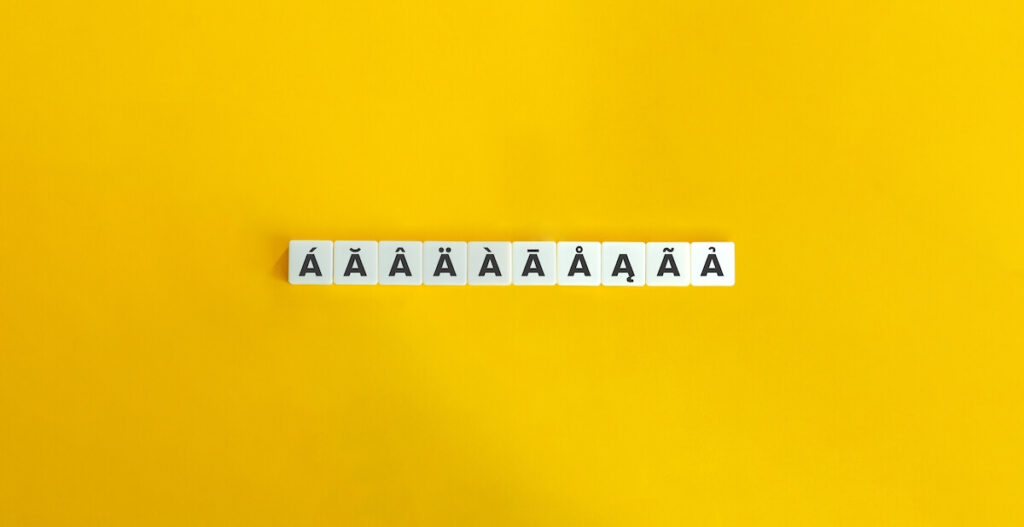
Portuguese is notorious for its abundant use of accent marks. With five different accent marks to navigate, it can feel like a minefield, and getting them wrong can cause confusion and even change the meaning of a word.
The most common accent mark is the acute accent, which appears on vowels to indicate stress on open vowels, such as in the word médico (“doctor”).
But there are also the circumflex, grave, tilde, and cedilla accents to consider. The circumflex, for example, appears on vowels to indicate a closed stress, such as in the word bêbado (“drunk”).
Meanwhile, the grave accent can be found on vowels to indicate a contraction, such as in the words “à” (“to” or “at”) and àquele (“to that one”).
Read more: Portuguese Accent Marks Explained: A Guide to Portuguese Pronunciation
Why Portuguese is worth learning anyway
1. It can hardly get any easier than Portuguese.

Though Portuguese is often overlooked when considering which foreign language to learn, it’s actually one of the easiest for English speakers to pick up.
According to the US government’s Foreign Service Institute (FSI), Portuguese is classified as a Category I language and should take about 600 class hours to master. (If you were wondering how long it takes to learn Portuguese, there you have it.)
It stands in the same category as Dutch, Italian, Spanish, and Swedish. One of the reasons why Portuguese is so accessible is that its vocabulary is heavily influenced by Latin, just like English.
This means that many Portuguese words are similar to their English counterparts, making them easier to remember. Furthermore, the grammar is relatively straightforward, with no cases to learn and only two genders to master.
2. It’ll give you an edge when learning other languages.

Learning Portuguese can give you a major head start if you’re down to learn other Romance languages afterward. Why? Because Portuguese shares many similarities with Spanish, French, Italian, and Romanian.
if you already know Portuguese, you’ll find that many Spanish words are similar in spelling and meaning, such as sol and mar in Portuguese, which are exactly the same in Spanish and mean “sun” and “sea,” respectively.
The same goes for French, Italian, and other Romance languages. In addition to that, many grammar rules are similar across these languages, such as the use of gender and verb conjugation.
3. Portuguese is the language of fascinating cultures.

Portuguese can open up a world of spellbinding cultures and experiences. Portugal, Brazil, Angola, Mozambique, and other Portuguese-speaking nations all have rich histories, traditions, and customs that can be explored and appreciated through the Portuguese language.
By learning Portuguese, you can gain a deeper understanding and appreciation of these cultures, their people, and their contributions to the world.
For example, Brazilian culture is known for its lively music, dance, and carnival celebrations. In Portugal, meanwhile, the language is steeped in centuries of history and tradition.
You can also gain access to other cultures that have been influenced by Portuguese colonization, such as Cape Verde, Guinea-Bissau, and East Timor.
Also read: 25 Fun Facts About the Portuguese Language
4. There’s no shortage of learning tools at your disposal.

If you’re an English speaker seeking to achieve fluency in Portuguese, you’re in luck! There are plenty of resources available to help you along the way. From Portuguese learning apps like Mondly to audio courses like Pimsleur, you have no excuse to not start learning today.
If you prefer a more traditional approach to language learning, consider taking classes at a language school or hiring a tutor at Preply or italki.
The best way to learn Portuguese is in fact relying on a good mix of tools. I’m sure you’ll discover a new passion for the language and culture of Portugal, Brazil, and beyond.
Final thoughts

I’ve shown you why Portuguese is hard to learn: basically, its grammar is intricate, its regional diversity is astonishing, and its pronunciation can be quite different from what you’re used to.
Don’t let that discourage you, though. With commitment and effort, anyone can become fluent in this beautiful language.
Plus, the benefits of learning Portuguese are priceless and include expanding your travel horizons, experiencing new cultures, and making new friends along the way.
Be it for personal or professional reasons, learning Portuguese is an investment in your future that you won’t regret. Boa sorte! (i.e. Good luck!)