
*This article may contain affiliate links. For full information, please see the disclaimer here.
Learning a language can seem like a daunting and complicated process. And it’s hard to know where to start if this is your first time.
The key to learning Portuguese, or any language, is working out the best ways and methods that work for you. Language learning can really be a personal process, depending on what you want from the process, the styles of learning that work best for you, and what you enjoy.

What’s the best way to learn Portuguese? I listed 21 tips below — you can mix and match these tips to create the most effective plan for you!
1. Establish a plan

Like most things in life, establishing a plan for your language learning will make the process easier and more successful. A plan will motivate you to do the necessary practice to learn, and also keep you on the right path.
Your plan doesn’t need to be extensive, but try thinking about what your motivations for learning Portuguese are, and how you can achieve them.
If you want to travel to Brazil, you can focus on developing everyday speech and understanding the spoken language. Listening to beginner’s podcasts could be great for this.
Or, if you want to work in Lisbon, you’ll have to pay more attention to written structures, and therefore grammar textbooks could be more useful.
Once you’ve got a plan, make sure to track your learning and adapt it as necessary to make the best progress possible.
2. Focus on one dialect of Portuguese

Portuguese has many different forms spoken in different countries and regions, commonly known as dialects.
Though these dialects are mutually intelligible, the Portuguese spoken in Portugal differs in grammar and vocabulary from the variations specific to Brazil, Angola, Mozambique, and elsewhere.
To avoid confusion, it’s often best to choose the dialect of Portuguese that most interests you and stick with that in the beginning, at least until you build up the basics.
Also Read: 10 Key Differences Between Brazilian and European Portuguese
3. Establish a routine

Consistent practice is important for internalizing key language concepts and vocabulary. Establishing a routine is a great way to make sure you practice often and able to improve over time.
Your routine doesn’t need to be extensive either, if you don’t have the time. Even 20 minutes at the same time every day can be very beneficial for language progress. The most important thing is that you keep it up!
Also read: How Long Does It Take to Learn Portuguese? The Real Answer
4. Find a style that works for you

Different learning styles work for different people and it’s crucial you find the styles that work best for you.
Some people prefer old-school books and learning by repetition. Some people may love flashcards or grammar exercises or podcasts.
Personally, I find it hard to read a grammar book and retain all the information. I prefer more interactive learning methods, such as apps like Duolingo and Mondly. But, that’s just me!
Some prefer structured courses on Babbel or Cudoo while others enjoy shorter courses like the ones on Skillshare. It’s all about finding what works best for you, and combining a whole load of different techniques for variety and efficiency.
5. Have fun

Whenever anyone asks me what is the best way to learn Portuguese from home, I say make language learning fun!
You’re more likely to stick with learning Portuguese if you’re having fun while doing it, so introduce it into your hobbies!
Watch Brazilian TV, listen to Angolan music, or bake pastel de nata with an authentic recipe written in Portuguese. Aside from the essentials, you can also allot time to learn more fun stuff like funny Portuguese phrases or Portuguese proverbs. Anything to make sure you’re enjoying learning and using Portuguese while doing it.
6. Read novels

Portuguese novels are a great way to see grammatical concepts and vocabulary used in practice and also learn about the culture of Portuguese-speaking countries. It’s one of the best ways to learn Portuguese on your own.
Start with children’s books if you’re a beginner learner. A great option is O Meu Pe De Laranja Lima by José Mauro de Vasconcelos, a classic of Brazilian children’s literature.
As you begin to get more confident, you could switch to adult novels with more simple language, such as O Alquimista by Paulo Coelho or Os Maias by José Maria de Eça de Queiroz.
Want something more academic? You can check out these books to learn Portuguese.
7. Read newspapers

Newspapers are also a great option for improving your reading skills in Portuguese. The language will be a bit more formal than some other written forms, but it’s a great way to get to grips with more complex grammar structures and vocabulary.
And with articles ranging from 100 words to longer pieces, it requires less consistent attention than a novel, allowing you to learn in bitesize chunks that suit your life schedule.
8. Listen to native speakers
Listening to native speakers is an important way to develop your comprehension skills and be able to apply language concepts to the real world of speech and communication.
After all, with Portuguese pronunciation known to be difficult, hearing it spoken more and more will help you to become more comfortable
You can use apps that teach with the voices of native speakers (such as Mondly, Babbel, and Pimsleur), listen to Portuguese multimedia, or find a Portuguese-speaking language buddy.
9. Watch TV

Watching TV can be a great way to get to grips with native Portuguese speakers and to hear how the language is used on a daily basis. Netflix has a great selection of Portuguese-language shows, with my personal favorites including Coisa mais linda and 3%.
And if you’re not a Netflix fan, watch anything that takes your fancy. The news can be great for improving your listening skills and learning more about the cultural context of Portuguese-speaking countries.
Better yet, use an engaging app like Lingopie to watch Portuguese TV shows, movies, or Netflix originals. What’s great about Lingopie is that it features clickable subtitles that provide instant translations and pronunciation help. You can even record your own voice and the app will test your accuracy.
10. Hire a language tutor
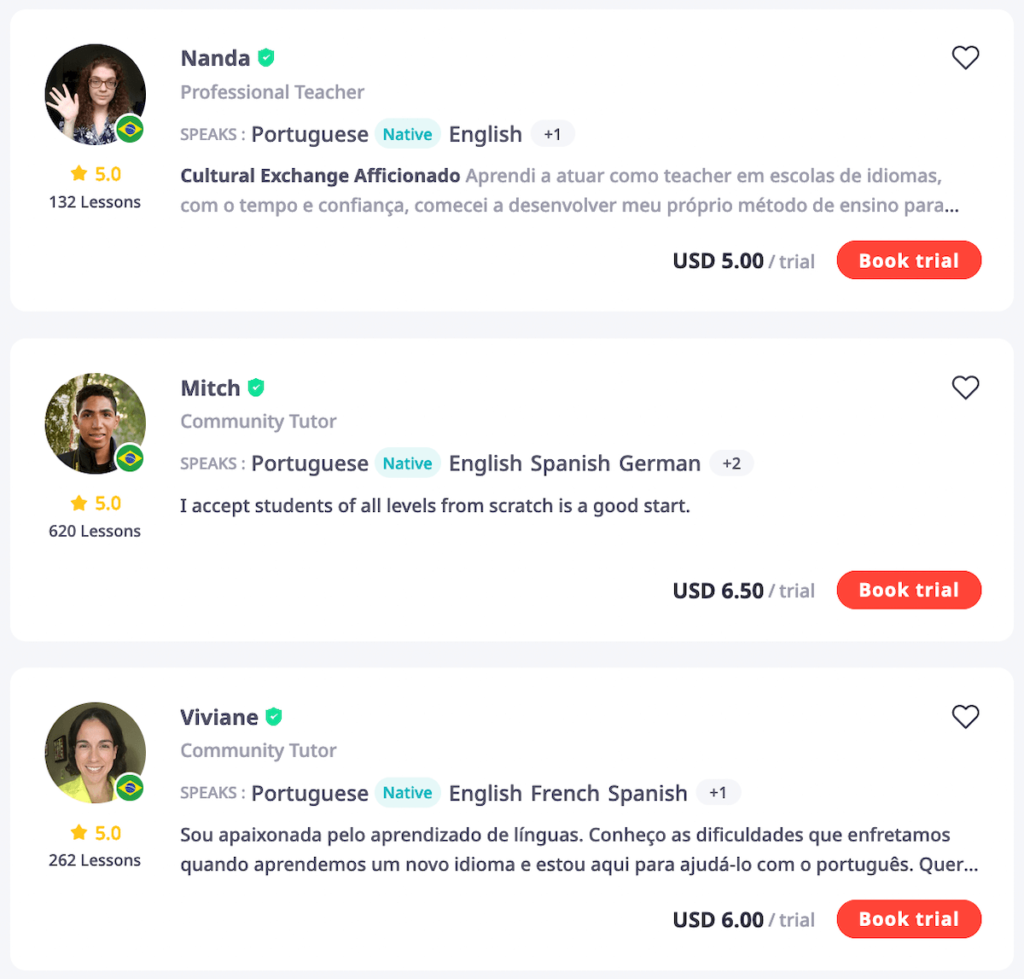
If you want a more tailored approach to your language learning, hiring a Portuguese language tutor can be a great idea. With a tutor, you can focus on the areas you most want to improve and receive learnings and feedback specific to you.
And with tutor apps like Italki and Preply, you can find yourself an expert language tutor without even having to leave the comfort of your house.
11. Listen to Portuguese music

If you’re a big music fan, listening to music in Portuguese can be a great way to get started. Song lyrics are often simple in language, and their catchiness means you’ll repeat them in your head over and over.
Brazil is of course famous for its music. Samba and bossa nova are famous across the world, but contemporary styles are also part of the new Latin-wave in modern music. Check out global superstar Anitta as a starting point.
Portugal too has a strong musical tradition, with Amália Rodriguez popularizing the Fado genre across the planet.
12. Talk to native speakers

One of the best ways to unlock your Portuguese speaking and listening skills is by speaking to native speakers. You’ll be able to apply the concepts you’ve learned, and will pick up on new phrases and how the language is spoken on a daily basis.
Language exchanges in person, or online with platforms such as Tandem, can help you find like-minded language learners while helping others speak your native language in return.
Also read: 14 Best Language Exchange Apps and Websites for Conversation Partners
13. Learn the most important phrases
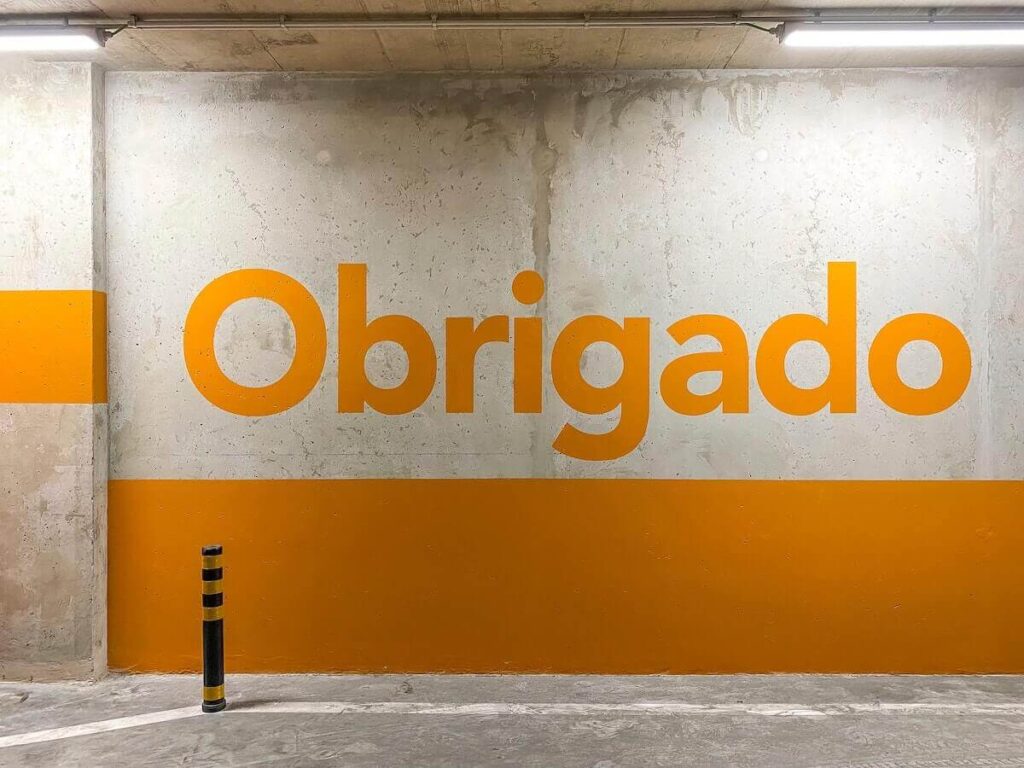
Learn the most important phrases to help you out in conversations and when you don’t understand something.
Phrases such as “o que significa? (“what does it mean?”), “como se escreve?” (“how do you spell it?”) and “poderia repetir, por favor?” (“could you repeat that, please?”) will be some of the most important in successfully talking with people in Portuguese.
And don’t be afraid to ask dumb questions, native speakers will be more than happy to help you out.
Also read: Saying Hello in Portuguese and 15 Other Portuguese Greetings
14. Talk to yourself in the mirror

One of the best tips my language teacher gave me in the early days of learning was to speak to myself in the mirror. You may not always have the time or energy to speak with another person every day, but speaking to yourself is a great alternative.
And in the mirror, you can pay closer attention to what you’re saying and also stop to correct yourself, which is not always possible in a full conversation with other people.
15. Join an audio-focused course

Websites and platforms such as Pimsleur and Rocket Portuguese are great for audio-specific courses and targeting your listening skills in particular.
But it’s not just listening that you can practice with an audio course, with emphases on speaking, vocabulary, and pronunciation too. And with the Portuguese spoken by native speakers on these platforms, it’s a great way to immerse yourself in the language.
Also read: 20 Best Portuguese Courses Online for 2023
16. Start with the 100 most common words
A good tactic for starting out with vocabulary, and building your knowledge over time, is focusing on the most common words first.
Learn the 100 most common words really well so that you can grapple with basic texts.
Once you feel comfortable with those, learn the 500 most common words, and then the 1000 most common words.
Within no time, you’ll have a whole range of vocabulary under your belt!
17. Learn some idioms

You may not be surprised to hear that languages don’t always work exactly the way you learn them in the classroom, and that Portuguese is full of its own little peculiarities and cultural phrases.
To sound more natural in your Portuguese, learn some Portuguese idioms and sayings and use them when you’re speaking.
You could say é minha praia (it’s my beach) to say that you like something or comprar gato por lebre (to buy a cat thinking it’s a rabbit) if someone’s pulled a fast one on you. Look out for these in the daily speech of native speakers.
18. Try to move beyond the embarrassment of speaking Portuguese
Yes, I know, getting things wrong when you’re learning a language can be embarrassing and speaking can make you feel shy and anxious.
But, one of the best ways to improve your language skills is to make mistakes and learn from them. You won’t improve by not working out where you’re going wrong.
If the thought of speaking Portuguese causes you embarrassment, start small by trying out smaller phrases you know well and try to build up your confidence over time.
19. Practice every day (or as often as possible)
One of the keys to truly mastering a language is consistency and repetition. By working on your Portuguese skills, you’ll not just develop a habit but your brain will be able to internalize concepts better.
Whether it’s just a few minutes of vocabulary learning a day, or listening to your favorite Portuguese podcast, this will do wonders for your practice and language development.
20. Change your technology to Portuguese

That said, it can often be hard to commit to language practice every day or week in our busy modern lives, and this shouldn’t dissuade you from learning Portuguese.
But, one thing you’re likely to use at least for a few minutes every day is your phone or laptop.
By switching the language of your technological devices to Portuguese, you can ensure you read the language at least a few times a day, and it will also introduce you to a new section of technology vocab.
It’s one of the easiest ways to learn Portuguese!
21. Bonus tip: spend time in a Portuguese-speaking country

The hands-down best and fastest way to learn Portuguese is immersion, and what better immersion than being in a Portuguese-speaking country?
Whether you’re spending a one-week holiday in the Algarve or moving to live in São Paulo, speaking to locals and experiencing the local culture will do great things for your language skills.
Just make sure you’re speaking in Portuguese and not your native language so that you can put your new skills into practice.
So that’s it for our list of the 21 best ways to learn Portuguese. Try them out and let us know which works best for you!