
A famous Brazilian poet once defined Portuguese as “the last flower of Lazio, uncultivated and beautiful”. Today, I’ll give you more than a few reasons to agree with him through a comprehensive list of compelling and informative facts about the Portuguese language.
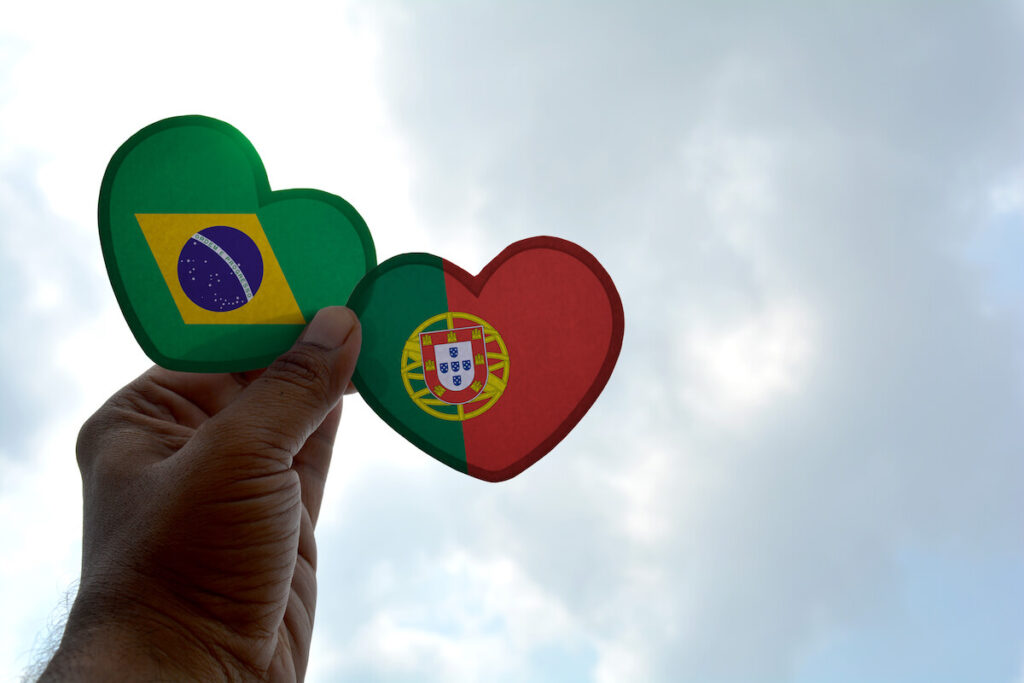
I’m positive that, if you haven’t yet, this post will make you want to learn Portuguese asap!
Essential facts about the Portuguese language
1. Portuguese is the official language of nine countries.

Besides Portugal, eight nations that were colonized by the former European power have adopted Portuguese as their official language: Brazil in South America, Angola, Mozambique, Guinea-Bissau, Cape Verde, and São Tomé and Príncipe in Africa, and East Timor in Asia.
Tiny Equatorial Guinea made Portuguese one of its official languages in 2010, aiming at greater integration with the eight Portuguese-speaking nations through membership in the Community of Portuguese Language Countries.
2. Brazil accounts for a great deal of the total of speakers.

Between first and second languages, approximately 310 million speak Portuguese. Given the population of Brazil is currently 214.3 million, the South American nation makes up some 69% of that number.
Angola and Mozambique come second and third, with 34.7 and 32.8 million, respectively. Portugal, with its 10.3 million people, is home to a mere 3.3% of the Portuguese-speaking population worldwide.
Also read: 10 Key Differences Between Brazilian and European Portuguese
3. It’s also spoken in… China!
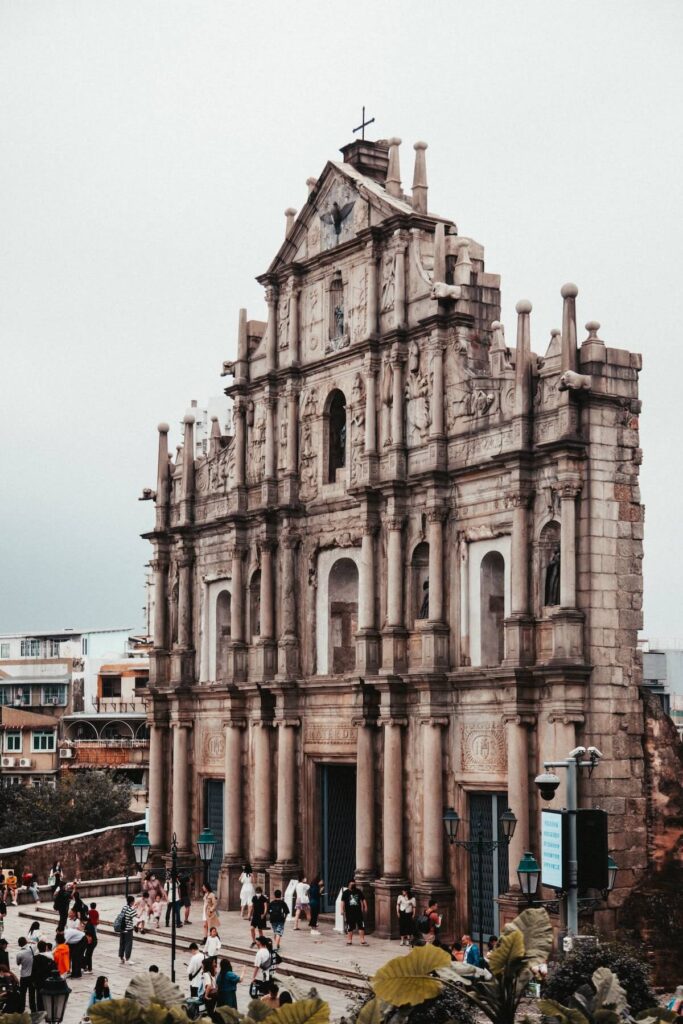
Located about 50 miles from Hong Kong, the city of Macau is tiny by Chinese standards: only about 680,000 people live there.
Macau was a Portuguese trading post, then under direct Portuguese rule, between 1557 and 1999. As a result, the archipelago developed a distinctive Sino-Portuguese culture and spoke the language of the western settlers.
Today, just 2.3% of Macau residents can speak Portuguese, yet it remains one of the city’s official languages alongside Chinese.
4. None of the Portuguese-speaking countries border one another.
While this may seem odd at first sight, there’s a simple explanation behind it. In the 16th century, as Portugal rose to the status of naval superpower, it started establishing trading posts all around the globe.
Some of these areas, like Brazil, were soon turned into straight-up colonies. But in Africa, for instance, many of these territories remained underdeveloped and sparsely populated for centuries.
When Portugal decided to expand inward in the late 19th century, large swaths of Africa were being claimed by countries like Britain, France, and Belgium, which in the meantime had become a lot more powerful.
Portuguese language facts: the history
5. Latin is the main ancestor of Portuguese.

The seed of Portuguese came about from the contact of the Lusitanian language, spoken in northern Portugal during pre-Roman times, and the vulgar Latin that soldiers, merchants, and settlers used.
This archaic language was also influenced by the languages of the Germanic tribes that occupied the Iberian Peninsula following the fall of Rome, then by that of the Arabs, who ruled the region for almost 800 years starting in 711.
6. French was decisive as well.
Thanks to the full-on obsession the Portuguese and Brazilians had with the French from the Age of Enlightenment through the best part of the 20th century, we use words like abajur for lamp (from abat-jour), batom for lipstick (from bâton), and greve for strike (from grève).
7. And indigenous languages gave it the flair it was missing.
This influence is naturally stronger in Brazil: we call a pineapple an abacaxi, whereas the Portuguese call it an ananás. A fern is a samambaia here and a feto on the other side of the pond.
Yet in a handful of cases, indigenous words made it to Portuguese shores: an alligator is a jacaré, and popcorn is pipoca in both countries.
8. The first written source in Portuguese dates back to 1214.
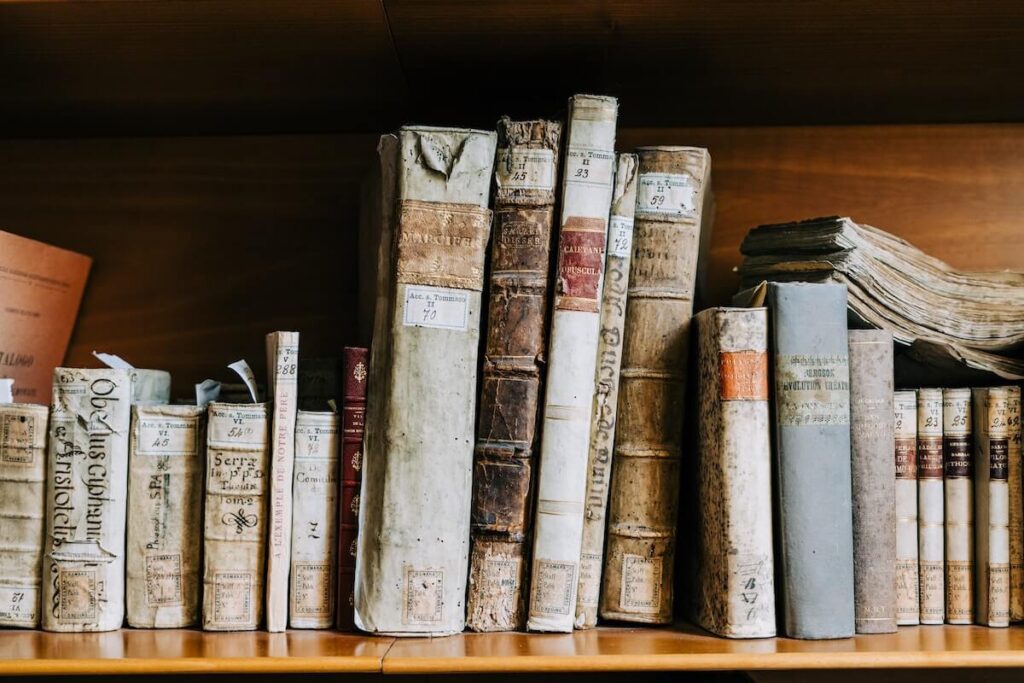
The language of the document, the will of King Afonso II of Portugal, is actually still considered the medieval Galician-Portuguese. It is, however, pretty similar to modern Portuguese, as you can see in the following excerpt:
Original text: “Eu rei don Afonso pela gracia de Deus rei de Portugal. seendo sano e saluo temete o dia de mia morte a saude de mia alma. e a proe de mia molier …”
Modern Portuguese: “Eu, rei Dom Afonso, pela graça de Deus, rei de Portugal, sendo são e salvo, temente o dia de minha morte, a saúde de minha alma e a prol de minha mulher …”
9. But the earliest grammar was only published in 1536.
It was published in Lisbon and written by Fernão de Oliveira, a friar and grammarian who worked at the University of Coimbra. Founded in 1290, Coimbra is one of the oldest higher-learning institutions in the West.
10. Portuguese lost many consonants when it derived words from Latin.
That usually applies to L and N. It’s a particularly striking phenomenon when you compare Portuguese to other major Romance languages:
| Portuguese | French | Italian | Spanish |
|---|---|---|---|
| fio (thread) | fil | filo | filo / hilo |
| freio (brake) | frein | freno | freno |
| lã (wool) | laine | lana | lana |
| lua (moon) | lune | luna | luna |
| pessoa (person) | personne | persona | persona |
| veia (vein) | veine | vena | vena |
| véu (veil) | voile | velo | velo |
Portuguese language facts: the structure of the language
11. The gap between oral and written Portuguese is often astonishing.

The issue isn’t even about style and register, which is common in basically every language. Overall, though, you won’t pronounce a Portuguese word the way you’d expect to.
Take tomate, which in theory should be pronounced just as it is in Spanish: /toh-mah-tay/. Yet while in Brazil we normally say /toh-mah-chee/ in Portugal you’ll hear something like /t’mah’t/.
12. There’s a way of knowing the stress of any Portuguese word.
The set of rules is intricate, but it makes perfect sense. Word stress can only fall on the last, next to last, and third to last syllables in Portuguese.
Words with the accent on the third last syllables all require a diacritic, as in helicóptero (“helicopter”), lâmpada (“lightbulb”), and médico (“doctor”).
Between the other two types, officially termed oxytones and paroxytones, they’ll either be assigned a diacritic or have the stress fall on the other syllable, as in jovem (“young”) vs. armazém (“warehouse”), lápis (“pencil”) vs. cassis (“blackcurrant”), and faca (“knife”) vs. sofá (“couch”).
Also read: Portuguese Accent Marks Explained: A Guide to Portuguese Pronunciation
13. We just love the diminutive case.
A cerveja (“beer”) is often a cervejinha, a barbecue becomes a churrasquinho rather than a churrasco, and even Brazil’s national cocktail is a caipirinha, not a caipira (which literally means “bumkpin”).
Not all diminutives are affectionate, however: a doutorzinho may simply be a short doctor, yet it normally refers to an incompetent one.
14. On the other hand, the augmentative case can be quite tricky.

In theory, words are given the suffixes -ão/-ona, depending on their gender, for the augmentative case, and -inho/-inha for the diminutive.
But there are countless exceptions: the augmentative of fogo (“fire”) is fogaréu, that of pedra (“rock”) is pedregulho, and rico (“rich”) turns into ricaço.
Most famously, mulher (“woman”), though a feminine word, becomes masculine in the augmentative case: a large or otherwise woman is um mulherão.
15. Portuguese has a unique pronoun placement: the middle of a verb.
So-called mesóclise can be used exclusively with future and conditional tenses and is typically limited to a very formal register.
Still, “we’ll hand her the award” can be translated as entregar-lhe-emos o prêmio, whereas “they would send me a letter” may be rendered as enviar-me-iam uma carta.
Facts about the Portuguese language and its words
16. There are between half a million and 800,000 words in Portuguese.
This possibly means Portuguese is one of the richest languages on the planet, vocabulary-wise. That said, the majority of speakers know only between 1,000 and 5,000 of that impressive sum.
17. The longest Portuguese word has 46 letters.
That would be pneumoultramicroscopicossilicovulcanoconiótico, which names a lung disease caused by inhaling volcanic ash.
Outside of the scientific realm, the longest word is anticonstitucionalissimamente, literally “extremely unconstitutionally”, at 29 letters.
18. Portuguese has its fair share of untranslatable words.

I listed a bunch of those in the article about beautiful Portuguese words and sayings. Some, such as cafuné (a gentle caress on the head) and dengo (which can be a pet name, a synonym for “caress”, or alternatively means harmless emotional blackmail), are of African origin.
The most famous of them, however, is saudade, an all-Portuguese word that describes a feeling related to nostalgia but far stronger, almost like a poetic yearning.
19. English words you use every day derive from Portuguese.
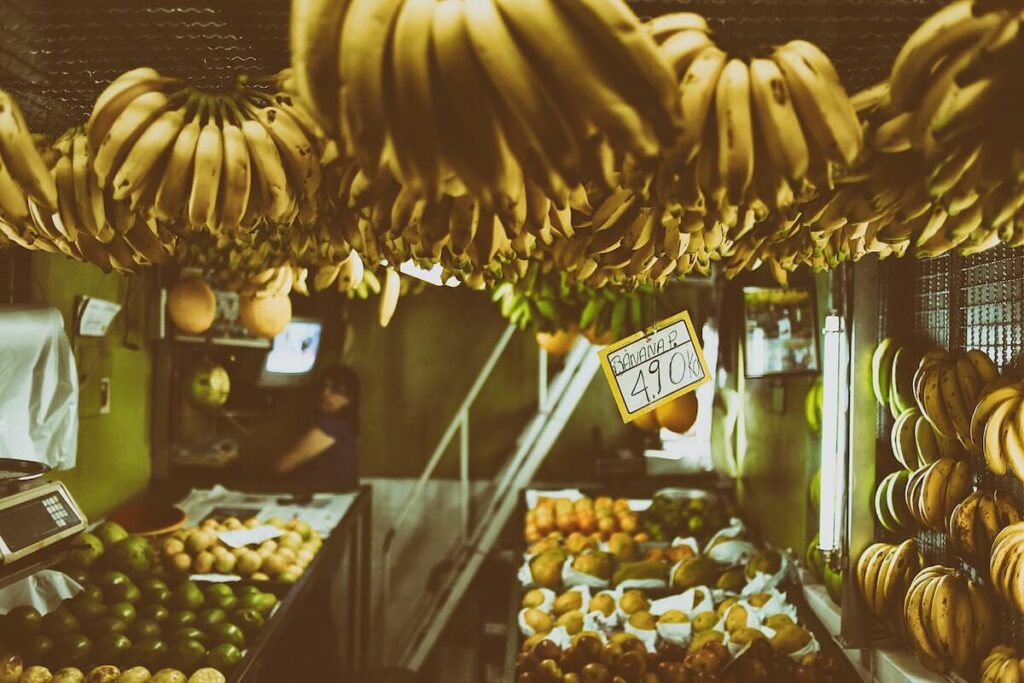
I’m not really talking about açaí, caipirinha, capoeira, and samba. Rather, I’m referring to words that have been absorbed into English since forever, such as:
- albino (albino)
- banana (banana)
- buffalo (búfalo)
- cashew (caju)
- coconut (coco)
- embarrass (embaraçar)
- launch (lancha)
- Mandarin (mandarim)
- mango (manga)
- molasses (melaço)
- monsoon (monção)
- mosquito (mosquito)
- potato (batata)
- zebra (zebra)
- zombie (zumbi)
Other interesting facts about the Portuguese language
20. Several regulating bodies oversee the “correct” Portuguese usage.
These sorts of organizations are unknown to the English-speaking world, but many countries have created councils that act as the official authority on the national language.
The majority has been modeled after the Italian Accademia della Crusca and the French Academy. For Portuguese, the most prestigious bodies are the Lisbon Academy of Sciences and the Brazilian Academy of Letters.
21. There’s an official day honoring the Portuguese language.
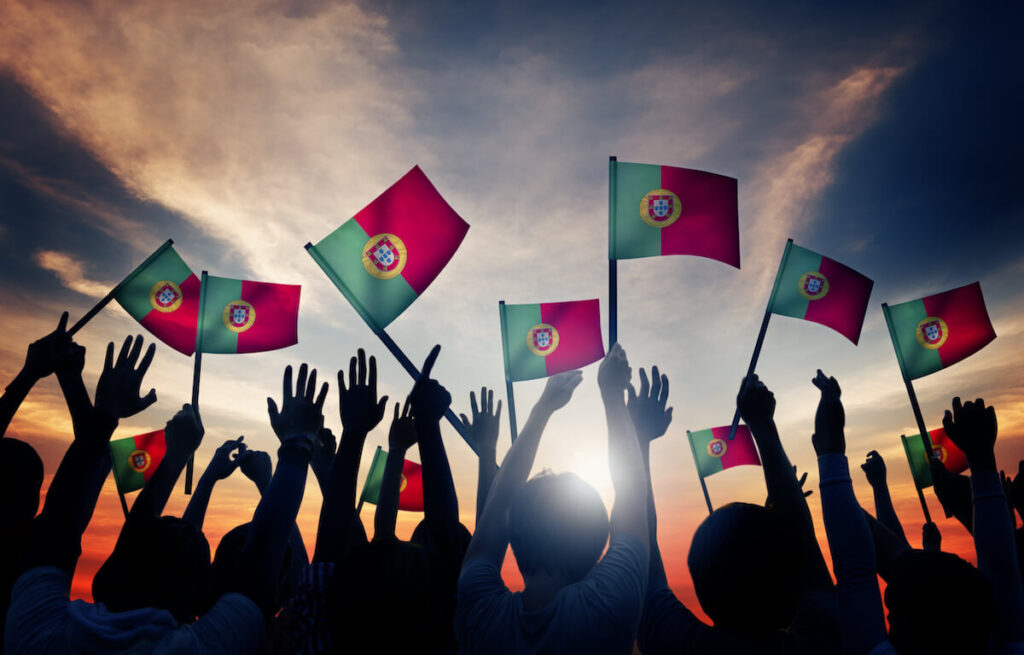
May 5 was chosen as the World Portuguese Language Day to mark the first meeting of the ministers of culture of the Community of Portuguese Language Countries, which took place in 2009.
Ten years later, UNESCO added the date to its official calendar, and Portuguese became the first language to be commemorated by a UN agency.
22. Portuguese is among the most influential languages on the planet.
Since Portuguese is the ninth-most spoken language on Earth and has the fifth-largest number of native speakers, it’s consistently ranked among the top 10 most influential languages. Thanks to Brazil, it’s the main language of the Southern Hemisphere as well.
23. It’s one of the easiest to learn for English speakers too.
According to the Foreign Service Institute of the State Department, you should expect to put in between 575 and 600 class hours to achieve fluency in Portuguese, alongside Romance languages like Spanish, French, and Italian.
That’s considerably less than German (750 hours), Indonesian (900 hours), Greek and Russian (1,100 hours), and especially Arabic, Chinese, Japanese, and Korean, which require an astounding 2,200 study hours.
Also read: 9 Easiest Languages to Learn for English Speakers
24. A few of your favorite celebrities speak Portuguese.

You have those whose descent gave them a head start: Nelly Furtado’s parents are Portuguese, while Hailey Bieber’s and Alfie Enoch’s mothers are Brazilian. Hailey claims she can just get by, but Enoch is fluent and even starred in a Brazilian movie last year.
That said, you also have celebrities who learned Portuguese because they felt like it. Shakira and Ricky Martin wanted to cater to their huge fanbase in Brazil, whereas Vincent Cassel lived in Rio between 2013 and 2018.
25. If you think Spanish is the twin of Portuguese, wait till you hear Galician.
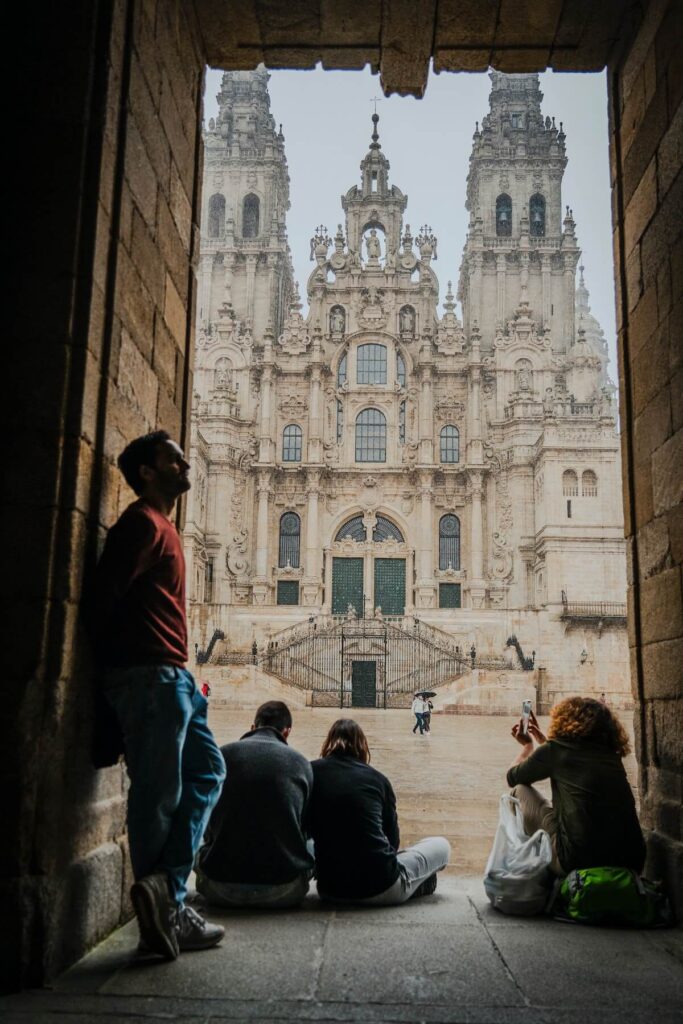
Galicia is the region of Spain that looks like Portugal’s hat on the map. Though Galician and Portuguese had split off by the early 1400s, they’d been a single language for over 500 years.
If you don’t speak Portuguese, you’ll struggle to understand how similar the two languages sound. So check out the table below and compare how several words are spelled:
| Galician word | Portuguese translation | Spanish translation |
|---|---|---|
| adeus (goodbye) | adeus | adiós |
| ferro (iron) | ferro | hierro |
| home (man) | homem | hombre |
| onte (yesterday) | ontem | ayer |
| outubro (October) | outubro | octubre |
| pai (father) | pai | padre |
| pobo (people) | povo | pueblo |
| rúa (street) | rua | called |
Also read: 10 Key Differences Between Portuguese and Spanish
Final thoughts
I can’t actually leave my bias aside; still, I do think Portuguese is one of the most stunning and interesting (if underrated) languages on Earth.
Its one-of-a-kind phonetics, amazing geographic diversity, and the vibrant cultures it is associated with, not to mention the fantastic opportunities you’ll be met with, make it hands down one of the best languages to learn for the future.