Some language aficionados will go out of their way to master the hardest possible languages. But if you’re like me, you’ll want to use your first language as a springboard to fluency in other languages. With that in mind, today I’ll rank the 10 easiest languages to learn for Portuguese speakers.

You probably won’t be surprised to learn Spanish and Italian are on the list, yet I bet you’re not expecting to see a few entries that don’t share a common origin with Portuguese, such as Esperanto and Dutch.
Portuguese as a Romance language
Spoken by about 300 million people across the globe between native and foreign speakers, Portuguese is one of the world’s most important languages.
These are not the only fun facts about it, though; Portuguese has official status in nine countries on four continents and is spoken even in China.
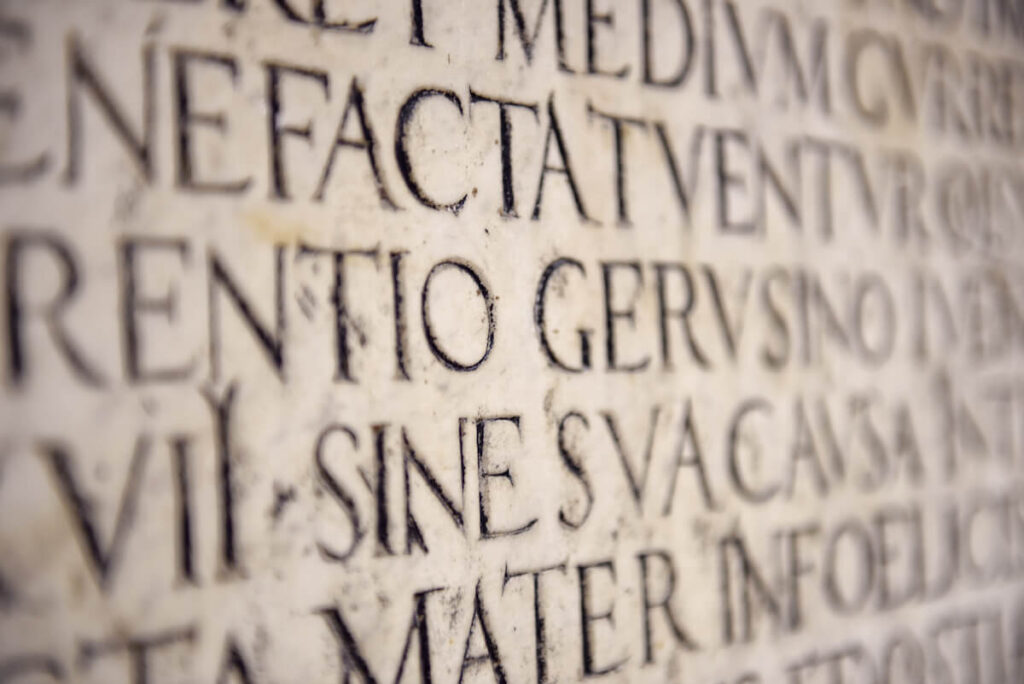
Like most of the languages spoken in southwestern Europe, Portuguese is a Romance language and descends from Vulgar Latin, which was the unofficial common language of the Roman Empire — Classical Latin, which was used in government, academia, and literature, was its official counterpart.
That means Portuguese is closely related to Spanish, French, Italian, Romanian, and other minority languages like Catalan and Galician.
While pronunciation and vocabulary vary widely between each of them, they share the same basic sentence structure and most grammar concepts.
It’s no wonder, then, that those are the six easiest languages for Portuguese speakers to learn, as you’ll see below.
How difficult can a language be?

I really don’t want to sound wishy-washy. However, how long it will take you to learn Portuguese or any language will depend on several factors, such as your motivation, the method you pick, and even your age.
For instance, children and teenagers have an easier time mastering a foreign language thanks to their brain, which is still making the connections that are needed for them to learn their native language in the first place.
Having said that, all languages are equal but some are more equal than others. The Foreign Service Institute, which is the branch of the U.S. State Department charged with preparing personnel to serve abroad, has categorized all the major world languages into four groups.
The classification doesn’t perfectly answer our question, given it estimates how long it should take an English speaker to achieve fluency in each language.
The FSI’s framework will have to do, though. To begin with, if you’re reading this you already speak English. Second, there are no reliable data on the same issue regarding Portuguese speakers specifically.
Check out an abridged version of the grouping:
- Group I (600 to 750 class hours): Danish, Dutch, French (750 hours), Italian, Norwegian, Portuguese, Romanian, Spanish, Swedish
- Group II (900 class hours): German, Indonesian, Malay, Swahili
- Group III (1,110 class hours): Farsi, Greek, Hebrew, Hindi, Polish, Russian, Tagalog, Thai, Turkish, Vietnamese
- Group IV (2,200 class hours): Arabic, Chinese, Japanese, Korean
You may have noticed that the farther you move from the UK and northwest Europe, where Anglo-Saxon languages like English, Dutch, and Swedish were born, the harder languages become.
Top easiest languages to learn for Portuguese speakers
1. Galician

I bet the top entry on our list comes as a surprise to many of you, given it’s not widely known outside the Iberian Peninsula (where Portugal and Spain are located).
The region is home to several minority languages that have bravely managed to survive despite the government’s historic fight to ban them and impose the national language on the communities that speak them.
That’s the case, for example, with Mirandese in Portugal and Galician, Basque, and Catalan in Spain. Galician specifically is spoken in Galicia, the region of northwest Spain that juts out above Portugal on the map.
It is so close to Portuguese that, up until the late 14th and early 15th centuries, Galician-Portuguese made up a single language. Check out how astonishingly similar the two languages are:
- Galician: O galego moderno forma parte de unha familia de linguas románicas que inclúen o portugués.
- Portuguese: O galego moderno faz parte de uma família de línguas românicas que incluem o português.
- English: Modern Galician is part of a family of Romance languages that include Portuguese.
2. Spanish

While you can easily spot key differences between Spanish and Portuguese, they’re among the most similar western languages.
In fact, thousands of words are either spelled exactly the same way, such as casa (“house”), flor (“flower”), mar (“sea”), and tarde (“afternoon” or “late”), or with small variations, e.g. mujer vs. mulher (“woman”), luna vs. lua (“moon”), and tierra vs. terra (“land”).
Since the grammar of the two languages is also closely related, Spanish is hands down the easiest language to learn for Portuguese speakers among the most popular languages on Earth.
Also read: Learn Spanish: 50+ Best Apps, Books, Podcasts & Online Courses
3. Italian

Italian is the closest language to Latin: a mere 12% of its vocabulary differs from the Roman vernacular. Portuguese, on the other hand, diverges from Latin approximately 31% of the time.
Portuguese speakers will enjoy the fact that Italian spelling almost flawlessly mirrors pronunciation and how straightforward grammar is in general (though the compound past tenses can be a hassle).
And like English, Portuguese imported several words from Italian, such as diva, fiasco, and lava, just to mention a few.
Find the best Italian learning resources here.
4. French

Both French and Portuguese are notorious for their ubiquitous nasal sounds and for the guttural R (which is pronounced at the back of the throat).
On a personal note, French seemed to me the hardest Romance language among the ones I studied owing to its tricky pronunciation.
Having said that, it had a huge impact on Portuguese, which incorporated a bunch of words of French origin like beterraba (after betterave, or beet), crocante (from croquant, i.e. crunchy), and greve (grève in French, meaning strike).
Here are the best French learning resources, if you’re also studying French.
5. Catalan

With its 10 million speakers (40% of which are native), Catalan is one of the most important minority languages in Western Europe.
It is spoken in Catalonia (the region of Barcelona), the neighboring Valencian Community, the Balearic Islands off the Catalonian Coast, Andorra (a microstate nestled between Spain and France), and, oddly, Alghero, a town in northwest Sardinia (Italy’s second-largest island after Sicily).
When looking up what Catalan sounded like — I had to since it’s nearly absent from the mainstream —, I managed to understand roughly 70% of what a former President of Catalonia said in a short speech.
Granted, his delivery was slow and clear, plus many of the words he used made sense to me solely because they sounded like words from other Romance languages I’m familiar with. I figure other Portuguese speakers may have a harder time with Catalan.
6. Romanian

The single Romance language to make its way into Eastern Europe is probably one of the oldest: an ancient form of it emerged between the 6th and 8th centuries. But only in the early 1500s would it take shape in its modern setting.
Apart from Romania, Romanian is spoken in Moldova, a landlocked state between Romania and Ukraine, as well as in adjacent countries like Bulgaria and Hungary by minority communities.
The language that gave us “Dragostea Din Tei” 20 years ago was influenced by neighboring Slavic languages, which account for 10% of its vocabulary.
Still, Romanian grammar has kept its Latin pedigree, so much so that the nominative, genitive, and vocative cases of Latin have survived in the language.
Unsurprisingly, Romanian shares over 70% of its vocabulary with each major Romance language, which makes it easy to master for Portuguese speakers.
7. English
While English isn’t an obvious addition to our list — it’s a West Germanic, not a Romance language, after all —, a few reasons justify its inclusion here.
First, the Norman invasion of England in 1066 radically changed the English language and marked the transition from Old to Middle English.
That’s when countless words of Latin origin entered the language, lots of which have equivalents in Portuguese, such as courageous (corajoso), forest (floresta), mansion (mansão), pork (porco), and vision (visão).
Then, over the centuries, it would borrow many more words from French to the point that Latin and French combined account for the origin of 50 to 60% of modern English words.
Finally, the fact that English has been predominant in global culture for well over a century, from pop music to cinema, makes it easy to learn both for Portuguese speakers and basically anyone who doesn’t live under a rock.
Read more: Learn English: 60+ Best Apps, Books, Podcasts & Online Courses
8. Esperanto

As the only constructed language on our list, Esperanto is the odd one out here.
The main artificial language on the planet (as Klingon has yet to catch on) was created by Polish physician L. L. Zamenhof between the 1870s and 1880s, in an attempt to lay out a universal language that would help abolish all wars.
As Britain was followed by the US as the no. 1 superpower on the international stage, English eventually became the world’s lingua franca in a more organic way. As for wars… Well, never mind.
Despite all but sinking into obscurity, Esperanto is not currently threatened thanks to a community of about 100,000 devoted speakers on all continents.
For Portuguese speakers, Esperanto is relatively easy to master because it derives about 75% of its vocabulary from Romance languages as a whole, and the rest chiefly from Germanic languages like English and Dutch.
9. Dutch
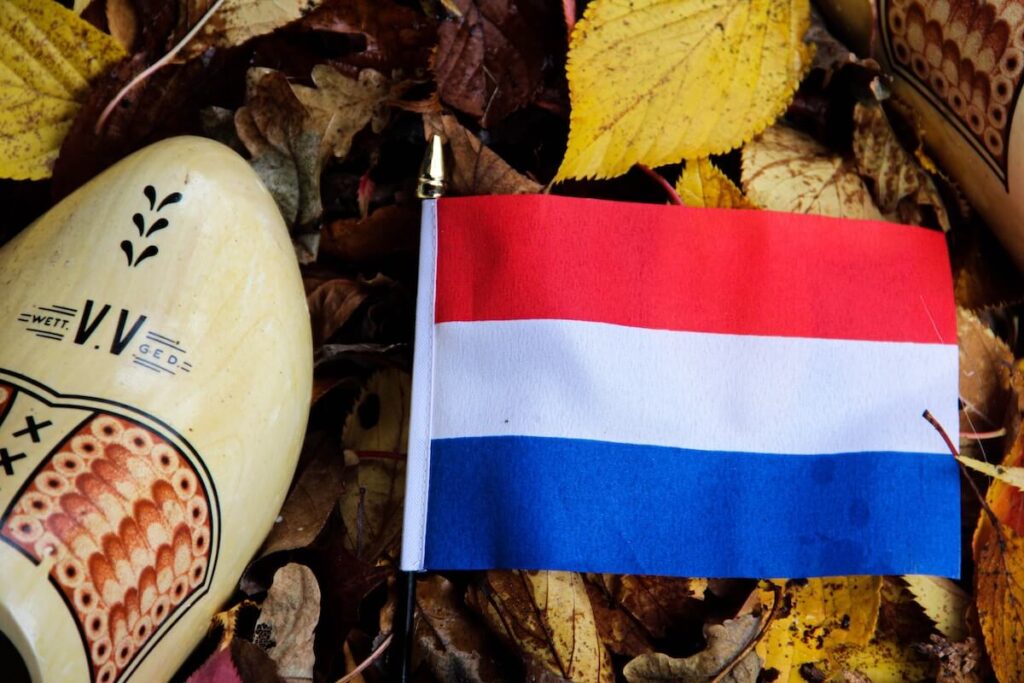
Dutch ranks low among the easiest languages for Portuguese speakers to learn because the two aren’t really related. Still, Dutch stands midway between English and German in a number of aspects, so for Portuguese speakers who also speak English mastering Dutch may not be too much of an uphill battle.
Since it has virtually abandoned the subjunctive mood and its case system (like English and unlike German), Dutch has a mildly simple grammar. The prevalent subject-object-verb word order of its sentences, in turn, might prove to be challenging, as Portuguese uses subject-verb-object instead.
Besides the Netherlands and northern Belgium, Dutch is spoken in Suriname, which borders Brazil to the south. However, given it’s a tiny nation that is kept isolated from its big neighbor by the Amazon, Suriname doesn’t exert any influence at all over Brazil’s culture or language.
Also read: 16 Best Apps to Learn Dutch By Yourself Fast and Effectively
10. German
Infamous for its obscenely long words, three genders, and four grammatical cases, the most widely spoken in the EU can be tough even for native English speakers, whose language has the same origin as German.
Yet knowing English does give learners a head start when studying German, which is why I felt like I should include it here in the first place.
After all, I’d run out of not-too-obscure Romance languages, plus German has a considerably larger presence in mainstream culture (which is always an advantage when learning a foreign language).
Final thoughts

Whether you’re a native speaker like me or have managed to learn Portuguese as a foreign language, you can use it to your advantage if you can’t wait to master a third or fourth language.
If that’s the case, you’ll have an easier time becoming fluent in languages like Spanish, French, and Italian, which like Portuguese all derive from Latin.
On the other hand, English and related languages like Dutch belong in a second tier that, though not as easy as Portuguese’s sister languages, should require far less time to master than, say, Russian, Greek, Japanese, or Arabic.
The easiest languages to learn for Portuguese speakers – Pin it!