
If you’ve ever wondered “What are Romance languages, after all?” throughout your foreign-language studies, get ready to find out a bunch of intriguing facts and delightful surprises about this language family.
So-called Romance or Latin languages, with their rich histories and captivating features, have won the hearts of millions of language learners around the globe.

From the ancient roots of Vulgar Latin to the modern-day importance of Spanish and French, I’ll uncover the secrets, quirks, and wonders that make these languages so unique and fascinating.
Whether you’re a language aficionado or simply curious about the linguistic complexities of our world, I’m sure you’ll learn a lot from this post.
What are Romance languages?

Stemming from the ancient roots of Latin, Romance languages have evolved and spread across the globe, leaving their mark on literature, art, and everyday communication.
Romance languages, including Spanish, French, Italian, Portuguese, and Romanian, trace their ancestry back to the Roman Empire. As Latin transformed through the ages, it gave birth to what we now recognize as Romance languages.
These languages hold immense cultural importance, acting as vehicles for literature, poetry, and music that have stirred emotions for centuries—just imagine the timeless verses of Dante in Italian or the unforgettable lyrics of French chanson.
Today, almost one billion people worldwide speak Romance languages, which makes them an incredibly influential language family. No wonder: these languages evoke a sense of charm and allure that captures the hearts of learners and native speakers alike.
While each Romance language has its own unique characteristics and regional variations, they also share similarities that allow for mutual intelligibility to varying degrees.
For example, if you speak Spanish, you might be able to understand some written Portuguese or have a basic conversation with an Italian speaker. It’s like having a secret linguistic passport to different parts of the world!
Fun facts about Romance languages
1. Vulgar Latin is the real ancestor of modern Romance languages.

While classical Latin was the formal and literary language of the Roman Empire, everyday conversations among the people took place in Vulgar Latin.
After the fall of Rome and throughout the Middle Ages (i.e. between the 5th and 15th centuries), regional variations and influences led to the emergence of distinct Romance languages such as Spanish, French, Italian, Portuguese, and Romanian.
These languages developed organically from Vulgar Latin, with each one adopting its own unique grammar, vocabulary, and pronunciation.
2. Romance languages may be romantic, but that’s not why they’re called that.

The term “romance” actually comes from the Latin word Romanicus, which means “in the Roman manner.” Since these languages evolved from Vulgar Latin, they came to be known as Romance languages.
So, next time you hear someone mention the Romance languages, remember that it’s all about their connection to the Roman heritage and the Roman way of speaking. Having said that, I’m sure you can use this piece of information to break the ice with your Romance-speaking crush!
3. Mutual intelligibility varies between Romance languages.

Mutual intelligibility among Romance languages is a bit of a mixed bag. Some languages in the Romance family, like Spanish and Portuguese, share a relatively high degree of mutual intelligibility. If you speak one, you can understand the other with some effort.
On the other hand, French and Italian can be a bit more challenging to understand if you’re not familiar with them. Although there are similarities in vocabulary and grammar, the pronunciation and sentence structures can differ significantly.
4. Almost a billion people speak Romance languages.

Romance languages have quite a global reach, spoken worldwide by nearly one billion people, between native and foreign speakers.
They span all inhabited continents, with native speakers spread out across countries like East Timor, Cuba, Switzerland, and the Republic of Congo, just to name a few.
On top of that, thanks to their historical influence, many people around the world learn and speak Romance languages as a second language.
So whether you’re strolling through the streets of Buenos Aires or enjoying the beautiful landscapes of the Italian countryside, you’re likely to encounter the sweet sound of Romance languages echoing in your ears.
5. Is English a Romance language? No—but its words are.
Here’s a surprising fact: English, although not a Romance language itself, has a whopping 60% of its words with Latin origins. When the Roman Empire spread its influence across Europe, Latin seeped into the languages of the conquered regions.
Then, with the Norman conquest of England in 1066, Old English incorporated even more words of Latin origins through Old French, eventually morphing into Middle (or medieval) English.
Over time, these Latin-derived words made their way into English through various channels. So, when you say “audio,” “dictionary,” or “solar,” you’re actually using Latin roots.
6. All the major Romance languages are standardized and safeguarded by special entities.

Unlike English, which doesn’t have a central governing body overseeing its language rules, the major Romance languages have dedicated bodies that standardize and protect their heritage.
Take Italian, for example. Since its founding in 1583, the Accademia della Crusca has been serving as a sort of language police, preserving and promoting the purity of Italian.
Likewise, the Académie Française in France fulfills a similar role for the French language. These institutions play a crucial role in setting grammar, vocabulary, and usage guidelines, ensuring consistency across different regions.
7. That’s why most of them are marked by so-called diglossia.
Diglossia refers to the coexistence of two forms of the same language: a formal, standardized version used in official settings like writing or public speeches, and a more informal, everyday version used in casual conversations.
This linguistic duality, with its stiff formal register and relaxed informal register, adds a unique flavor to Romance languages, and at least in part has been made possible precisely by the conservative role language governing bodies play in the Romance-speaking world.
8. Romance languages were and still are highly influential.
Back in the day, when the Roman Empire was strutting its stuff, Latin spread its linguistic roots far and wide. Fast forward to today, and these languages continue to wield influence.
From the enchanting melodies of Italian opera to the passionate tango lyrics of Spanish, Romance languages have infused art, literature, music, and even everyday conversations with their unmistakable charm.
9. Romanian is the easternmost Romance language.
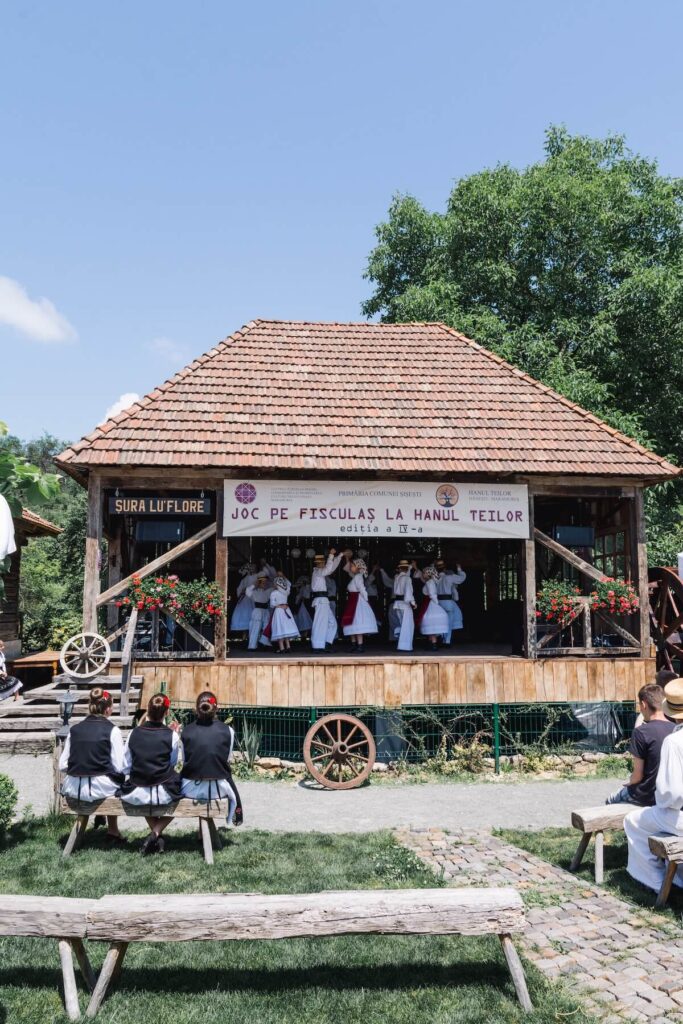
When it comes to Romance languages, Romanian stands proudly as the easternmost sibling. Nestled in the heart of Eastern Europe, Romania finds itself surrounded by a sea of Slavic languages.
This unique position has had a fascinating impact on Romanian, infusing it with some Slavic influences in vocabulary and phonetics. While its Romance roots remain strong, you might catch a glimpse of the Slavic flair as you explore the language.
10. Spanish is the second-most spoken language on Earth.

Spanish, the language of fiestas and flamenco, has claimed the silver medal as the second-most spoken language on the planet. With almost 5000 million native speakers and millions more who have fallen under its spell as a second language, Spanish conquers hearts and borders alike.
It’s not just Spain and its Latin American amigos that have adopted this linguistic gem, though; Spanish spreads its warm embrace to the Philippines, Equatorial Guinea in Africa, and even parts of the United States.
11. Before English, French was the West’s first international language.

Long before English took the crown, the language of love and savoir-faire reigned as the West’s first international language, spreading its influence far and wide.
From the royal courts of Europe to the salons of intellectual discourse, French was the language of diplomacy, culture, and sophistication.
Today, it still holds a prestigious position as one of the languages of diplomacy, alongside English. The words like “cuisine,” “lingerie” and “café” have effortlessly woven their way into our vocabulary, a testament to French’s enduring impact.
12. Romance languages have given birth to a few Creole languages.

Did you know that Romance languages have birthed fascinating Creole languages? In case you don’t know, Creole languages typically develop in situations where populations with diverse linguistic backgrounds come together and need to communicate.
Take Papiamento, spoken in the Caribbean islands of Aruba, Bonaire, and Curaçao. It emerged from a blend of Spanish, Portuguese, and Dutch, with a sprinkle of African and Arawak influences.
Then there’s Haitian Creole, a vibrant language spoken in Haiti, born from French and African languages during the colonial era.
13. There are some Romance languages you’ve never heard of.
Beyond the well-known Romance languages, there are several lesser-known ones waiting to be discovered. For instance, have you heard of Asturian, spoken in the northern Spanish region of Asturias, or the enchanting Sardinian, native to the Italian island of Sardinia?
Then you have Aragonese, found in parts of northeastern Spain, and the lyrical Romansh, spoken in Switzerland’s picturesque Grisons region. And don’t forget about Friulian, spoken in northeastern Italy. These hidden gems offer unique insights into local cultures and histories.
14. Some of the world’s most prestigious writers speak Romance languages.
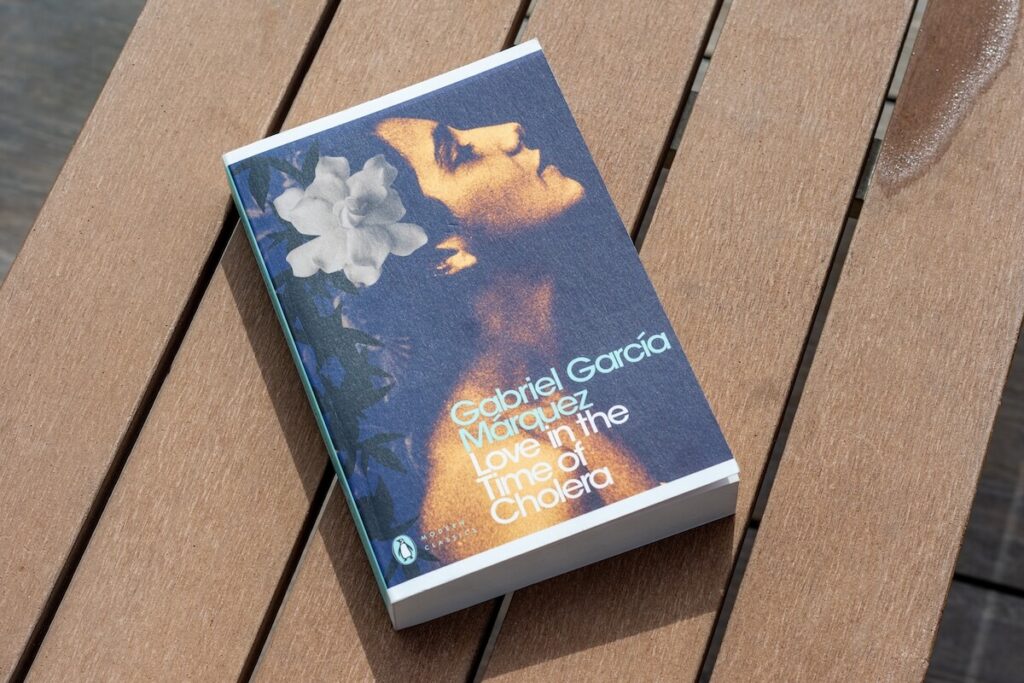
Some of the most esteemed writers in the world, who have enchanted readers with their captivating works and received the prestigious Nobel Prize in Literature, hail from Romance language backgrounds.
Gabriel García Márquez, the Colombian master of magical realism, and his evocative Spanish prose earned him this honor. So did the illustrious Portuguese writer José Saramago, known for his thought-provoking narratives.
Let’s not forget the brilliant Italian playwright and poet Dario Fo, celebrated for his satirical and politically-charged works. These remarkable authors exemplify the depth and beauty of Romance language literature, captivating audiences across the globe with their literary prowess.
15. The gender cases in Romance languages may give you a hard time.

One aspect of Romance languages that can give learners a bit of a headache is dealing with gender cases. Unlike English, where nouns are largely gender-neutral, Romance languages assign genders to nouns, which affects the forms of articles, adjectives, and pronouns associated with them.
For example, in Spanish, you have el libro (“the book”, masculine) and la mesa (“the table”, feminine), each requiring specific agreement with accompanying words.
It can be a tad perplexing at first to remember the gender of every noun and use the appropriate forms, but with practice and exposure, it becomes more natural.
16. Pronunciation can be challenging too.

When it comes to learning Romance languages, pronunciation can be quite tricky. Each language has its own distinct sounds and phonetic rules that differ considerably from English.
For instance, in French, the nasal vowels in words like un and on require a unique nasal airflow. Italian has a rich variety of vowel sounds, including open and closed variants. And Spanish features the infamous rolled R sounds that can be pretty hard for some learners.
Though mastering these nuances may take time, with patience and a willingness to imitate native speakers you’ll gradually refine your pronunciation and sound more natural in your chosen Romance language.
17. Yet they’re among the easiest languages to learn.
Surprisingly, despite the challenges of pronunciation and grammar, Romance languages are often considered the easiest for English speakers to learn. That’s not me saying—it’s the Foreign Service Institute of the US Department of State.
This is due to several factors. First off, many English words derive from Latin, as we’ve seen above. This makes building vocabulary a bit easier. Secondly, Romance languages generally have simpler grammar structures compared to other language families (e.g. East Asian ones).
Then, the availability of learning resources and language courses for Romance languages is abundant. Finally, the widespread influence of Romance languages in popular culture and media allows for more exposure and immersion opportunities.
Wrap-up

Hopefully, by now, rather than simply giving a well-rounded reply to the question “What are Romance languages?”, you have a lot more to say about this beautiful language family.
These languages have shaped the cultures, literature, and communication of the West. Their unique features and challenges, such as gender cases and pronunciation, add depth to the learning journey and make mastering these languages all the more rewarding.
So, whether you’re drawn to the passionate rhythms of Italian, the lyricism of Portuguese, or the elegance of French, embrace the thrilling road learning a Romance language always turns out to be.