
If you’ve already mastered Spanish as a second language, you might be in a position to consider learning a third language. But what’s the easiest language to learn for Spanish speakers like you?
The truth is that once you’ve learned one foreign language, you’ll already be a step ahead when it comes to learning a third. You’ll know all of the terminologies for one and you’ll have already mastered the skills needed to break down reading texts and understand listening passages. All that you need is the vocabulary and grammar.

Ok, so that’s still a lot! To make things easier, lots of people choose to learn a similar language. This article is aimed at anyone who has already learned Spanish and wants to learn another language as easily as possible.
1. Portuguese

Portuguese is by far the closest language to Spanish on our list. The languages both belong to the same linguistic group.
Spain and Portugal have a long history of political relations, cultural exchange, and trade. They were both once under the rule of the Roman Empire. At this time, Vulgar Latin was widely spoken. It was the commonly spoken language, while Classic Latin was the written language of the time.
Both Portuguese and Spanish developed from Vulgar Latin, which means that there are many similarities between the two languages.
The main differences between Spanish and Portuguese lie in their pronunciation and vocabulary. Spain was heavily influenced by the Moors and many Arabic words have crept into the language. The way Spanish constructs any new words has also been influenced by Arabic.
Portuguese, however, was less influenced by the Arab world and so the language is much closer to the original Vulgar Latin from which it derived.
The good news is that you’ll find plenty of people out there who speak Portuguese to help you learn. Resources are plentiful too! Remember, there is a difference between Brazilian Portuguese and the Portuguese spoken in Portugal, but this is only like the differences between British English and American English.
Also read: 10 Easiest Languages to Learn for Portuguese Speakers
2. Galician

If you’ve learnt Spanish already, then it’s highly likely you’ve heard all about Spain’s autonomous communities and their different languages and cultures. Galician is an important language in Spain and there are around 3 million speakers.
Though it’s a little tricky to learn in terms of the availability of resources and speakers, it’s very easy if you already know Spanish.
Many people who speak Galician say that if you already know Spanish, you know 80% of Galician already. There is also a large overlap with Portuguese too.
It’s important to remember, however, that Galician isn’t a dialect. It is a language in its own right.
3. Italian

Another Romance language derived from Vulgar Latin is Italian. If you already know Spanish, you’ll find learning Italian a lot easier than other people. Sure, the accent is different and there are some differences in grammar but otherwise, it’s pretty straightforward.
What’s more, if you’ve battled with ser and estar in Spanish, it will be a familiar story when you come across essere and stare (though I think it’s easy in Italian!).
The main differences between the two include the use of double letters and the lack of words containing the letter ‘J’. The grammar of Italian is very similar though, so you’ll feel on common ground there.
4. French

They share a border so it’s no surprise that you’ll find commonalities between French and Spanish. As another Romance language descended from Vulgar Latin, you’ll find some similar grammar rules and verbs.
The biggest problem you’ll have if you already know Spanish is the pronunciation differences. Unlike Spanish, French is not a phonetic language, which makes learning it trickier. There are also a lot more sounds, including guttural and nasal sounds, which are new for many Spanish speakers.
One confusing thing for many learners of French is the number of silent letters you come across. Sometimes you say the ‘s’ at the end of a word (e.g., in bus, meaning ‘bus’) and others you don’t (e.g., in placards, meaning ‘wardrobes’).
All things considered, you should still find it a simple language to learn due to the common origins of the two languages.
5. Catalan

You might also see Catalan referred to as Valencian and linguists agree that these are two names for the same language.
Like Galician, Catalan is a language of an autonomous community in Spain. If you’ve ever been to Barcelona, you might have been surprised to see and hear that most locals converse in Catalan rather than Castellano (Spanish as most people know it).
Catalan does have similarities with Spanish. After all, it has the same roots. If you read Catalan as a Spanish speaker, you’ll probably be able to decipher things quite easily – especially if you know some French too.
For example, the Spanish sentence como una manzana por la mañana (I eat an apple in the morning), is jo menjo una poma al matí. In French, this is je mange une pomme le matin. As you can see, there is some crossover between both languages!
So, if you’re looking for one of the easiest languages to learn as a Spanish speaker and want something a little less popular, Catalan is the way to go.
6. Romanian

Sometimes, people want to learn a language for fun rather than for work or travel. If that’s you and you already know Spanish, it’s really interesting to learn Romanian.
Romanian is a Romance language but it’s one the least known. Rather than being influenced by other Romance languages, languages of eastern Europe like Hungarian, Slavic, German and Greek have influenced this language. There is some Italian influence too.
The grammar is a little trickier to grasp if you only know Spanish. For a start, there are five cases and three genders (masculine, feminine and neutral). Here are some similarities in vocabulary:
| English | Romanian | Spanish |
| Table | Masa | Mesa |
| House | Casa | Casa |
| Fruit | Fruct | Fruta |
| Tooth | Dinte | Diente |
7. Tagalog

Tagalog is not often the first language you think of when you’re looking to learn another language as a Spanish speaker. However, this is pretty straightforward to learn and if you’re interested in exploring languages outside of those originating in Europe, this is a good one to start with.
Tagalog is an Austronesian language, a family of languages spoken mainly in Southeast Asia. You’ll mostly hear Tagalog in the Philippines where it’s spoken by one-quarter of the population there – the Tagalog people. Alongside English, Tagalog is an official language in the country.
Due to Spanish colonialism of the past, the Philippines had three hundred years of Spanish influence. It’s believed that one-third of Tagalog words have a Spanish origin. This is a bit like England being under French rule for 300 years and why English has a lot of French vocabulary.
Here are some examples:
| English | Spanish | Tagalog |
| Education | Educación | Edukasyon |
| Knife | Cuchillo | Kutsilyo |
| Green | Verde | Berde |
| Chair | Silla | Silya |
| Spoon | Cuchara | Kutsara |
| Ship | Barco | Barko |
There are, of course, many differences between the two languages but at least with reading and listening comprehension, you’re one step ahead!
8. Dutch
The Dutch language shares some similarities with Spanish. They are both Indo-European languages that have Latin alphabets and they have similar phonetics. If you already know English, this will make things even easier as Dutch also has lots of similarities and overlap with this language.
Spain ruled the Netherlands as well as Belgium for a time between the 1500s and 1600s. However, unlike other countries that lived under colonial rule, the language hasn’t had much impact. This could be because the Spanish only ruled de facto and only for twelve years. What’s more, they were despised so it’s no wonder there was little influence!
Despite there being few similarities in the lexicon, it’s still one of the easiest languages to learn for Spanish speakers.
9. Indonesian
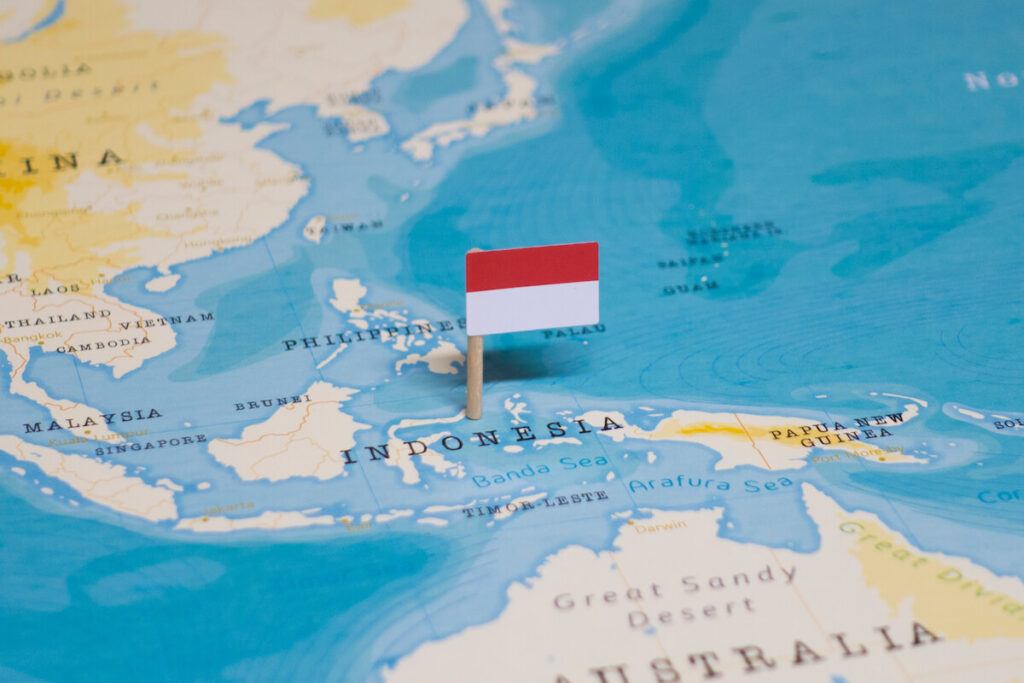
Millions of Southeast Asians speak Indonesian and so it’s a great language to know. Despite it being on the other side of the world from Spain, Indonesian is pretty easy to learn compared to other Asian languages.
It isn’t related to Spanish in any way but because the area where it is spoken was under Islam for centuries, you’ll find some similarities with Spanish, particularly when the words are of Arabic origin.
For example, the Spanish word camisa (shirt) is kamisa in Indonesian.
The language itself is also really easy to learn. Plurals, for example, is just the single word repeated. So, orang means ‘person’ and orang-orang means ‘people,’ and bola means ‘ball’ so ‘balls’ is bola-bola.
What’s more, advanced Indonesian vocabulary often has Latin influence. So, multikulturalisme and ekonomi and ‘multiculturalism’ and ‘economy’ respectively.
10. Arabic

Last but not least we have Arabic. Let’s be clear, Arabic certainly isn’t the easiest language to learn for Spanish speakers. It is, however, a useful language that has had a lot of influence over Spain and the Spanish language.
The Moors occupied Spain for the best part of 800 years and so lots of Spanish words originate from Arabic, particularly food items and accommodation. Here are some examples:
- Alfombra – carpet
- Azúcar – sugar
- Naranja – orange
- Albahaca – basil
Final thoughts

If you’re interested in learning another language and already know Spanish, then this list of the ten easiest languages for Spanish speakers will give you some ideas.
Of course, it’s not exhaustive and there are many others you can try, but we’ve tried to incorporate an eclectic mix to suit everyone’s tastes and needs. Good luck!