
You may be aware of how beautiful and poetic Portuguese sounds most of the time. But today I want to show you another side of the language that flies under most learners’ radar: Portuguese can be so freaking hilarious too!

If you want to know what I’m talking about, check out the funny Portuguese words and phrases I’ve listed below and try not to laugh out loud!
Funny Portuguese phrases mentioning animals
1. O cão chupando manga
Does a dog sucking on a mango sound like an awful sight to you? To me, that should look pretty adorable. Yet o cão chupando manga is the perfect overstatement to describe a particularly ugly person or a gruesome situation.
In fact, cão here is intended as a humorous nickname for the devil rather than man’s best friend. Does it seem hideous enough now?
2. Procurar chifre em cabeça de cavalo
Looking for a horn on a horse’s head shouldn’t be frustrating at all in Unicornland. On Planet Earth, I’m not so sure.

If we’re not so literal, procurar chifre em cabeça de cavalo means “nitpicking”, usually just for the sake of criticizing.
Procurar pelo em ovo, or “to look for hair on an egg”, has roughly the same usage.
3. Nem que a vaca tussa
Nem que a vaca tussa, or “when a cow coughs”, is the Portuguese equivalent of “when hell freezes over” — except it sounds a lot funnier.
These days folks normally favor less polite phrases to express the same idea, but you’re guaranteed to make a native speaker laugh if you use it.
Oddly enough, Nem Que a Vaca Tussa was picked as the Brazilian title for Home on the Range, a 2004 Disney movie nobody watched.
4. Ter estômago de avestruz
When you say someone has a stomach like an ostrich, or estômago de avestruz, you mean they’re a big eater who likes pretty much anything. No wonder: ostriches are not very fussy about their meals and are even capable of digesting certain metals.
Funny Portuguese Phrases Involving Food
5. Água que passarinho não bebe
I probably know what you did last weekend; you drank a massive amount of “water a bird won’t drink”, or água que passarinho não bebe.
Yup, I’m talking about the one thing that gives you that mysterious headache every Sunday morning: b-o-o-z-e.
6. Estar com a faca e o queijo na mão
If you hold all the aces to accomplish something, you can say “you have the knife and the cheese in your hands” in Portuguese.
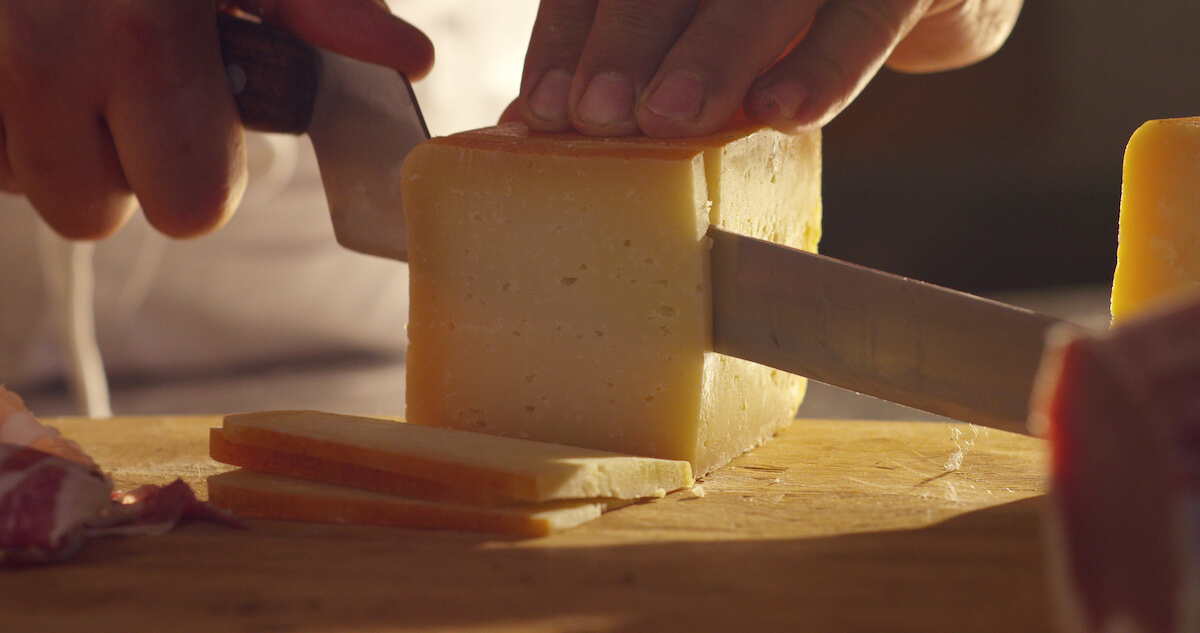
This is one of my favorite expressions because when I actually have cheese and a knife at my fingertips I feel like I don’t want much else in life.
7. Viajar na maionese
When someone is acting silly or just plain stupid, you can say they’re “trippin'”. In Portuguese, you can use the verb viajar in the exact same way, but the whole expression sounds funnier: viajar na maionese literally means “to trip on mayo”.
8. Enfiar o pé na jaca
Have you ever cut a ripe jackfruit open? It’s quite messy and sticky, that I can tell you. So if you ever stick your foot into one — which is what enfiar o pé na jaca means, literally — expect to have a hard time cleaning yourself up.
The expression is always related to excess: when you drink too much or party too hard, you enfia o pé na jaca. Maybe the idea is that curing a hangover is as hard as getting jackfruit bits off your feet?
Funny Portuguese Words
9. Segunda-feira, terça-feira, quarta-feira, quinta-feira, and sexta-feira
“Second-day-off”, “third-day-off”, “fourth-day-off”, fifth-day-off”, and “sixth-day-off”: I wish my plans for this week were this exciting. Yet surprisingly, that’s just the literal translation of Portuguese weekday names.
While sábado and domingo, the words for Saturday and Sunday, are pretty in line with other Romance languages, the names for Monday through Friday in Portuguese sound quite unusual to foreign ears.
In most languages that derived from or were influenced by Latin, the days of the week were named after ancient deities.
In 6th-century Portugal, Saint Martin of Braga argued against this “heresy” and suggested that the days of the Holy Week preceding Easter (which were traditionally devoted to resting) should be renamed to honor the Christian God.
When the Portuguese language was born a few centuries later, it ended up adopting weird Christianized names for all weekdays throughout the year. Still more confusing is the fact that in modern Portuguese feira means “fair” (as in “trade fair”) instead of “day off”.
10. Quebra-molas
You probably know how Italians love’em some overstatement, but let me tell you they have nothing on Portuguese speakers. Proof of that is what we informally call speed bumps: quebra-molas literally translates as “coil-spring-breaker”.
In this case, though, you may think locals have a point. If you ever drive through a residential neighborhood in Brazil, notice how speed bumps are all over the place and are often poorly marked. Chances are you’ll eventually speed through one and almost hit your head against the ceiling of your car.
11. Dedo-duro
While successful snitches don’t point literally, they still do it figuratively. That’s exactly what the Portuguese word for snitch calls attention to, as it means “stiff-finger”.

“To snitch on”, or dedurar, is even weirder. Can you imagine if we said “stiff-fingering someone” in English? I’m glad that at least in this case English sounds more appropriate than Portuguese!
12. Pernilongo
A mosquito is named a mosquito in Portuguese too. Yet to account for the ferocity and huge dimensions of the specimens you’ll be introduced to in the tropics, natives came up with a fitting term: pernilongo, or “long-leg”.
The word pernilongo derives from the standard spelling of the phrase “long leg”, perna longa, which oddly is Bugs Bunny’s name in Portuguese.
13. Bate-boca

Sometimes, an argument escalates so badly that it becomes almost as violent as an actual fight. That’s basically the idea behind the word Portuguese bate-boca, which translates as “mouth-hitting” or something along these lines.
The word reminds us how our mouth can hit just as hard and usually more effectively than our fists! And like reality TV has shown us, a bate-boca can be really entertaining to watch as well.
14. Vira-lata
A mixed breed dog is called a vira-lata in Portuguese, or literally a “knocks-cans-off”. As a direct reference to street dogs, the term may sound demeaning. Yet the very concept of a vira-lata is endearing to Brazilians, and mixes are the dog of choice for about 40% of them.
The caramel-colored vira-lata in particular is an icon in its own right: in 2020, when the Brazilian Central Bank announced it would release a 200-real banknote for the first time ever, a campaign to make it the new banknote’s mascot took the web by storm. All other bills featured animals of the nation’s fauna anyway.
(Internet users were ultimately defeated, but not humiliatingly so — the dog’s cousin the maned wolf was picked instead.)
Funny Portuguese Phrases Related to Body Parts
15. Dar uma de João sem braço
You “pull a John-the-armless” whenever you pretend you can’t or don’t know how to do something in the hope that someone else will do it for you.
Apparently, the expression originated to describe beggars who would hide an arm underneath their coats to pass themselves off as disabled war veterans.
16. Dor de cotovelo
“Elbow pain”, the literal translation of dor de cotovelo, may sound pointless. It’s used to describe that lingering sinking heart feeling you get over unrequited love or a dramatic breakup.
While the origin of this phrase is controversial, some folks argue it references the very real physical pain you’ll feel on your elbows after a night spent drowning your sorrows at the bar.
17. Botar a boca no trombone
If you’ve ever played the trombone, you know how loud it can be. That’s exactly the point of “putting your mouth on the trombone”, or botar a boca no trombone in Portuguese.

You do that — or more often threaten to — when you denounce something you don’t think is fair. It can also mean “to give someone else’s secrets away”, though that’s a far less common usage.
18. Tirar água do joelho
This one is slightly off-color, only in a sort of dadlike way. Tirar (uma) água do joelho literally means “to get (some) water off one’s knees”, which under normal circumstances shouldn’t be possible.
What I’m referencing here is the only kind of water the lower parts of your body typically release: pee.
I told you it was a tad crude! That said, you’d only be judged for using this phrase in a business or otherwise formal environment.
19. Com o pé nas costas
No, you don’t have to be a contortionist or take part in an elaborate torture sesh to do something like putting “your foot on your back”. As nonsensical as that may sound, com o pé nas costas actually means “effortlessly”.
Perhaps the idea here is that something is so easy that even with your legs tied up you’d still manage to do it.
20. Não pregar o olho
Failing to nail down your eyes should be a fantastic thing, right? It’s terrible instead. That’s literally what não pregar o olho means, a phrase you use when you’ve barely slept the night before.
Despite appearances, the expression isn’t as surreal as it may sound. The verb pregar can also mean “to preach” or, in this case, “to fold”. This definition, however, is all but archaic these days.
So whenever a native speaker says não pregar o olho a more unsettling image than “folding your eyes” comes to mind.
Other Funny Phrases in Portuguese
21. Rachar o bico

The image behind rachar o bico, which literally means “to crack one’s beak” is a bit like the one behind “laugh your a** off” (though the phrase’s not really considered rude in Portuguese).
I guess the idea here is that you laugh so hard that your body can’t physically bear it and sort of bursts open (on one end or the other).
22. Cheio de nove horas
I’m not gonna lie: when I was a kid, my grandma would sometimes write me off as “full of nine hours”. It would take me a few years before I could understand she was saying I was being picky.
The phrase seems to have been created in the 19th century when 9 p.m. was the latest a “respectable” person would stay out. Those who stayed in and missed all the fun eventually came to be seen as judgy and self-righteous, which isn’t too far away from finicky.
23. Para inglês ver
Paying lip service or simply doing something just for the sake of appearances is doing it “so the Brits can see it”, or para inglês ver in Portuguese.
This is a great expression because it sheds a light on the sense of sarcasm of Portuguese speakers. It was originally used to describe a set of unenforced laws that officially banned the slave trade across the Portuguese Empire in the early 19th century.

Back then, the Brits were all about fighting slavery overseas (mostly for trade rather than humanitarian purposes) and kept pushing their Portuguese allies to act on the issue — which they could swear they’d done.
24. Comer capim pela raiz
This one is pretty graphic, which is probably why it’s one of the finest entries on our list. Can you figure out when you’ll get the chance to “eat grass through its roots”? That’s right: when you kick the bucket, or comer capim pela raiz.
Another extremely distasteful (and, consequently, comic) Portuguese expression for dying is abotoar o paletó de madeira, or “to button up the wooden jacket”.
25. Entrar pelo cano
Can you picture somebody squeezing themself into the piping? That sounds painful to the very least! So I guess entrar pelo cano is illustrative and straightforward: it means “to get screwed”.
26. Engolir um palhaço
Before the 🤡 emoji made things a lot simpler, Portuguese speakers had an awesome expression to let someone know their attempt at a joke was either inappropriate or had merely fallen flat. It’s the delightful engolir um palhaço — or “to swallow a clown” in English.
Alternatively, you can ask if they had dormido com o Bozo (i.e., “slept with Bozo”) as well, though Zoomers probably won’t get this one.
And before you ask, I’m pretty sure I’ve never included a human being in my diet — regardless of their job!
Final thoughts
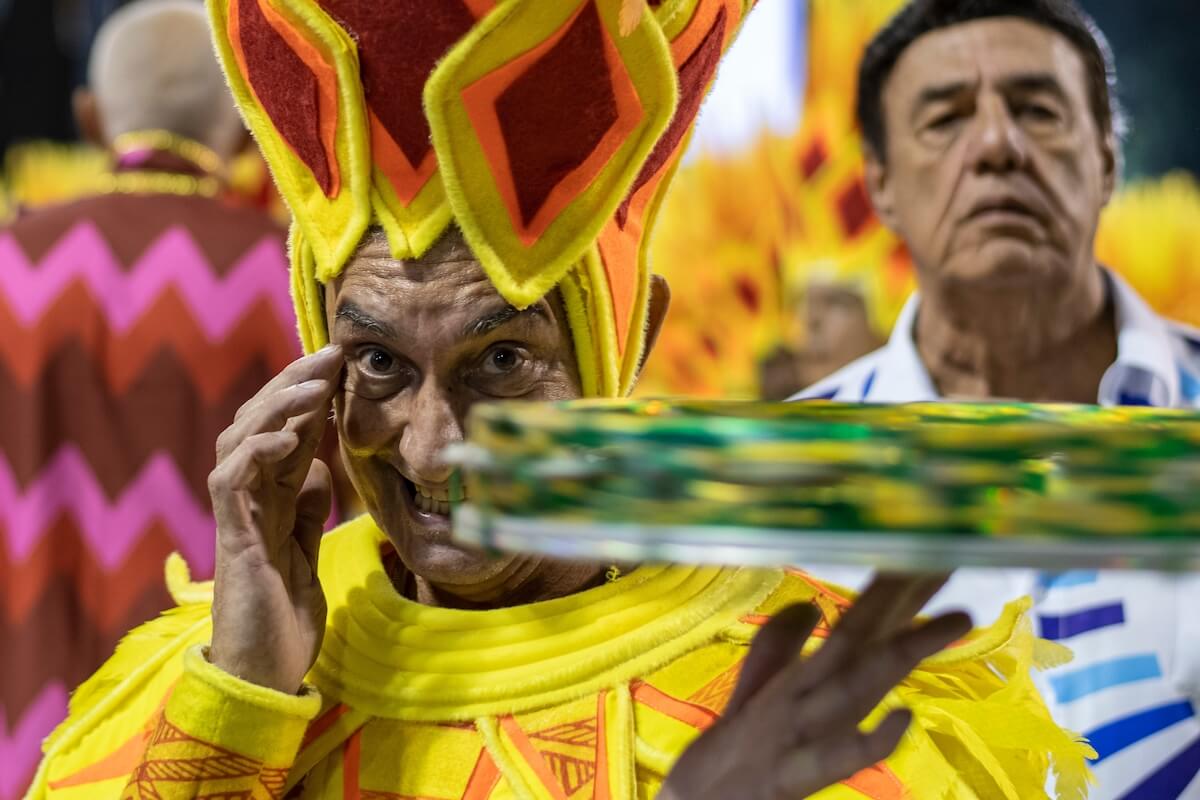
As a native speaker, I may not be exactly impartial when I say Portuguese is among the funniest languages out there. Yet, those of you who’ve already taken to studying it should be able to agree with me.
Wit and sarcasm are an essential part of the Portuguese-speaking culture, which is utterly reflected in the funny Portuguese sayings and words I’ve listed above.
Now let me know in the comments if there’s some other phrase you’d also include in the post! And if you want to learn more, here are some cool Portuguese words you can add to your arsenal.
i grew up in hawaii, my grandparents were portuguese, barely spoke to us kids in the language. I grew up with a word that sounds like “beesh”, my understanding is it meant brat, naughty, something like that. Called my own kids that growing up, now the grandkids, is there such a word or one similar. I’ll love it if you could email me.