
So, you’ve started to learn Spanish, and you’ve had your first (mildly traumatizing) experience of irregular verb conjugations and grammar. Having survived that, you now feel like you can speak Spanish fairly well, but you can’t shake the feeling that native speakers keep looking at you weirdly when you speak.
Unless you’re misremembering certain words or committing grave errors, most likely this is because you speak with a clear foreign accent. This is, of course, understandable since Spanish isn’t your first language. But what if you want to get rid of that awkward accent?
Fret not because I’ve got a list of the most effective tips to improve your Spanish accent! And for credibility’s sake, I’ve been learning and speaking Spanish for nearly eight years, so you can trust me when I say these are the tips I used myself to better my accent!
1. Choose your accent

You’re probably how this has anything to do with improving your Spanish accent. To answer this, we need to understand that with Spanish being spoken in so many parts of the world, it’s inevitable that there are plenty of variations when it comes to accents.
One prominent example is how Spaniards speak with a bit of a lisp but most South Americans don’t. The problem with trying to improve your Spanish accent by imitating different types of accents is you might end up sounding weirdly inconsistent!
My advice is simply to focus on one Spanish accent and practice perfecting it.
2. Practice your vowels

While perfecting an accent and polishing your pronunciation are two different things, in Spanish, being able to properly pronounce your vowels is an important step towards achieving a more natural-sounding Spanish accent.
The good news is that Spanish vowels sound the same no matter how they are spelled in a word (none of that “tough” vs “dough” sounds in English that confound non-native speakers). The tricky bit is when several vowels are stringed together, such as “eu” in “euro” — pronounced eh-oo-ro.
Being able to enunciate vowels clearly (and with confidence) is one of the most effective tips to improve your Spanish accent, especially since vowels make up the most noticeable sounds in Spanish conversations. So, to speak with a Spanish accent, one must first learn to speak Spanish well!
3. Go easy on the consonants

One of the key giveaways in a non-native Spanish accent is the way the consonants sound. Speaking from experience, this is especially true for native English speakers because certain consonants in the English language are enunciated with emphasis.
Take, for example, the word “tomato” (tomate in Spanish). Whether you pronounce it as tuh-may-tow or tuh-maa-tow, the consonants (the letter “t” in particular) sound more pronounced and prominent. On the other hand, in a proper Spanish accent, the letter “t” in tomate would have a much softer sound, almost like a flat “d”.
If you want to improve your Spanish accent, learn to not over-enunciate your consonants!
4. Learn to roll your tongue

When it comes to the topic of how to do Spanish accents, one particular tip that seems to always come up is learning how to roll your “r”s. Indeed, if one were to watch Spanish movies or tv shows, one’ll notice that most of the actors on screen pronounce their “r” with a certain brrrravado.
In fact, you could say that the rolling “r”s are one of the most recognizable characteristics of the Spanish accent. While it’s true that not all Spanish speakers (even native ones) can roll their tongues perfectly, being able to do so certainly helps to give you a more pronounced Spanish accent.
What’s more, being able to roll your tongue helps you to pronounce certain words in Spanish better and more clearly, since some words are spelled identically. Take for example the word pero (meaning but) and perro (meaning dog; pronounced with a rolling “r”).
5. Try some Spanish tongue twisters

As they say, practice makes perfect, and that certainly applies to improving your Spanish accent. While using Spanish learning apps are a great way to learn, revise, and practice Spanish, an even better method to improve your Spanish accent is by learning Spanish tongue twisters.
As we all know, muscles build up strength from training, and tongue twisters are like total body workouts for your tongue! Nonsensical as some of them may seem, Spanish tongue twisters not only help train your pronunciation but also lets you (subconsciously) practice grammar and conversational nuances.
If you’re looking for an easy(ish) tongue twister to start, try this:
Hoy ya es ayer y ayer ya es hoy. Ya llegó el día, y hoy es hoy.
Today is already yesterday, and yesterday is already today. The day’s here, and today is today.
6. Up your tempo over time

As with many other languages, one thing that distinctly sets apart native and non-native speakers when it comes to Spanish accents is tempo. To improve your Spanish accent, you need to learn not just how to speak more quickly, but also how to properly shorten and/or combine certain words or phrases.
It’s the same thing as in English. While a native speaker might say “I’m gonna head to bed ‘cuz I’ve had a helluva day”, a non-native speaker would say “I am going to head to bed because I have had a hell of a day”. Try reading both sentences out loud. Hear the difference?
In Spanish, words that end and begin with vowels are sometimes “extended into each other”, making it sound like one long word. For example, the phrase, ella está enfadada (she is angry) would sound like ellaestáenfadada when a native speaker says it. So, to improve your Spanish accent, build up your speed, and learn how to properly connect and shorten words and phrases.
7. Find a Spanish speaker to converse with

Perhaps the easiest way to improve your Spanish accent is simply to find someone to converse with. Whether it’s finding a personal tutor on platforms like Preply or Italki, or connecting with native speakers around the world through HelloTalk or HiNative, being able to converse in real time is one of the best ways to help you polish up your accent.
What’s more, there are undoubtedly extra benefits of conversing with native speakers to brush up your accent. For one, you get to listen to the way they speak the language. You can note down the conversational nuances, how they pronounce certain words, what fillers they use, and more, and apply it to your own learning.
More importantly, you get to practice your own speaking skills, which will surely go a long way in helping you to nail down your Spanish accent!
8. Practice giving a speech or interview and record yourself

If you’re a little shy about having conversations with others, especially if your Spanish proficiency isn’t quite at the level where you can freely converse with others, don’t worry. You can always just…talk to yourself to improve your Spanish accent!
And no, this isn’t the talk-in-front-of-a-mirror hack ala The Sims. You can, but a better way would be simply to pretend like you’re giving a speech or an interview and record yourself. After that, play it back and take note of not just the way you speak, but also your facial expressions. Do they match up, or do you look like someone reciting a pre-written script?
Not prepared to give a speech? Start small by reading a conversation from a book. Note down the parts where you sound unnatural and where your pronunciation is unclear, and work on them!
9. Watch some Spanish movies or TV shows
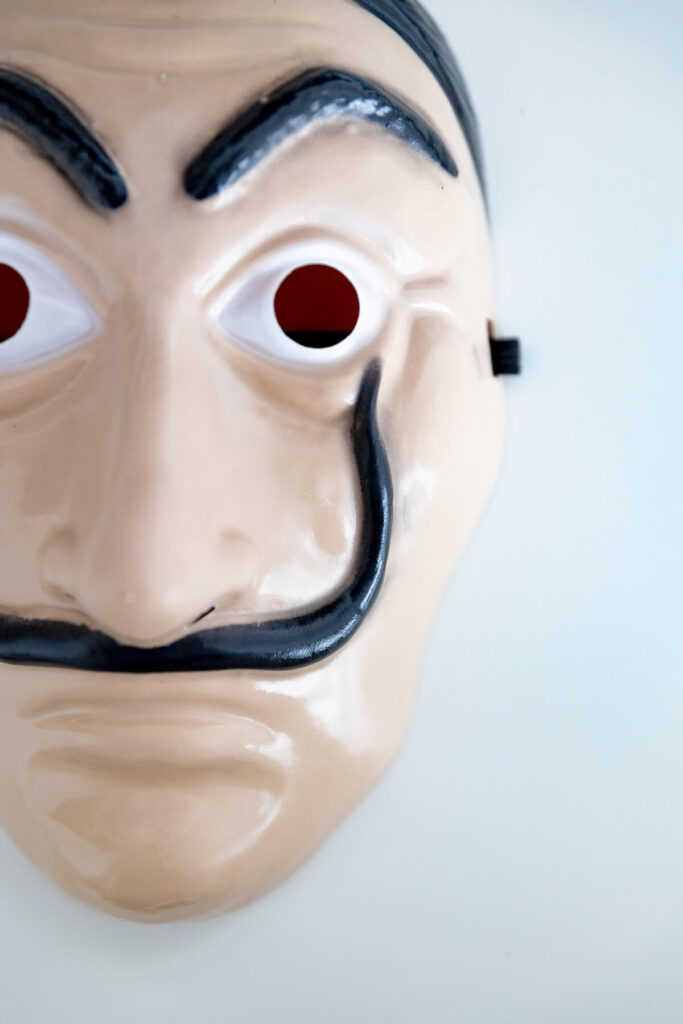
For a fun, passive way to improve your Spanish accent, simply watch some Spanish movies or tv shows on Netflix! Not only can you listen to how native speakers speak, but you can also practice your Spanish at the same time! Plus, you’ll probably be able to pick up some new Spanish vocabulary!
While there are different types of shows to watch, such as the popular Case de Papel, opt for shows that are, to paraphrase Elvis, a little more conversation, a little less action. Some of my recommendations (with plenty of personal bias) are Monarca, La Casa de las Flores, and La Reina del Flow.
If you’re interested in seeing what different types of Spanish accents sound like, check out the dark Bitter Daisies which uses Galician Spanish.
10. Tune in to Spanish radio channels or podcasts

Watching Spanish TV shows are one thing, but Spanish radio is next level! Even though I have studied Spanish for a few years and can probably hold my own in any conversation, some Spanish radio DJs speak with more speed and flair than you can imagine.
Not only does tuning into Spanish radio help improve your Spanish listening, but eventually, you’ll also be able to improve your Spanish accent by picking up on the nuances of the DJs. Plus, you get to keep up with Spanish news and listen to some of the trending local hits.
If Spanish radio is a step too far for you at this time, check out podcasts like Coffee Break Spanish and SpanishPod101 which are more beginner-friendly.
11. Sign up for a Spanish audio or video course

Undeniably, some language learners learn best when they’re in a structured environment, like in a class or curated lesson. If you’re one of these learners, then perhaps one of the best tips to improve your Spanish accent is simply to sign up for audio or video courses.
Online courses on Pimsleur, Cudoo, and Coursera, all of which have a wide variety of audio lessons designed to get students conversation-ready, are excellent options.
Alternatively, you can also check out video courses on Youtube (such as Learn Spanish) to add a little visual learning to your Spanish learning journey. Pay attention to how the instructors speak, and soon, your Spanish accent will start improving too!
12. Travel to or live in a Spanish-speaking country

And last but not least, hands down the best way to improve your Spanish accent is simply to move to a Spanish-speaking country! Now that’s what you call total immersion!
I had a friend from Spanish 101 who took up an internship in Madrid one summer, and when she came back, she sounded like a local! As you interact daily in Spanish, and listen in on the conversations around you, you will eventually start speaking with a more localized accent.
What’s more, you get to fully appreciate the culture of the language you’re learning and get to see more of the world as you do so!
Final thoughts
And there you have it: 12 effective tips to improve your Spanish accent. While having a native-sounding accent isn’t the most important thing when learning to speak Spanish (learning how to communicate fluently takes priority), it definitely adds a certain level of elegance to your speech!
My final advice is to first master the Spanish language. Learn to first speak Spanish fluently even if you sound like a gringo, and THEN work on hitting the right conversational nuances to improve your Spanish accent!