
This article may contain affiliate links. As an Amazon Associate, I earn from qualifying purchases. For full information, please see the disclaimer here.
Buenos dias, my friends! So, you’ve finally taken the bold step to learn Spanish? Well done! As we all know, one of the best ways to improve your grasp of any language is to constantly read. Thus, I present to you, the wonderful world of Spanish novels and storybooks!
Be it simple children’s books or spellbinding novels that focus on mature themes, reading Spanish novels and storybooks has the potential to vastly expand your vocabulary and improve your grammar. But which book(s) should you read?
Fret not because here’s a list of the 16 best Spanish novels and storybooks for beginners and beyond to learn Spanish! Read (pun intended) on for more!
How to read in Spanish?

Your instinctive answer was probably “With your eyes, duh!” True, but what I meant was how reading Spanish novels and storybooks can actually help you improve your mastery of the language, and what you should go for.
First, there is the concept of active vs passive reading. Active reading is when you read with the sole purpose of learning Spanish, be it expanding your vocabulary or familiarizing yourself with Spanish sentence structure. You basically read, and then note down anything that you find interesting and new.
Passive reading, on the other hand, is reading for leisure without paying too much attention to learning. A combination of both active and passive reading is the way to go. What I would do is read the text passively first, and then go back again from the top to identify new words and interesting phrases.
Having said that, why Spanish novels in particular instead of, say, Spanish tabloids and newspapers? Simply because novels are much more interesting and varied — there are a ton of genres you can choose from. What’s more, different stories written throughout different times will have slightly different approaches to language.
For beginner Spanish learners, I’d recommend modern novels and short stories, while advanced learners can dive into classic Spanish literature.
Spanish novels and storybooks for beginners
For those who’ve just started learning Spanish and are starting to grasp the language, reading Spanish novel and short stories are a great way to accelerate your progress. If nothing at all, it helps you fully immerse yourself in a Spanish learning environment.
For beginners, I recommend looking for books that use short and straightforward sentences and simple vocabulary. If the books contain notes or translations, even better!
In addition, you might have to sacrifice leisure reading for now. This means potentially having to go with children’s books or novels and stories that contain a much simpler plot. That’s because this helps you focus more on the language aspects, which is crucial at this stage of learning.
1. Short Stories in Spanish by Olly Richards


One of the most famous Spanish novels and storybooks for beginners is surely this curation of short stories by Olly Richards. It contains 10 contemporary stories written by some of the most famous Spanish authors.
Each short story in this book is about 10 pages long, each containing a fascinating plot, plenty of useful Spanish vocabulary to pick up, and helpful annotations to help beginners navigate each page.
What I like about Short Stories in Spanish is simply the fact that it’s not a Spanish children’s book. Rather, it offers itself as a gateway into authentic Spanish literature without overwhelming new Spanish speakers. If you’re looking for a Spanish novel or storybook to help you learn Spanish, I highly recommend this.
2. Short and Easy Spanish Novels for Beginners by Joe Arenas

As the name suggests, this collection of Spanish short stories by Joe Arenass is one of the best Spanish storybooks for beginners and one of the few of its kind that isn’t a Spanish children’s book.
Instead, the curated stories here focus mainly on the horror genre, which is quite unique as this genre is usually reserved for more advanced learners. However, the two stories (Espectro and La Casa) in this book buck the trend.
For one, it breaks each chapter into no more than 10 short sentences, using simple grammar constructions and straightforward vocabulary to ensure that even beginners can follow the story closely. What’s more, you’ll find plenty of space on each page for you to write down any notes, as well as a little quiz to check how much of the chapters you understood!
3. ¿Eres mi mamá? (Are You My Mother?) by P.D. Eastman
No products found.
One tip to improve your Spanish reading quickly is to not shy away from reading Spanish children’s books. While the stories are often quite juvenile, many books actually contain essential vocabulary that you’ll find yourself using quite regularly in daily life.
Because of that, I recommend beginner learners to read ¿Eres Mi Mama?. It’s a heartwarming tale about a newly-hatched bird and his journey to finding his mother. Along the way, he meets plenty of different animals and encounters a multitude of unique situations, culminating in a surprising ending (no spoilers!).
As you might expect, you’ll learn the names of many animals, as well as a host of vocabulary and grammar. Most importantly, thanks to the simple nature of the sentences, you can get a good grasp of proper Spanish sentence structure too!
4. El gran oso pardo (The Big Brown Bear) by David McPhail

With a title like El gran oso pardo (The Big Brown Bear), it’s quite obvious from the get-go that this is, in fact, a children’s book. However, despite the juvenile setting of the story, I would still recommend this as one of the best Spanish storybooks for beginners.
¿Por qué? Because this beginner-friendly Spanish short story contains side-by-side, English-Spanish translations for every line!
This is extremely helpful for total beginners in Spanish, as they can not only follow the story without losing track of what’s going on, but they can also see compare and contrast the two languages. This is especially useful when it comes to the difference in sentence structure and verb conjugation, which I must stress again, is one of the most important aspects of learning Spanish.
5. Aura by Carlos Fuentes

One of the first things I learned about Spanish verb conjugation was this: If all else fails, go with the present tense. While this would lead to plenty of grammatical mistakes early on (imagine saying “I eat salad yesterday”), mastering the present tense is a great confidence booster and helps you better understand the rules of Spanish conjugation.
That is why I think Aura is one of the most essential Spanish novels for beginners. Written by Carlos Fuentes, a popular Latin American author, the book is written almost exclusively in the present tense, making it the perfect avenue for beginner learners to practice or get familiar with Spanish conjugation. Plus, you’ll be able to expand your vocabulary list as you read on.
To give you a teaser, this mystery novel tells the story of a man named Felipe, who visits the house of a widow. While there to help compile her deceased husband’s memories, he meets and becomes entangled with the widow’s niece, Aura. I shan’t say more, but what I can tell you is that this short novel is truly an enticing page-turner!
6. Pobre Ana (Poor Ana) by Blaine Ray

Written by Blaine Ray, Pobre Ana is easily one of the best Spanish novels for beginners, thanks not only to the simple language that’s used throughout the book but also because of its California-based character who makes it easier for US-based Spanish learners to connect with.
In truth, this is one of many Spanish storybooks that belong in a novel series that’s suited for beginner Spanish learners. Set in Mexico, it follows the story of Ana (duh!), a struggling student who gets the chance to move to Mexico for the summer. There, she experiences an epiphany and discovers a new outlook on her life in California.
While the story isn’t exactly what I would personally find interesting (it’s rather cliched if you ask me), I must admit that the simple plot does allow beginner learners to really focus on the language and vocabulary. In fact, there’s a list of vocabulary at the back of the novel too!
7. Wonder: La lección de August (Wonder: August’s Lesson) by R. J. Palacio

This is one of the few novels on this list that isn’t set in a Spanish-speaking country. After all, this novel is simply the Spanish version of the English novel, Wonder.
Written by R. J. Palacio, this New York Times bestseller follows the heartful journey of fifth grader August Pullman who navigates life in his new middle school whilst dealing with a facial disformity.
I would classify this as one of those Spanish novels for beginners that’s also suitable for intermediate Spanish learners. The novel is written from a first-person point of view, which is brilliant for Spanish beginners as it helps them to grasp the fundamentals of Spanish verb conjugation (which, I can tell you, is super important!). Of course, you’ll also be able to expand your vocabulary as you read on.
8. La vida imaginaria (The Imaginary Life) by Mara Torres

One of the best ways to describe La vida imaginaria is that it is one of the best Spanish novels for beginners that actually caters more to adults. In fact, I would say that this is arguably one of the better options for those trying to transition from beginner to intermediate-level Spanish.
Written by Mara Torres, this inspiring story set in Spain follows the character Nata who grapples with her past to rebuild her life anew after a harsh breakup. As you might expect, it’s not the type of plot that would entice children or young readers.
While the vocabulary is pretty straightforward, what’s best about this 200-page novel is that it contains plenty of colloquial words and phrases that will really add some flair to your Spanish.
9. Alma y cómo obtuvo su nombre (Alma and How She Got Her Name) by Juana Martinez-Neal

Juana Martinez-Neal’s storybook is a Spanish children’s book. That said, I actually feel that it’s one of those Spanish storybooks that’s suitable for both beginners and intermediate learners, thanks to the core theme of the story.
Alma y cómo obtuvo su nombre explores the themes of heritage and culture as it follows the story of protagonist Alma, and her quest to discover the history and heritage of her name. Unsurprisingly, the story contains plenty of information about certain cultural norms in Spain despite using elementary phrases and vocabulary.
For those who like a little bit of self-studying, at the end of the novel, the author actually encourages you to share the origins of your own name, which is the perfect time to practice the vocabulary and sentence structure you’ve just read in the book!
10. Spanish Short Stories for Beginners by Lingo Mastery
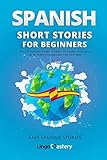
Another collection of short stories, this Spanish storybook is perfect for both beginners and intermediate learners. It contains 20 original stories of various different genres and a whole host of vocabulary to spice up your word bank.
What I like about this collection of Spanish literature is that it contains colloquial phrases from various Spanish dialects, offering readers a little taste of how the language differs by region. I recommend including this in your list of books to learn Spanish and have a notebook ready while you read, to jot down interesting vocabulary and grammar.
What’s more, every chapter ends with a little quiz to test your comprehension and writing skills. The book also contains a glossary of vocabulary, grammar notes, and an English translation of the stories behind each quiz.
Spanish novels for intermediate learners
If you’ve already got a firm grasp of Spanish — you can understand the gist of sentences even if you don’t know exactly what every word means, then you’re ready to explore the wider range of Spanish literature.
For intermediate learners, I recommend short novels that contain a more interesting plot, but also either help you be more consistent with Spanish conjugation and grammar, or expand your vocabulary into different fields.
One tip is to not disregard children’s books yet or books with child-like themes. As a language learner, these books may yet provide new learning opportunities!
11. Con Tango son tres (With Tango There Are Three) by Justin Richardson

- Hardcover Book
It’s very rare to find a children’s book that’s classified as an intermediate-level read, but Con Tango so tres is exactly that, thanks to its heartwarming but mature themes, as well as nuanced vocabulary.
The story is actually based on a real-world event as well! Taking place at the Central Park Zoo in New York, the colorful picture book follows the story of how two male penguins became partners, and then raised a penguin chick they adopted.
While the sentence structure throughout the book is simple and straightforward, its discussion of LGBT themes and its animal-centric settings open the way to learning a whole plethora of Spanish vocabulary you probably wouldn’t be exposed to when reading other Spanish literature.
12. Cuentos de la selva (Jungle Tales) by Horacio Quiroga

- Amazon Kindle Edition
Cuentos de la Selva is one of those Spanish storybooks that’s considered a proper classic. Written by Horacio Quiroga in 1918, this timeless classic documents the life of the author while he lived in the jungle of Misiones, Argentine.
As you might have guessed from the title of the book, it focuses mainly on animals in the jungle, but it does so with a little bit of whimsical fantasy. Essentially, you can consider this the Spanish version of The Jungle Book, where you have crocodiles who smoke cigars, tigers enjoying tea, and more amusing tales.
Despite the jovial and child-like themes, the vocabulary in this book is actually quite vast, making it a good read even for intermediate learners.
13. Guardianes de la Ciudadela (All the Fairies in the Kingdom) by Laura Gallego

The Guardianes de la Ciudadela trilogy, written masterfully by Laura Gallego, is arguably one of the most popular Spanish novel series on the market.
What’s interesting about the series is that while all three books in the series — El bestairio de Axlin, El secreto de Xein, and La misión de Rox (in chronological order) are all connected within the same setting, they can also be enjoyed as stand-alone reads.
This fantasy series, suitable for young adults and intermediate Spanish learners, tells a whimsical story of magic, monsters, and an enthralling quest to defend humanity. Gallego uses easy-to-understand Spanish for most of the book.
That, combined with the engrossing plot, makes the Guardianes de la Ciudadela series one of the most popular novels for Spanish learners. However, you may also need a translation or dictionary app to fully understand everything!
14. Detective Malasuerte (Unlucky Detective) by Hilario Pena

I must confess that I, as an avid fan of mystery and thriller novels, will also have a soft spot for Hilario Pena’s Detective Malasuerte. After all, it was the very first Spanish crime novel I’ve ever read!
Much like Guardianes de la Ciudadela, this enticing read is one of the more famous Spanish novels for intermediate learners or beginners who are up for a bit of a challenge. This exciting story follows a private investigator who investigates a case that is riddled with elements of the supernatural. That alone — for me at least, is already a winning combination!
While the language that Pena uses in the novel is largely uncomplicated, those who’ve just started grasping the basics of Spanish may find some parts of the novel a little difficult to understand, so a translation app would be helpful. What I like about the novel is that it also includes plenty of local slang and cultural references that help you improve your Spanish further!
Believe me, if you love crime and thriller novels, Detective Malasuerte is one of those page-turners you won’t be able to put down.
Spanish novels for advanced learners
At this level of proficiency, you are finally ready to enjoy some of the most fascinating reads in Spanish. However, don’t just stick to novels or genres that you like. Don’t be afraid to go for classic Spanish novels that are even more challenging to read!
You’ll pick up a host of sophisticated vocabulary and get to enjoy authentic Spanish literature in the process!
15. El túnel (The Tunnel) by Ernesto Sabato
No products found.
While the language and vocabulary that is used in El túnel by Ernesto Sabato are relatively beginner-friendly, I would classify this classic Spanish novel as one of those reads that are much better suited for late-intermediate or advanced learners, mostly because of the complicated subject matter.
On the surface, this highly-acclaimed 1948 Spanish novel is an intriguing read that follows the story of a painter who murders his lover. However, beneath the usual confines of the genre, is a deep reflection around the themes of existentialism and mental health.
In my opinion, it’s one of those Spanish novels that are a hit or miss. Those who enjoy heavy reads will love every page of this while those who prefer more light-hearted reading should probably give this one a miss. That said, you’ll likely pick up plenty of Spanish vocabulary as you turn the pages of this book!
16. La casa de los espíritus (The House of the Spirits) by Isabel Allende
![La casa de los espíritus [The House of the Spirits]](https://m.media-amazon.com/images/I/51Bq5yGmT6L._SL160_.jpg)
- Audible Audiobook
La casa de los espíritus is arguably one of the most enticing Spanish novels for advanced learners. Written by Isabel Allende, it’s an intense family drama that follows the lives of the colorful del Valle family, laden with romance, betrayal, dramatic plot twists, and everything else in between.
For advanced learners, this novel is a scintillating read with an elegant linguistic touch and ambient descriptive writing. Expect slightly more complicated sentences and verb conjugations, as well as a whole host of interesting and advanced vocabulary, laced between fascinating stories and cultural nuances.
This is one of the most challenging reads on this list but it is still just simple enough for advanced learners to enjoy whilst improving their overall Spanish.
Conclusion

And there you have it: 16 of the best Spanish novels and storybooks for beginners and beyond! As you can see, reading novels and storybooks in Spanish can really help supplement your learning and help you achieve fluency much quicker.
So, don’t just stick to your Spanish textbooks and, go pick up an interesting novel and read away! And don’t forget to check out apps, online courses, and other Spanish learning resources too.
If you’re interested in even more languages, check out our list of the top French and Italian novels too!