Rankings of particularly easy or challenging languages to learn tend to be crafted with largely monolingual English native speakers in mind. But what about speakers of German – a language related to but notoriously challenging for speakers of English and most European tongues?
That’s exactly what we are going to find out today. Let’s take a look at the top contenders for the easiest language to learn for German speakers!
German and the Germanic family

As you are probably aware, German is part of a tightly-knit linguistic family known as the Germanic languages. English is part of that family, too – it even stems from the same branch, or subgroup, within that family, namely the West Germanic branch!
Read more: 27 Fun Facts About the German Language That Will Surprise You
However, at face value, the two can seem further apart than they really are under the hood. A lot of that has to do with specific historical developments both English, German, and some of the other Germanic languages have undergone which have individually influenced their development.

For instance, English has experienced a long process of Latinization and French influence ever since the Norman conquest of 1066, something that never happened to German or any other members of the family.
Meanwhile, the Northern Germanic languages experienced vowel shifts and changes in grammar that were not shared with their continental brethren further to the southwest.
This has given the different Germanic languages characters and sounds of their own which might confuse the untrained eye into assuming that they are not that closely related after all. In the end, the opposite is true – as is often the case in life, family connections are everything when it comes to the easiest language to learn for German speakers!
What are the easiest languages to learn for German speakers?
As popular as it may be, listing languages by difficulty is not an easy task.
Countless factors can influence how a person learns a new language – including their existing language knowledge, their self-motivation, their learning style, cultural differences or lack thereof between them and the new linguistic environment, as well as the availability of resources and ease of interacting with native speakers.
In this guide, I tried to simplify things a bit and mostly based my ranking on the linguistic compatibility of languages.
In other words, the following represent some of the languages that a motivated German speaker might find the easiest to pick up on a whim due to their pronounced grammatical, vocabulary, and other similarities which make them easy to understand.
Without further ado, let’s take a look at which made the cut!
1. Dutch
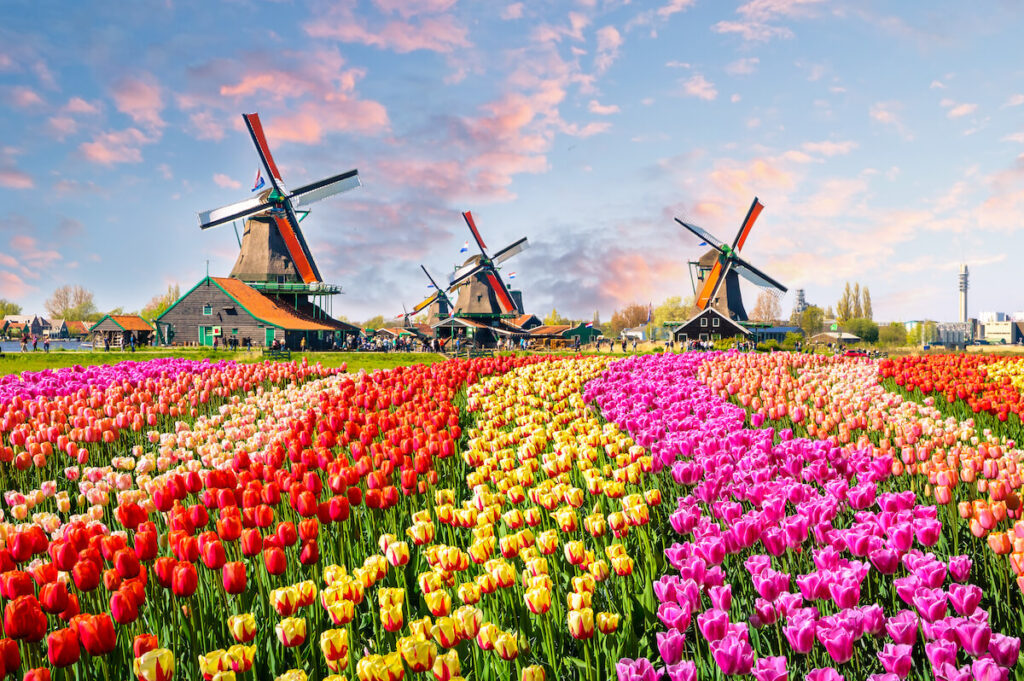
There are tons of arguments in favor of learning Dutch as a German speaker if what you’re after is a familiar, easy-to-pick-up foreign tongue. Dutch belongs to the same branch of the Germanic family as English and German.
Its shared history and geographic proximity make for easy intelligibility, and indeed much of Dutch vocabulary is not only cognate with German, but similar enough in spelling to be fairly easy to understand.
With that said, spoken Dutch tends to be a bit more of a challenge considering the pronunciation system differs much more from that of German.
Here’s an example, two phrases meaning “I went to the store to buy some milk.”
In German, it’s Ich ging zum Laden, um Milch zu kaufen.
In Dutch, the same thing would be Ik ging naar de winkel om melk te kopen.
Note the one false friend here, winkel. An identical term does exist in German, but it means angle instead! Thankfully though, these things can usually be sorted out via context.

If you want proof of just how far this can go, imagine this: when I used to live in Italy, a local friend brought over a German book that they got on vacation to surprise me with. Well, it turns out that there had been a slight misunderstanding, as the book was entirely in Dutch instead!
We shared a laugh, but me being curious, I attempted to read it anyway. As it turned out, I managed to last almost halfway through the whole novel on my own before giving in and borrowing an English copy instead.
Sure, it was all in all tougher than it would have been to read the same thing in German in the first place, but with some imagination and spending a little bit more time on certain words and phrases, it was definitely doable for me.
If that’s not a testament to how close some Germanic languages can be, I don’t know what is!
2. Afrikaans
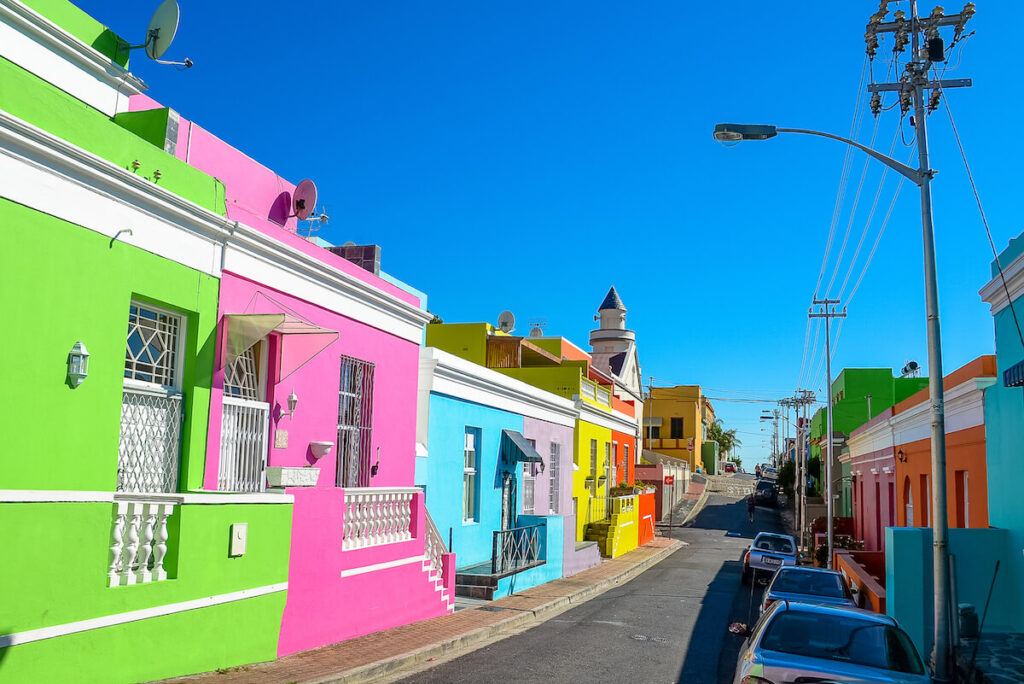
This one is fairly straightforward. Afrikaans is a West Germanic language directly descended from (and almost entirely mutually intelligible with) Dutch and spoken mostly in South Africa and by South African communities in countries around the globe.
As a result, learning Afrikaans is very similar to learning Dutch as a German speaker. Honestly, I struggle most of the time to tell which is which if the source does not state it explicitly!
The only argument in favor of Dutch instead of Afrikaans that I can think of is that learning resources for the latter are less common. For a German speaker living in Germany, exposure to Dutch of the Netherlands will also be much easier.
In all other respects, the two are a very close call indeed!
3. Yiddish

This is a fascinating pick for me, though a highly unusual one in any case. Yiddish is the traditional vernacular language used by the Ashkenazi (German and Central-Eastern European) Jewish diaspora since Medieval times.
Today, it is considered a rare minority language by most, though it continues to be used by many local Jewish communities around the world, and some ‘Yiddish revival’ organizations are even campaigning to make educational materials and literature in Yiddish more available into the current century.
Grammatically speaking, Yiddish is near-identical to German – no wonder considering it is derived from an older dialect of High German.
The vast majority of the vocabulary is also a spitting image of German itself, with a significant minority of loanwords from Slavic languages and Hebrew (particularly for religious terms). Pronunciation differs a little bit, but sticks far closer to Modern High German than Dutch does.
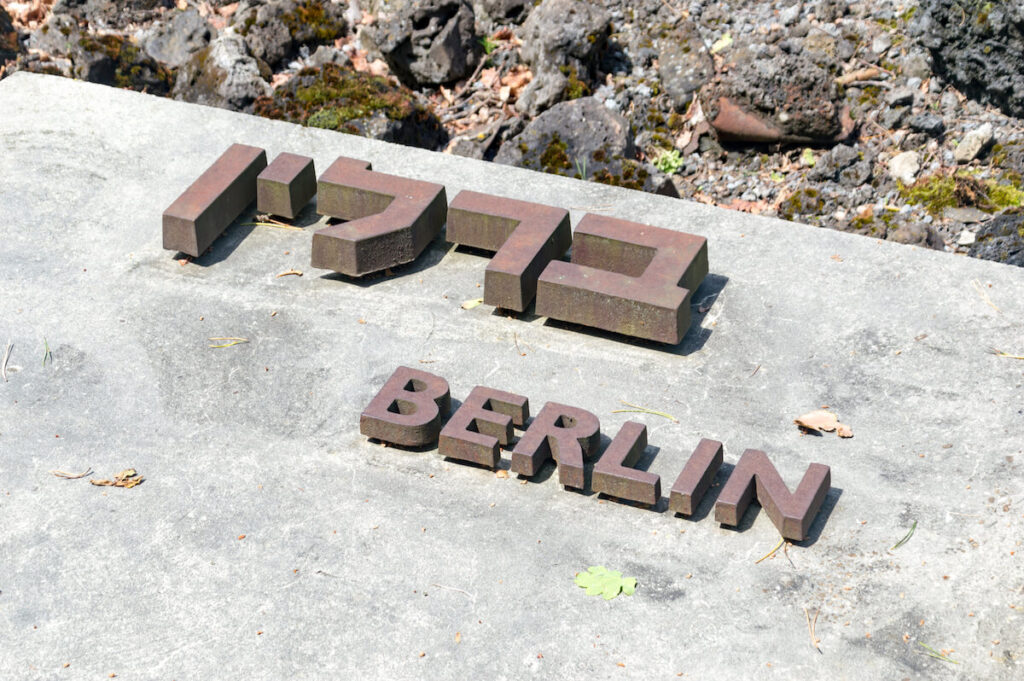
The only real challenge for a native German speaker to adapt to Yiddish would be the writing system. Yiddish uses Hebrew letters instead of Latin, but with a caveat: instead of an abjad system which the original Hebrew language and other Semitic tongues use, Yiddish repurposes all the Hebrew letters to be near-equivalents of the Latin ones used in German.
This means that, as long as you know which shapes correspond to which sounds, reading Yiddish comes very close to the experience of having German transcribed into a different script!
As someone who is fluent in both German and Hebrew, I am able to understand spoken and written Yiddish with relative ease. I’d say my German does about 80% of the legwork there, while Hebrew helps with the odd loanword peppered in!
4. English
Not too surprisingly, English ranks pretty highly on the list of easiest languages to learn for German speakers.
English is almost universally regarded as a fairly beginner-friendly language, though its odd pronunciation and some inconsistent rules brought on by its colorful history and Latinization have made it far less distinctly Germanic – and thus perhaps a little trickier to learn – than most of its close relatives.
Nevertheless, pretty much no language in the world can compete with the incredible variety and wealth of learning materials you can find for learning English, no matter where you live.
English speakers are also easily found in every corner of the globe, so exposure to the language shouldn’t be a problem either. This alone helps solidify its status as one of the most beginner-friendly languages to learn, not just for German speakers!
5. Danish
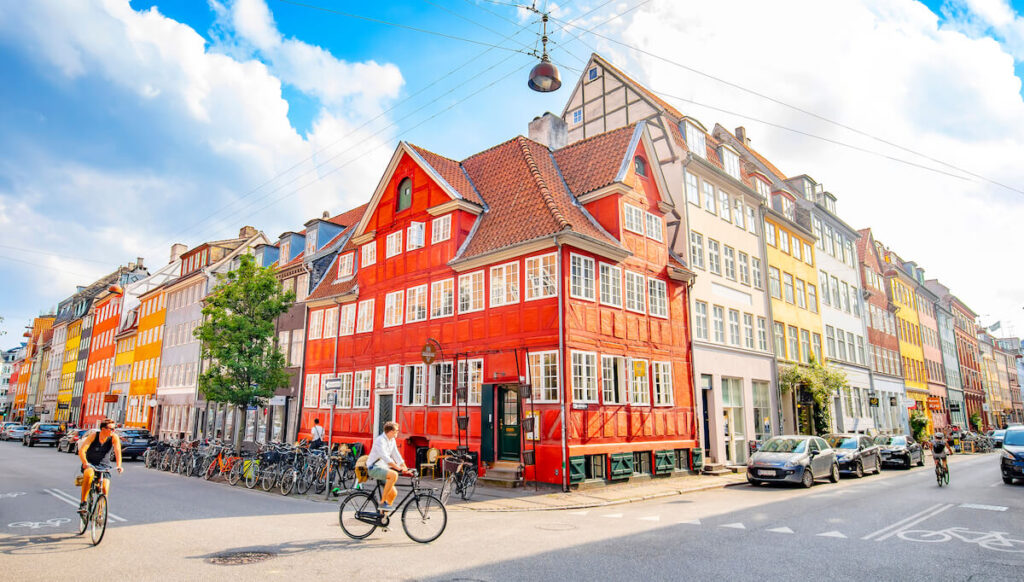
Danish is a North Germanic language, meaning it is more closely related to the native tongues of Scandinavia than to German itself. Despite that, it remains fairly easy to pick up for German speakers and the two share a lot in common.
Personally, I find Danish to be the easiest of the Northern Germanic languages to read by a long shot, though in most cases it’s still clearly far more challenging than something like Dutch or Yiddish. The spoken language, with its unique melody and pronunciation, can also be a bit of a challenge if you’re not that used to it.

Still, if you stick to it and develop a real affection for Danish, it should be relatively easy to master for a German speaker!
6. Norwegian

If you found Danish a breeze to learn, Norwegian will likely be a similar experience as a German speaker. While Norwegian exhibits a greater variation among different dialects spoken across Norway, its linguistic characteristics are overall fairly close to Danish.
However, I have to agree with the majority opinion among German speakers that, while written Norwegian can put up a challenge to the untrained eye, the more melodic and clearer nature of the spoken language may make it somewhat easier to study for German speakers.
To compare, here’s a set of example phrases all meaning “Today is a bright day, so we might go fishing.”
In Norwegian: I dag er det en lys dag, så kanskje vi drar på fisketur.
In Danish: I dag er en lys dag, så måske tager vi ud at fiske.
And in German: Heute ist ein sonniger Tag, also gehen wir vielleicht angeln.
It’s easy to see how the Northern Germanic languages have a lot more in common with each other than with German. Still, it’s also clear how all three share a lot of cognate words and feature very similar sentence structure and grammar, making each of them relatively easy to study if you already know one member of the family.
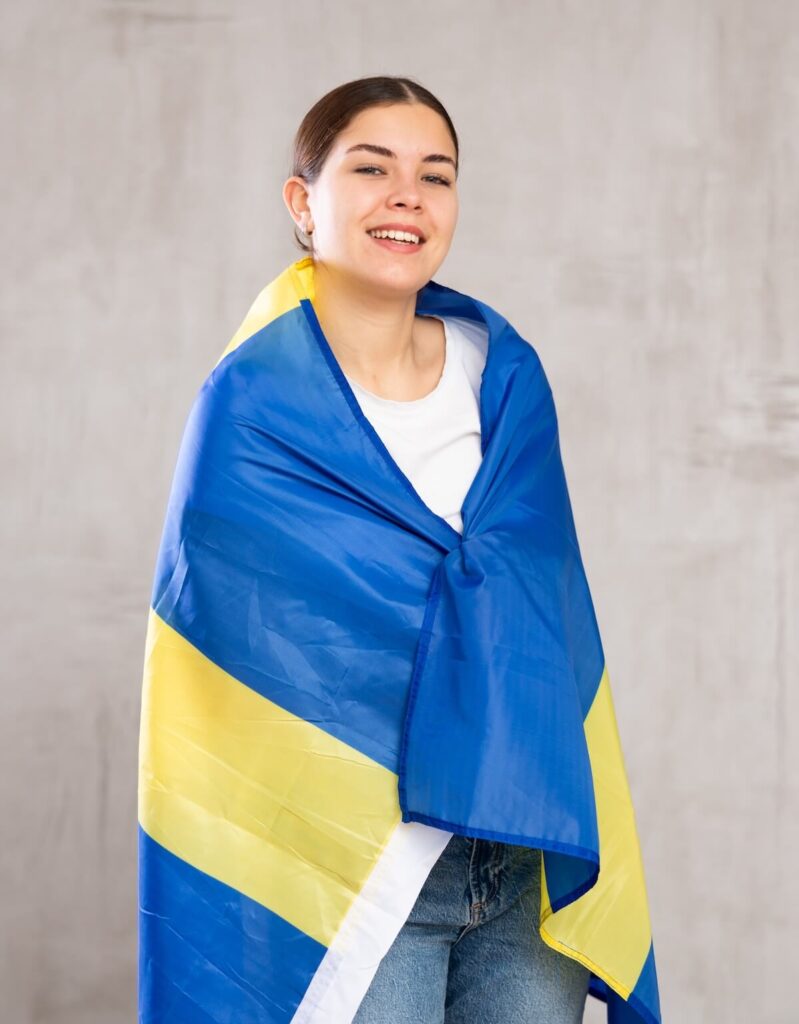
7. Swedish
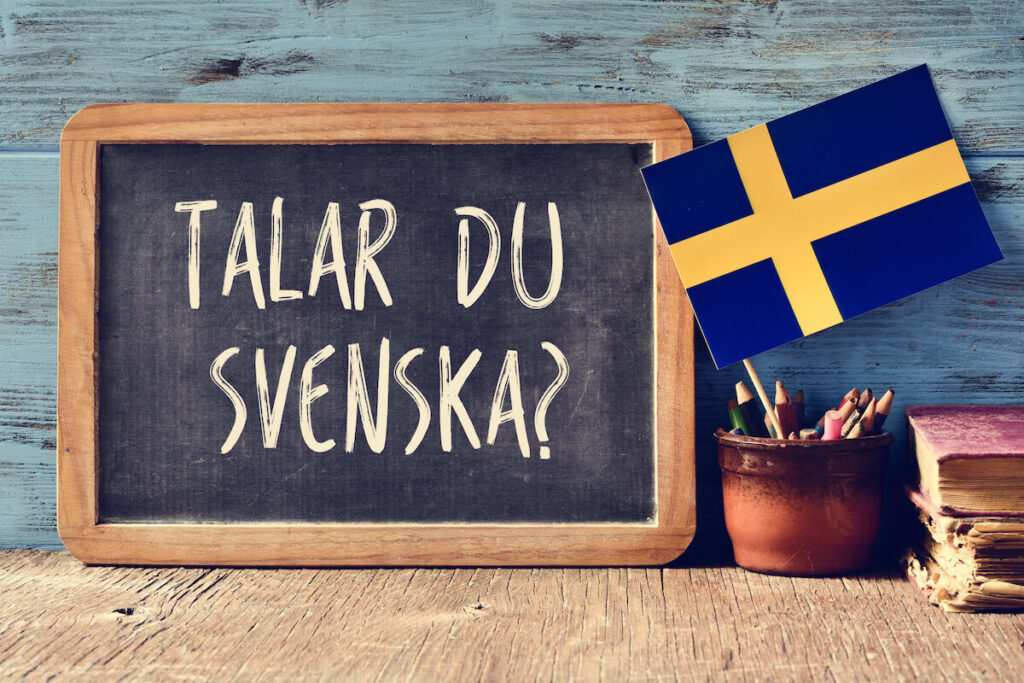
The most popular North Germanic language among learners by a long shot, Swedish also has a reputation for being challenging, yet fair and rewarding. This especially holds true for German speakers, who will have a much easier time with it than most!
Overall, Swedish is fairly similar to Norwegian, but incorporates some different spelling, a more melodic pronunciation, and slightly different word roots in some cases. Some people actually prefer the way Norwegian sounds and find it more intuitive to the German ear – others beg to differ and go for Swedish.
To demonstrate, let’s look at another sample phrase meaning “I am waiting for the bus to pick me up from work.”
In Swedish, it’s: Jag väntar på att bussen ska hämta mig från jobbet.
In Norwegian, you would say: Jeg venter på at bussen skal hente meg på jobb.
And finally for comparison’s sake, the German equivalent is: Ich warte auf den Bus, der mich von der Arbeit abholt.
You can see how both Norwegian and Swedish make use of the loanword job! According to some of my native friends, these kinds of loans, particularly English ones, are somewhat more common in Swedish, but they definitely appear in both.
8. French

Our first non-Germanic contender is also the most popular foreign language taught to German schoolchildren past English, and for good reason.
French is a Romance language descended from Vulgar Latin and is spoken in dozens of countries on four continents, including right across the border from Germany in both France and Switzerland.
Almost all Romance languages make great, beginner-friendly candidates for the easiest language to learn for German speakers. However, French wins out in my opinion for two major reasons.

First of all, the cross-cultural contact between German and French people that has endured for centuries has left a lasting influence on both languages.
There are plenty of French words in German (depending on the region, some of these may even be pronounced in the original French manner), and while German loanwords in French are a bit rarer, they do definitely exist. This lends French a slight, but noticeable sense of commonality that other Romance tongues lack.
Secondly, France’s proximity, large population, and strong economy have always attracted German native speakers to pick up French as a second language. This means that French resources specifically targeted towards German natives are commonplace and very easy to get a hold of, even compared to other popular Romance languages like Italian or Spanish.
9. Polish
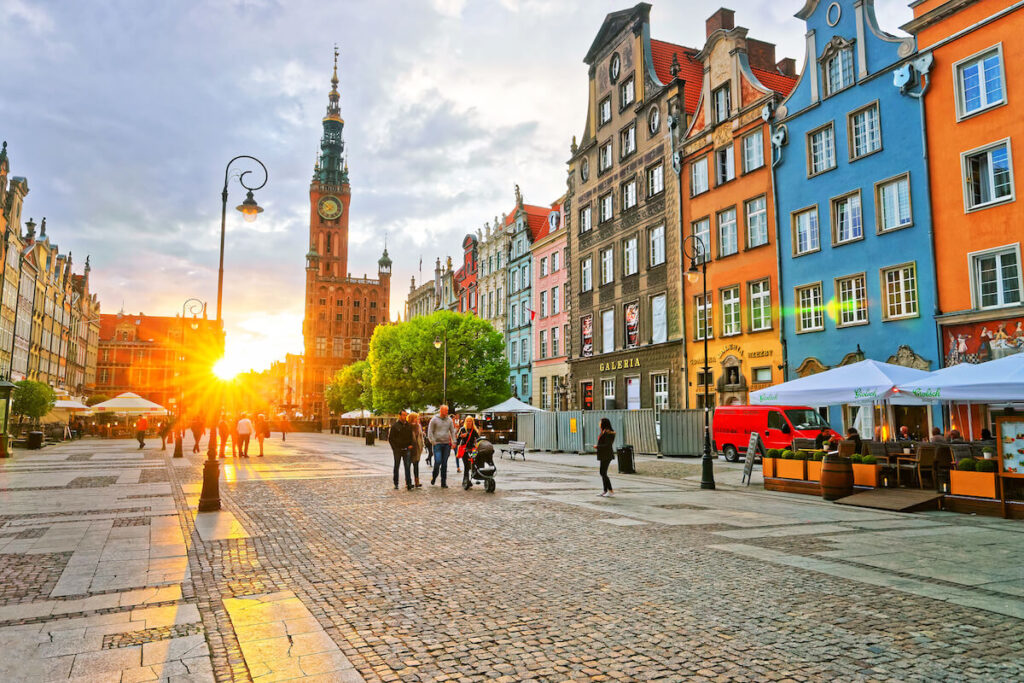
Didn’t think you would see a Slavic language on this list, did you?
It’s true: the Slavic family – and in particular Polish – have a reputation for being quite unwieldy and difficult to learn. This is not entirely inaccurate either! In all my two years of consistently attempting to learn the language, I have had to give up and restart from scratch plenty of times.
But what I have found is that so much of learning Polish has to do with finding the right form of instruction that suits you. Until I had it explained to me via a diagram, for example, I had no idea that the Polish case system works pretty much the same way as the German one, with a few small differences.
The same goes for sentence structure, which it took me a long time to realize is essentially the same as German most of the time, especially in spoken language. Even the way prefixes can form new compound words is awfully Germanic-esque when you really think about it!
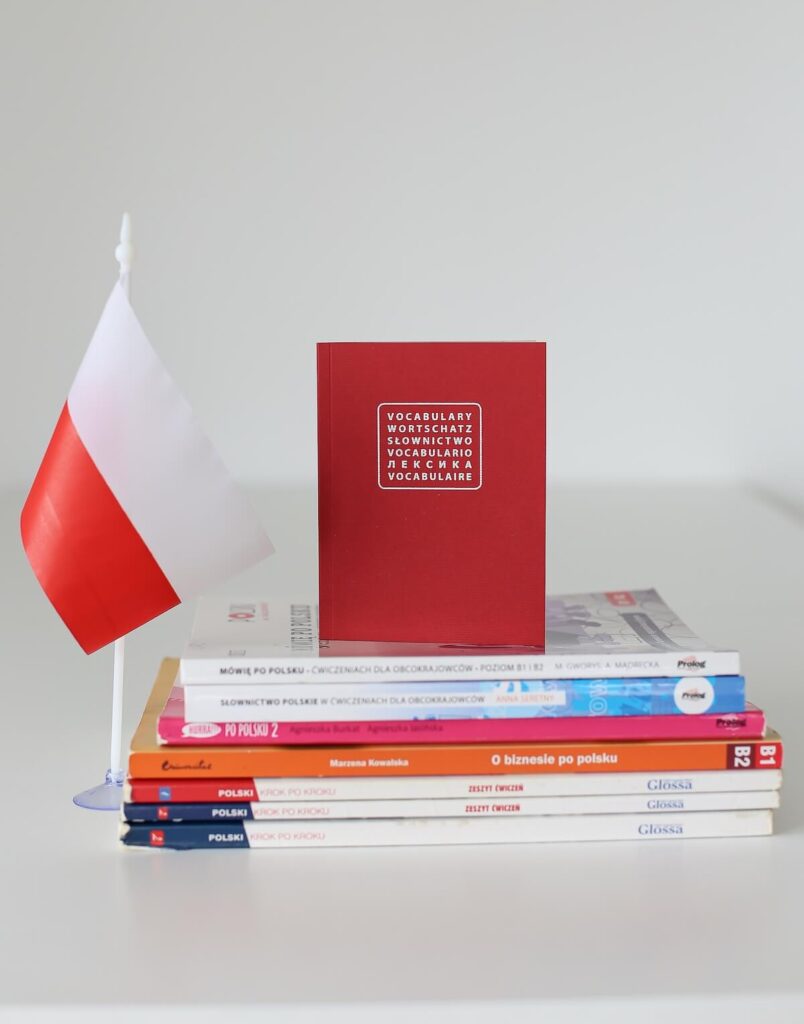
Ultimately then, the greatest challenge I have had to face learning Polish is to adapt to the learning and teaching styles of Polish natives (do expect some degree of culture shock if you’re from anywhere beyond Central-Eastern Europe). Taken on its own merits, however, Polish is remarkably elegant and straightforward to learn for a German speaker!
While most of these points can be said about all Slavic languages, Polish stands out as one of the most accessible ones for German speakers. Its homeland is right across the border from Germany, the language is spoken by more people than any other Slavic tongue apart from Russian, and unlike most of its brethren, it uses the familiar Latin script, too!
As a little bonus, also consider the fact that Polish features a lot of German loanwords, from asystent to dach, plac, hebel, and countless others. Those definitely give you an edge in reading and listening comprehension when you’re starting to learn the language!
10. Luxembourgish

If even the prospect of learning Yiddish sounds a tad bit too much like treading familiar ground to you, but you also don’t want to go overboard and study a language of an entirely different family like Polish, then maybe Luxembourgish would be right up your alley!
Spoken by less than half a million people, mostly within the city-state of Luxembourg and in surrounding areas across the German, Belgian, and French borders, Luxembourgish was considered no more than a German dialect for a long time – some still treat it as such, though today’s generation of linguists would beg to differ.
With a very large degree of similarity to Standard High German but blended with a vocabulary and phonetic system that draws a lot of influence from French, Luxembourgish is the quintessential example of a language caught in the middle of a dialect spectrum.
Though the orthography can be confusing as it follows almost entirely different rules than that of Standard German, Luxembourgish is actually fairly intelligible with some practice.
In Luxembourg, it’s used mostly interchangeably with French and German. Because of this, almost all Luxembourgish speakers are fluent in German as well, which can make learning the language as a German speaker that much more convenient.
Final thoughts
The German language offers you countless opportunities to pick up a new language without experiencing too harsh of a learning curve. Today’s list only includes some of the most notable ones – remember that depending on your background and other language skills, you may find that the easiest language to learn for you as a German speaker is one not featured in this guide at all!
Also, take care to remind yourself that language difficulty is both relative and far from the most important factor you should consider. Each of us has our own reasons for studying a new tongue, and you should quiz yourself thoroughly about your personal goals before making any big decisions.
Which languages did you personally find the easiest or the most intuitive to learn as a German speaker? Let us know in the comments below, and until next time!