Arabic is by any measure among the most widespread languages in the world, so it’s natural to expect some variation among the whopping 22 countries that speak it natively. What many budding Arabic students don’t know, however, is that Arabic exhibits a much broader variety of dialects than what you’ll find in most languages.
In effect, dialects of Arabic are more akin to a tightly-knit family of “Arabic languages”! Most of these are similar enough to be mutually intelligible, but when two speakers of widely different dialects meet, they may have trouble understanding one another.

This means that your choice of Arabic dialect can greatly influence how you’re perceived and understood in the Arab world. If speaking the vernacular is important to you (as opposed to studying Arabic purely for literary or religious reasons), then you should know which dialect is the most widely spoken in the region you’ll be traveling to.
Because finding that out can get a bit complicated sometimes, I’ve compiled this handy guide to the most spoken Arabic dialects in the world. Let’s explore and find out what makes each of them so unique!
Where is Arabic spoken?

Arabic originated within the Arabian Peninsula sometime between the 8th and 10th centuries CE. Concurrent with the rise of Islam, it spread and expanded, splitting off into numerous dialects along the way. These, in addition to the Classical Arabic of the Quran, continue to be spoken today in one form or another.
Today, Arabic is the dominant native language as far west as Morocco and as far east as Iraq! In the past, Arabic was also more widely spoken in other areas, such as al-Andalus (Spain and Portugal during their Islamic period).
In addition, a huge worldwide Arab diaspora also continues to allow the language to prosper in dozens of countries on every continent.
According to most counts, all this makes Arabic one of the most widely-spoken tongues on Earth, with over 300 million speakers in total!
Forms of Arabic
Today, there are dozens of forms of Arabic that have survived over the centuries to become fleshed-out dialects with thousands of native speakers. These don’t just exist at the national level – you will see later on how almost all Arabic dialects can be further subdivided into more regional or local varieties that all differ, sometimes significantly!
There are also some instances where linguists have disagreed on whether a language should be considered a relative of Arabic or counted among its dialects. This is the case with Maltese, which split off from an older form of Moroccan a long time ago, blending together with Sicilian to become something entirely different.

As for what the whole Arab world speaks natively, there is only one official answer.
Fusha is the direct descendant of the Classical Arabic language that the Quran and many other pieces of Islamic scripture were composed in.
Fusha, which is also known as MSA (short for Modern Standard Arabic), is taught at practically all Arabic-speaking grammar schools throughout the Arab world. It’s the only dialect – if you consider it as such – that is broadly understood by almost everyone in any Arabic-speaking country, though its use in day-to-day conversation remains very rare.
For the most part, Fusha is used in literature, on TV, in international politics, and in various other more formal contexts.
Most estimates put the number of fluent Fusha speakers at around 270 million – more than all the vernacular dialects combined!
The most widely spoken dialects of Arabic
1. Egyptian Arabic

Out of all vernacular varieties of Arabic, Egyptian is by far the most widespread, with over 100 million speakers and counting. In some way, this comes as a surprise – Egyptian is one of the few major Arabic dialect groups that is limited to just one country in terms of spread. Grammatically and in terms of pronunciation and vocabulary, it is distinct enough from all other Arabic dialects to be instantly recognizable and staggeringly different.
One of the most typical Egyptian expressions is using izzayak or izzayik to ask about how somebody’s doing. Literally, these actually translate to “how are you?” just like we say in English! However, this kind of expression is considered strange and unusual in other Arabic dialects and would immediately out the speaker as Egyptian.
Egyptians also use Aiwa for the word “yes”; though non-standard in most other dialects, this has entered the daily vernacular of many other Arabic-speaking countries as well.
Egyptian has a unique history among Arabic dialects and includes both recent colonial influences from European languages such as French (al-journal) and Italian (guanti for “gloves”), as well as signs of more ancient interactions with Turkish and some Canaanite languages.
Most crucially, modern Egyptian formed out of the bedrock of the Coptic language, the descendant of the ancient Egyptian pre-Arabic language spoken during the Classical era. This is the reason behind many unique Coptic words that only exist in Egyptian Arabic today, such as tarabeeza for “table” (other Arabic dialects use tahwla, which is actually the cognate for “table” in English and tons of other languages!).
The use of Egyptian Arabic outside of Egypt increased dramatically throughout the 20th century as a result of Egypt developing a rich domestic media industry, exporting Egyptian songs, films, and TV all over the Arab world and beyond. This is the major reason why to this day, Arabic speakers from many other countries can recognize and understand Egyptian fairly well even if they don’t speak it themselves.
2. Sudanese Arabic

Often overlooked by students, Sudanese nonetheless ranks among the most widely spoken dialects of Arabic with over 35 million speakers!
Note that this dialect, just like many others, exhibits plenty of regional variation. It isn’t even exclusively spoken in Sudan, to begin with – pockets of Sudanese Arabic exist in nearby Chad and even as far as Ethiopia.
Sudanese exhibits some grammatical similarities to so-called Sa’idi Arabic – the variety spoken in the far south of Egypt – but it remains unique and distinct enough to confound most other native Arabic speakers. Unlike all other African Arabic dialects, Sudanese maintains the full pronunciation of emphatic letters like thaa and dhal (equivalent to the hard and soft ‘th’ sounds in English, respectively).
However, completely contrary to MSA and many dialects, Sudanese makes far fewer distinctions about grammatical gender. Third-person plural gender does not exist in most varieties of Sudanese, and in some of them, gender can be entirely optional!
3. Iraqi Arabic

The form of Arabic spoken in Iraq by about 30 million people is another variant of the language that is unique enough to be considered its own linguistic category.
Also called Mesopotamian Arabic by some, Iraqi is fairly close to Fusha in grammar and pronunciation but also takes a lot from Canaanite and Mesopotamian languages like Aramaic, Assyrian, Kurdish, and Babylonian.
One feature that distinguishes some, though not all Iraqi speakers is their preservation of the ‘full’, emphatic sound for the letter Qaf, which has been softened in one way or another in almost every other dialect.
Note that the native dialect of Kuwait is closely related enough to be considered a variant of Iraqi by many linguists. The same goes for the Arabic spoken by Turkish Arabs, Arab Iranians, and many Kurds outside of Iraq.
Maghrebi Arabic dialects

Coming in at about 80 million native speakers in total, the Maghrebi Arabic dialects, spoken across northern Africa, are the second-biggest vernacular dialect group after Egyptian. Maghreb means “West” in Arabic, so these dialects are all colloquially referred to as Western.
Maghrebi Arabic features a very distinct sound with a lot of soft consonants in dense clusters compared to other Arabic dialects.
For example, the letter Qaf (which is realized as a very hard, emphatic k-like consonant produced far back in the throat) is pronounced contrary to its Fusha counterpart as a very soft g-like sound, like in the word ‘garden’. Also, long vowels are often cut out of words or replaced with short vowels.
It also features a lot of influences from Berber languages that are absent from so-called Eastern Arabic, a sign of the Maghreb region’s unique heritage.
4. Moroccan Arabic

With about 30 million native speakers, Moroccan is among the most widely spoken of the Maghrebi Arabic varieties. Due to its large proportion of foreign vocabulary and uniquely rapid pronunciation where many short vowels are skipped or deleted, it is generally considered one of the more difficult Arabic dialects to understand for Arabic speakers from non-Maghreb regions.
Moroccan uses a very high proportion of not only Berber vocabulary, but also French – a relic of the colonial period. Furthermore, some common everyday terms like kuzina (kitchen) are derived from Spanish, which can be traced back to the time period when trade and diplomacy between North African states and Al-Andalus provoked a very prolonged linguistic exchange between Arabic and Spanish.
On top of that, Moroccans themselves are notorious for code-switching on the fly between their Darija (the Moroccan dialect), Fusha Arabic, and French! This can make conversation that much harder for speakers from different regions.
5. Algerian Arabic
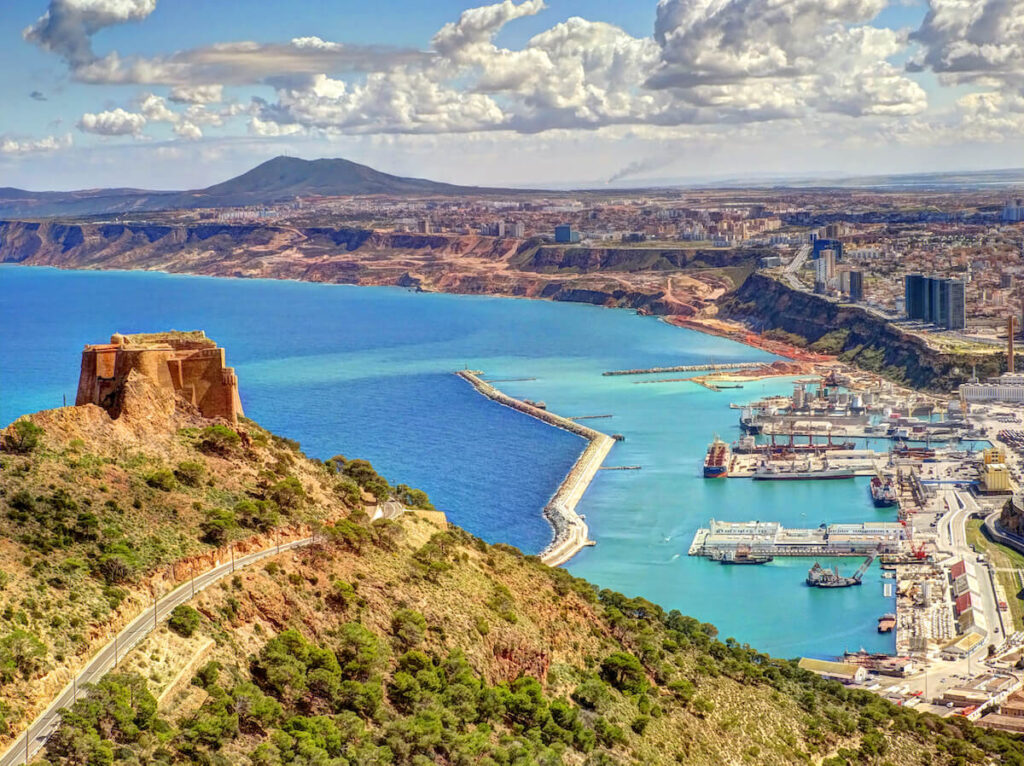
Like Moroccan, Algerian Arabic also features large influences from native Berber languages as well as French. Compared side-by-side, Algerian is natively spoken by a similar number of people as Moroccan – about 30 million – and features a somewhat less heavy Spanish influence in exchange for an even higher proportion of French loanwords.
Like many dialects of the Maghreb, Algerian and Moroccan flow together in a way: the local dialects of the far west of Algeria and the far east of Morocco are much more similar to one another than variations of either dialect from opposite ends of the same country.
All in all, Algerian is considered mostly easily intelligible with other Maghrebi languages by most speakers, in particular Moroccans.
6. Tunisian Arabic

Nestled in a corner surrounded by the Mediterranean Sea to the north, Morocco to the west, and Algeria to the east, the Arabic of Tunisia is fairly similar to its neighbors but remains fairly distinct.
Like the surrounding Maghreb languages, Tunisian exhibits plenty of loanwords from Italian, French, and Spanish, as well as a healthy substratum of Berber expressions.
Tunisian is spoken by around 12 million people natively and features a different cadence and sound than most other Maghrebi languages. For many Mashriqi (Eastern Arabic) speakers, Tunisian is one of the easier Maghreb dialects to understand, though it is still considered quite challenging nonetheless.
7. Libyan Arabic

Spoken by about 5 million people, Libyan is an often-overlooked member of the Maghrebi family. Because it is the easternmost Maghreb dialect, many assume that Libyan is mutually intelligible with, or at least easy to understand for Egyptian speakers.
However, Libyan shares much more in common with Tunisian and even Algerian than it does with dialects further to the east! The variant of Libyan spoken in the west surrounding Tripoli is considered to be part of a dialect continuum shared with most variations of Tunisian, just like the relationship between West Algerian and East Moroccan that I mentioned above.
The Benghazi variant of Libyan is in many ways its most distinct. A lot of the French terms that have become more common further west are replaced by Italian loanwords instead – this is a historic feature of Libyan that has to do with the country’s past as an Italian colony.
Levantine Arabic dialects

With about 50 million speakers in total, the Levantine Arabic dialects are some of the most popular among learners and also, thanks to their political and pop cultural presence, some of the most widely understood around the globe.
All Levantine Arabic varieties exist across a dialectical spectrum, just like Maghrebi dialects. Geographic distance, then, is the primary determiner of mutual intelligibility when it comes to most of these dialects. Generally speaking, Levantine Arabic is a lot closer to the classical language than Maghrebi and also features significant influences from Canaanite languages.
8. Syrian Arabic
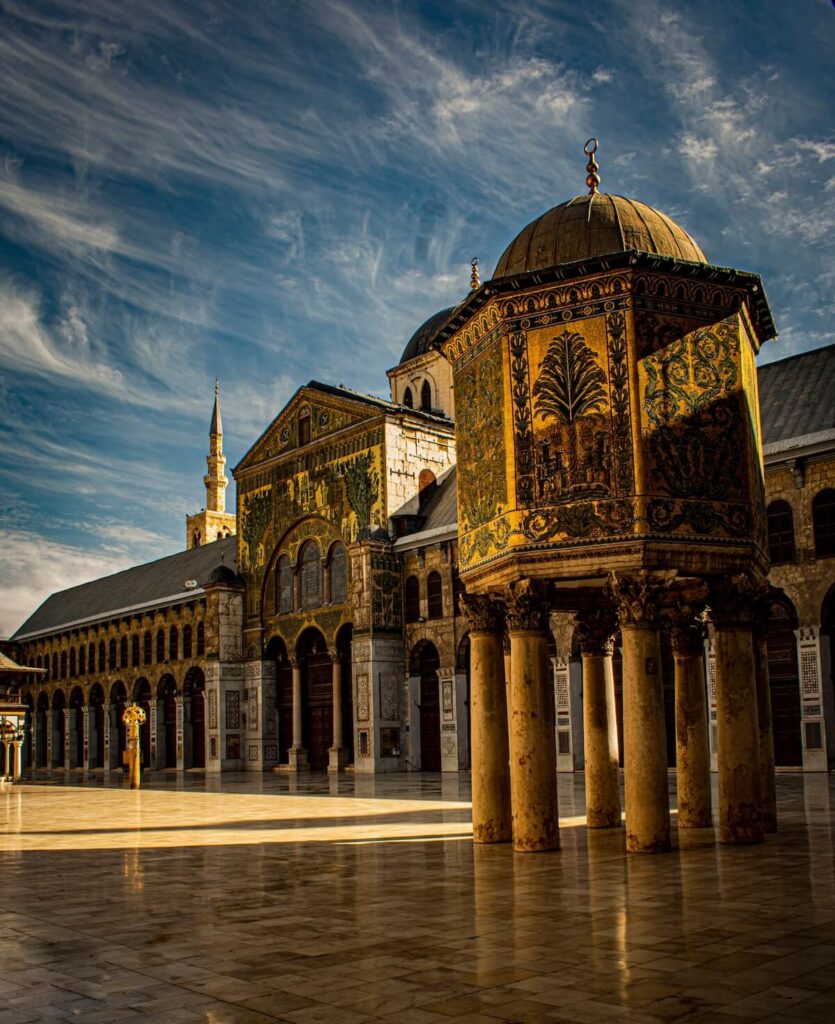
Out of all the Levantine dialects, Syrian is the most widely spoken with about 20 million people being fluent in it as of today! Thanks to the country’s vast land area and many shared borders, the national dialect also exhibits a lot of variety.
Usually, linguists categorize Syrian into a loose group of distinct languages clustered around the country’s major cities, out of which the Damascus variant is the most internationally well-known and widely spoken.
All Syrian dialects feature large amounts of influence from Aramaic, Assyrian, and classical Arabic. Compared to Fusha, the pronunciation of Syrian is a lot softer, with many of the emphatic letter sounds deleted or cut off. The southern Syrian variants are very easily intelligible with their neighbors, whereas the kind of Syrian spoken in the northeast is more easily understood by Iraqi speakers.
The Aleppo dialect, which is spoken throughout the north of Syria but remains linguistically mostly Levantine, also features a lot of Turkish loanwords which are fairly unique to Syrian Arabic.
9. Palestinian Arabic

Palestinian Arabic, spoken by about 7 million people, shares many similarities with Jordanian, and for some time was in fact treated as a unique variant of the Jordanian language. However, the Palestinian language is overall a lot closer to Modern Standard, and by extension classical Arabic than most of the other Levantine varieties.
Palestinian exhibits a blend of Jordanian, Syrian, and Egyptian influences in its pronunciation, with the vocabulary being by and large classical. Like Jordanians, Palestinians often modify their letter Qaf. However, they tend to pronounce it more emphatically than their eastern neighbors, much closer to the English ‘k’.
10. Jordanian Arabic
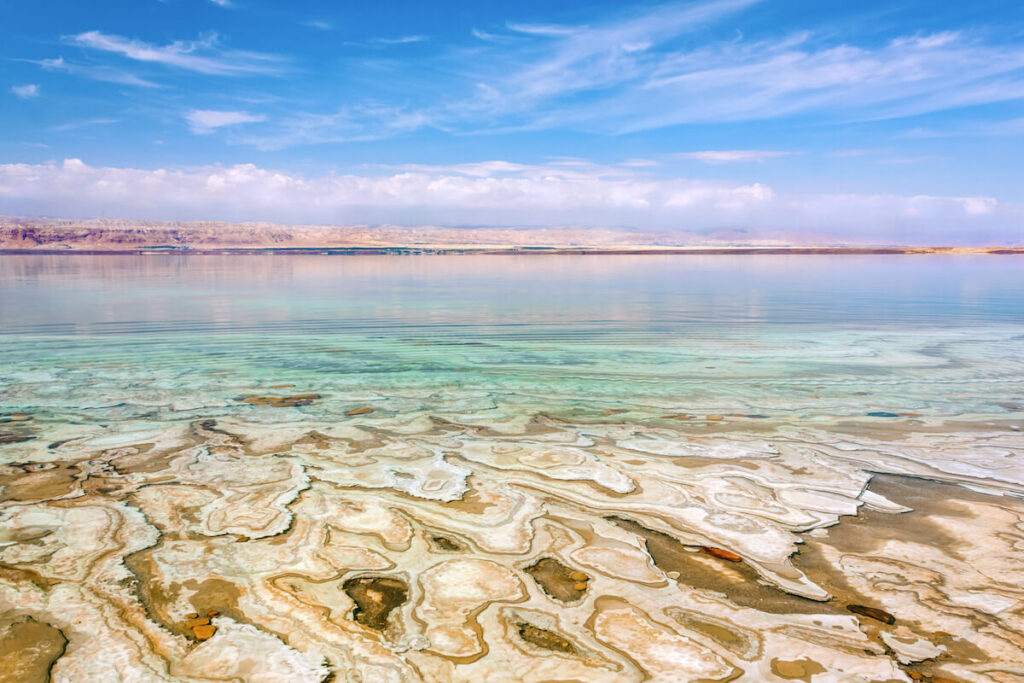
With over 6 million speakers, Jordanian is one of the most common dialects in the Levant and also one of the most popular among foreign learners.
The Jordanian diaspora is large and has helped to spread awareness of their unique variety of Arabic throughout the world; Jordanian entertainment, in particular music and TV are also popular in plenty of Arab countries.
Just like speakers of many other dialects, Jordanians like to play with their letter Qaf, though they do so in their own, distinctive way. Instead of softening it into a ‘g’ like Maghrebis, Jordanian Arabic speakers often turn the Qaf into a glottal stop or a totally silent letter, not unlike some Egyptian speakers.
To some extent, this is something you’ll also hear people say in other neighboring Levantine dialects, though the farther you go away from Jordan, the rarer it becomes.
11. Lebanese Arabic

Lebanese has a unique history among Levantine dialects. Linguistically, it is the closest relative to Syrian and shares much of its pronunciation and vocabulary. However, Lebanese is distinct thanks to its French colonial history, which has imbued it with many French loanwords and expressions.
Like Algerians, Lebanese like to code-switch back and forth between Arabic and French. However, where in the Maghreb this is a nearly universal phenomenon, in Lebanon it is much more socio-culturally diverse.
Generally, well-educated Christian Lebanese from Tripoli and Beirut are the most likely to code-switch, whilst the poorer Muslim communities of smaller towns and villages make very little use of European-origin expressions.
One distinct element of Lebanese that is also found in Syrian (though to a lesser extent) is the so-called imala, where a lot of long ah-vowels are turned into ‘eh’.
Peninsular Arabic dialects

The Arabic dialects spoken across the Arabian Peninsula are some of the most linguistically conservative of them all, retaining many features of Fusha that other varieties lack or have lost over the generations. This ranges from sentence structure to certain verb conjugations and especially the pronunciation of certain letters.
All that can make them difficult to understand for those not used to them, though the range of mutual intelligibility between peninsular Arabic and most other dialects is still far more favorable than for the Maghrebi languages!
12. Gulf Arabic

The language of the Gulf, spoken by about 12 million people in Oman, Bahrain, Qatar, the UAE, and the eastern part of Saudi Arabia, exists on a continuum with Iraqi but lacks many of the Mesopotamian influences that characterize the dialects from further up north.
One sign of the grammatically conservative nature of Gulf Arabic (or Khaleeji Arabic as it is also known) is the relative wealth of gendered forms used in daily conversation. All the Levantine dialects in addition to Egyptian and most Maghrebi languages have simplified the original 10 Quranic Arabic subject pronouns and verb conjugations down to a more compact selection.
By contrast, Gulf Arabic has retained all of these distinctions, maintaining a clear difference between second-person plural feminine and masculine, for example!
13. Najdi Arabic

Najdi is the term for the Arabic language spoken throughout the great midsection of the Arabian desert, including in the capital of Riyadh and by Bedouins and other nomadic communities in outlying areas. It is of course closely related to Gulf Arabic, particularly the so-called Badawi group of Gulf dialects spoken by native Bedouin tribes.
Known as one of the most conservative dialects of them all, the vocabulary and pronunciation of Najdi Arabic are very close to MSA. Only the letter Dad (an emphatic d-like sound in the standard language) is changed by merging its pronunciation with that of Za, making it more of an emphatic ‘z’.
14. Hijazi Arabic

Hijazi is the third of the dialects comprising the variety of Arabic variants common throughout Saudi Arabia.
Because it is spoken across Saudi Arabia’s western shoreline, where the holy cities of Medina and Mecca are located, the dialect has been heavily influenced by Muslim pilgrims from around the world. Its pronunciation has been affected and influenced by Urdu, Persian, and Turkish among others.
Estimates of Hijazi Arabic speakers amount to about 10 to 12 million, making it one of the most spoken Arabic dialects worldwide.
15. Yemenite Arabic

Yemenite Arabic, spoken by about 15 million people, is one of the most unique Arabic dialects of them all, though it is rarely studied nowadays. Like its neighbors, Yemenite exhibits a huge range of diversity, particularly from east to west.
Yemenite Arabic competes with Hijazi for the title of the most conservative, true-to-Fusha dialect of them all. It has retained all 10 personal pronouns, almost all of the original literary Arabic conjugations and tense structures, and the original pronunciation of every single letter including the Hamza, dhal, thaa, Qaf, and other emphatic letters often modified greatly by other dialects.
Depending on where exactly you go in Yemen, regional and local linguistic influences can vary a lot. Much of the language spoken in the north is similar to Gulf Arabic – including the distinctive ‘g’ sound for Qaf. In addition, the Yemenite Arabic found around Sana’a exhibits a lot of other unique features, such as words taken from Urdu, Persian, and various other Indo-Iranian languages.
Final thoughts

And that’s a wrap! Did you expect today’s list of the most spoken Arabic dialects to be this rich and diverse? The sheer range of vernacular speech and the wild differences in sounds, vocabulary, and grammar are just part of what makes Arabic a difficult, yet incredibly rewarding language to learn for me.
If you want to learn more about this fascinating language, consider checking out our articles on the most interesting fun facts about Arabic. Those looking for some study tips should also check out our top book and app recommendations for learning Arabic!