
Learning Spanish is a fun and rewarding process. I know, because I’ve been studying Spanish for four years! One thing that I can share is that, much like learning Chinese, English, or any other language, expanding your vocabulary in Spanish is one of the key aspects of achieving fluency.

You’ll need to have a repertoire of around 3,000 to 5,000 words just to be considered conversational in Spanish. If that number frightens you a little, don’t be, because you have a ton of tools at your disposal to help you quickly improve your Spanish, like Spanish vocabulary books!
About Spanish vocabulary

One key thing to remember when learning Spanish vocabulary is that many nouns in Spanish have masculine and feminine forms that are also spelled differently depending on whether they are singular or plural. While you can probably still be able to communicate effectively if you make a mistake here or there, to native speakers, you may come off sounding a little weird.
More importantly, verbs in Spanish need to be conjugated to convey the right meaning. Add to that the various verb tenses and one singular verb could have as many as 16 different conjugations, including its root form! So the key to mastering Spanish vocabulary is mastering verb conjugation.
In addition, context in Spanish vocabulary is extremely important because “false friends” (words that look familiar) in Spanish are common, especially for English speakers. One clear example I can remember is the word embarazzada, which doesn’t mean “embarrassed” at all. Instead, it means “pregnant”!
And so, as you can see, learning Spanish vocabulary is quite different from learning English, or even Mandarin. But for me, that just makes the process even more fun! To help you get started, here are some of the best Spanish vocabulary books you can get now!
Top books to learn Spanish vocabulary
1. Madrigal’s Magic Key to Spanish

No conversation about the best Spanish vocabulary books is ever complete without the inclusion of Madrigal’s Magic Key to Spanish. After all, this popular Spanish textbook is arguably one of the most important comprehensive and important books to learn Spanish!
With topics covering reading, writing, and speaking Spanish, this book is known for helping Spanish learners build a strong foundation in the fundamentals of the language. It starts by introducing basic concepts and vocabulary, codeswitching between English and Spanish to help readers understand.
As you progress, you’ll be exposed to more complicated Spanish vocabulary — all of which is taught in context through numerous example sentences, and pretty soon, you’ll have built up a sizeable archive of words!
What I like about this book:
- It covers every core language skill in Spanish and builds a strong foundation
- Provides plenty of usage examples for each new word
- Includes lessons on conjugation and context rather than making readers memorize words
2. Easy Spanish Step-by-Step
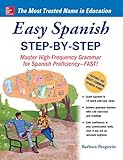
- Easy Spanish Step by Step proves that a solid grounding in grammar basics is the key to mastering a second language
- Grammatical rules and concepts are clearly explained in order of importance, and more than 300 verbs and key terms are introduced on the basis of frequency
- Numerous exercises and engaging readings help learners quickly build their Spanish speaking and comprehension prowess
- Amazon Kindle Edition
When I first started learning Spanish, one aspect that I struggled with was verb conjugation. That’s because, unlike my mother tongue, Spanish vocabulary and grammar are heavily interlinked. That’s why Spanish vocabulary books like Easy Spanish Step by Step are so important.
The best quality of this approachable and engaging textbook is how it takes a step-by-step approach to make learning Spanish vocabulary manageable and fun. Each step masterfully breaks down complex grammar rules into bite-sized chunks before introducing new vocabulary in context, allowing learners to quickly develop a holistic comprehension of the language.
Best of all, the book, written by language expert Barbara Bregstein, contains plenty of exercises and reading samples to help you build your confidence and practice what you’ve learned!
What I like about this book:
- Seamlessly combines grammar and vocabulary lessons into each chapter
- Lessons are taught in a structured and progressive way
- Covers every essential form of Spanish verb conjugation
3. Spanish Made Simple: Revised and Updated

Another comprehensive Spanish vocabulary book that language learners should consider is Spanish Made Simple. As the name of the book suggests, this helpful read presents itself as a step-by-step guide that helps learners master the basics of Spanish grammar and vocabulary.
The newest edition not only features a plethora of new, modern vocabulary (including idioms), but also retains its helpful conjugation and pronunciation guides, as well as much-needed review chapters and exercises. As a bonus, it also contains a mini dual-language (English-Spanish) dictionary at the end.
I would recommend combining this comprehensive book with other Spanish vocabulary books and other Spanish learning materials to quickly master the basics of the language.
What I like about this book:
- Breaks down complex grammar and vocabulary into easy-to-digest chapters
- Teaches conjugation in context and along with grammar rules
- Comes with plenty of exercises and an answer key for review
4. The Everything Learning Spanish Book
No products found.
For beginner learners who already have a basic grasp of Spanish, one of the Spanish vocabulary books not to miss is this comprehensive guide by language expert Ed Swick.
Like most other Spanish textbooks, The Everything Learning Spanish Book covers important grammar and vocabulary lessons. However, this particular guide also covers cultural insights, allowing learners to catch a glimpse into Hispanic culture and tradition.
What’s more, thanks to the book’s helpful step-by-step instructions and practice sections, Spanish learners will be able to pick up new words and learn how to properly use them quickly. The eBook version also contains pronunciation guides, making it one of the most holistic books to learn Spanish on the market!
What I like about this book:
- A comprehensive guide combining all language skills
- Exposes readers to the cultural nuance of Spanish and its vibrant communities
- Comes with an audio CD with pronunciation guides
5. First Spanish Reader: A Beginner’s Dual-Language Book

- Amazon Kindle Edition
When it comes to Spanish vocabulary books that beginners can pick up and just start learning, one of my recommendations is this handy volume edited by Angel Flores. It features easy-to-read classic Spanish stories alongside English translations for quick comparison.
What I like about it is that, apart from picking up vocabulary and conjugation by reading the stories, learners are also subtly exposed to Hispanic culture and tradition, as many of the stories are based on the daily life of Spanish communities. What’s more, readers can then practice the newly acquired vocabulary via the exercises at the end of the book.
Overall, First Spanish Reader is a great Spanish vocabulary book because it allows even total beginners to enjoy classic Spanish stories and encourages quick comparison between languages for easy comprehension.
What I like about this book:
- The vocabulary is presented through interesting Spanish stories
- Dual-language translation allows easy comprehension
- Comes with an exercise section at the end to help with information retention
6. Spanish Short Stories for Beginners
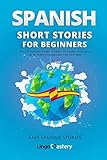

Another one of the most popular Spanish vocabulary books that uses short stories to teach Spanish vocabulary is Spanish Short Stories for Beginners. As the name suggests, this book is simply a compilation of 20 easy-to-read short stories that help Spanish learners expand their vocabulary and build their comprehension in the process.
What is unique about this popular book is that it isn’t just a mish-mash of stories. Instead, every story in the book contains an important lesson focusing on some of the core language skills in Spanish. What’s more, most of the dialogue in the story is also reminiscent of realistic day-to-day conversations.
When it comes to actually learning new words, Spanish Short Stories for Beginners uses a combination of translations, summaries, and a helpful glossary list to highlight useful vocabulary from each story, including any slang or phrases! Readers can then test their understanding with an exercise at the end of the chapter!
What I like about this book:
- Uses a variety of stories to highlight important language skills in Spanish
- Summarizes each story in both English and Spanish and provides a list of vocabulary
- Each story comes with exercises to test one’s comprehension
7. Spanish Vocabulary Builder

If what you want are Spanish vocabulary books that dispense with boring grammar lessons and focus only on teaching you new words, one entry-level book you can use is Spanish Vocabulary Builder.
As the name suggests, this book focuses on helping learners expand their word bank, with over 3,000 Spanish words and expressions to learn. Helpfully, the words are all categorized into different themes, including basic nouns and greetings, to more niche topics like relationships, hobbies, and tourism.
However, one potential weakness of this book is the lack of grammar instruction. Because of this, I recommend combining this book with another one on this list for a more well-balanced learning experience.
What I like about this book:
- Hyper-focused on expanding one’s Spanish vocabulary
- Chapters are presented in easy-to-read lists of words and phrases
- Covers a wide variety of topics and themes
8. 501 Spanish Verbs, Ninth Edition

A slightly better vocabulary-centric Spanish book is Barron’s 501 Spanish Verbs. As the title of the book suggests, the main focus of this book is to get learners familiar with the most common and useful Spanish verbs. And, as you will find out once you start learning Spanish, verbs and conjugation make up the bulk of vocabulary mastery in the language.
What I like about this book is that it doesn’t shy away from the more complicated conjugations like the subjunctive. Instead, it covers all bases and ensures learners can master the correct form of Spanish conjugation, with clear and easy examples provided for each verb in alphabetical order.
What’s more, the book comes with links to online practice and exercise sessions to reinforce what you’ve learned. Along with an audio program (featuring a native speaker), this book will have you speaking Spanish with perfect conjugation and accurate vocabulary in no time!
What I like about this book:
- Showcases the most important verbs in the Spanish language
- Highlights the conjugation of each verb thoroughly
- Comes with plenty of exercise — a key factor in mastering Spanish conjugation
9. Practice Makes Perfect: Spanish Verb Tenses

In my opinion, no two Spanish vocabulary books go together as well as Practice Makes Perfect: Spanish Verb Tenses and 501 Spanish Verbs do. After all, the latter teaches language learners common verbs and conjugation in Spanish, while the former focuses on helping learners master the art of conjugation.
Written by experienced language teacher Dorothy Richmond, this helpful book not only spends a great deal of time explaining what Spanish conjugations are and why they’re important, but it also supplements each chapter with essential vocabulary to know.
The book also comes with vigorous exercises, audio lessons (found online), and flashcards for convenient and quick lessons. Overall, it’s one of the best and most underrated Spanish vocabulary books in the market.
What I like about this book:
- Provides ample explanations about the concepts of Spanish conjugation
- Includes a glossary of essential vocabulary in every chapter
- Supplements each chapter with exercises and additional materials online
10. Spanish: 3 Books in 1
No products found.
For me, a good Spanish book for self-learning language enthusiasts allows you to switch it up when you need to. Having sat through hour-long grammar lessons, I can tell you that being able to switch from grammar to vocabulary to idioms can help keep you motivated.
This bundle of Spanish books written by Paul Ramos contains three separate books that touch on Spanish vocabulary and grammar, common phrases, and short stories, making it one of the Spanish vocabulary books on this list that is best suited for beginners looking to progress to intermediate Spanish.
Not only do the books cover the fundamental rules of Spanish grammar and vocabulary, but it also exposes the reader to common phrases used in daily conversation, as well as short stories to help with reading practice. Speaking of, there are a ton of exercises with which users can review what they’ve learned!
What I like about this book:
- Contains everything a learner needs to progress from beginner to intermediate Spanish
- A large archive of useful Spanish vocabulary as well as common phrases
- Comes with a plethora of different exercises that work on different language skills
11. Complete Spanish Step-by-Step, Premium Second Edition

If you’re looking for even more Spanish vocabulary books to improve your Spanish, then check out the “upgraded” version of Easy Spanish Step-by-Step — Complete Spanish Step-by-Step!
Also written by Barbara Bregstein, Complete Spanish Step-by-Step does what Easy Spanish Step-by-Step does: Helping readers and language learners build a solid grounding in Spanish grammar and vocabulary. The difference is that this book combines the aforementioned classic with Advanced Spanish Step-by-Step, making it an ideal choice for beginners who want to go beyond just the basics.
This book contains more advanced grammar concepts and more complicated vocabulary, as well as idioms and more to help you truly master the language and start speaking like a local.
What I like about this book:
- Combines both beginner and advanced-level Spanish lessons
- Includes complicated vocabulary in context
- Comes with audio recordings and plenty of exercises to test your progress
12. A Frequency Dictionary of Spanish

You might wonder why I’d recommend a dictionary in a list of Spanish vocabulary books, but hear me out. For Spanish learners who already have a basic understanding of Spanish grammar and vocabulary, the next step is to practice conversing in the language.
A Frequency Dictionary of Spanish will help you do that, as it contains a large archive of Spanish vocabulary, based on a new web-based corpus with words from 21 Spanish-speaking countries. Each new word comes with an English translation and usage example.
What is impressive is that every word in this book is backed by data — it contains around 5,000 of the most frequently used words in Spanish. However, this book does require a lot of heavy reading to fully understand, so it’s best reserved for intermediate learners.
What I like about this book:
- Features a vocabulary bank that’s backed by research
- Provides long and comprehensive explanations
- Vocabulary is split into multiple different categories
13. 2,001 Most Useful Spanish Words

Another Spanish vocabulary book that focuses on practicality is this popular guide written by Dr. Pablo Garcia Loaeza. It features over 2,000 of the most common Spanish vocabulary, along with translations, definitions, and sample sentences in Spanish.
What I like about this book, compared to the entry above it, is that it doesn’t spend too much time explaining other things, it just jumps straight into the thick of it. This is understandable as it is one of those Spanish vocabulary books that also cater to travelers looking to learn some basic Spanish.
However, it’s also suitable for language learners as it also features some tips on grammar and other core language skills.
What I like about this book:
- Presents words in an easy-to-digest list containing example sentences
- Splits words into different categories that are easy to navigate
- Comes with a brief introduction to grammar rules at the beginning
14. Mastering Spanish Vocabulary
No products found.
One could argue that this is one of the most complete Spanish vocabulary books on the market. After all, it contains over 13,000 words!
However, what’s good about Mastering Spanish Vocabulary is that it’s not just an endless glossary of words. Instead, this book is surprisingly comprehensive, supplementing each word entry with a pronunciation guide, use examples, and definitions.
Like other books that focus mainly on vocabulary, this publication, part of the Barron’s Foreign Language Guides series, categorizes vocabulary into different themes and topics, making it easy for readers to find exactly what they’re looking for.
What I like about this book:
- Contains an extremely large archive of vocabulary
- Comes with an online audio guide
- Words are arranged in an order that gets increasingly difficult
15. Nothing but Vocab: Spanish Edition

If Spanish vocabulary books had a “final boss” this would be it! Nothing but Vocab contains over 36,000 Spanish words for learners to master, ranging from basic vocabulary to some of the most complicated words in the dictionary.
Normally, I would scoff at books like these, but what this publication does well is it makes the process fun by adding quizzes to every chapter. So rather than memorize word after word after word, language learners will be challenged to fully understand and use the words correctly.
With over 36 chapters, this one vocabulary book pretty much covers everything from beginner to advanced-level Spanish. As if that isn’t enough, there is a massive final exam at the end of the book that will test even the most seasoned Spanish speaker!
What I like about this book:
- Comes with a massive vocabulary bank covering just about every topic
- Each chapter ends with plenty of review exercises to improve info retention
- A final exam awaits for an overall review of everything that you’ve learned
16. Conversational Spanish Quick and Easy

Learning a new language is ultimately about being able to converse fluently. The same goes for Spanish. One of the best Spanish vocabulary books you can get to expand your word bank is one that focuses on conversational Spanish.
This book contains over 300 of the most common Spanish words that are used in daily conversations and teaches learners how to correctly use them the way a native speaker would. To be precise, this book is one with a clear purpose — getting you to speak Spanish as soon as you can. What it lacks, however, is any proper instruction in complicated grammar rules, so if you were hoping to give a speech about human evolution in Spanish, this might not be the book for you.
However, if what you want is to learn enough Spanish vocabulary for a trip to Spain or Argentina, then you’ve got a real gem in the form of this book!
What I like about this book:
- Contains the most commonly used Spanish words in daily life
- Example sentences are structured the same way they would in real-world conversations
- Dispenses with other topics — this book is purely about conversational vocabulary
17. Learn Spanish Vocabulary Crossword Puzzles

This is perhaps one of the more fun Spanish vocabulary books on the market. As you might have already guessed from its name, this book is all about expanding your vocabulary by doing daily crossword puzzles!
In total, this book contains 50 crossword puzzles filled with the sort of vocabulary that’s used in daily conversation. Suitable for both beginner and intermediate-level learners, the book contains clues that are written in English and Spanish. So, if you want a proper challenge, you can ignore the ones in English!
For Spanish vocabulary to stick, the best thing to do is simply to constantly practice. But if you’re tired of the same repetitive exercises, this book will offer a little something different compared to your other Spanish workbooks!
What I like about this book:
- Teaches Spanish vocabulary in a fun, interactive way
- Suitable for all levels of Spanish
- Encourages a gamified learning experience
Tips on how to improve your Spanish vocabulary

To master Spanish and perfect your vocabulary, you can’t just rely on Spanish vocabulary books. Instead, combine the books on this list with other learning materials, like apps and novels so you can immerse yourself in a Spanish learning environment. In fact, you can even sign up for some Spanish courses online!
However, more importantly, there are some tips that you can use to help make things easier. Consider this a little cheatsheet from someone who’s studied Spanish for the past four years:
Master verb conjugation. I don’t care if it’s just a list of 10 regular verbs and one irregular verb. Before you expand your vocabulary bank, you need to make sure you know how to correctly use them. And with verbs being such an essential part of any language, you’ll want to first learn how to correctly conjugate Spanish verbs.
Take it slow and steady. In case you haven’t noticed, Spanish is fast, especially when it’s two native speakers talking to each other. You’ll likely hear many words you’ve never heard before, and that’s okay. Be at peace with knowing that it will take some time before you learn enough words to be able to watch Money Heist without subtitles.
Set achievable goals (perhaps 10 new words per day), and slowly build your word bank. It’s more important that you understand the words you learn than it is to learn more.
Surround yourself with Spanish media. In my opinion, Spanish is one of those languages that you get better at the more you listen to it. The more you consume Spanish media (watching movies, listening to songs, and more), the easier it will be for you to pick up new words, especially once you get used to listening to native speakers!
Talk to yourself. This is one of the most cliche language tips but it works. Pretend that you’re giving a speech about something. It could be something simple like your hobbies, or something more nuanced, like pretending you’re a soccer coach giving an interview.
Try, as best as you can to give a speech in Spanish. When you’re stuck, look up the word you need in Spanish, and note it down. Trust me, this will help you improve your Spanish vocabulary quickly!
Conclusion
And there you have it: 17 of the best Spanish vocabulary books for beginners and beyond. Like I said, to be able to master Spanish vocabulary, you also need a firm grasp of the language’s grammar rules. So, I recommend combining the books on this list with these Spanish grammar books for the best results!