
If you’re learning a language in Europe (or a European language elsewhere), then you’ve probably seen references to CEFR levels or letters and numbers A1 to C2. But what are these levels and how does this international level system work?
In this article, we’ll address all of your questions about Spanish language levels using the CEFR system. CEFR levels are the same for all languages (description-wise) but we’ll be basing this article specifically on levels of fluency in Spanish.
What are CEFR Spanish language levels?

CEFR stands for Common European Framework of Reference for Languages. The levels are broken up into six levels and allow Spanish learners and teachers to measure language ability and fluency. Essentially, the levels will range from someone who is beginner Spanish to advanced and near-native Spanish proficiency.
To get an official CEFR Spanish language level, you’d need to take a special exam that assesses your skills – the DELE or the SIELE test.
The CEFR levels show an international standard of a person’s language ability. It can help people to know where they are in terms of proficiency in a specific language in relation to other people but also to other languages that they speak too.
The CEFR levels have a complete list of descriptions of ability in four skill areas: listening, speaking, reading, and writing. Thus, a person’s overall ability is assessed rather than just their ability to read the language or understand spoken language.
CEFR levels as a foundation
Because CEFR is the most widely used system for assessing languages worldwide, it is used as a foundation to write syllabuses for curriculums around the world. Many international language syllabus contents will be taken directly from CEFR level descriptions.
What are the benefits of CEFR levels?
When learners have their Spanish language levels defined by CEFR standards, it provides instant understanding for many educational institutions and teachers internationally. For example, a student in China who is at Spanish level B1 will be as proficient as a student in the UK at the same level.
What’s more, if you’re a C1 level in Spanish and a C1 level in Italian, you can conclude that you’re just as proficient in both languages.

Another benefit of CEFR levels is in the world of work. If you’re applying for a job in another country or one that requires a lot of international communication and travel, knowing your CEFR level can really help. Instead of saying you have GCSE or A Level Spanish in the UK, you can actually put your qualification and level into terms that other countries will understand.
How are the CEFR levels broken down?
It’s worth remembering that the Spanish language levels for CEFR are the same for other languages. This means that for some languages, it’s harder to get to C2 proficiency due to the language being harder.
For example, an English speaker would find getting to C2 level in Spanish easier than they would German because Spanish is easier for native English speakers to learn. Check out this article we wrote about the easiest languages to learn.
When the Council of Europe came up with the CEFR levels, they created six stages: A1, A2, B1, B2, C1 and C2.

Let’s look at what each level involves in terms of proficiency.
The “A”s – basic language proficiency
A1 – beginner
As far as Spanish language levels go, every learner will begin at A1 level. When A1 level has been achieved, the learner will be able to:
- Use and understand the most basic of expressions to be able to satisfy needs
- Greet others and introduce themselves, asking others about themselves
- Interact with another speaker simply when the other person speaks clearly and slowly
How to get to A1 level in Spanish

Getting to A1 level is pretty easy with effort and time. Most people can get to this level by using common apps like Duolingo or Babbel. Most high street bookstores will have basic Spanish learning guides too.
A2 – elementary
At A2, the learner will have progressed from the basics and will also be able to:
- Understand common Spanish expressions concerning day-to-day topics like family, shopping, and employment
- Complete routine tasks that need an exchange of information
- Describe needs in basic terms
For UK learners, CEFR A2 is the equivalent of a lower grade at GCSE level.
How to get to A2 level in Spanish
A2 level in Spanish is also pretty straightforward for most people to achieve at home and there are plenty of resources available. Passion and motivation will begin to become more important at this level.
In terms of specifics for Spanish, you’ll need to know the difference between ser and estar, know how to construct sentences and questions accurately, use gustar and all pronouns, use conjunctions like pues, además, por lo cual, etc.
The “B”s – independent users
B1 – intermediate
At B1, Spanish language learners can:
- Understand information about work, school, family, and leisure topics
- Deal with travel situations
- Create a simple text on a topic of interest.
- Describe their experiences, dreams, ambitions, opinions, and plans
For UK learners, B1 level is the equivalent to a higher grade at GCSE.
How to get to B1 level in Spanish

Things start to get more complex at B1 level and you’ll need a lot more dedication to grasp new concepts.
Though you can generally breeze through A1 and A2 Spanish levels solo, when it comes to B1, you’re probably going to need some more input, either by a Spanish tutor or by a native speaker in a language exchange. Getting a grammar book will help you now too.
B2 – upper intermediate
At B2, learners of Spanish can:
- Understand the main points of a complex written text. This might be a technical text relating to an area of specialism
- Respond spontaneously without too much difficulty for either the native speaker or the learner.
- Produce detailed written texts on a range of topics
For Spanish language learners in the UK, B2 is equivalent to A Level.
How to get to B2 level in Spanish
A tutor or class will really help Spanish learners wanting to get to B2 level. If you haven’t already, you’ll need to start dedicating a lot of time to studying.
It is a good idea to vary the sorts of activities you’re doing in order to keep up the motivation. As such, using apps, YouTube videos, watching movies, and listening to music in Spanish will all help.
The “C”s – proficient users
C1 – advanced
When a learner is at C1 level, they can:
- Understand a wider range of more demanding, longer conversations and texts
- Express their own ideas without too much difficulty
- Use Spanish for academic, professional, and social situations
- Create detailed and well-structured text on complicated topics
How to get to C1 level in Spanish

Being at C1 level means knowing advanced Spanish. This level takes many years of effort to get to. There is no quick way about it, unfortunately.
If you can, the best way to get to this sort of advanced level is to completely immerse yourself in the language. Realistically, you can only do that by moving to a Spanish-speaking country and living and breathing the language. Read our article on how long it takes to learn a language.
C2 – proficiency
When a person is at C2 level in Spanish, they can:
- Understand nearly everything they hear or read easily
- Summarise information coherently from a range of sources
- Express themselves precisely in complex situations
For learners in the UK, C2 level is where you would expect to be after completing an undergraduate degree in Spanish.
How to get to C2 Level in Spanish
As with C1, being at C2 level will mean tons of hard work and dedication. Once you do reach this level, though, you’ll be completely fluent!
When do CEFR Spanish levels matter?
These levels only really matter to anyone who wants to measure people’s levels of fluency in Spanish. It’s also useful for people who have a pressing need to Google what level of Spanish am I?
Another reason why people find these levels useful is for employment. Being able to add levels of Spanish for resume documents or educational admissions is good.
Do you need a CEFR certification?

Outside of academia and the world of work, CEFR levels aren’t that important.
If you’re learning Spanish for fun, they’re simply a tool you can use to gauge where you’re at. Sitting exams means studying hard. For some people, that’s enough motivation to get them to achieve their goals. For others who just want to speak conversationally, it might not be as important.
How is your CEFR level calculated?
To get an official CEFR level, you’ll need to take an exam. There are, however, ways of assessing yourself against the descriptors to work out where you are.
If you’re interested in the exam approach, you’ll be tested on reading, listening, writing, speaking, interpreting, and translating.
There are two Spanish CEFR official tests. These are the DELE and the SIELE tests.
The DELE test
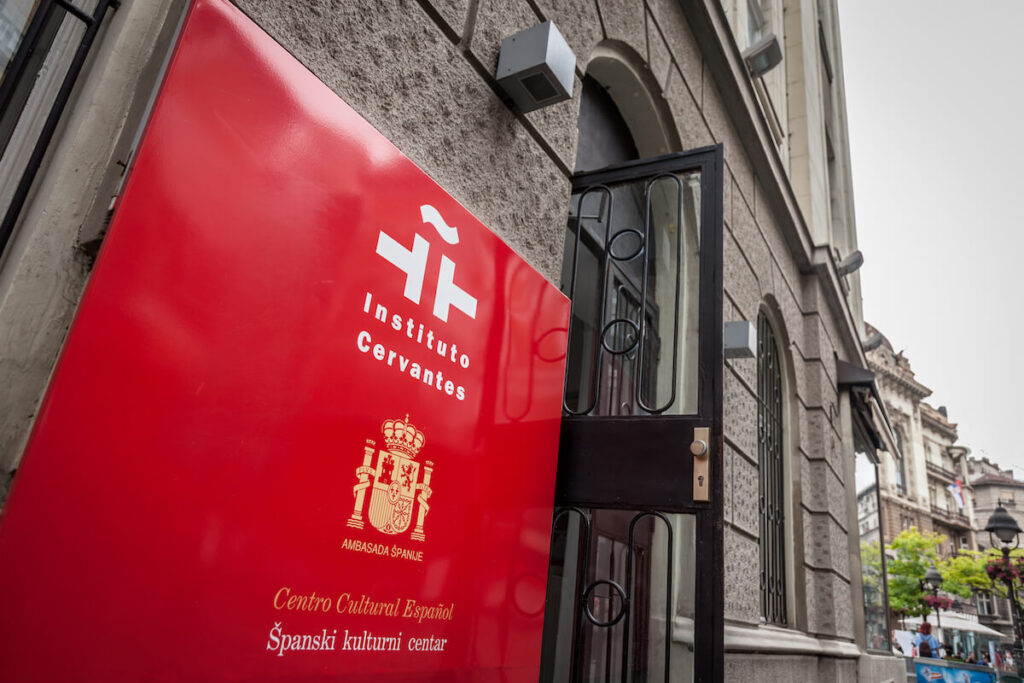
The DELE is administered by the Instituto Cervantes for over 16s. It is valid internationally and indefinitely.
The SIELE test
The SIELE test is very similar. It is a singular, multilevel example with a resulting score of 0 to 1000. It is recognised internationally. The sum of the four tests is linked to the CEFR levels.
Preparing for CEFR levels test
Like any exam, preparing for a CEFR levels test needs dedication. It’s always advisable to look at the structure and content of the tests and see if you can find any example papers so that you know what to expect. Speak to people who have taken the test before and ask for their advice too.
Final thoughts

Hopefully, you’ll now have a better understanding of Spanish language levels and what they mean. Perhaps, you’ve also been able to work out roughly where your Spanish level is.
Remember, unless you need to know or are motivated by knowing your Spanish level, you don’t need to worry about it too much. After all, language learning should be fun!