
Are you ready for a thrilling linguistic journey through South America? In this post, we’re diving into the rich linguistic landscape that paints the continent with colors as diverse as its cultures to discover the most spoken languages in South America.
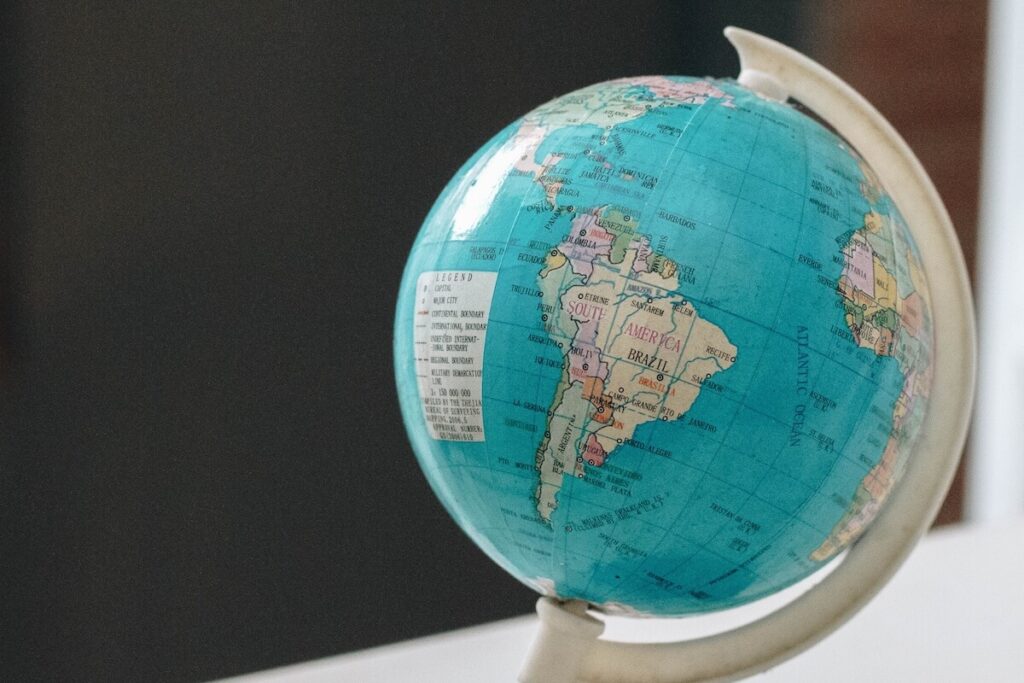
From the delightful rhythm of Portuguese and Spanish, the indigenous echoes of Quechua and Guarani, to the historical imprints left by German, Italian, Arabic, and Chinese diaspora communities – South America is a symphony of languages.
Top languages in South America in numbers
| Language | No. of speakers |
| Spanish | 210 million |
| Portuguese | 203 million |
| Quechua | 13 million |
| English | 5.1 million |
| Aymara | 2.2 million |
| German | 2 million |
| Italian | 1.5 million |
| Arabic | 1.1 million |
| Chinese | 535,000 |
| Mapuche | 500,000 |
| Dutch | 280,000 |
| Guarani | 280,000 |
| French | 231,000 |
What are the most spoken languages in South America?
1. Spanish

Spanish dances through the lips of millions across South America. From the vibrant streets of Buenos Aires to the ancient alleys of Cusco, Spanish unites, but it also transforms—its regional dialects paint a linguistic mosaic.
In Colombia, it’s a melody laced with the accent of the Caribbean, while in Chile, the ‘s’ whispers softly, echoing the Pacific breeze. The rhythm of Spanish in South America beats in tandem with the diverse pulse of its landscapes.
That’s not a uniform waltz—or tango—though. The most widely spoken language in South America is quite distinct from its European cousin. The ‘y’ and ‘ll’ sounds, often a stumbling block for learners, find unique nuances here. The vosotros form fades away, leaving room for the more familiar ustedes.
Venture into the plazas of Lima or the bustling markets of La Paz, and you’ll encounter the vocabulary of everyday life. Yet, beyond utility, Spanish in South America tells the story of ancient civilizations, the passion of revolutions, and the zest of contemporary art.
2. Portuguese

The heart of Portuguese, the poetic language of Brazil, beats strongest in the continent’s largest country where the samba rhythms and Amazonian melodies find their linguistic counterpart.
The journey of Portuguese across the Atlantic echoes the age of exploration, colonization, and the intricate dance of cultures.
Today, Brazilian Portuguese is spoken by virtually all of Brazil’s 203 million citizens and in the countless diaspora communities across the planet. It features at least a dozen dialects that often vary widely within a hundred-mile range.
Step into the linguistic realm of South American Portuguese to find a spectrum of tones and nuances. From the sing-song melody of Rio de Janeiro’s streets to the mellower notes of Portuguese in the southern regions, it paints a canvas of regional diversity.
Different from its European origin, South American Portuguese is more than a deviation; it’s a testament to the cultural fusion that defines the continent.
The você form, for instance, which is often considered rude in European Portuguese, stands strong in Brazil, fostering an informal intimacy in conversations.
3. Quechua

I bet you didn’t see this coming. Quechua, the ancient language of the Andes, breathes the whispers of history across the mountainous terrain of South America.
It carries the legacy of the Inca Empire, once the largest empire in pre-Columbian America, and survives as a testament to the resilience of indigenous cultures, thanks to the fact that about 13 million people still speak it.
Spanning across six countries—Peru, Bolivia, Ecuador, Colombia, Argentina, and Chile—Quechua finds its home in the highlands and valleys of the Andes.
Its syllables echo through the stone ruins of Machu Picchu where the language once served as the tongue of the Inca elite.
But Quechua is not a relic of the past; it thrives in bustling marketplaces, in conversations between farmers, and in the vibrant cultural expressions of the Quechuan people.
4. English

English, a global linguistic nomad, has left its footprints on nearly every corner of the world, including the diverse landscapes of South America.
Its journey in this continent traces back to the colonial era when British fleets sailed the Atlantic in pursuit of imperial ambitions.
While Spanish and Portuguese became the dominant languages, English lingered in enclaves like tiny Guyana, leaving imprints that survive to this day.
In contemporary South America, English emerges both as a native language in Guyana and as a versatile companion across the continent.
Its influence is notably felt in urban hubs where international trade and cultural exchange thrive. Cities like Santiago and Rio de Janeiro resonate with the rhythm of English in business transactions, academic pursuits, and the vibrant expat life.
That said, only about 1.2% of the continent’s population, or around 5.1 million people, are fluent in English. That shouldn’t stop you from visiting, though: South Americans will typically go out of their way to help you even when they can barely understand you.
5. Aymara

Aymara, a linguistic gem nestled in the Andean highlands, weaves a narrative that predates the Spanish conquest. Originating in the Lake Titicaca basin, where the Inca civilization flourished, Aymara has endured centuries, etching its story across the altiplano.
Spoken primarily in Bolivia, Peru, and parts of Chile, Aymara thrives in the high-altitude plains, where the air is crisp, and the vistas are breathtaking.
It’s a language that encapsulates the spirit of South America’s “spine”, fostering a sense of identity among the Aymara people. Amid the hectic markets of La Paz or the serene landscapes of Lake Titicaca, Aymara is a linguistic thread connecting communities across borders.
Interestingly, unlike most languages, Aymara doesn’t strictly differentiate between the past, present, and future—instead, it paints time as if looking forward while facing the speaker.
6. German

German, a language synonymous with precision and engineering prowess, found its way to the South America through migration and cultural exchange.
The roots of German influence in the region date back the 19th century when waves of German immigrants sought new beginnings, lured by promises of fertile lands and economic opportunities.
In South America, pockets of German-speaking communities took root in countries like Brazil, Argentina, and Uruguay.
Fun fact: Oktoberfest, the world-famous celebration of Bavarian culture and beer, finds an unexpected home in Blumenau, Brazil. This city, with its half-timbered houses and beer gardens, transforms into a South American Bavaria during this lively festival.
7. Italian

Italian, a language steeped in the elegance of art and the romance of history, found a second home on the shores of South America through the winds of migration.
The story begins in the late 19th and early 20th centuries when a wave of Italian immigrants sailed across the Atlantic seeking prosperity in the fertile lands of the Southern Hemisphere.
In the bustling streets of Buenos Aires and Sao Paulo and in small communities in southern Brazil and throughout Argentina and Uruguay, the sweet tones of Italian still resonate.
8. Arabic
Arabic, a language steeped in the rich history of the Middle East, has made unexpected inroads into the cultural fabric of South America.
This linguistic journey traces back to the late 19th and early 20th centuries when Christian Arab immigrants fleeing the Ottoman Empire and seeking new horizons and economic prospects, arrived on the shores of countries like Brazil, Argentina, and Colombia.
It’s now sparsely spoken within diaspora communities, particularly in neighborhoods shaped by the legacy of Arab immigrants. From the lively streets of São Paulo to the bustling districts of Buenos Aires, echoes of Arabic can be heard, connecting generations to their ancestral roots.
9. Chinese

Chinese, with roots stretching back through millennia, has found a home far from its traditional borders in South America. The Chinese presence in this region is entwined with tales of migration, trade, and cultural exchange.
Waves of Chinese immigrants, drawn by economic opportunities and adventure, embarked on journeys that led them to countries like Peru, Brazil, and Argentina, leaving an indelible mark on the linguistic landscape.
In certain parts of South America, particularly in urban centers, Chinese is spoken within close-knit communities.
What’s more, the influence of Chinese extends beyond spoken words. In South American cuisines, the infusion of Chinese flavors is a testament to the gastronomic bridge built between cultures.
10. Mapuche

In the southern stretches of South America, where the Andes give way to the expansive landscapes of Chile and Argentina, the Mapuche language unfolds like a story etched in the very soil.
With roots that trace back to long before the arrival of the Spanish, Mapudungun, the language of the Mapuche people, resonates with the tales of this ancient culture.
Mapudungun is a linguistic tradition that weaves through the Patagonian plains and the lush forests, connecting communities with a shared heritage.
Spoken primarily in the regions of Araucanía in Chile and parts of Argentina, Mapudungun mirrors the resilience of the Mapuche people, who persist in safeguarding their cultural identity.
Rich in oral tradition, the Mapuche language embraces a poetic nuance in its everyday expressions. Instead of simple numerical terms, for example, Mapudungun assigns names like kenchefe for “five”, which literally translates as “open hand.”
11. Dutch

In the wildly diverse South America, where cultures intersect and languages mingle, Dutch finds its place as a linguistic thread with historical depth.
The Dutch language, rooted in the colonial history of the continent, whispers tales of exploration and trade winds.
During the 17th century, the Dutch West India Company left its linguistic imprint in regions like present-day Suriname and the former Dutch Brazil, where echoes of Dutch linger amid the tropical rhythms.
Fast forward to the present, and Dutch in South America has become a linguistic bridge to the past. While the majority of Suriname’s population speaks Sranan Tongo, Dutch remains the official language, reflecting the colonial legacy that shaped the linguistic landscape.
In Suriname’s vibrant streets, you might encounter Dutch as a symbol of administrative continuity, a language that has woven itself into the legal framework.
12. Guarani

In the heart of South America, where the rhythm of the Paraguay River echoes the pulse of ancient traditions, the Guarani language unfolds like a lyrical dance.
Rooted in the history of the Guarani people, this indigenous language carries the whispers of time across the landscapes of Paraguay, parts of Brazil, Argentina, and even Bolivia.
As one of the official languages of Paraguay, Guarani bridges the past and present, connecting communities with a linguistic legacy that predates colonial boundaries.
With its distinct phonetics and a prevalence of nasal sounds, Guarani is an audible expression of cultural continuity.
Guarani isn’t confined to spoken communication; it’s also a written language with its own script. The Guarani alphabet, developed by missionaries in the 17th century, provides a written medium for this expressive language.
13. French

The story of French in South America is woven into the fabric of colonial ventures and cultural exchange. During the 16th century, French explorers navigated the Atlantic and ventured into territories that would become part of their dominions in the continent.
The echoes of French now resound in pockets of South America, notably in the French overseas region of French Guiana. Nestled on the northeastern shoulder of the continent, French Guiana carries the linguistic legacy of its colonial past.
Amid the tropical landscapes and diverse communities, French stands as an official language, connecting this region to its European roots.
But French in South America isn’t confined to Guiana alone. In cosmopolitan cities like Buenos Aires and Sao Paulo, French expats and cultural enthusiasts contribute to the linguistic medley that the continent is noted for.
Final thoughts

As we wrap up this voyage across the most spoken languages South America, we’ve touched on the beating heart of its diverse cultures expressed through the region’s languages.
Each language tells a story, a testament to the continent’s incredible heritage of traditions. In celebrating these languages, we celebrate the richness of South America itself.
Now tell me in the comments below which of the languages above you feel like mastering next. Make sure you get the best resources available on the web, whether you’re learning Spanish, Portuguese, Arabic, or Chinese.