
Falling down the K-pop rabbit hole usually starts with a catchy chorus and ends with you accidentally learning a new language. I know because I’ve been there!
Beyond the flashy music videos, K-pop has become a powerhouse of South Korean soft power, pulling millions of us into a culture that’s as much about community as it is about the music. And for fans and language learners alike, mastering specific K-Pop terms is the ultimate “level up” for understanding lyrics and variety show banter without needing subtitles.

Some of these words are pure Korean, while others are “Konglish”—English words adapted with a unique Korean twist—and I’ve noted which is which to help your studies. To keep things organized, I’ve broken the list into four sections: fandom basics, honorifics and relationships, music and performance, and the industry itself.
가자! (That’s Korean for let’s go!)
K-Pop terms for fandom culture
Before diving into the deep end, you need to master the essentials. These foundational K-pop terms cover everything from how we identify ourselves as fans to the specific lingo used to describe our absolute favorite idols.
1. Hallyu (한류)

Hallyu (한류) is the massive tidal wave that brought K-dramas and idols to your doorstep.
Literally meaning “Korean Wave,” it describes the global explosion of South Korean culture since the late ’90s. Originally coined by Chinese journalists, it’s now the official term for Korea’s cultural soft power.
How to use it:
- I’ve been riding the Hallyu wave since the second generation of K-pop!
- The Hallyu effect is the reason I’m suddenly obsessed with kimchi and skincare.
2. Bias

In the K-pop world, your bias is the member who owns your heart.
While “bias” is a Konglish staple, Koreans often use the term choe-ae (최애), which translates to “most loved.” It originated from Japanese fandom culture before becoming a permanent fixture in the Hallyu lexicon.
How to use it:
- He’s talented, but Seungkwan is definitely my bias.
- My choe-ae just posted a new selca—I’m not okay!
3. Bias wrecker
Loyalty is a struggle when a bias wrecker enters the chat. This Konglish term describes that one member who isn’t your main favorite but constantly threatens to steal the top spot.
In Korean, fans use cha-ae (차애), meaning “second love.” It’s the ultimate test of fandom willpower!
How to use it:
- I’m trying to focus on Hanni, but Haerin is such a bias wrecker this era.
- My cha-ae is becoming my main bias; I’m in trouble.
4. Ultimate bias (UB)

The ultimate bias (UB) is the final boss of your heart. While a bias is your favorite in a specific group, your UB is the absolute #1 across the entire industry.
This Konglish term is often translated as choe-choe-ae (최최애) in Korean—literally “the most, most loved.” It’s the highest honor a fan can bestow upon an idol!
How to use it:
- I stan many groups, but Jungkook is my ultimate bias.
- My UB just announced a solo world tour—I’m crying!
5. Stan

Being a fan is one thing, but deciding to stan a group is a whole different level of commitment.
Originally derived from Eminem’s song “Stan” (a mix of “stalker” and “fan”), the term has evolved into a common Konglish verb meaning to be a dedicated supporter. In Korea, you’ll often hear the phrase deok-jil (덕질), which specifically refers to the act of “doing” fan activities for your favorites.
How to use it:
- I’ve decided to stan Riize; their discography is flawless.
- Once you start watching their variety shows, you’ll definitely stan.
6. Fandom
Joining a fandom is basically like gaining a second family that shares your exact taste in music. This Konglish term, often written as paen-deom (팬덤), refers to the organized community supporting a specific artist.
Each group gives its fandom a unique name—like ARMY or BLINK—creating a powerful sense of identity and belonging that drives the entire industry.
How to use it:
- The fandom organized a massive billboard for his birthday!
- Which fandom do you belong to?
7. Lightstick

If you want to spot a fan in a dark crowd, just look for their lightstick. Known in Korean as an eung-won-bong (응원봉), these high-tech, glowing wands are unique to each group. Big Bang’s G-Dragon is credited with creating the first one to help VIPs (Bigbang’s fans) stand out!
While most are hand-held, some groups—like my favorites, Day6—switch it up with lightbands you wear on your wrist.
How to use it:
- Don’t forget to sync your lightstick to the concert app!
- The ocean of eung-won-bong at the venue was breathtaking.
Honorific K-Pop terms
In Korea, age and seniority are everything. While these K-Pop terms aren’t exclusive to the music industry, you’ll hear them constantly as idols navigate the strict social hierarchies that define how they interact with each other and their fans.
If you’re learning Korean, pay attention to how idols use honorifics. They are a great window into how Korean society values age and social hierarchy!
8. Hyung (형)

In the world of K-pop boy groups, hyung (형) is the term you’ll hear most often.
This term is what a male calls an older male brother or a close older male friend. It’s a foundational part of Korean social structure, emphasizing respect for seniority while maintaining a brotherly bond. You’ll frequently see younger members using it to address their leaders or older teammates.
How to use it:
- He’s the oldest in the group, so everyone calls him hyung.
- Thanks for the advice, Jin-hyung!
9. Oppa (오빠)

If you’ve ever been to a K-pop concert, you’ve definitely heard the high-pitched chorus of fans shouting oppa (오빠). It is the term a female uses for an older brother or a close older male friend. (Note: For couples wherein the man is older than the woman, the woman sometimes calls her boyfriend oppa as a term of endearment.)
While PSY’s “Gangnam Style” made the word a global household name, in the fandom, it’s a way to show affection and respect to male idols who are older than you.
How to use it:
- Happy birthday, Sehun-oppa! We love you!
- He’s only two years older than me, so I call him oppa.
10. Noona (누나)
When a younger male addresses an older sister or a close older female friend, he uses the term noona (누나). It’s the counterpart to hyung, establishing a respectful yet cozy connection.
In K-pop, you’ll often see younger idols—or “little brother” types—using this to charm older fans or show affection to their senior female labelmates.
How to use it:
- SHINee’s debut song, ‘Replay,’ is the ultimate anthem for every noona fan.
- Does Jisoo-noona have any advice for us rookies?
11. Unnie (언니)
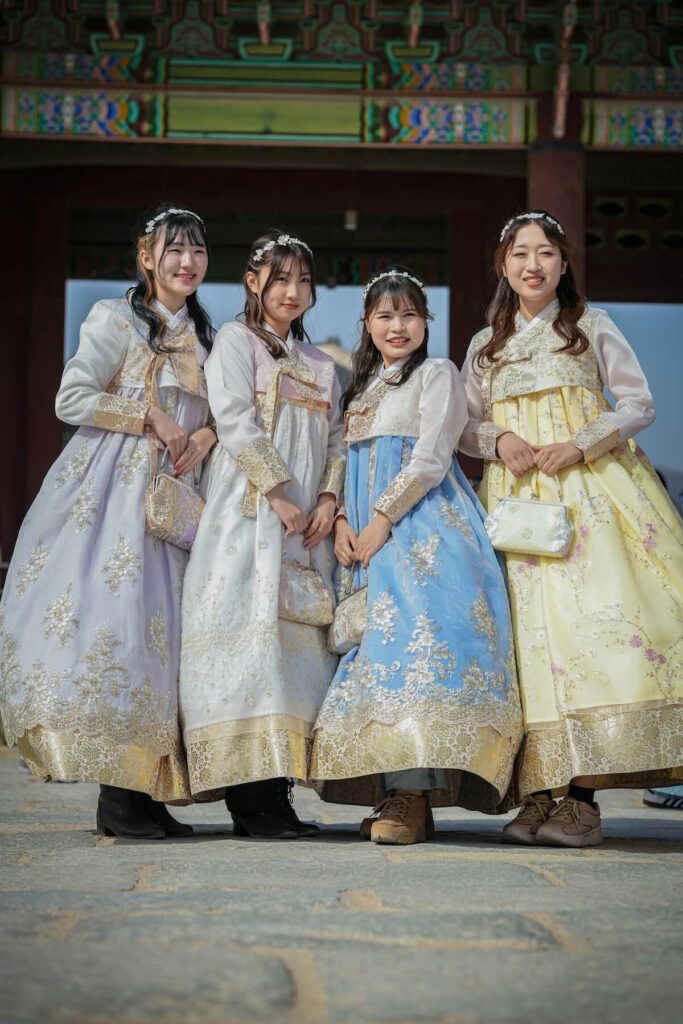
In girl groups, the bond between the “big sisters” and the younger members is defined by the term unnie (언니). This is what a female calls an older sister or an older female friend. It’s a term of endearment and respect that signals a close, protective relationship.
Whether it’s a rookie seeking advice or a fan cheering for her favorite soloist, unnie is the go-to honorific for sisterly vibes.
How to use it:
- I want to be as talented as Hwasa-unnie someday!
- The unnies in the group always take care of the younger members.
12. Maknae (막내)

Being the baby of the group comes with its own set of rules and a very specific title: maknae (막내).
This term refers to the youngest member in any group or family. For language learners, take note of the pronunciation—due to Korean sound rules, the ‘k’ slides into the ‘n,’ making it sound more like mang-nae.
Whether they’re protected or “evil” pranksters, the maknae often gets the most attention from fans.
How to use it:
- Jungkook is the golden maknae because he’s good at literally everything.
- Our maknae is finally graduating from high school today!
13. Sunbae (선배)
In the competitive world of music, respect for your elders is actually built into the vocabulary with sunbae (선배).
This term refers to a senior colleague or someone with more experience in the industry. It isn’t just about age; even a younger artist can be a sunbae if they debuted first. It’s the ultimate sign of professional respect when a rookie group greets their idols in the hallway.
How to use it:
- They were so nervous to meet their BoA-sunbae for the first time.
- As your sunbae, I have a few tips for your first world tour.
14. Hoobae (후배)
While seniors get the spotlight, the hoobae (후배) represents the fresh energy of the industry. This term refers to a junior or newcomer with less experience than their counterparts.
In the hierarchical K-pop world, a hoobae is expected to show respect to their seniors, while the seniors often take on a protective, mentoring role. It’s all about that professional “big sibling” dynamic!
How to use it:
- The veteran idols were so impressed by their hoobae’s cover dance.
- We’re rookies, so we always greet our sunbaes before the show.
K-pop terms related to music and performance
Now we’re getting to the heart of the stage. These K-Pop terms explain everything from how groups drop new music to the specific ways they move, helping you decode the production and performance behind the glitz.
15. Comeback
In the music world, a “comeback” usually means a reunion after a decade, but in K-pop, it’s just Monday.
This Konglish term refers to any time a group releases new music and a fresh concept (more on this later), even if they were only gone for three months. It’s a full-scale event involving new hair colors, music videos (which fans will heavily stream for a week or more), and a “comeback stage” on music shows.
How to use it:
- I’m saving up because my favorites just announced their comeback next month!
- This dark concept is their best comeback yet.
16. Title track
While an album might have ten songs, the title track is the undisputed star of the show.
In Korea, it’s simply called the ta-i-teul gok (타이틀 곡). This Konglish term refers to the main single chosen for promotion, usually paired with a high-budget music video and intense choreography. It’s the song designed to climb the charts and define the group’s “sound” for that specific era.
How to use it:
- The B-sides are great, but the title track is a total earworm.
- I can’t wait to see the choreography for the new title track!
17. B-side
Don’t let the main single hog all your attention; the B-side is often where the real magic happens.
Another Konglish term, this word refers to every track on an album that isn’t the promoted title track. While they don’t always get flashy music videos, many “hidden gems” live here. In Korea, fans often call these su-rok-gok (수록곡), which literally translates to “songs included on an album.”
How to use it:
- The title track is catchy, but that soulful B-side is actually my favorite.
- They’re performing a su-rok-gok as a special gift for the fans!
18. Concept

A K-pop group can go from being adorable high schoolers to space-traveling rebels overnight thanks to a new concept.
This Konglish term—kon-sep (콘셉트)—refers to the specific theme (like “retro,” “noir,” or “high teen”) that dictates everything from the music style to the outfits for a comeback. It’s the creative backbone that keeps every release feeling fresh and keeps fans guessing.
How to use it:
- I’m obsessed with their new ‘dark academia’ concept.
- What kind of kon-sep do you think they’ll try next?
19. Choreography
If you’ve ever wondered how twelve people can move like a single organism, you’re witnessing the power of K-pop choreography. Often called an-mu (안무) in Korean, these synchronized routines are the industry’s bread and butter.
While “choreography” is standard English, fans also use the Konglish ko-ri-o (코리오) when discussing specific creators. From sharp “knife-like” movements to storytelling through dance, the routine is just as important as the vocals themselves.
How to use it:
- The an-mu for this comeback is insanely difficult!
- I spent all weekend learning the choreography from the dance practice video.
20. Point dance
If a dance routine is a story, the point dance is its most viral punchline. This term refers to the “key” or most memorable move in a song’s choreography—think the “shooting” move in IVE’s Love Dive or the “penguin” walk in Twice’s TT.
In Korean, it’s simply po-in-teu an-mu (포인트 안무). These moves are specifically designed to be catchy, easy to recognize, and perfect for TikTok challenges.
How to use it:
- Wait, show me the point dance for the chorus again!
- The po-in-teu an-mu is definitely going viral this week.
21. Fan chant
K-pop isn’t a spectator sport—it’s a team effort, and fan chants are how the crowd joins the song. Known in Korean as eung-won-beop (응원법), these are specific lyrics or member names shouted in unison during instrumental breaks.
Whether it’s the rapid-fire Seventeen roll call (“Seungcheol! Jeonghan! Jisoo!”) or rhythmic “Hey!” shouts, these chants make every performance incredibly participatory and high-energy.
How to use it:
- I need to memorize the fan chant before the show!
- The eung-won-beop for this song is so fast, I can barely keep up.
22. All-kill
When a song is so good it conquers every single chart at once, that’s an all-kill (올킬). This Konglish term describes the rare feat of hitting #1 on all major South Korean real-time music charts—like Melon, Genie, and Bugs—simultaneously.
It’s the ultimate flex for digital powerhouses like IU, NewJeans, and BIGBANG. Achieving a “Perfect All-Kill” (PAK) is even harder, requiring the top spot on weekly and daily charts too.
How to use it:
- Their new title track just got a certified all-kill within two hours!
- Only a few groups can pull off an 올킬 in this competitive market.
23. Ending fairy
The performance might be over, but the ending fairy (엔딩요정) is just getting started. This Konglish term refers to the member the camera zooms in on for those final, breathless seconds of a music show.
While some credit EXO’s Xiumin for the early vibes, the trend truly exploded during Produce 101 with Jung Chaeyeon. Now, it’s a high-stakes moment for idols to wink, breathe heavily, or reveal a cute hidden message.
How to use it:
- Did you see his wink? He’s the ultimate ending fairy!
- I wonder who the 엔딩요정 will be for today’s stage.
K-Pop terms for the industry and related interactions
Behind the scenes and on camera, the way idols live and interact is a whole different ballgame. These K-Pop terms cover the journey from trainee days to those iconic, viral moments that happen after the music stops.
24. Trainee

Before the glitz and glamour, every idol starts in the trenches as a trainee. Known in Korean as yeon-seup-saeng (연습생), these are talented individuals who haven’t debuted yet, spending years honing their singing, dancing, and language skills.
Some, like Twice’s Jihyo or G-Dragon, spent a decade in this high-pressure “idol boot camp” before finally hitting the stage. It’s a grueling journey, but it’s where the stars are truly made.
How to use it:
- He’s been a trainee for five years, so his debut is going to be legendary.
- I wonder which yeon-seup-saeng from the survival show will make the final cut?
25. Debut
The wait is finally over when a group makes their official debut (데뷔). This Konglish term marks the high-stakes moment a trainee officially enters the music industry with a first single or album.
The debut is more than just a release. For K-Pop idols, this is a total brand launch. After years of practice, a successful debut can turn a “nobody” into a household name overnight.
How to use it:
- I’ve been following them since their pre-debut reality show!”
- Their debut stage on M Countdown was actually flawless.
26. Aegyo (애교)

If you’ve ever seen an idol pouting, using a baby voice, or doing “heart ears,” you’ve witnessed aegyo (애교). This native Korean term refers to acting ultra-cute or innocent to charm fans.
While it can feel a bit “cringe” to some, it’s a staple of variety shows and fan meetings where idols are often “forced” to show their sweetest side.
How to use it:
- He has so much natural aegyo, he doesn’t even have to try!
- Stop doing 애교! You’re making me blush.
27. Skinship
In the world of K-pop, a simple hug or holding hands is more than just a gesture—it’s skinship.
This classic Konglish term combines “skin” and “friendship” to describe platonic physical affection between group members. While it might look like “fan service” to some, in Korean culture, it’s a natural way to show a deep, sibling-like bond. It’s the ultimate proof that the group is actually close-knit behind the scenes.
How to use it:
- The skinship between the members during the interview was so wholesome.
- They aren’t usually big on skinship, so that hug was a huge deal!
28. Fan service

Everything an idol does specifically to make their fans smile falls under the umbrella of fan service (팬서비스).
This term covers a wide range of gestures—from winking at a camera and posing for “boyfriend material” photos to staying late at a fansign to chat. It’s the ultimate way for idols to show appreciation for their supporters, showing that the bond between the artist and the fandom is a two-way street.
How to use it:
- He gave so much fan service during the concert; he literally shook everyone’s hand!
- The group’s 팬서비스 is one of the reasons they have such a loyal following.
29. Vlive / Weverse
Ever wonder where idols go to just… hang out with fans?
For years, Vlive was the go-to app for livestreams and chaos, but it officially shut down in 2022. Most groups have now migrated to Weverse, a massive community platform where they post “moments” and go live in real-time.
That said, while Vlive is defunct, some fans still use it as a generic term for any idol livestream because it’s such a staple of the culture.
How to use it:
- I missed the notification for the Weverse live!
- He just went live on Weverse to celebrate his birthday.
- I still miss the old Vlive interface and the fan subtitles.
30. Selca (셀카)

Long before “selfie” was added to the Oxford Dictionary, K-pop idols were already masters of the selca (셀카). This classic Konglish blend of “self” and “camera” is the standard term for a self-portrait.
Whether it’s a mirrored gym shot or a high-angle pouting face, these photos are the bread and butter of fan interaction. While idols used to post them on Vlive, you’ll now find a steady stream of them on Weverse or Instagram.
How to use it:
- I can’t believe she posted a selca with those new blue contacts!
- His latest 셀카 just became my new lock screen.
Wrap up

Whether you’re just starting your journey or you’ve been a fan for years, mastering these K-Pop terms is the best way to keep up with the fast-paced world of stanning. From “lightsticks” to “selcas,” these words help you bridge the gap between being a listener and truly understanding the culture. Don’t be afraid to drop these into your next group chat!
Want to further expand your Korean vocabulary? Check out these Korean vocabulary apps, or these Korean vocabulary books if you’d like a more traditional route. For a more comprehensive list, this collection of Korean learning resources is your best friend!