
Is Chinese hard to learn for English speakers? That, my friends, is perhaps one fo the most common questions in the language-learning world. Unsurprising, considering how Chinese is such a beautiful and useful language to master.
But exactly how challenging is it to learn Chinese? Perhaps I can try to answer that for you as a native speaker. Let’s look at some of the reasons why Chinese is hard to learn and see if there are ways to make the process easier!
It’s tough to learn any language from scratch

Before we dive into answering the question “Is Chinese hard to learn”, I feel like I need to insert this disclaimer here.
I won’t sugarcoat it. As you’ll find out, there are many reasons why Chinese is a difficult language to master. And yet, the same reasons can be applied to learning Spanish, Japanese, Italian, or even for Chinese native speakers trying to learn English!
One’s ability to learn and master a new language is dependent on many factors both external and internal. What matters is your dedication and what your learning goals ultimately are. My hope is that, as I lay out the challenges to learning Chinese, it will spur you on and help you figure out how to learn more effectively.
Reasons why Chinese is hard to learn
1. It has a totally different writing system

For English speakers, one of the main reasons Chinese is hard to learn is because of the completely foreign-looking writing system. It’s one of the key differences between Chinese and English.
The Chinese script, known as hanzi (汉字), is notoriously difficult to master because instead of learning your ABCs, you learn about strokes (bihua 笔画) which, when combined, forms a zi (字), a Chinese character, which, when combined in turn, forms ci (词), words.
If you speak English (or most other European languages), switching from an alphabets-based writing system to Chinese will be quite the stumbling block, especially in the early stages of learning.
Also read: How to Improve Your Chinese Handwriting: 10 Key Tips
2. Learning Chinese characters is not the same as learning the alphabet
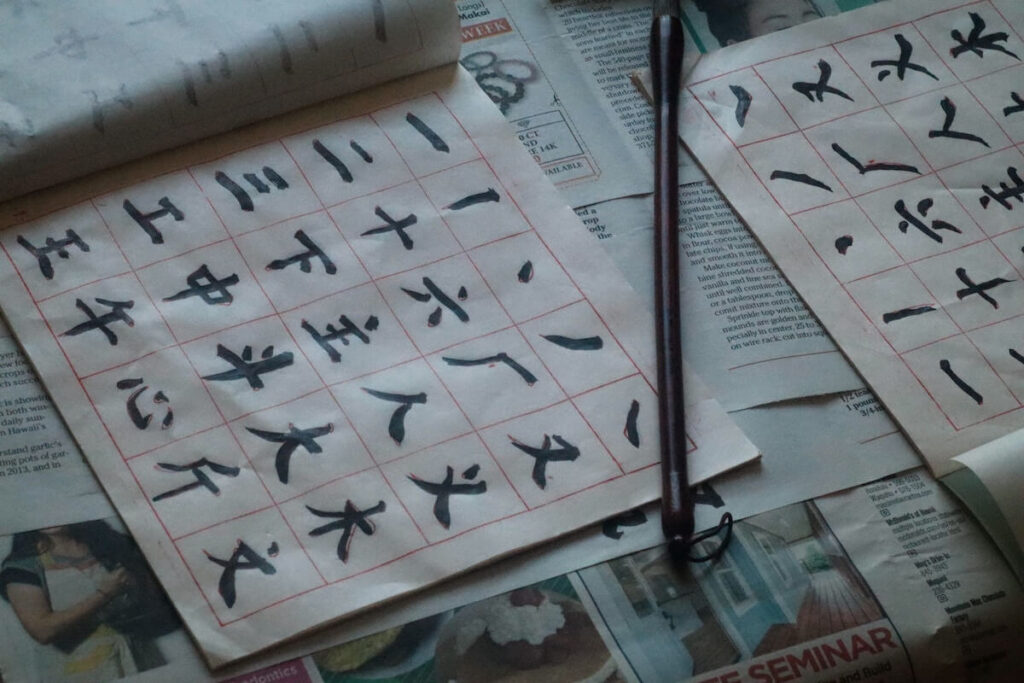
Given that Chinese uses a different writing system from English, it’s only natural that learning to read and understand Chinese is also different from learning the alphabet. That’s another one of the reasons why Chinese is hard to learn.
The Roman alphabet, used in most Western languages, is a phonetic script — memorize the 26 or so letters and you’ll likely be able to verbalize most words in the language. However, Chinese is logographic in nature. Each character has its own distinct sound and meaning. Simply put, if you’re coming across a new Chinese character for the first time, chances are you won’t be able to guess how it’s pronounced.
However, here’s a tip from a native speaker: focus on mastering radicals (bushou 部首). The best way to explain radicals is that it’s a recurring stroke or character (often smaller in size) that appears in Chinese characters (Yes, characters IN characters are a thing in Chinese). While you may not guess how new Chinese characters are pronounced, you can often guess the meaning by looking at the radical.
For example, 木 (mu) is the character for wood. It’s also a common radical. The characters for tree (树 shu), bridge (桥 qiao), and roots (根 gen) all contain the wood radical (木字旁 muzipang) on the left, which clues learners into the fact that all those characters have something to do with wood. If you can learn how to recognize radicals, then learning Chinese becomes just a little bit easier.
3. There are almost limitless word combinations, and they all mean different things

Is Chinese hard to learn? Well, if you want to be literate and slightly conversational, you’ll need to first learn and memorize around 600 characters. Sounds challenging in and of itself except that just learning characters isn’t enough.
As mentioned, the Chinese system is where different characters, which each have their own meaning, are combined to form words that also have their own meaning. This makes expanding your vocabulary in Chinese trickier than learning new words in English.
Take, for example, the words “candy” (糖果 tangguo) and “soy sauce” (酱油 jiangyou). When broken down, the former is made up of the characters, sugar (糖 tang) and fruit (果 guo) while the latter is a combination of sauce (酱 jiang) and oil (油 you). But if you were to combine fruit and sauce, you get jam (果酱 guojiang). From just two original words (candy and soy sauce), you’ve just learned five different characters and words!
So you see, one of the reasons Chinese is hard to learn is because of the near-infinite number of combinations of characters and words. Thankfully, just like how radicals clue you in on the meaning of a character, the pattern of character combinations can do the same. Here’s an example:
火 (huo): fire
火山 (huo shan): fire + mountain = volcano
火花 (huo hua): fire + flower = spark
火车 (huo che): fire + car = train
Notice how all those words have the character “fire” in them? So even if you’ve never seen these ci (words) before, you can guess that it has something to do with heat and fire (old trains were run by burning coal, hence the name).
4. There are…two versions of Chinese characters!?

As if having to learn an endless combination of characters and words isn’t hard enough, Chinese has two sets of written characters — Traditional Chinese and Simplified Chinese.
However, before you get even more anxious, understand that both these versions are actually the same script. They just look different. Think of them as different font types. If you master one set of Chinese characters, you can most likely master the other.
Plus, you don’t have to master both of them anyway. Simplified Chinese is the more widely-used version, and is the go-to script in Mainland China, Malaysia, Singapore, and other Chinese-speaking countries. Traditional Chinese is usually only used in Taiwan and Hong Kong.
5. Learning Chinese pronunciation is a challenge for English speakers
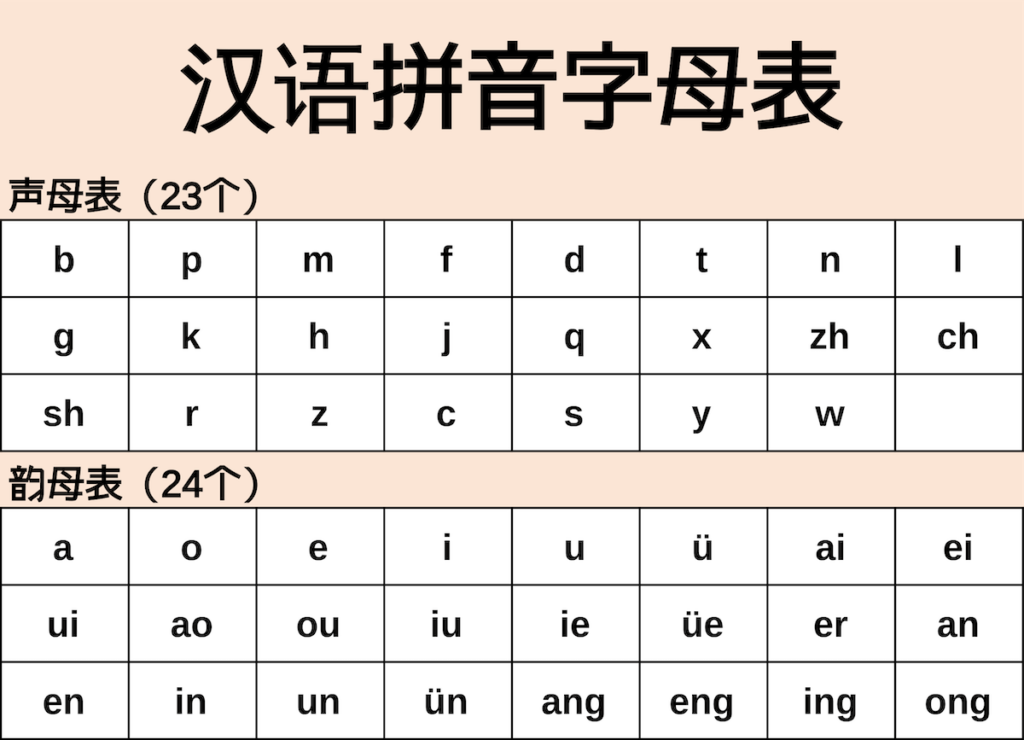
Is Chinese hard to learn for English speakers? Potentially so, yes. Especially when it comes to pronunciation.
The major difference between learning to pronounce Chinese and English words is that Chinese is a tonal language, meaning the meaning of the word (character, technically) changes based on how you pronounce it.
For example, no matter how you pronounce “game”, the meaning is the same. But depending on how you pronounce “ma” in Chinese, you could either be saying “mother” (妈 ma1), saying that something is numb (麻 ma2), talking about a horse (马 ma3), or scolding someone (骂 ma4), or asking a question (吗 ma).
Notice how there’s a number after each romanized spelling (known as Hanyu Pinyin) of the Chinese character above? The first four represent the four main tones of Mandarin Chinese, while the last one is the fifth neutral tone. Those are the ones you need to master to be able to fluently pronounce Chinese characters.
6. Emphasizing certain characters can also change the meaning of a sentence
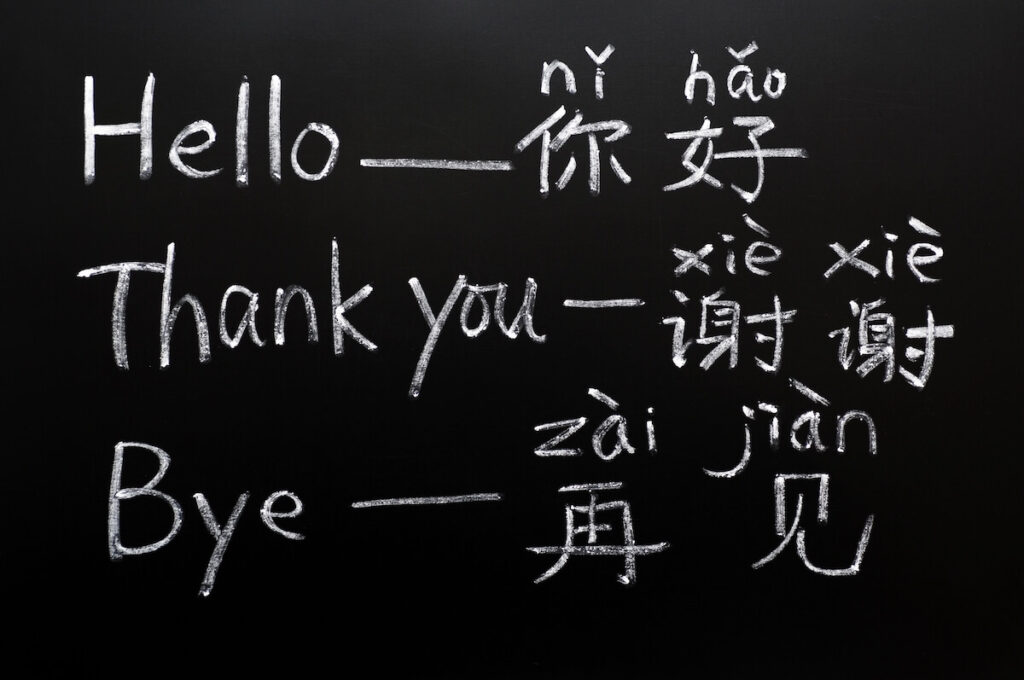
In a wider context of Chinese pronunciation, what makes Chinese difficult to learn for English speakers is how emphasis can change the meaning of a sentence.
In the English sentence, “the raccoon ate the apple”, emphasizing any one of the given words draws specific attention to that word, but the meaning overall remains the same, that the raccoon ate the apple. However, in Chinese, emphasizing a single character in a sentence (even with pristine pronunciation) can alter the meaning.
爱上一个人 (ai shang yi ge ren) means to fall in love with someone. However, if you pronounce the second character with added emphasis, the same sentence means “I like hooking up with a particular someone”. And, if you emphasize both the second and third characters, it means “I’m in love with my previous partner”. May the odds be ever in your favor if you were to say that to your Chinese partner!
7. Even characters that have the same tone can have vastly different meanings

To add to the challenge of mastering Chinese pronunciation (because why not?) there are also words that have the same tone but have vastly different meanings. This is another one of the reasons why Chinese is hard to learn.
It demonstrates how it’s impossible to be fluent in Mandarin Chinese by just relying on Hanyu Pinyin and that the actual Chinese character itself is important. Both 沙 and 杀 have the same tonal pronunciation (first tone) and Pinyin spelling: sha. However, the first one means sand while the second means to kill!
However, don’t despair because Chinese is a contextual language. Meaning, that as you gain fluency, you’ll usually be able to understand perfectly what’s being spoken based on the rest of the conversation.
8. Chinese is a super “fast” language

Hear me out. If you were to Google “fastest languages in the world”, you’ll notice that Chinese is actually listed below English, with only about 5.18 syllables per second, compared to 6.19 in English. However, as someone who speaks both languages, Chinese is the “faster” language because of its efficiency.
Since every character has its own meaning in Chinese, you can compress and express complicated ideas using far fewer syllables. For example, “Do you want to eat” becomes “吃吗“ (chi ma) in Chinese. So while on a technical basis, Chinese is slower, but it’s because the language has far fewer filler words and sounds. In actual conversation, Chinese can be much faster than English.
What’s more, while on the subject of conversations, the diverse regional accents and dialects further complicate the language, not only in terms of the way words are pronounced but in terms of character usage in general. For example, potato is called 马铃薯 (malingshu) in Taiwan but 土豆 (tudou) in Mainland China.
9. Chinese grammar is not the same as in English

If you’re still thinking to yourself, “How hard is Chinese as a language?”, I just want to point out that, up till this point, everything I’ve spoken about boils down to just understanding and learning Chinese characters. We haven’t even gotten into how Chinese grammar and sentence structure differs from English!
However, don’t fret. Because as we dive into that now, you’ll realize that even though the two languages are different, Chinese grammar is actually much simpler to master. For one, you don’t need to bother with past, present, or future tense when it comes to verbs — just use the root words and add time order words in a sentence.
Additionally, while there is a standard word order in Chinese sentence structure (subject-verb-object like English), sometimes, people will understand even if you mess that up. For example, 我喜欢熊猫 (I like pandas) and 熊猫我喜欢 (pandas, I like) are pretty much the same thing even though the latter sounds awkward.
10. It takes a long time to master the Chinese language

Finally, the biggest reason why Chinese is hard to learn — it takes a long time to master the language. How long does it take to learn Chinese? Well, as a rule of thumb, about 600 hours to be fluent enough to speak basic Chinese and about 2,200 hours to reach native proficiency.
For context, languages like Spanish take only about 750 hours to reach native fluency.
Part of the reason why Chinese is so hard to learn is because, as mentioned, the completely different system compared to English. But apart from that, we also need to consider that Chinese is a cultural language, meaning that many of its characters, words, and phrases are affected by the community’s cultural norms.
And because it takes a long time to understand a culture, it takes equally as much time to learn the Chinese language.
Why Chinese is still worth learning
1. It is one of the most widely spoken languages in the world

Is Chinese hard to learn for English speakers? I won’t mince words: Yes, it is difficult to master the Chinese language.
That said, it is still arguably one of the most useful languages to master. After all, it’s not only one of the most commonly spoken languages in the world today, but also one of the main languages in the business world thanks to China’s standing as an economic superpower.
Learning Chinese (even if only to a certain degree of fluency) opens the doors to new cultures and potentially work opportunities both at home and abroad. So, while learning Chinese is a challenge, it’s certainly one worth facing head-on.
2. It is a gateway to learning other East Asian languages

Remember how I said the Chinese writing system is completely foreign compared to most Western scripts? Well, you’ll be happy to know that Chinese shares similarities with other East Asian languages like Korean and Japanese.
While all three languages look and sound different, there are enough similarities between them that it make so that being fluent in just one language makes learning the others much easier. So, learning Chinese opens the door to potentially mastering Japanese and Korean!
3. Learning Chinese helps you to embrace new cultures

Speaking of opening doors, the Chinese culture is one full of mystique, history, and heritage. By mastering Chinese, you’ll (figuratively) be stepping into a whole new world, filled with experiences you’ve probably never thought of before.
Even Chinese literature alone is enough to cause a paradigm shift sometimes, especially historical literature. If nothing at all, you’ll see why the Chinese are so immensely proud of their country.
What’s more, you’ll be able to enjoy a whole new genre of media and appreciate the finer, colloquial things of daily life in China.
4. There are a ton of resources to learn Chinese

What I’m about to say next is paradoxical but true: Chinese is hard to learn, but it’s also one of the easiest languages to start learning. Why? Because there are a ton of resources to learn Chinese, both online and offline. After all, it’s one of the most popular languages to learn!
If you like to study languages the old-fashioned way, there is a wide array of Chinese books to help you improve your Chinese vocabulary or master Chinese handwriting. There are also workbooks that help you practice what you’ve learned.
Those who are more tech-savvy can make use of the many incredible Chinese learning apps instead or listen to Chinese podcasts online to improve their Chinese listening skills.
Final thoughts

As you can see, Chinese is indeed hard to learn but I’ve also shown you why it’s not only doable (thanks to a plethora of online and offline learning resources), but extremely worthwhile to master the language.
As someone who speaks both Chinese and English, I will say that the two languages complement each other perfectly and open the door to pretty much the entire world. These two are, in my opinion, the best language combination to have.
So, whether it’s for a trip to China or for striking that business deal with an international partner, I hope that you won’t be dissuaded from learning Chinese just because it’s challenging. I promise you, mastering the language will be one of your most memorable achievements!