
French speakers seeking a new language to learn might wonder what their options are. Thankfully, there are some languages that are fairly straightforward for Francophones to learn.

But in order to know what is the easiest language to learn for French speakers, we need to know a little about the French language.
All about French
French is a Romance language and belongs to the Indo-European family of languages. Like all Romance languages, it descended from Vulgar Latin spoken during the latter stages of the Roman Empire. Vulgar Latin was the colloquial or popular form of Latin while Classical Latin was the language used in literature at the time.
French is an official language in 28 countries as well as France and there are more than 300 million French speakers around the world. But how similar is it to other Romance languages and does this make them easier to learn?
French as a Romance language

All languages that are Romance languages share similar vocabulary stems and grammar structures. Their biggest differences are largely cosmetic and have to do with pronunciation and vocabulary.
French is the third most-spoken Romance language after Spanish and Portuguese but it’s the one that has changed the most from Latin.
Romance languages can also be categorized in different ways. French is classed as a Gallo-Romance language while Spanish and Portuguese are both Ibero-Romance languages. Italian, however, is categorised as an Italo-Dalmatian language.
So, is one of these Romance languages the easiest language for French speakers to learn?
What is the easiest language for French people to learn?
Discovering the easiest language to learn for French speakers depends on a number of factors.
If a learner is really motivated and interested in a language and culture, they will find it easier to learn. Another factor is how widely spoken it is. Hawaiian Créole might be the easiest language for Francophones to learn but are there any resources or native speakers close by to help? Probably not.
Let’s look at 8 languages that are easier for French speakers to learn.
1. Spanish

Spanish is the second most spoken language in the world and it’s very similar to French. Both French and Spanish have many shared features. For example, they both use the Latin alphabet and have similar structures in terms of grammar and syntax. There are also lots of cognates between the two languages.
Thanks to all of the similarities, French people often find it easy to learn Spanish – and there’s also the bonus of Spanish being a phonetic language, unlike French.
For all of these reasons, it’s easy to see why so many French speakers choose Spanish as a second language.
2. Italian
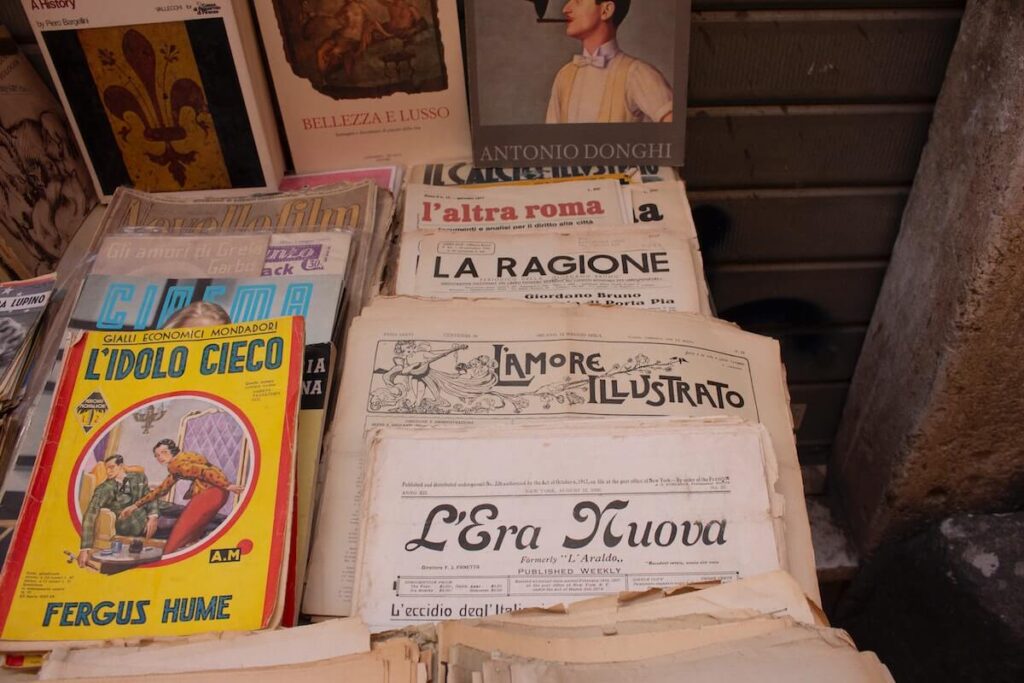
Another popular and easy language for French speakers to learn is Italian. In some ways, Italian is more similar to French than Spanish is, which is why it’s one of the easiest languages for French speakers to learn.
Both languages have very similar grammar. When you compare, Italian is more like French than Spanish, particularly when looking at the formation and use of the past tense. Both French and Italian use the passé composé rather than the preterite.
The biggest difference – but one that only takes a second to learn – is in how nouns are pluralised. In Spanish, you’ve got the ‘s’ added like in French but in Italian, this is ‘e’ or ‘i’.
3. Portuguese

Another of the easiest languages for French speakers to learn is Portuguese. The two languages both share similar features in their vocabulary and grammar.
For example, both Portuguese and French use subject-verb-object (SVO) word order and have gendered nouns. There are also many cognates, which makes understanding a new language easier.
4. Romanian

Though Romanian might well be one of the easiest languages to learn for French speakers, it’s not widely spoken, which means it isn’t that popular as a second language. This means finding resources (and native speakers to practise with) isn’t as easy. It’s also got a case system, which makes it trickier to get your head around.
Despite this, it is a beautiful language that French speakers can pick up with relative ease. Romanian isn’t just spoken in Romania; it is also spoken in Hungary, Israel, Serbia, Moldova, Ukraine, and Montenegro. There are some 2 million speakers outside of Romania.
5. English

Though English isn’t a Romance language, French was the official language of England for around 300 years – from the Norman conquest in 1066 until 1362. This meant that many French words entered the English language.
Given that there is a lot of vocabulary-sharing going on, French native speakers often find learning English quite easy. There is also a similar grammatical structure in the two languages.
Of course, learning English still has many challenges for French speakers. The pronunciation is notoriously difficult given that English is not a phonetic language and sometimes there just are no conceivable rules to follow. Some sounds don’t exist in French too.
That said, with English being so widely spoken, there are plenty of resources available as well as lots of people to practise with. This is bound to make learning the language easier.
6. German
Though German certainly isn’t the easiest language for French speakers to learn per se, due to its close proximity and its prevalence in the business world, there are many reasons why learning German could be quite straightforward.
Any French speaker living in Alsace will likely be familiar with German vocabulary and sounds anyway so learning German seems like an obvious choice here.
Although the German language is different in many ways, it also shares some similarities and learning the basics is fairly straightforward for French speakers.
7. Dutch

French speakers can learn Dutch fairly easily. It’s a Germanic language and so is similar to English and German, though you won’t find as many resources or native speakers around to help you.
Like French, Dutch grammar uses genders but it doesn’t affect a sentence as much, which is good news. Unlike German, though, there is no case system so it’s easier in some ways too!
8. Indonesian

Hear me out on this one! So, Indonesian isn’t the easiest language for French speakers to learn but it is probably the easiest Asian language. So, for anyone wanting to try something that’s not European, this is the one to choose.
Despite not being a European language, it does use a Latin script, which means it’s easy to get your teeth into straight away! What’s more, the language is entirely phonetic with no difficult sounds or tones.
What’s more, the grammar is very simple indeed – for example, words don’t pluralise. If you want to say there is more than one, for instance, you just repeat the word twice. In Indonesian, ‘child’ is anak and ‘children’ is anak anak!
What about tenses? Well, there are none! Verbs are expressed with time markers instead. So, saya makan means ‘I eat’ and saya sudah makan means ‘I already eat’ i.e., the past tense! What’s more, adding the suffix ‘an’ to a verb makes it a noun. With makan (to eat), you get makanan (food).
9. Esperanto

As an honourable mention, we must include Esperanto. After all, this conlang (sshort for constructed languages) was created to be easy to learn.
Esperanto doesn’t have any of the challenging features of natural languages. You won’t find irregular verbs, tricky pronunciation, case systems and gender, for example.
Though there are very few native speakers (there still are a few!), it is the most widely spoken constructed auxiliary language in the world. It can be learned quickly and is flexible, which means it suits many different cultures. Many people say that you can learn this language faster than any other second language.
There are now courses on Esperanto – Duolingo has one, books in Esperanto and films too. In 2021, the Swedish author Sten Johansson wrote Sesdek ok, which is a novel originally written in Esperanto. He has written over 20 original books in the language. George Orwell’s Nineteen Eighty-Four has even been translated into Esperanto and is called Mil naûcent okdek kvar.
Final thoughts
When choosing a second or third language, it’s often the first thing on someone’s mind to choose the easiest language to learn. While this obviously makes progress happen faster, ease of learning does not mean the language is the best choice for you.
Learning a language is hard and if you’re just doing it for fun, it probably is a good idea to choose an easy one. If you do have other motivations too – like work – then choosing the easiest language might not be the most appropriate.
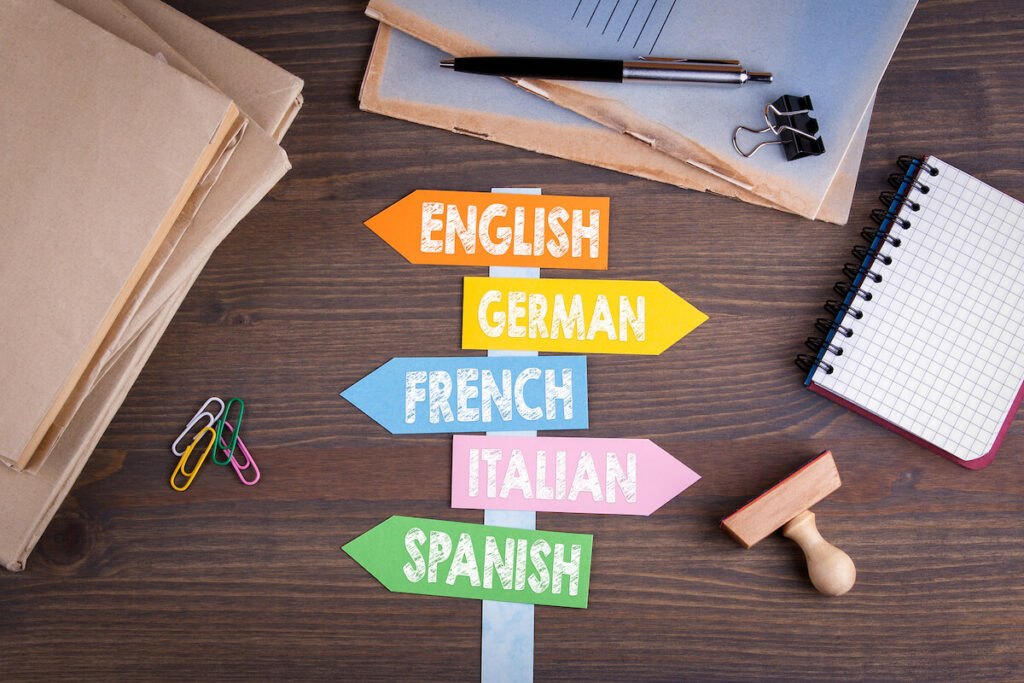
For French speakers, whether native or otherwise, the easiest language to learn will be another Romance language (or another language similar to the mother tongue if this is not French). As we’ve seen in this article, there are lots to choose from.
If you fancy trying something a little different, Indonesian and Esperanto are so fun! Otherwise, Spanish, Italian and Portuguese come top of the list.
If you’ve already got a second language under your belt, you’ll be surprised just how quickly you progress in a third language. Don’t forget, a lot of what you have learned, you will already know (i.e., terminology). Good luck!