
*This article may contain affiliate links. For full information, please see the disclaimer here.
Thinking of learning Uzbek? It’s a fantastic choice!
Uzbek is a Turkic language spoken by over 34 million people, primarily in Uzbekistan, but also in communities across Afghanistan, Tajikistan, and Kyrgyzstan. It’s a key to understanding the vibrant culture and history of Central Asia, making it a great asset for travelers, historians, or anyone looking to connect with the Uzbek diaspora.

One interesting fact is that it has gone through several script changes, moving from an Arabic script to Latin and then Cyrillic, before officially readopting a Latin alphabet in recent decades.
That said, if you’re looking for a Duolingo Uzbek course, it (sadly) isn’t an option. Luckily, the world of language learning is full of robust alternatives, from dedicated apps to online tutors, that can help you master the fundamentals and start speaking Uzbek quickly.
Why is Uzbek not on Duolingo?
“Wait, there’s no Uzbek on Duolingo?” Yup, that’s a common reaction.
Duolingo is famous for its massive coverage, offering dozens of courses, including popular languages like French and German, but also niche ones like Latin, Finnish, and even constructed languages like High Valyrian and Klingon. With so many languages available, why is this major Central Asian language missing?
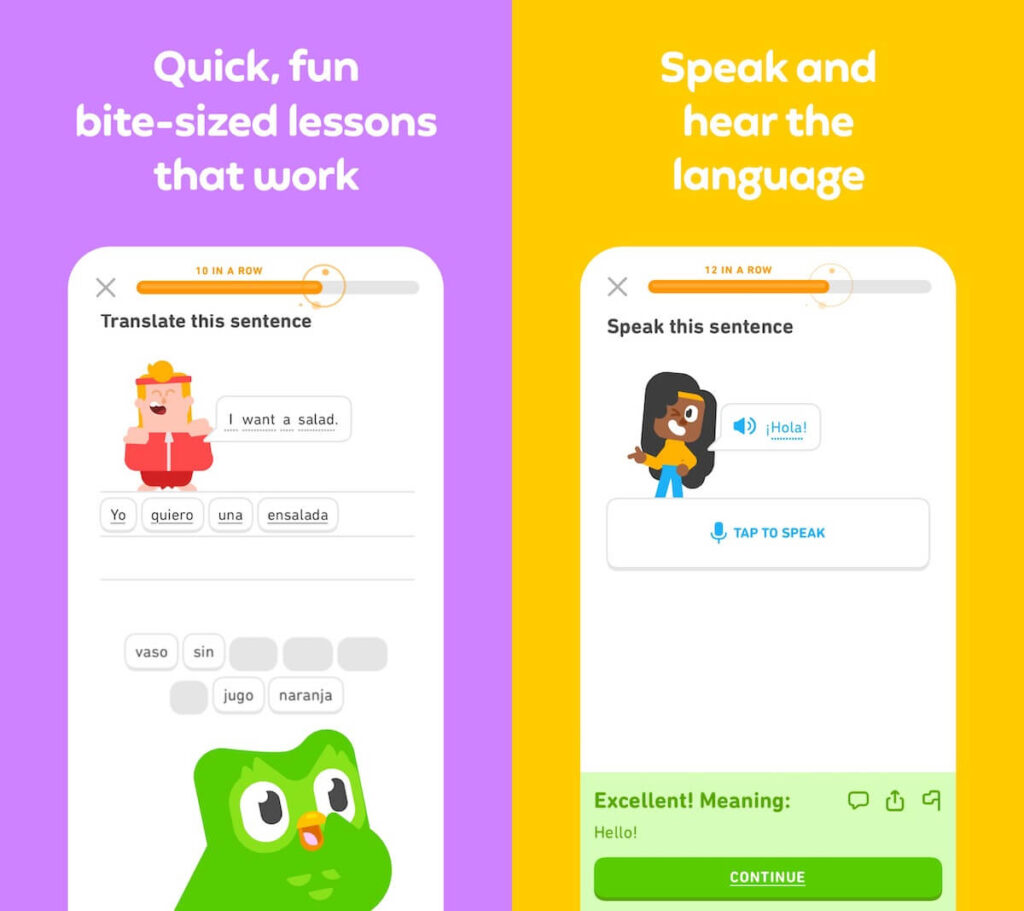
The most likely reason is simple economics and resource allocation: a language is usually added when there’s a huge, proven demand and readily available, high-quality educational material. Uzbek, while spoken by over 34 million people, may not have been high enough on Duolingo’s priority list compared to, say, Spanish or Japanese.
In the past, courses for less-requested languages were often created by dedicated volunteer teams through the Duolingo Incubator, but that program, along with the community contributor model, was officially ended a few years ago.
Now, Duolingo develops all new courses internally with paid staff, focusing its efforts and AI-driven tools on high-impact languages or those with the greatest potential for new users and revenue. The end of the volunteer-driven program has essentially closed the door on the organic creation of courses like Uzbek for the foreseeable future.
So, for now, you’ll have to skip the green owl and look at the fantastic alternatives that do exist!
The best Duolingo alternatives for learning Uzbek
Even if you won’t find a Duolingo Uzbek course to get started, the good news is that there are so many other language learning resources that can help you learn this fascinating and increasingly relevant Central Asian language.
Below are three apps that rival (and even surpass) Duolingo in providing engaging and effective lessons. Read on!
1. uTalk

Aiming to expand your Uzbek vocab? You can’t go wrong with uTalk. This app is a fun, game-based tool that targets vocabulary building and is designed for new learners and travelers.
What makes uTalk shine is its engaging, short games that constantly ramp up the difficulty, pushing you to recognize words and phrases faster. The Uzbek course is packed with content, featuring over 2,500 everyday words and phrases across more than 60 practical, real-world topics. Every single word and phrase comes with crystal-clear audio recorded by both male and female native speakers, which is fantastic for nailing that authentic Uzbek pronunciation.
While uTalk is not the place for in-depth grammar lessons—it doesn’t explicitly teach the nuts and bolts of the language—it’s a phenomenal resource for rapidly expanding your active vocabulary and training your ear with local accents.
Want to know more? This detailed uTalk review explains the ins and outs of this app.
Key features:
- Expansive vocabulary bank
- Authentic audio featuring native speakers
- Recording option for pronunciation practice
2. LingChat
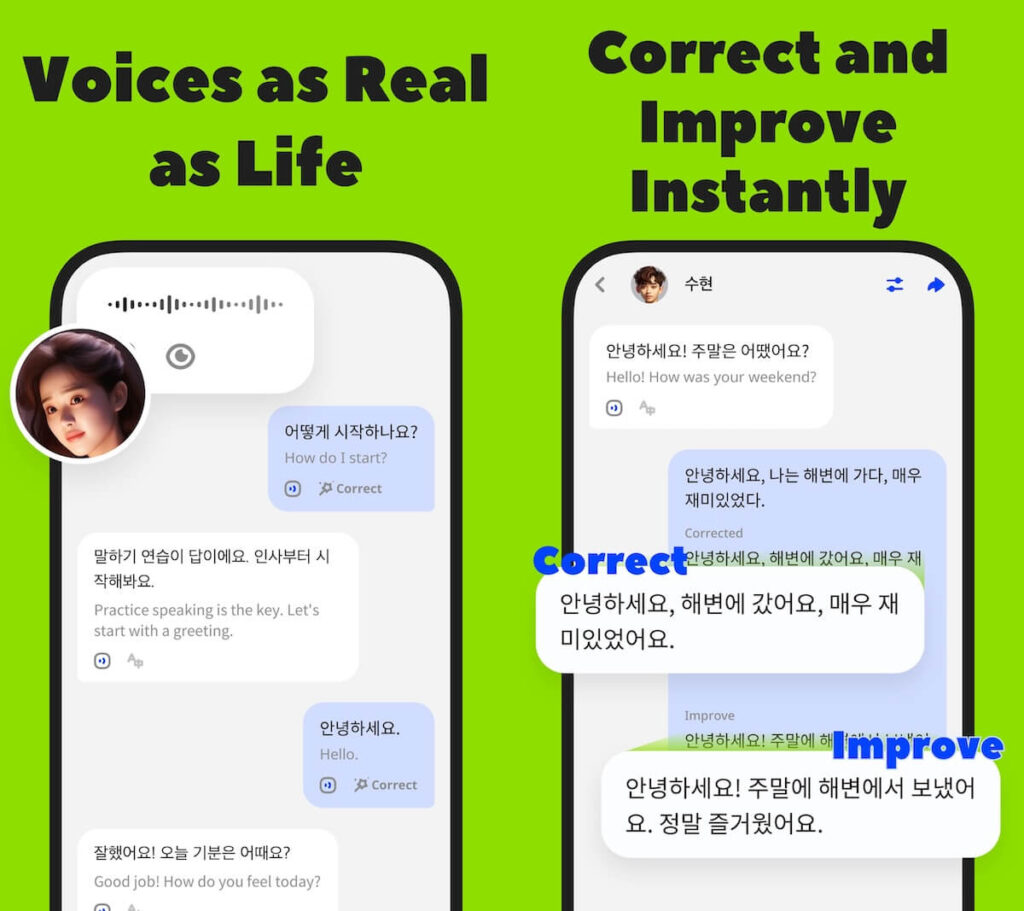
Regular conversations with native speakers are the real key to fluency, but they’re not always easy to access. This is where LingChat steps in.
This innovative app serves as your personal AI language coach, offering a unique, judgment-free space to practice speaking Uzbek. It features a diverse cast of AI characters, suitable for all ages and skill levels, who are ready to engage in dynamic role-playing games whenever you are.
The core of the experience involves simulating various real-life scenarios, which gives you a practical, everyday context for your language skills. You can even design custom scenarios to focus on your specific needs.
As you chat, the AI provides real-time grammar corrections and instant suggestions to improve your speaking. Plus, effective review methods like spaced repetition and flashcards ensure the vocabulary and phrases you learn stick with you for the long run.
Key features:
- AI conversation partner for pressure-free practice
- Real-time feedback for pronunciation and grammar
- Review tools for memory retention
3. Talkpal
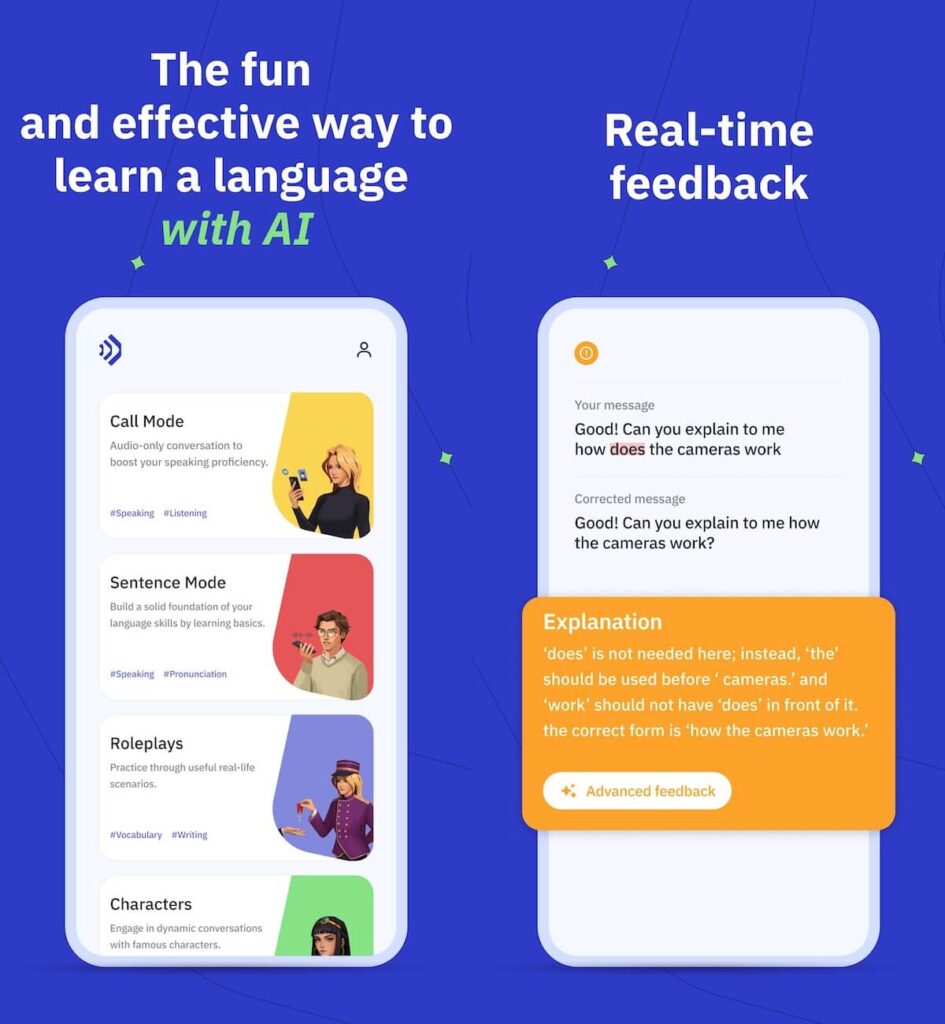
If you’ve ever felt like you’re just memorizing flashcards without actually learning how to speak, Talkpal is the GPT-powered pivot you need. It functions as an AI language tutor that swaps repetitive drills for immersive, real-time conversations. Plus, you get instant feedback on your Uzbek grammar and pronunciation!
The app keeps things lively by focusing on reading, listening, and speaking through game-like challenges and insightful prompts. You can jump into different modes depending on your energy level: Roleplay lets you practice specific scenarios like navigating a Tashkent bazaar, while Debate Mode pushes you to articulate complex opinions.
There’s also Character Mode, where you chat with unique personalities, and Photo Mode, which asks you to describe various scenes in Uzbek. It’s a well-rounded approach that ensures you’re actually prepared for real-world interactions.
Key features:
- Natural-sounding conversations for immersion
- Real-time corrections
- Versatile learning modes
Other great resources for learning Uzbek
uTalk, LingChat, and Talkpal are amazing tools that can jumpstart your Uzbek learning journey. But if you want a well-rounded routine that can bring you to fluency, it’s best to mix and match resources.
I recommend these apps, books, online courses, plus a YouTube channel for immersion. Pick what works for you and build a solid toolkit to reach your Uzbek learning goals!
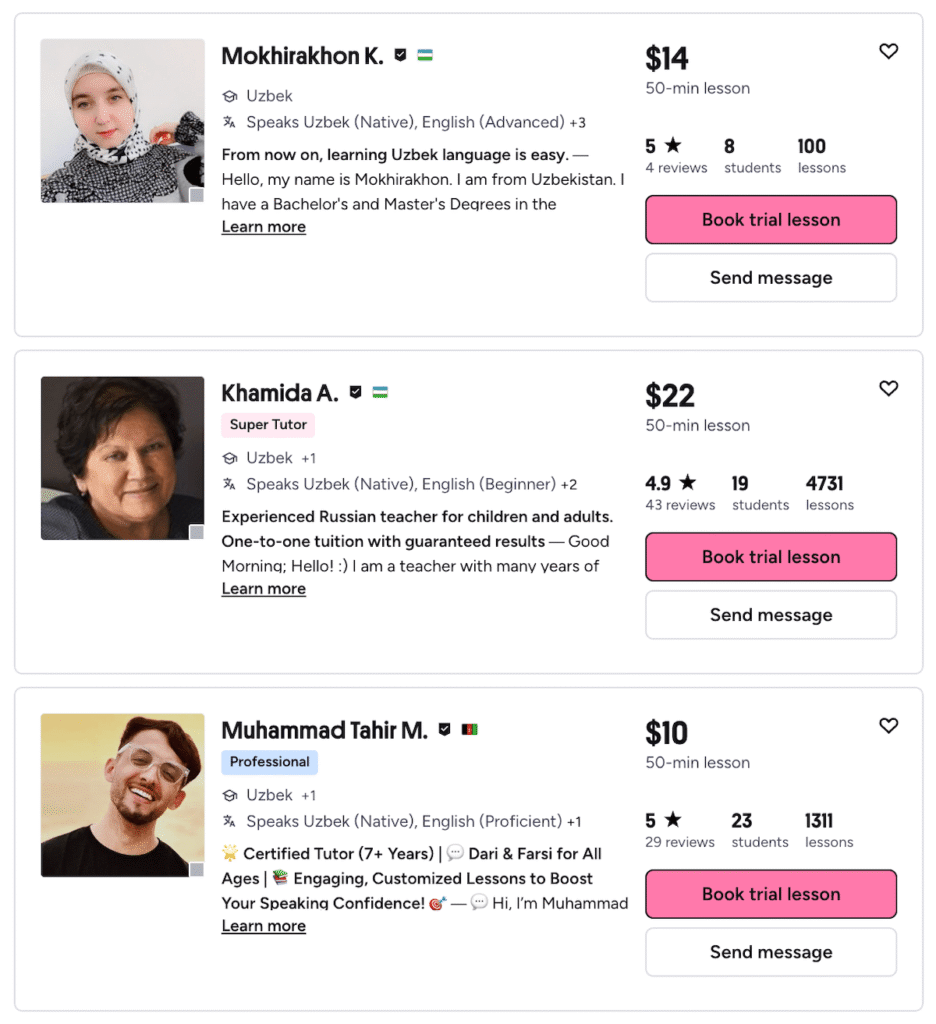
Preply: For expert guidance and one-on-one coaching, check out Preply. You can browse profiles of experienced tutors (including native speakers) and book one-on-one video classes tailored specifically to your level and goals. This human-centered approach ensures you get personalized instruction, practice real conversation, and receive targeted feedback to help you master Uzbek faster.
italki: Like Preply, this platform connects you directly with native Uzbek speakers for customized, one-on-one video lessons. It’s a flexible site where you pick a community tutor or professional teacher based on price and style. Whether you want serious grammar help or just a casual conversation to practice speaking, you pay per lesson and get the personalized feedback you need.

Cudoo: This online Uzbek course uses self-paced lessons to teach you the basics. You’ll work through common topics like greetings, numbers, colors, and food using videos, quizzes, and interactive material. It’s a good option if you prefer a structured, go-at-your-own-speed approach to pick up foundational vocabulary and everyday phrases for travel or general conversation.
Glossika: This app teaches Uzbek through an audio-heavy, “mass sentence” method. You’ll hear and repeat thousands of full, natural sentences recorded by native speakers, which helps your brain absorb grammar and pronunciation effortlessly. It uses spaced repetition to drill the material based on your current skill level, so you automatically improve your speaking and listening flow.

Udemy: This site offers various video-based Uzbek courses taught by different independent instructors. Since it’s a marketplace, you’ll find different styles, from beginner-focused classes covering essential vocabulary and grammar to intermediate courses centered on reading and conversation practice. It’s a great place to find affordable, structured video lessons that you can tackle on your own schedule.
Uzbek: An Elementary Textbook: This textbook is great for serious beginners, offering a structured, thematic look at Uzbek language and culture. It teaches with an integrated approach, meaning you get grammar, four-skill development, and authentic materials—like videos filmed in Uzbekistan—all in one place. It even includes a Cyrillic reader and a big glossary to help you out!
No products found.
Mango Languages: Mango Languages teaches conversational Uzbek by breaking down practical phrases from native speakers. You learn vocabulary, grammar, and cultural insights simultaneously. A cool feature is the Voice Comparison tool, which lets you record yourself and match your pronunciation to the native audio, helping you sound more natural.
Uzbek: Real-Life Conversation for Beginners: This book is a handy resource for absolute beginners focused on speaking right away. It offers 30 conversation-based units, each with dialogues, key phrases, themed vocabulary, and exercises. You can even access native-speaker audio tracks online to practice your listening and pronunciation for a truly practical start to chatting in Uzbek.
No products found.
50Languages: This free, straightforward resource comes with 100 lessons focused on practical, real-world Uzbek phrases. It uses a combo of audio and text to help you build basic vocabulary for situations like ordering food or asking directions. You can listen to the MP3s on the go and play games to boost your memory.
Learn Uzbek: This app by Ghumman Tech is a traveler’s best friend, focusing on thousands of essential Uzbek words and phrases across many topics, from shopping to emergencies. It uses flashcards, quizzes, and a text-to-speech audio function to help you learn quickly. It’s a straightforward, vocabulary-driven tool that supports numerous native languages.
Uzbek Language for Beginners: This YouTube playlist by Ibrat Farzandlari is a comprehensive Uzbek course perfect for beginners. The lessons dive into both essential grammar and practical, commonly used phrases. Topics range from greetings and possessive pronouns to ordering food, making it great for building a solid foundational vocabulary and real-life conversation skills.
Conclusion

With all the options available, from apps to books to online courses, the absence of a Duolingo Uzbek course shouldn’t stop you from pursuing this language.
Whether it’s five minutes on your phone or a structured video lesson, you can learn anytime, anywhere. Ultimately, though, your success depends on showing up consistently; make a commitment and have fun with it!