
*This article may contain affiliate links. For full information, please see the disclaimer here.
Merħba! Welcome to the world of Maltese, a beautiful language spoken by over half a million people, primarily on the beautiful Mediterranean islands of Malta and Gozo.
What makes Maltese truly fascinating is its history: it’s the only Semitic language (like Arabic and Hebrew) written using the Latin alphabet. Its vocabulary is a fascinating linguistic cocktail, with roughly half derived from Sicilian and Italian, and the other half from Siculo-Arabic. This unique blend gives the language a truly distinct rhythm and sound.

Perhaps you’re planning a trip, have Maltese heritage, or just crave a unique mental workout. Whatever your reason, learning Maltese is a fun and rewarding endeavor.
While you won’t find a Duolingo Maltese course to guide you through this language, don’t let that stop you! The good news is that several excellent resources are available for aspiring learners.
Ready to take the plunge? Ejja (come on), and let’s explore some of the best alternatives out there.
Why is Maltese not on Duolingo?
But first, why is there no Maltese on Duolingo?
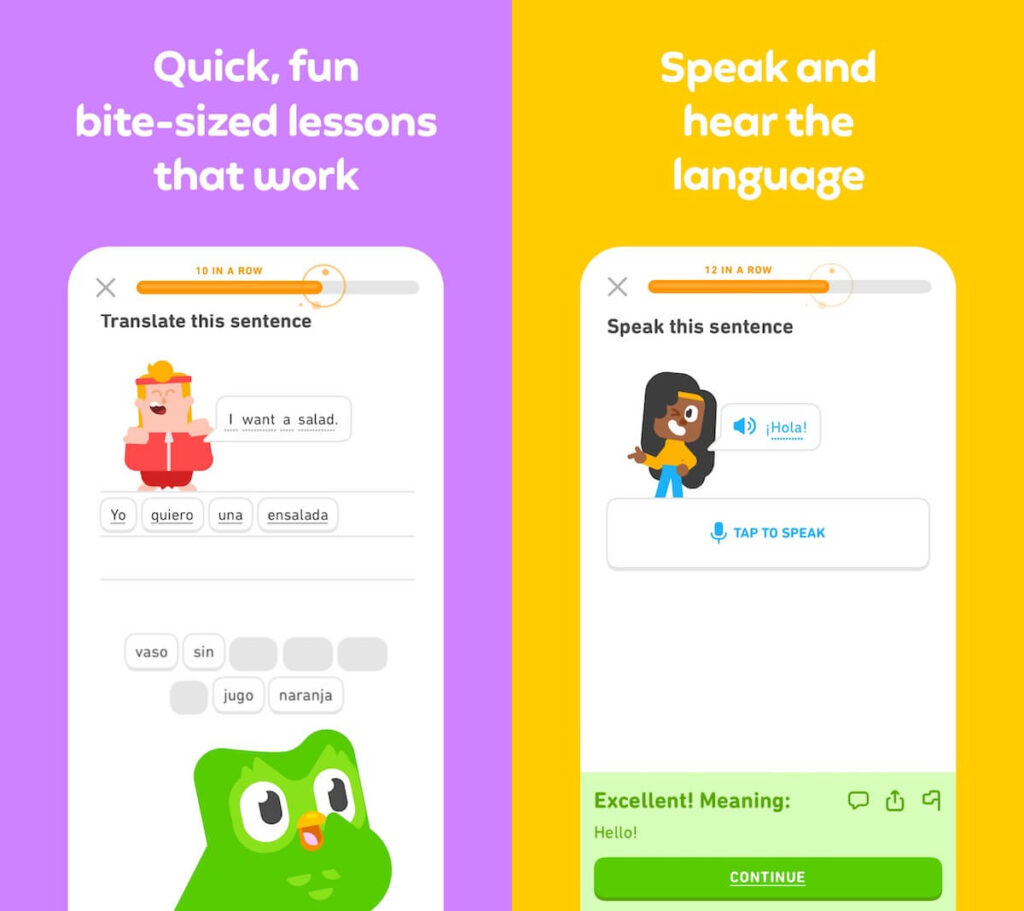
Duolingo boasts over 40 language courses, covering everything from global heavy hitters like Spanish and French to niche European tongues like Welsh and Irish, and even conlangs like Klingon and High Valyrian. So, why the absence of the Maltese language?
The main reason is likely a simple matter of prioritization and market size. Maltese has a relatively small global population of native speakers—around half a million—which means less commercial demand for a dedicated course compared to a language spoken by millions.
This challenge was made tougher when Duolingo ended its incubator and volunteer contribution program back in 2021. While the community used to build courses for smaller languages, all new courses are now developed internally by paid teams, requiring significant investment and a clear return.
In short, a small market size combined with a change in Duolingo’s development strategy means Maltese hasn’t yet made the cut.
No worries, though! You can tap into an array of Duolingo alternatives that offer a more focused, in-depth, and perhaps even more authentic experience.
The best Duolingo alternatives for learning Maltese
Although the well-known owl isn’t an option, there are several excellent digital resources for building your vocabulary, honing your Maltese pronunciation, and immersing in the language.
1. uTalk
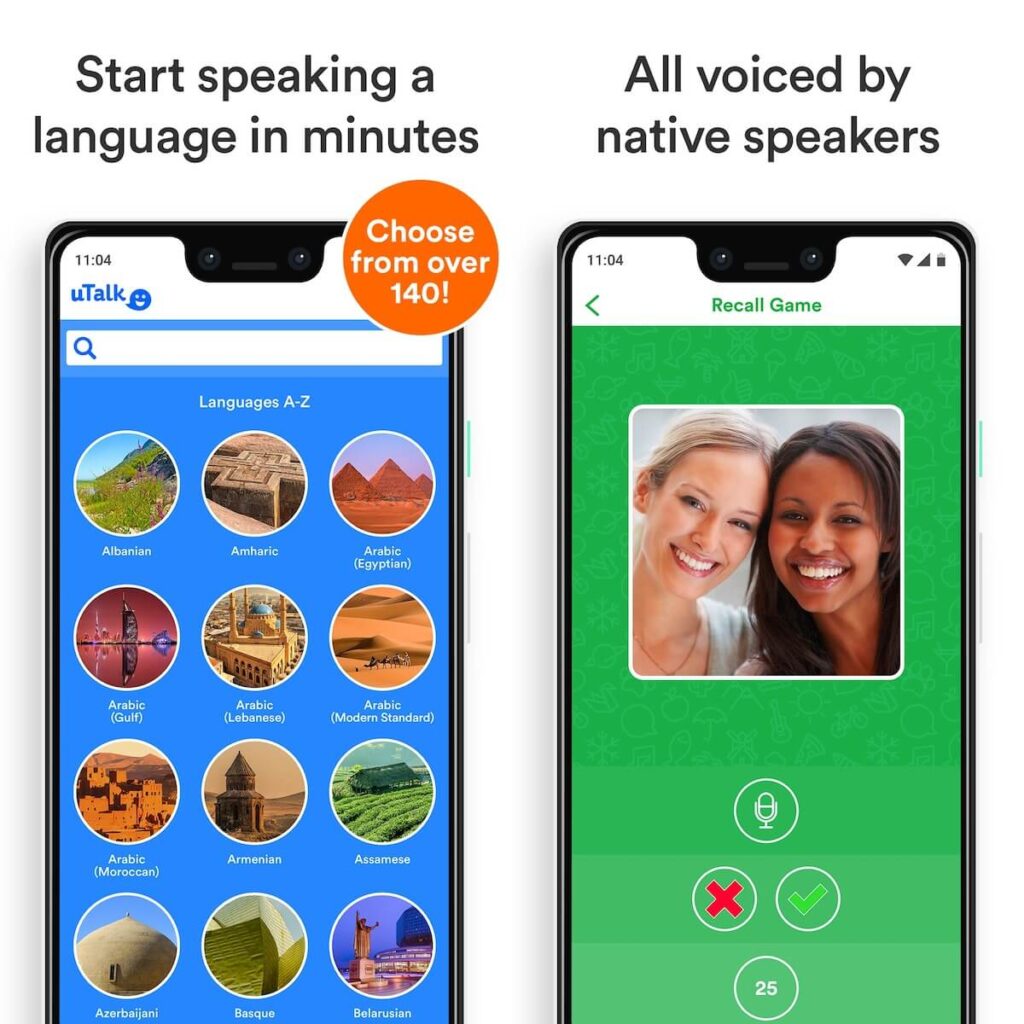
Want to supercharge your Maltese vocabulary? You can do so with uTalk, a highly-tuned flashcard system disguised as a fun, progressive game.
Unlike programs that spend ages on grammar rules, uTalk’s core mission is to get you speaking and recognizing practical words and phrases right away. You’ll work through over 2,500 words and phrases across more than 60 everyday topics, like food, travel, and shopping, with the level of difficulty increasing as you progress through five different games per topic.
What’s more, every single word and phrase is recorded by a real Maltese native speaker in both male and female voices. This makes it perfect for improving your listening skills and pronunciation.
Learn more about uTalk with this comprehensive review.
Key features:
- Native speaker audio in male and female voices
- Huge vocabulary base and travel-focused content
- Gamified learning
2. Talkpal
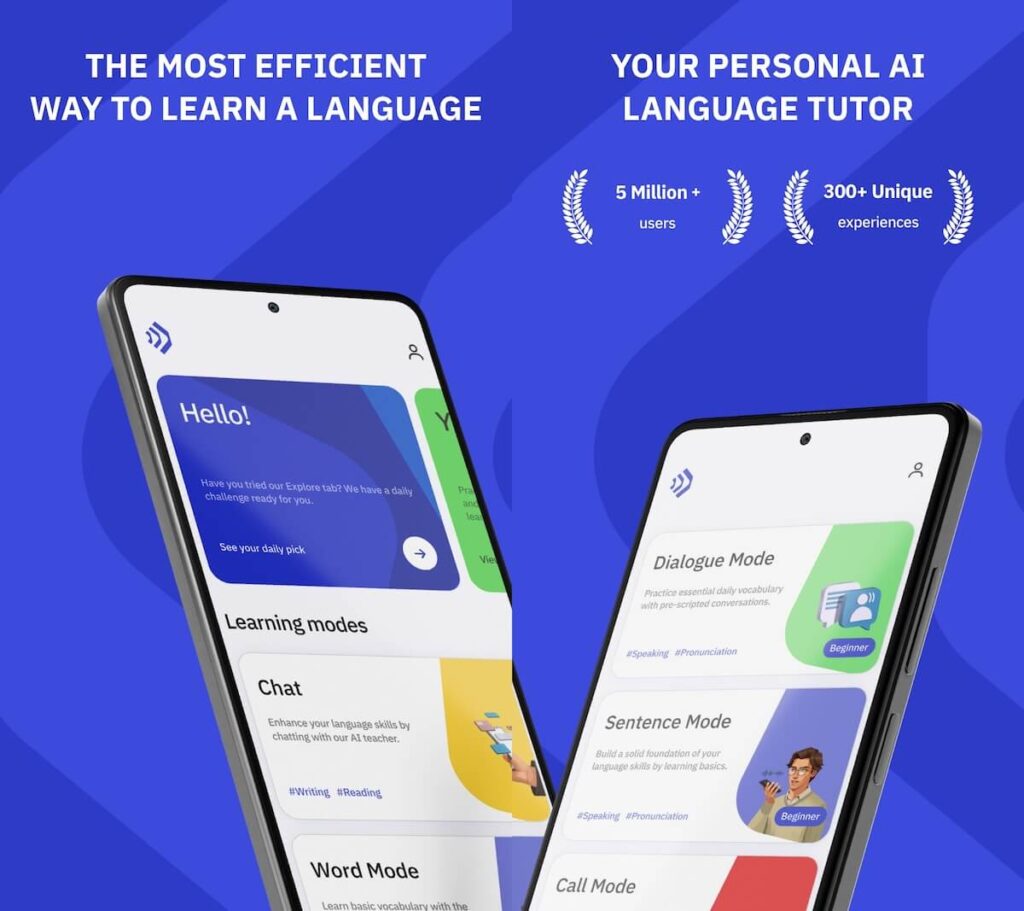
Want to learn Maltese from a teacher who is always available and never judges your pronunciation? That’s where Talkpal comes in!
This platform uses GPT-based AI to create a genuinely immersive, conversational learning experience. It’s designed to get you speaking from day one by skipping endless rote memorization and focusing on real-time practice through dialogues and fun challenges, all while receiving instant feedback on your pronunciation and grammar.
Talkpal goes beyond basic practice with a variety of dedicated learning modes. Whether you’re using Chat Mode for a free-form conversation, Roleplays to practice real-life scenarios like ordering food, or Call Mode for audio-only fluency practice, the app targets all four core skills: reading, listening, writing, and, most importantly, speaking.
Key features:
- Real-time conversation practice
- All-skills coverage
- Multiple practice modes
3. Kuċċarina

For something closer to home, try Kuċċarina (Maltese for “teaspoon”). This charming app was inspired by a Maltese developer’s desire to help his foreign girlfriend learn the language, and it truly fills the gap left by major platforms.
Kuċċarina is a beautifully designed, gamified experience packed with thousands of questions and challenges covering essential everyday words and phrases. This focus on practical, real-world scenarios helps you prepare for conversations you’ll actually have in Malta, like shopping or dining.
The app offers four exciting game modes that challenge your spelling, sentence structure, and vocabulary through flashcards and puzzle-like exercises. It even features integrated access to Maltese music and podcasts to make learning a cultural experience!
Key features:
- Focuses on practical phrases for real-world scenarios
- Various game modes
- Covers all skill levels
Other great resources for learning Maltese
To truly reach fluency in Maltese, consider expanding your toolkit with human interaction and traditional materials. Connecting with online tutors can provide personalized feedback, while structured online courses and textbooks offer the necessary deep dives into grammar and complex sentence structure.
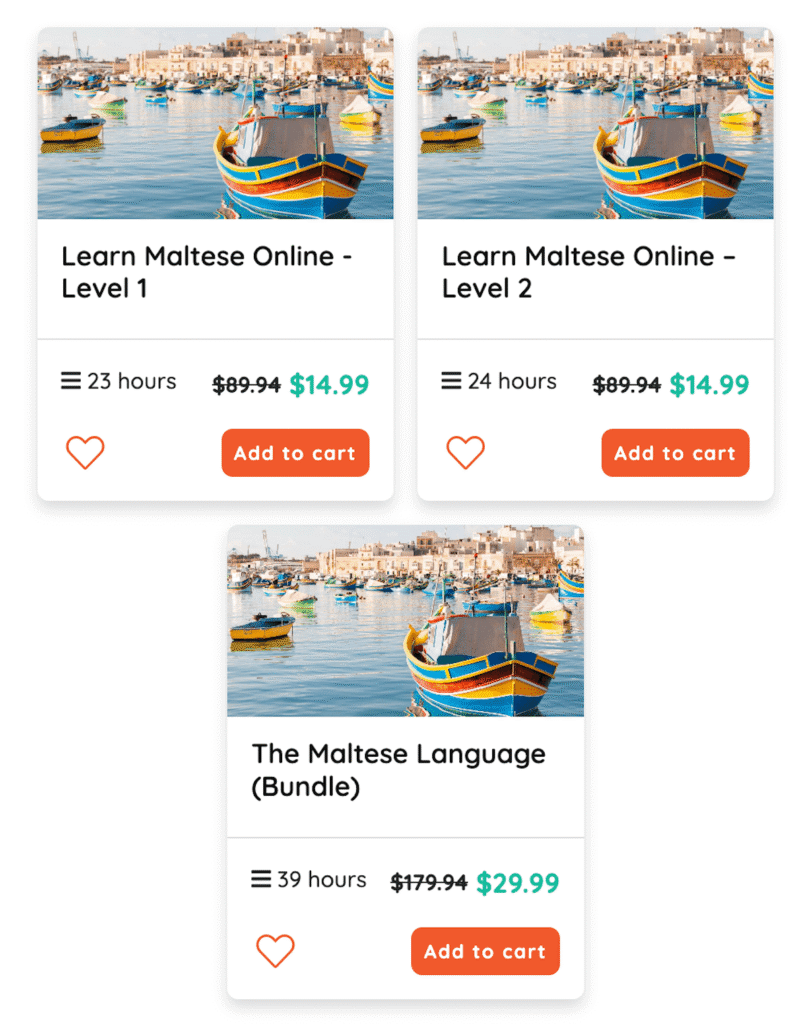
Cudoo: For a more structured, self-paced approach, check out Cudoo. This platform offers comprehensive online Maltese courses that combine vocabulary and grammar. You can start with Level 1 for the basics and move on to Level 2 for more depth, or grab the full bundle to commit to your journey!
Preply: For personalized, one-on-one lessons, look no further than Preply. This platform connects you with native Maltese tutors who create tailored classes just for you. You get real conversation practice, custom feedback, and lessons that adapt to your goals, making it the fastest way to truly build speaking confidence.
Maltese for Foreigners: This series is excellent for beginners, covering essential grammar and vocabulary in a structured way. With a focus on real-life context and having a second book to take you further, it’s a great choice for self-study!

Maltese – Listening Speaking by ivoca.io: To focus on your speaking skills, try this app by ivoca.io. It uses AI-powered voice recognition and real-life video clips featuring native speakers to get you confidently conversing. You can practice dialogues, get instant feedback on your pronunciation, and touch any word to learn its meaning—perfect for practical fluency.
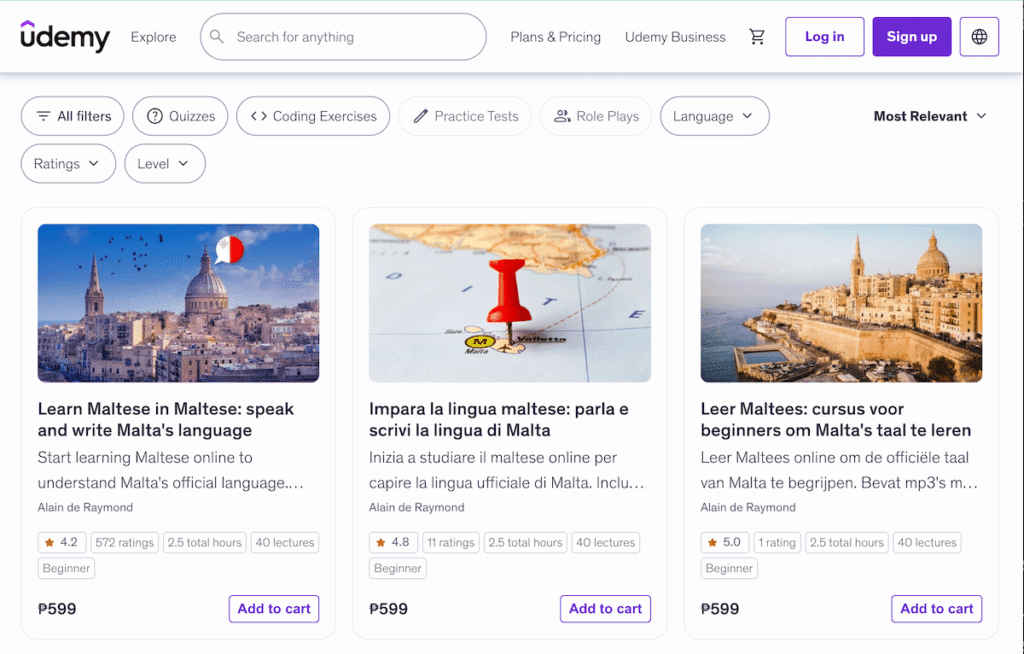
Udemy: This site offers self-paced video courses for learning Maltese, perfect for the beginner who prefers learning on their own schedule. These courses provide video-based lessons, downloadable audio files, and quizzes to cover essential vocabulary and basic conversation skills.
Maltese-English/English-Maltese Dictionary and Phrasebook: This compact bilingual guide is an essential travel companion. Beyond its handy dictionary entries, it features a practical phrasebook covering all visitor topics and a short reference to basic grammar and pronunciation. It’s perfect for quickly looking up words and common expressions on the go!

- Used Book in Good Condition

Bluebird Languages: Get access to a massive library of ready-made lessons. This app focuses on hands-free, audio-based learning, using the spaced repetition technique to help you remember over 2,000 high-frequency words and 100 verbs. You can choose from over 2,000 lessons and practice listening and repeating while you’re on the go!
Conclusion

Even without a dedicated Duolingo Maltese course, you have an incredible array of resources ready at your fingertips—from fun apps to experienced human tutors and classic textbooks.
As you can see from the list above, learning Maltese is entirely possible anytime, anywhere! All it takes is discipline, consistent hard work, and a commitment to having fun with the process. Saħħa (cheers) to your language journey!