
Most German students start off by learning Hochdeutsch, the standardized form of the language taught at most schools and spoken by most people in Germany.
But many of them never go on to realize even much later on that the kind of German spoken in various regions of Europe differs a whole lot from Hochdeutsch – sometimes quite drastically.
That can be a real burden, as learning a language variety that isn’t suited to your long-term goals cannot just be detrimental to your learning progress. It can also be really frustrating to have to study a close relative of a language you already know, unlearning and re-learning countless closely-related details!
To help avoid these kinds of misdirection, let’s take a look today at two of the most heavily studied and spoken varieties of German that students and learners often confuse with one another – Hochdeutsch and Swiss German.
We will not just examine the differences between Swiss German and German, but also take a look at what makes them related. That way, you will hopefully have an easier time choosing which of the two to devote most of your studies to!

Swiss German vs Swiss Standard German
Before we look at some concrete differences between Swiss German and standard German, I should point out one common source of confusion. Swiss German is not the same thing as Schweizer Hochdeutsch, or Swiss Standard German.
While the former is a language entirely of its own (though closely related to German), the latter is more of a local dialect that Swiss people use instead of Hochdeutsch in Switzerland.
Apart from pronunciation, the use of different vocabulary, and a few unique expressions, it doesn’t differ enough from Standard High German to be called a distinct language, and almost all German speakers can understand it without any problems.
That’s why for today, we’ll be trying a crack at the more difficult of the two Swiss varieties – Schweizerdeutsch, or as it’s called natively, Schwytzerdüütsch. See some differences already?
1. Swiss German uses fewer tenses

Though this is not a hard and fast rule and different variants of Swiss German differ in this regard, almost all of them lack at least one or two of the tenses you will find in Hochdeutsch.
A very widespread example is the preterite tense, or Präteritum.
This is the equivalent of the simple past tense, e.g., in phrases like “Ich wartete”, I waited.
In Swiss German (and, by the way, also in most dialects of Austrian German), this tense is almost entirely absent.
Instead, you mostly use the perfect past tense – just like in Standard German, you add a conjugation of the word haben (to have), or in the case of Swiss, haa, to the past tense verb stem.
2. Spelling works entirely differently
As you might have noticed by this point, Swiss German spells words in a very distinct (and, some might say, funny) way compared to Standard German.
This is not just because of differences in pronunciation – we’ll get to those in a bit.
Rather, spelling rules in Swiss German and German differ across the board!
In written German texts in Switzerland, High German is used, the same kind as in Germany. The only major division between the two is that Swiss German writing never uses the sharp s, the ß symbol.
However, Swiss German has traditionally only existed as an oral dialect, with spelling very loosely defined.
That is why it is possible to find many alternative spellings for just about any word in Swiss German.
The bottom line for learners: concentrate on developing speaking skills if you want to become a fluent user of Swiss German!
3. Vocabulary is closely related, but (almost) never identical
German and Swiss German are close brothers, linguistically speaking. That is why, if you’re already conversational in Standard High German, you’ll probably be able to pick out many common Swiss German words and phrases and identify them based on what you already know.
But just like a native Italian speaker can read and understand basic Portuguese texts in this way, knowing Italian doesn’t make you magically fluent in Portuguese overnight!
In almost every respect, the vocabularies of Swiss German and German are entirely distinct. So while you’ll have an easier time learning the one after spending some time with the other, don’t go in assuming they’re the same!
4. Swiss German uses a different ch sound
Now, let’s talk about pronunciation. Swiss German and German differ significantly in pronunciation, so much so that it makes Swiss German almost entirely unintelligible to Hochdeutsch speakers sometimes.
One such difference, and a telltale aspect of Swiss German, is its use of the ch.
In Hochdeutsch, ch can either sound like the ch in “Loch” or like a fricative that is almost like the sh in “shot”, but much softer and produced with air passing only through the lower teeth.
However, in Swiss German, the ch always produces the former sound. The soft ch basically doesn’t exist!
You can see this effect, and how it completely changes the way Swiss German speakers sound to Hochdeutsch-trained ears, in even short and simple words like “mich”, or “me”.
5. Umlauts all over the place

Another pronunciation quirk: while both German and Swiss German make heavy use of umlauts – those special letters looking like vowels with two dots on their heads – Swiss German likes to pepper them in places Hochdeutsch would never dare.
Thus, Swiss German words can feature chains of umlauts, multiple umlauts in a row, and even some words that have at least one of each umlaut in them!
6. There are lots of false friends
No, not those kinds of false friends that double-cross you, don’t worry!
I touched on the close relationship between German and Swiss German vocabulary up above. While it’s true that almost all of the vocabulary shared among the two languages is related, but not identical, that also means that there are a lot of close calls.
In particular, there are plenty of cases where Swiss German and Hochdeutsch speakers both use a certain word, but in different contexts.
For instance, schwätzen exists in High German as a derogatory way of describing someone speaking or talking, usually in a loud, rude, or gossipy manner.
In Swiss German, the same word exists – but it actually just means “to say” or “to talk”, in a perfectly neutral manner!
7. Swiss German conjugations can take you by surprise

From a basic linguistic perspective, grammatical differences between Swiss German and German don’t go much further than skin deep. Sure, some elements differ (like the tenses we talked about earlier), but all in all, Swiss German and German follow each other pretty closely.
An area where this is true – but only sort of – is the issue of verb conjugations. By and large, the rules in Swiss German for conjugating verbs are the same as the ones in Hochdeutsch.
However, the actual conjugations themselves, the different verb endings and case forms that you use to decline verbs to different tenses and such, are different.
For example: in Hochdeutsch, the verb for “to have” gets a –be at the end for the first person singular present tense form. Ich habe Hunger means “I am hungry” (or “I have hunger”, word for word).
In Swiss German, these -b and -be endings are changed to –a and –an endings instead.
Therefore, it’s Ich ha Hunger in Switzerland!
8. Swiss German likes to contract phrases more
Standard High German is no stranger to contractions.
In grammatical cases like the dative, it’s actually considered slightly incorrect (or at the very least unnatural) to say “Ich gehe zu dem Supermarkt” instead of “Ich gehe zum Supermarkt”.
However, Swiss German takes this up a notch, where grammatical cases and compounds aren’t the only instances where you can contract multiple words into one.
For example, there’s the very common Swiss expression Wämmer, which these days is actually used more and more in Western and Southern Germany, too!
What that expression is is a contraction of the three-word phrase, Wollen wir mal?, which is to say, “Do we wanna?”.
When spelled out like that, Swiss German contractions can appear quite natural, but they can be hard to guess at first. That is one of the things that has contributed to a popular image of Swiss Germans speaking much faster than their brethren from across the border.
Turns out, they really don’t – they just contract more of their words!
9. Swiss German completely changes depending on where you go
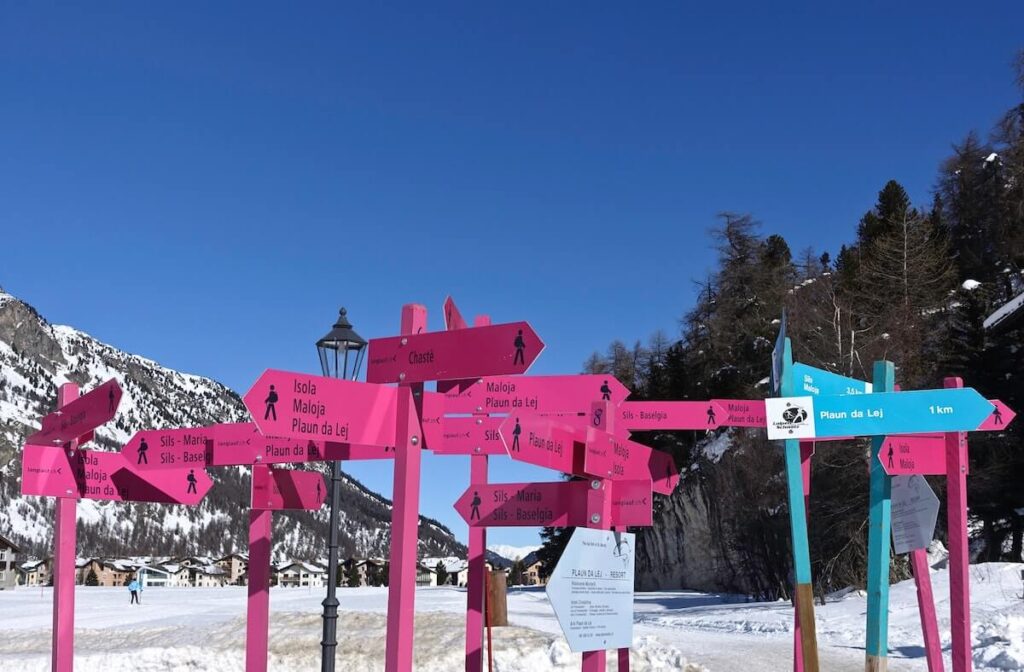
Hochdeutsch has the advantage in terms of being easier to learn by being an entirely standardized language. Bar regional differences in accents and some slang words, every High German speaker can understand each other.
The same isn’t necessarily true for Swiss German! The varieties of Bern and Lucerne, of Zurich and of Baden differ from each other in ways that range from minor to fundamental.
Hence, you can’t just learn Swiss German in one go and expect to understand every Swiss speaker, unfortunately!
10. Switzerland experiences high diglossia and code-switching

In Germany, the only foreign language you can expect most people to self-identify as being fluent in is English.
In some specific areas, French might be more common, but the gist is: Germans use German (Hochdeutsch specifically) for the majority of the day, switching to the main foreign language they know when chatting with friends from across the border, or for international business purposes.
In Swiss German-speaking areas, things work entirely differently. I already mentioned how the Swiss tend to speak in Swiss German, but write in Hochdeutsch. In the same vein, many Swiss German speakers that I personally know identify the “German’s German” as more of a formal foreign language rather than a variety of their own mother tongue.
This leads to unique code-switching, where Swiss speakers will sometimes deliberately, sometimes subconsciously switch between Hochdeutsch words, phrases, and grammar, Swiss German ones, and back and forth throughout a conversation.
In my experience, that can be a double-edged sword if your mission is to learn and understand Swiss German as well as possible.
On the one hand, the familiar German peeking through the code-switching can help – on the other, it can also blur the lines as to where Swiss stops and German begins!
My final thoughts

What a ride, huh? I hope you can see now how Swiss German is not “just” a dialect of German, but a unique vernacular language of its own that deserves the same kind of diligence, preparation, and practice if you wish to learn it as any other.
In the end, German and Swiss German do share more similarities than differences, of course. So don’t take what you learned today as a warning, but rather as an encouragement: if you’re already learning High German or Swiss German, you’re only making life easier for yourself when it might eventually come to transferring your skills to the other!
And with that, auf wiedersehen – or uf wiederluege, as they say in Switzerland!