
*This article may contain affiliate links. For full information, please see the disclaimer here.
So, you’ve decided to learn a language? Good for you! You, my friend, are in for quite an adventure!
At some point in most people’s lives, learning languages has probably been part of their resolutions. It’s not surprising, given the many benefits of learning languages, from traveling with ease to getting that much-needed mental workout. Even better, you don’t have to leave your house to do so—you can learn languages online, anytime, anywhere.
Mastering a language through online resources is totally achievable. For many, it’s much more preferable than enrolling in a face-to-face class. But how exactly do you do it? What’s the best way to learn a language online?

If you’ve been wondering about the same thing, let me tell you that there isn’t just one way to go about it. No magic pill, no one-size-fits-all solution. Instead, you’ll find that you need to leverage a diverse set of digital tools and learning principles to reach your goals. And fortunately for you, that’s exactly what this article is all about.
Laying the foundation: Setting up for success
Tip #1: Define your “why” and set SMART goals
Motivation is key. This is what propelled you to start learning a language in the first place and this is what’s going to keep you on track.
Knowing your “why” is a foundational step if you want to succeed in your language learning journey. For one, it will be your driving force as you face difficulties (and believe me, you will face difficulties) along the way. For another, if you’re going to be investing time, energy, and money into language learning, you should at least know why you’re doing it, right?

Ask yourself why you want to learn a language. Is it for travel or migration? To advance your career? To better navigate a culture? To beef up your resume? Whatever your motivation is, articulate it, write it down, and place it somewhere you can always see, so you’ll always be reminded when you need that extra push.
Knowing your “why” is also crucial in setting up smaller, achievable milestones. Your goals should be SMART (Specific, Measurable, Achievable, Relevant, Timebound). This isn’t anything like your generic “I want to be fluent” or “I want to speak German” statements.

For instance, if your motivation is travel, a SMART goal might look like: “By December 2025, I will be able to order food and ask for directions independently in Italian during my trip to Rome, as evidenced by successful interactions without relying on a translation app.”
If your motivation is career-related, a goal could be: “I will complete an intermediate Spanish business communication course by the end of Q3 2025 and confidently participate in a 15-minute mock business negotiation in Spanish.”
Knowing your “why” and having SMART goals will give a solid structure to your language learning journey.
Tip #2: Choose the right core resources
Now that you’ve pinned down your motivation and set your goals, it’s time to build your online learning arsenal.

Choosing the core resources is critical as these tools will form the backbone of your language learning journey. This means you don’t just choose for the fun of it. You have to pick the tools that will meet your goals.
Let’s start with apps. The best language learning apps will vary per person. For instance, if your goal is to build foundational vocabulary, apps like Mondly, Ling, and uTalk are some of your best options. These apps offer gamified experiences that make initial learning accessible and engaging.
If you prefer something that incorporates vocabulary and grammar, I highly recommend Babbel and Rocket Languages. These two provide a variety of exercises that go beyond generic phrases. These two, plus Pimsleur, are also great for getting speaking practice.
If you prefer a more structured approach with comprehensive curricula, you can also sign up for self-paced online courses such as those on Coursera, Alison, and Cudoo. There are also other dedicated language learning websites that provide academic-level instruction.
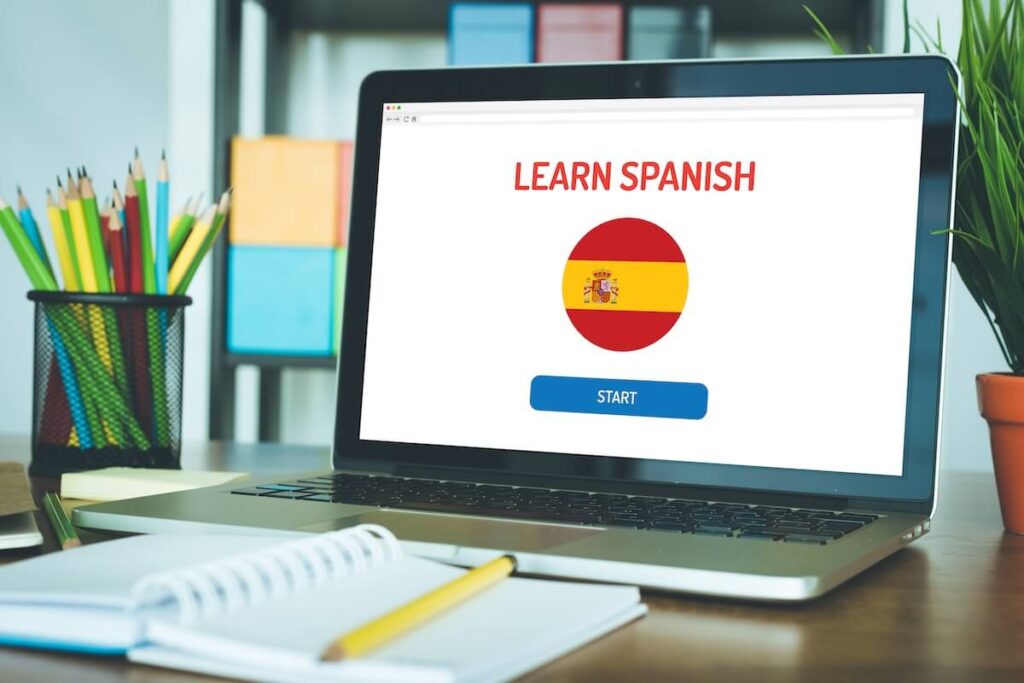
When choosing your online language resources, do consider your learning style and preferences too. Do you thrive with gamified daily challenges? Do you prefer a highly structured academic path? Or do you seek more conversational lessons? Knowing the answer to these will help point you to the right tool.
If you’re having a hard time choosing, you can always test them out first! You can check out these deals and discounts (including free trial runs) on some of our favorite tools.
Immersion and practice: Bringing the language to life
Tip #3: Integrate online tutors and conversation partners
Apps and online courses are among the best ways to learn a language by yourself. But if you’re serious and really want to master a language, you’ll have to talk to native speakers. After all, the main purpose of language is to facilitate communication.
So, dear introvert who wants to be a polyglot, you’ll have to talk to other people at some point (and they don’t have to be strangers).

Not all of us have the resources to travel and meet native speakers in person, but there are platforms like italki, Preply, Lingoda, and AmazingTalker. These are websites that connect you with expert language tutors who can help you practice speaking and listening, give you real-time feedback, and share cultural insights that you may not be able to get from other resources.
The great thing is that these tutors can tailor-fit their lessons to your goals and needs. Depending on your budget, you can even decide how many sessions to take. My advice? Aim for regular sessions, even short ones. Consistency is crucial for growth.
An alternative (or an add-on, depending on how much time or budget you have) to online tutoring is finding conversation partners on language exchange apps and websites. Of course, this is more casual, and instead of structured lessons, you talk to your partner about anything under the sun.
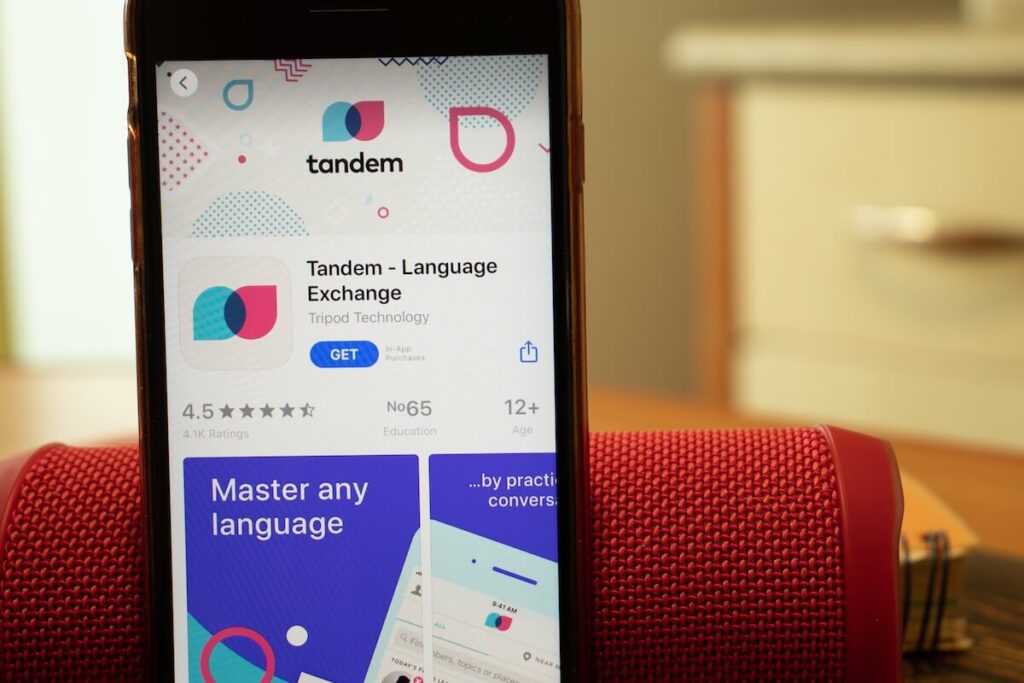
Many language exchange apps feature built-in tools for chatting and translating so the conversation can flow more smoothly. Others also have a “social” vibe to them, with features allowing you to “follow” fellow learners, post questions, and comment on other people’s posts.
Tip #4: Leverage audio resources
Some of us, myself included, learn better by listening. Audio resources like podcasts and music aren’t exclusively for entertainment. They can also be an invaluable way to immerse yourself in your target language and develop crucial listening comprehension skills.
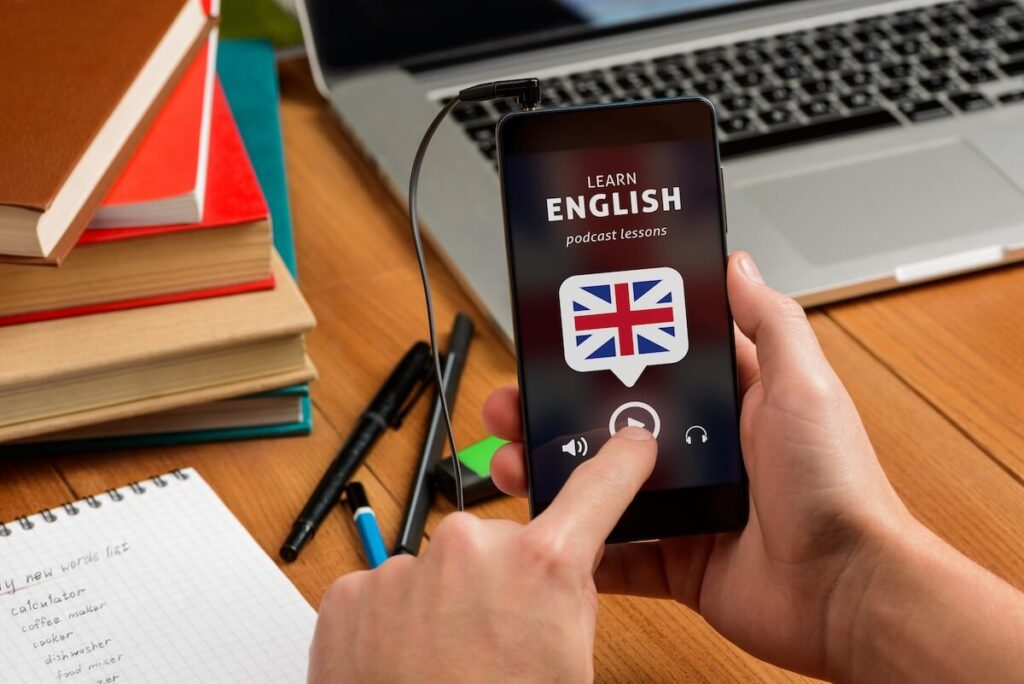
Language-specific learning podcasts, such as Babbel’s podcasts, the Coffee Break series, Duolingo podcasts, the Pod101 series by Innovative Language, and BBC’s English podcasts, are excellent for guided instruction. There are also native-speaker podcasts on a variety of topics (e.g., history, news, true crime, technology), which give authentic exposure to natural speech patterns and vocabulary.
(Tip: You can find good podcasts for your target language here.)
Audio-based apps like Pimsleur, Glossika, and Rocket Languages, although not technically podcasts, are also great for internalizing pronunciation and accents.
Don’t dismiss music; it can be a great language learning tool too! In my years of learning Korean, I have been, on several occasions, surprised at how I’ve managed to learn new words through Korean songs and TV shows—even before I encountered them in actual lessons!

Listening to songs in your target language and actively looking up the lyrics can make learning more fun. Plus, this helps you drill down on the pronunciation while also building your lexicon.
Whichever audio resource you use, the key is “active listening”—don’t just let the sounds wash over you. Instead, consciously try to understand the pronunciation and context, repeat the words aloud, and identify new words as you listen.
Tip #5: Watch and learn
Do you see now how “immersion and practice” can just be a fun time to learn?
Seriously though, even your downtime can be an engaging opportunity for you to learn something new.

Video and streaming platforms like YouTube are teeming with language learning resources—from dedicated language teachers providing structured lessons (complete with a whiteboard and all) to vlogs by native speakers offering authentic conversational exposure and sometimes, travel and culture information.
Streaming platforms, such as Netflix, Hulu, Amazon Prime, and more, are powerful tools as well. You can watch content in your target language, turn on the subtitles in your native language to grasp the general meaning, and then challenge yourself by switching to target language subtitles to connect spoken words with their written forms. You can also turn off the subtitles altogether and test your listening comprehension skills.

The visual and auditory combination significantly enhances comprehension, vocabulary retention, and cultural understanding. And it’s undeniably more fun than sitting in a classroom.
If you want something more interactive, I recommend Lingopie and FluentU. These platforms allow you to watch content (including Netflix shows and music videos) in your target language, then present to you quizzes and games to test your understanding and recall. Cool, huh?
Active learning & retention: Making it stick
Tip #6: Read extensively
A well-rounded approach to language learning is important for fluency. While knowing how to speak the language is a good metric, so is writing. And for you to master writing, you’ll need to invest a good amount of time reading.

Reading extensively is a powerful technique for expanding vocabulary, strengthening your grasp of grammar, and gaining cultural insights. It’s especially important if you’re studying languages with non-Latin scripts, such as Chinese, Thai, Korean, Hebrew, Greek, or Arabic.
Lucky for you, you can find lots of online resources for reading. You can start with graded readers—simplified texts designed for language learning—to build confidence and familiarity with common structures. This website, for instance, has a robust library of free graded readers for Japanese learners.
As your understanding grows, you can transition to authentic, “more serious” materials, like e-books, online news articles, or even fiction in your target language. You can even install browser extensions for quick word lookups, although resisting the urge to stop for every unknown word is a crucial technique. Instead, practice inferring meaning from context. This will sharpen your comprehension skills.
Although not strictly online, textbooks, grammar books, and workbooks can also provide structured lessons and exercises to reinforce grammar and vocabulary.
Tip #7: Master vocabulary with spaced repetition systems
Mastering vocabulary is fundamental to fluency. Take me, for example. Despite learning how to read and write Hangeul (the Korean alphabet), I admit that I still can’t fully watch a show without subtitles because there are words I haven’t learned yet. In short, my vocabulary is limited.
I am growing though, and using spaced repetition system (SRS) has been helpful. The best language learning programs use SRS, which is arguably the most effective tool for amassing vocabulary. This system presents words for review at scientifically optimized, increasing intervals based on your recall performance, helping you develop long-term memory.

When it comes to spaced repetition platforms, Anki is the undisputed champion. This flashcard program is powered by a sophisticated SRS algorithm that adapts to your learning pace, helping you spend more time on new and challenging material and less on what you already know.
Anki lets you create your own flashcard decks or download thousands of pre-made ones. But for best results, I recommend creating your own flashcards and focusing on complete sentences rather than isolated words. This gives you more context and reinforces grammar and sentence structures.
Mochi, Quizlet, and Brainscape are also good options for SRS flashcards on just about any topic. As for language learning apps, Babbel, FluentU, Glossika, Lingopie, MosaLingua, and Pimsleur use SRS to effectively teach and reinforce vocabulary.
Tip #8: Practice active recall and self-testing
Making your learning stick involves more than just consuming information. It requires active engagement. Even if you’ve chosen good online language learning tools, if you don’t actively challenge your brain to retain information, you’ll end up just forgetting most of what you’ve learned.
So, how do you practice active recall? As I’ve said earlier, flashcards are good, especially SRS-powered digital flashcards. Beyond that, you can summarize lessons or readings in your own words after each session. You can also translate sentences from your native language into your target language to force your brain to work.

This practice of active retrieval, rather than mere recognition, significantly strengthens your neural pathways. This way, your learned vocabulary and grammar will stick far more effectively in your long-term memory.
One practice that also worked for me is thinking in my target language (this video from TTMIK was super helpful). You can start small, perhaps by mentally translating common objects you see around you—the “table,” the “chair,” the “pencil.” As you gain confidence, challenge yourself to mentally translate longer phrases or even entire sentences that pop into your head.
This constant internal dialogue forces your brain to operate directly in the new language, bypassing the need to translate from your native tongue. Sure, it feels slow at first. But it eventually accelerates your ability to form thoughts and speak more naturally.
Consistency & mindset: Sustaining your journey
Tip #9: Create a language learning routine and stick to it
I’m just gonna go ahead and say it: learning languages on your own, especially at home, is not for the weak.
Finding good online resources and actually learning from them is half the battle. Showing up daily, consistently—that’s where the real challenge is.
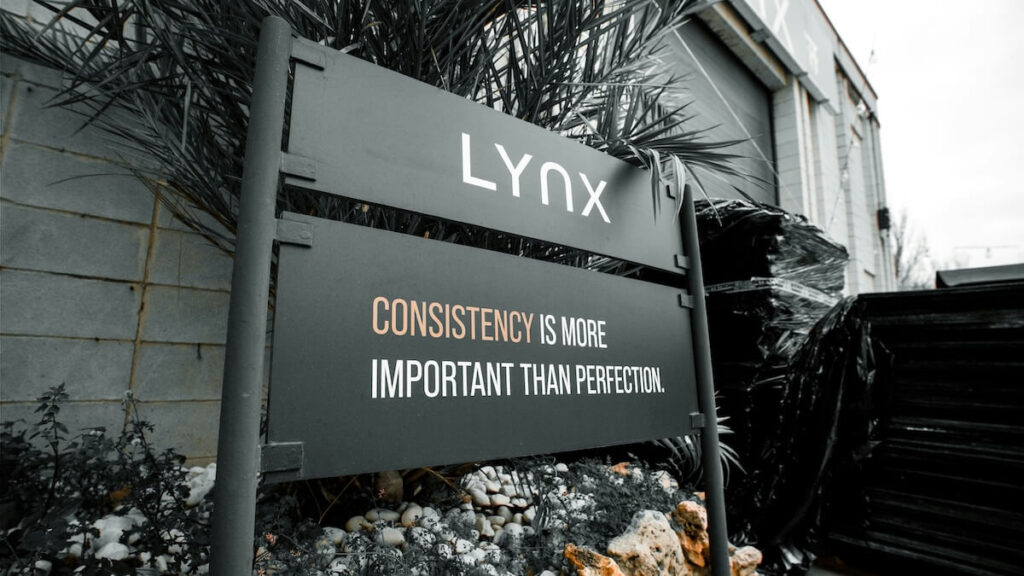
The secret ingredient to long-term language learning success isn’t brute force, but unwavering consistency. If you wonder why many apps push for “streaks,” it’s not just so they can force you to use their products (although that’s part of the reason) but also because it helps build momentum.
Establishing a language learning routine, and more importantly, sticking to it, will yield far greater results than sporadic, intense study sessions. Prioritize consistency over intensity. This means even just 15 to 30 minutes daily can get you to your goal, if you keep at it long enough.

Block off this dedicated time in your calendar, treating it as an unmissable appointment. While life happens, and flexibility is key to avoiding burnout, the goal is to adapt your routine as needed rather than abandoning it entirely. In other words, you need to make language learning a part of your daily life!
Tip #10: Embrace mistakes and celebrate small wins
I get it, every endeavor involves a lot of second-guessing. What if I fail that exam? What if I make a blunder in public?

Well, what if every stumble was a step forward? What if every mispronounced word or grammatical error wasn’t a failure, but a sign that you’re actively pushing your boundaries?
Making mistakes is okay. In fact, they are a normal and necessary part of learning anything. Embracing mistakes is perhaps the most freeing mindset you can adopt in language learning. Instead of letting the fear of error silence you, you can view each mistake as invaluable feedback and a clear indication of where to focus your efforts.

Equally important is celebrating every small win, whether it’s understanding a new phrase, successfully ordering coffee in your target language, or holding a slight longer conversation. And, of course, hitting certain milestones in your SMART goals certainly merits a celebration!
Acknowledging these incremental victories (and rewarding yourself for them) fuels your motivation, reinforces every effort, and ultimately, brings you closer to fluency.
Wrap up

So, what’s the best way to learn a language online? It’s by following these 10 tips!
Online learning has truly democratized language acquisition, offering unparalleled access to innovative tools, tutors, and native speakers right at your fingertips. But as you can see from the list above, the techniques matter just as much (if not more) than the tools.
With these powerful tips—from defining your ‘why’ and choosing the right resources to immersing yourself in various content and building a consistent routine—you now have a comprehensive roadmap to language mastery.
My final advice? Don’t wait, start today, stay consistent, and enjoy every moment of this rewarding journey!