
Learning a language can have countless motivators. Plenty of people pick up a new language for seeking work in a new country or bridging gaps with distant family, for example.
German, as one of the most widely-spoken native tongues within Europe and being the official language of not one, but three of the continent’s biggest powerhouse economies, definitely ticks those boxes for many.

But what if what attracted you to German is something else entirely? Are there still any measurable benefits of learning German?
Not only is the answer a resounding yes, but you might be surprised to hear just how many unbelievable and powerful advantages you can gain by becoming a German speaker. Let’s go through some of the wildest and most important ones!
The greatest benefits of learning German
1. You’ll finally pierce through the barrier…

If you’ve ever spent a significant amount of time in a German-speaking area, you know which barrier I am talking about. The barrier, in plain words, is the near-impenetrable social shield that can make it awfully hard for non-fluent speakers to make friends and mingle with native Germans, whether that’s at work, in educational settings, or just out and about on an average day.
Germans and their linguistic brethren are known as rather cool, closed-off fellows, and for the most part, that’s a reputation they’ve earned. But a good command of their native tongue can indeed help you breach the barrier and gain some valuable, deep German connections.
If that’s not one of the most important advantages of learning German, I don’t know what is!
2. You’ll open a lot of doors!

The way Germans are less likely to interact with foreign speakers of other languages on a deeper level doesn’t stop at personal relationships and day-to-day socializing. In the world of business, for instance, German is key – German-speaking companies are some of the most powerful in Europe, but to this day they have not made as much of an effort to internationalize as heavily as some of their neighbors on the continent.
Lots of foreigners try to enter German-dominated fields and spaces each year to better their prospects, but unfortunately, a lot of them are passed on in favor of those who have a fluent command of the language.
Of course, you can still expect English to be spoken at any major workplace. But without knowing German, you might feel excluded from some real career opportunities! This makes learning German for business not just an incentive, but a true advantage for the long-term.
No matter what kind of professional interactions you have or plan to have with German people in your life, you can bet that their native tongue is always going to be more effective than English or any other intermediary or translation. It can start as small as a simple Vielen dank!
3. Getting around Germany, Austria, and Switzerland will be that much easier…

Following a similar trend, you might notice that outside of areas heavily popular with tourists, German roads and public places are very rarely equipped with multilingual signage.
If you’re planning a German road trip, let alone thinking of relocating to any German-speaking country at all, it will really come in handy to be able to read the language and understand what’s posted. This is especially important in this case, as Germany and Austria (and Switzerland as well to a lesser extent) are absolutely brimming with written instructions – from where to cross the road to what bin to pick to dispose of your trash, and much more.
In some cases, you may even face fines for an accidental faux pas, so arm yourself with the necessary German knowledge and your future you will be thankful!
4. You will gain a much deeper understanding of German culture.

It’s not just these day-to-day necessities where a solid understanding of German really helps you survive within the country. On a deeper level, too, knowing the language can really transform your view of the place.
As in many other countries, German is very intimately connected with a notion of shared history, culture, and identity. The same goes for Austria as well, though the local interpretation of the language – as in, both the way people view it and the forms of German that are spoken there – are different.
In any case, really integrating into German society, feeling at home and freely navigating the ins and outs of the culture can only come from a thorough command of the native language. Suffice it to say that few things in life can compare to the experience of being introduced to an entirely new world like that!
5. Your reading list will thank you.

German literature is, to put it bluntly, rich and without compare. In the world of fiction, you have greats ranging from Goethe to Hermann Hesse, from Thomas Mann to Max Frisch, from Kafka to Schiller.
In philosophy, German classics likewise dominate, with works from authors like Kant, Nietzsche, and Hegel being held up to this day as defining cornerstones of serious thought.
And even in the sciences, German individuals like Max Planck, Werner Heisenberg, Karl Marx, Max Horkheimer, and Johannes Kepler, not to mention Albert Einstein and others, continue to dominate reading lists in their respective fields.
While most people, especially those studying at a university level, will come into contact with some of this amazing German literature at some point, it will mostly be through translations.
Interacting with German books in the original language allows you to get in touch with the authors’ original words, which often makes for a richer reading experience. That’s why I consider this one of the greatest reasons to learn German at a high level!
Also read: 15 Best German Novels and Storybooks for Beginners and Beyond
6. Other Germanic languages will feel much easier to reach.
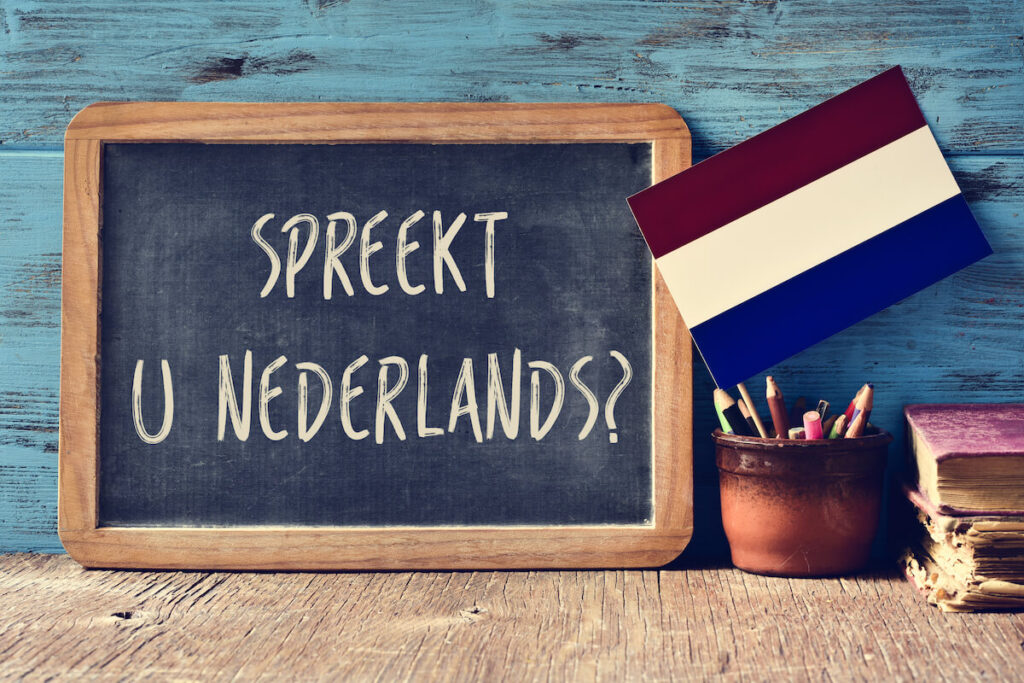
People often forget the fact that German is but one member of a tightly-knit linguistic family – one that includes English, among others like Norwegian, Danish, Dutch, and many of the minority languages of Central and Northern Europe.
Not only does this mean that German and English complement each other well, but you will probably see even greater mutual benefits studying German side-by-side with one of its more closely related brethren, like Swedish!
So, if you have any interest at all in any of these other Germanic languages, know that German will come in very handy indeed.
7. Your online experience might change dramatically, too!

Did you know that the German-language internet has consistently ranked as one of the largest non-English-speaking segments of the web by total number of users and pages? It’s true!
I still remember navigating the internet in German for the first few times, being shocked at the amount of content, the number of content creators and quasi-celebrities, and even the depth of information that you simply wouldn’t be able to find in English!
In my opinion, this is one of the most serious advantages of learning German – no matter where your interests lie, exploring them in German online will offer you new perspectives and experiences that you will surely be grateful for.
8. You may gain a whole new appreciation for German music

If classical music has any place at all in your life, I don’t need to bring up great masters like Schubert, Mozart, Beethoven, Strauss, or Bach. Their world-changing compositions speak for themselves!
But when it comes to more modern, popular music styles, German is often left by the wayside by foreign critics. That’s a shame, as standout acts like Die Ärzte, Rammstein, Nena, Die Toten Hosen, and others definitely deserve your attention!
What’s more, German music combines business with pleasure by allowing you to discover great tunes while at the same time improving your listening and reading comprehension through the lyrics!
9. German-speaking countries offer great academic prospects.

One of the best reasons to study German is to expand your academic horizons. Germany, Austria, and Switzerland are an international student’s dream in many ways.
University tuition in the former two is free for all, regardless of nationality. Swiss universities do charge, and you can expect much of the tuition to be held in French and Italian in addition to English and German, but even then, they remain some of the more affordable institutions compared to those of many other countries.
That fact only starts looking more attractive once you realize that great universities of the German-speaking world, such as TU Munich, ETH Zurich, Heidelberg University, and the University of Vienna, are rated as some of the best places to get your degree in all of Europe, and even the globe by some measures!
Pluses commonly echoed by alumni include highly-qualified, English-speaking faculty, top-notch research facilities and equipment, as well as gorgeous, clean and historical campuses located in some of Europe’s most popular student cities.
10. Learning German builds your confidence and self-esteem for future linguistic projects!

If there’s one sentiment that German learners (including yours truly!) like to make abundantly clear to those interested in the language, it’s that it is a tough one.
German may have close relatives in English, Norwegian, and Dutch, that’s true. But compared to those side-by-side, its odd pronunciation, tough grammar rules, and unique sentence structure stand out as uniquely complicated.
While many find these elements of the language a source of frustration, there is a flip side to this as well! One of the best benefits of learning German, to me at least, is that its complexity and opaque rules can really serve as useful preparation for other difficult languages you may want to add to your list in the future.
For example, I found that conquering German’s notorious cases made approaching Slavic languages like Polish at least a little less daunting than it otherwise would have been. I still make mistakes all the time, but at least I had a smoother learning curve thanks to my past experiences!
11. You will finally get a deeper understanding of those uncomfortably long German loanwords!

While the direct linguistic influences of German are of course largely limited to those languages that German has had the most direct contact with over the centuries – this includes French, Italian, and Polish – German words and phrases have entered other tongues as loans far beyond Germany’s borders!
You might know, for example, the term Schadenfreude, denoting that particularly nasty feeling when someone else’s mishaps or bad luck give you a sense of joy. Other German words that have not just entered English, but dozens of languages from around the world include Delicatessen, kaputt, Angst, Doppelgänger, Ersatz, Leitmotif, Bildungsroman, and even simple terms like fest!
As you can tell, plenty of these are heavily used in academic fields, particularly philosophy, literary studies, and social sciences. Interacting with these words in the native language can give you a whole new perspective on how they’re used – and you can bet it’ll also make the unwieldy, long nature of German compounds a bit easier on the eyes once you get used to it!
12. Learning German may make you more detail-aware and precise…

Germans have a reputation for being punctual, detail-oriented, and mechanically savvy. What if you could impart some of those talents through learning their language?
It’s not all pseudoscience and wishful thinking: there is some evidence to suggest that learning a new language teaches a new way of thinking, too! With German being both culturally and linguistically full of complex rules and relentless perfectionism, expect your left brain to get a real workout by learning this language!
13. You will gain a new perspective on things and broaden your worldview!

What could be a greater benefit of learning German than growing as a person and becoming more culturally aware? Following from my last point, this is one of the many reasons to learn German that can also apply to many other linguistic endeavors.
Especially if you’ve interacted with German speakers before but only by means of translation or mediating languages like English, you will see how knowing German can completely change your perspective on the culture, character, and feel of not just German society and language, but all others as well.
No matter how much you already know, adding a new language to your repertoire always expands your horizons and gets you to think in ways you may not have considered ever before. Prepare to see things in a different light when you learn German, then!
14. There’s no need to go far to get a chance to practice your German skills…

Germans, Austrians, and Swiss people are known as savvy travelers, and German-speaking communities exist all over the globe. This makes it uniquely convenient to attend language exchanges and find groups of native speakers to practice your skills with, no matter where you may be located.
Because German existed as a sort of lingua franca throughout large parts of Europe for a long time and is still one of the most popular second languages taught at school in many countries, you may also be surprised by how much German skills can come in handy while traveling the globe!
15. Your brain might grow stronger!

Studies have shown that learning a new language strengthens the brain and especially improves areas like memory and brain plasticity which are important for long-term mental health.
In that vein, consider learning German not just a linguistic, cultural, and educational journey, but a boon to your health as well!
Conclusion

I hope that some of these benefits of learning German have made it easier for you to see why this language is definitely worthy of your attention!
Of course, choosing a language always remains a personal thing at the end of the day, and for me, it’s no different with German! Between the countless hours I have sunk into Hermann Hesse and the major life achievements, such as some of my first successful job interviews, that I couldn’t have experienced in the same way without German, I will always be grateful for what this language has given me and allowed me to see. I hope that it can do something similar for you, too!
If you’re interested in the best resources to learn German with, feel free to take a look at our recommendations for excellent books and apps to learn German! You might also want to read about the key differences between the German and Austrian varieties of the language, in case you’re still not sure which to focus on.
That wraps it up for today’s guide. See you next time, and have fun with your German learning journey!