*This article may contain affiliate links. For full information, please see the disclaimer here.
A language learning app that’s so comprehensive that it can address all of the needs of every language learner — that is the dream. Alas, because we have different requirements, different goals, and different budgets, the perfect app does not exist.
And so, it’s understandable if you are looking for a Babbel alternative, despite being impressed with its features.

The good news is that there are lots of language resources available for you. Whether you’re looking for apps that are similar to Babbel but have more features, or you’re seeking other learning methods, this article has got you covered.
What is Babbel?

Babbel is one of the most well-known language learning apps in the market. And for good reason. It provides holistic courses in 13 of the most popular languages including French, Spanish, German, Italian, and Russian.
The premise behind the app is simple: by learning real-life conversations through recordings of native speakers, you authentically learn a language. And by reviewing it through various engaging ways (e.g., flashcards, listening and speaking exercises, stories, podcasts, games, and more), you can retain what you’ve learned.
Babbel, with its well-designed app, claims that it takes just 10 minutes a day to get you to start speaking right away — and speaking right at that, because its speech-recognition technology is one of the most accurate out there. This dynamic learning platform even incorporates a lot of cultural context into the lessons.
Babbel is one of the most comprehensive language learning apps I’ve used (I posted my review here). It doesn’t hurt that it’s so user-friendly and very fun to use, despite being designed for serious learners.
Why should you look for alternatives to Babbel?

Like I said in the intro, no app is perfect for everyone. We have varying studying preferences and we don’t have to stick to one app just because we see others succeeding with the said resource.
It’s worth mentioning that although Babbel has impressive speech recognition technology, nothing beats talking to native speakers. For private or group classes with a tutor, you’re better off seeking online tutoring sites, such as Preply and italki.
Budget is another valid reason for looking for a Babbel alternative. A Babbel subscription costs $13.95/month, dropping to $6.95/month if you subscribe for 12 months. This is definitely worth it if you’re enjoying every feature of the app and plan to use it long-term. But for some, it can be a bit steep.
Even if you’re fine with the price and the features but just feel like trying new things, there’s nothing wrong with checking out other apps and sites. Who knows? You might end up finding one that complements your Babbel lessons, too!
Let’s not forget, too — Babbel has only 13 courses, most of which are European languages. Languages such as Finnish, Romanian, Greek, Korean, and Hebrew aren’t on Babbel. If you’re studying a language that’s not available on Babbel, the list below is for you.
And without further ado, here are the 18 top alternatives to Babbel.
Top Babbel alternatives for language learners
1. Mondly

As in Babbel, it also takes only 10 minutes a day to learn languages on Mondly. In fact, Mondly is similar to Babbel in many ways, from its easy-to-follow lessons that target all core skills to its use of real-life conversations and voices of native speakers.
Mondly has two advantages over Babbel though. The first one is the availability of more languages. Mondly has 41 languages, which you can learn from other languages, not necessarily English. Can you speak Vietnamese and want to learn Latin? Do you want to study Hungarian from Portuguese? You can!
The second one is its pricing. Mondly subscriptions are more affordable and it offers one-time lifetime access as well. What’s more, it does have a free version, albeit with limited content.
Check out our Mondly review for more details!
What I love about Mondly:
- Quick and engaging lessons that address all core language skills
- Variety of exercises that target vocabulary and grammar
- Ample listening and speaking practice
- The free version is robust enough for learning
Pricing: Free daily lessons. Access to all content is available for $12.90/month or $61.92/year. Check out the latest promo here.
2. Pimsleur
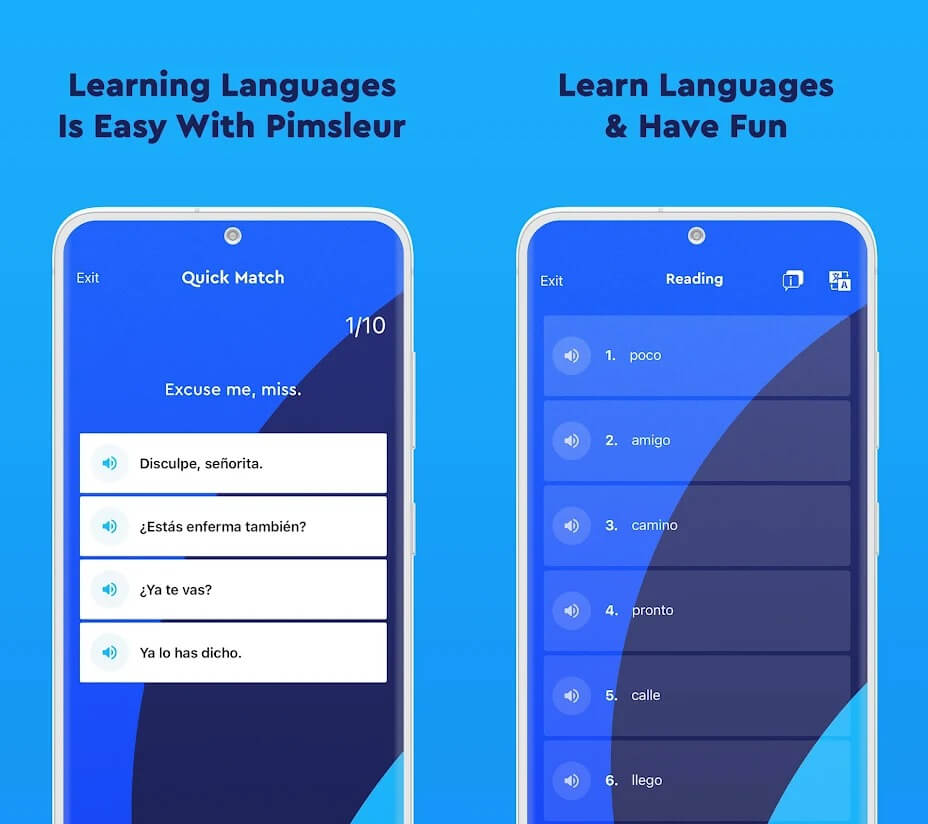
While it’s important to learn how to read and write in a new language, one can argue that languages are meant to be spoken. If you agree with this, and if you don’t think Babbel’s speaking challenges are enough for you, you might want to give Pimsleur a try.
Pimsleur is a language learning program that helps you become conversational quickly. It achieves this with core 30-minute audio lessons that get you speaking from day 1. And though it’s mostly audio-based, some of its courses offer reading exercises as well as flashcards and digital games.
Thanks to its science-backed graduated interval recall (Pimsleur’s take on the spaced repetition system), you can hear new vocabulary at systematic intervals. This ensures you establish long-term memory. You can check out our Pimsleur review to know more about the app.
What I love about Pimsleur:
- Helps you become conversational and confident in speaking
- Teaches relevant vocabulary; doesn’t overwhelm you with too many words
- Native speakers and intonation
- The graduated interval recall system is effective in retaining what you learned.
Pricing: $14.95/month for Audio-Only; $19.95/month for Premium (with bonus materials), or $20.95/month for All Access. Start your full access, 7-day free trial.
3. Rocket Languages

Learn a language on Rocket Languages
For a holistic approach to language learning, improving your speaking, listening, reading, and writing skills in engaging ways is a must. Rocket Languages is a great alternative to Babbel if this is what you’re looking for.
A Rocket Languages course teaches relevant vocabulary in an updated and contextualized manner. Grammar is taught with in-depth but easy-to-understand explanations. The app’s algorithms also identify your difficulties and repeat problematic words or phrases to you.
To help perfect your pronunciation, Rocket Languages use a state-of-the-art virtual voice recognition system. This analyzes your speech to pinpoint words you’re mispronouncing. Not a bad choice if you aim to be more conversational.
Here’s an in-depth review of Rocket Languages, if you’re on the fence.
What I love about Rocket Languages:
- Contextualized learning and relevant vocabulary
- A vast library of downloadable audio content for learning on-the-go
- Lots of speaking practice
- Extensive writing lessons for languages with different scripts
Pricing: Varies per language but discounts are available
4. Preply
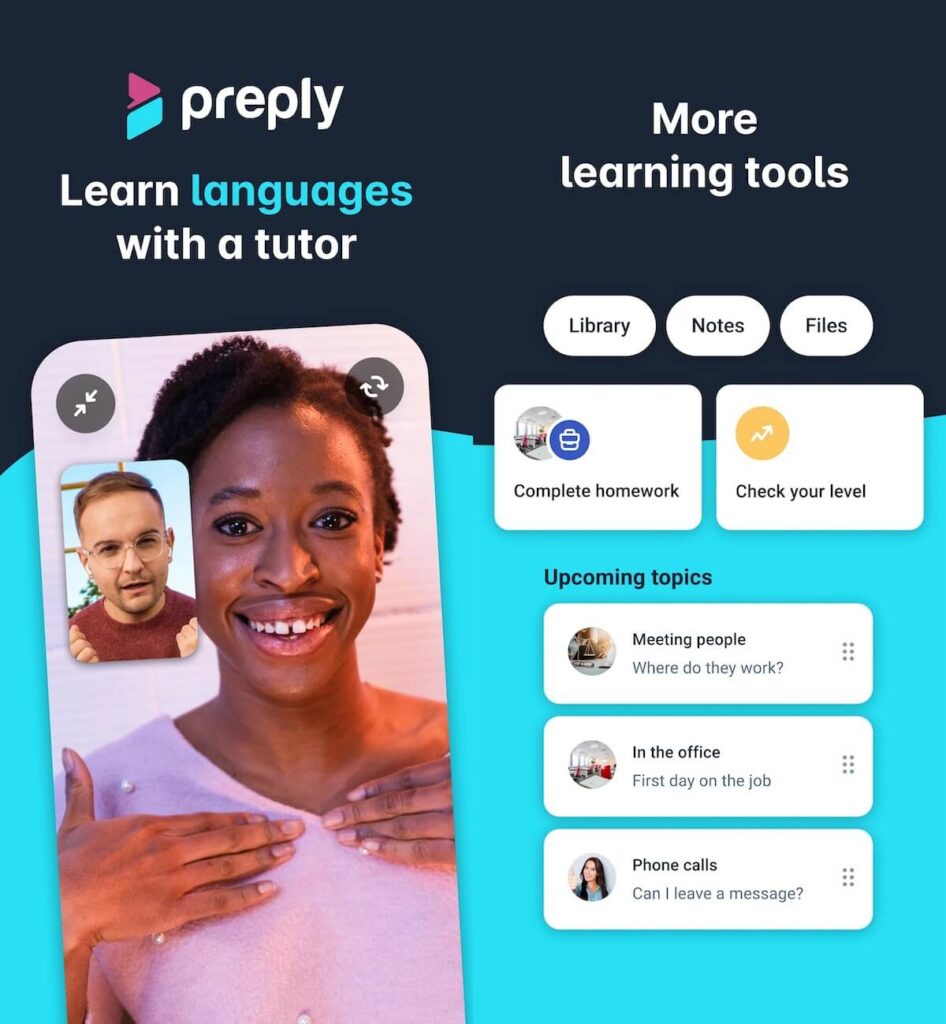
An alternative to Babbel and italki, Preply is the breath of fresh air that actually puts a human face to your learning.
Instead of scrolling through endless static exercises, this platform connects you with thousands of expert tutors who are ready to dive into real, live conversations. It is arguably the best tool for building the raw confidence needed to speak in the real world, as every lesson is tailored specifically to your personal goals and pace.
Whether you’re prepping for a job interview or a trip abroad, you get to choose your schedule and your teacher, building lasting fluency one genuine conversation at a time.
What I love about Preply:
- Massive tutor selection
- Customized lesson plans
- Flexible subscriptions and scheduling
Pricing: You can find a tutor for as low as $5/session. Get a discount voucher here.
5. italki
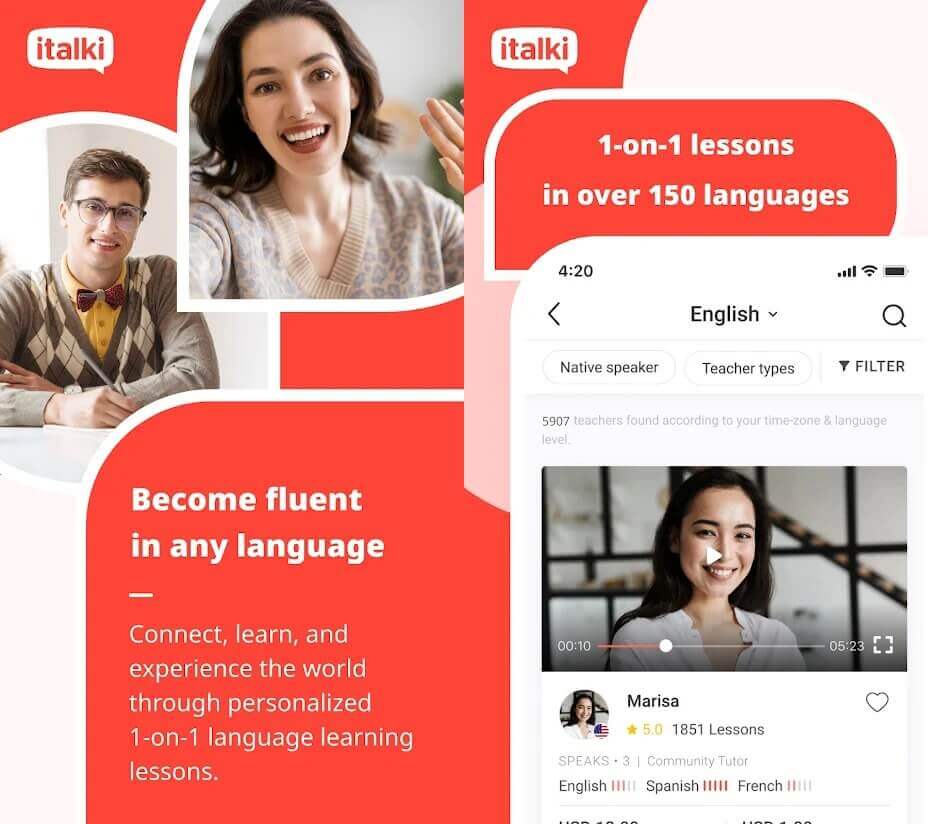
Speaking of being conversational, the best way to get there is by talking to native speakers. And with a language tutor from italki, you get to practice speaking with a native speaker while also learning about the more technical aspects of the language.
With italki, you get access to over 150 languages and 20,000+ tutors who can provide one-on-one coaching. While improving speaking and listening skills is a given, you can also practice reading and writing with tutors.
You can choose based on your learning goals, budget, preferred schedule, and the reviews and ratings of the teachers. The best part is that you pay per lesson so there’s no need to be stuck with a tutor if his/her style isn’t working out for you. Know more about italki with this in-depth review.
What I love about italki:
- Start speaking right away and improve conversational skills as you go
- Wide selection of language tutors
- Flexible rates and you only pay per lesson
Pricing: Varies per language and tutor but you can find tutors for as low as $5 per lesson. Avail of the discounted trial lesson here.
6. uTalk
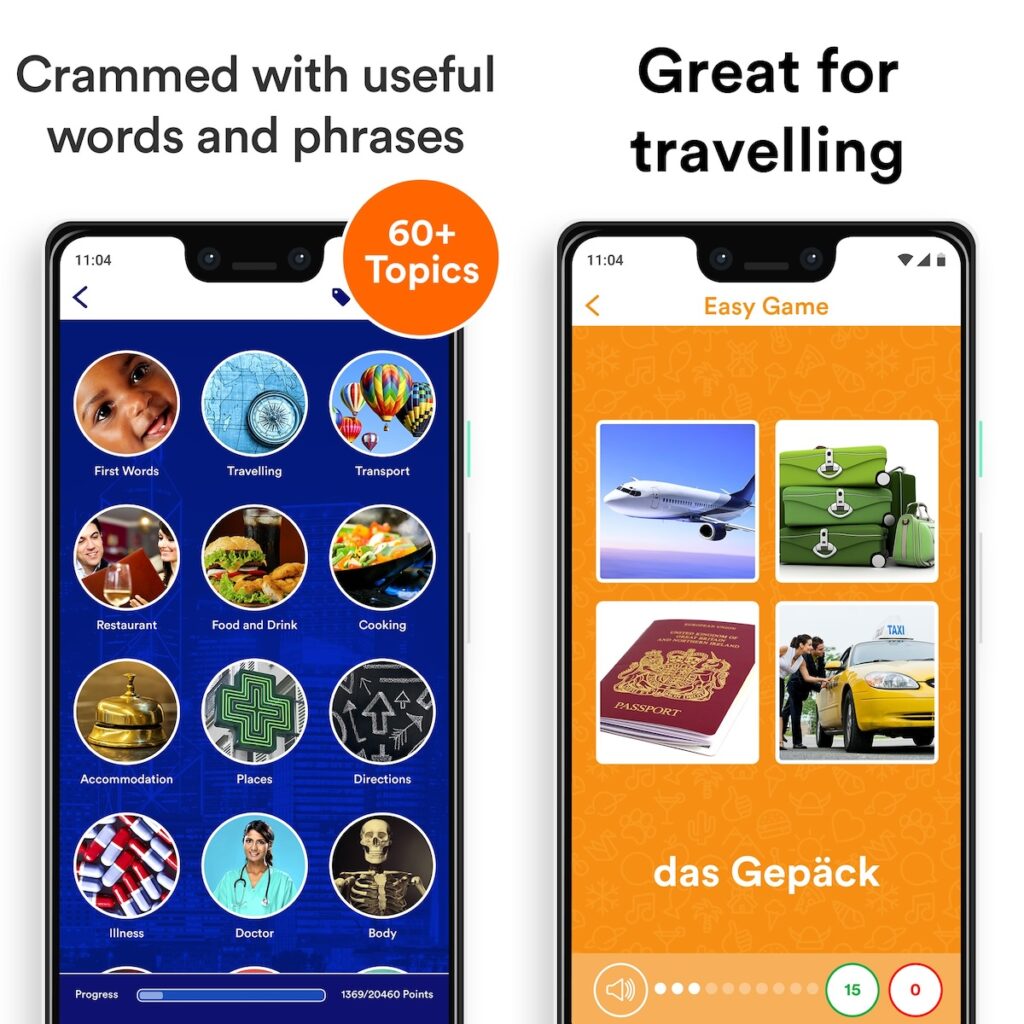
If you think language learning has to be a slog through conjugation tables, uTalk is here to prove you wrong by turning the whole process into a digital playground.
Unlike Babbel’s structured curriculum, uTalk ditches the heavy grammar drills in favor of a pure, vocabulary-first approach. The app is packed with over 2,500 essential words and phrases spread across 60 practical topics, covering everything from business meetings to ordering at a restaurant.
To make sure you actually sound like a local, every single item is recorded by both male and female native speakers. This focus on authentic pronunciation and high-frequency vocab makes it the perfect companion for travelers or casual learners who want to bridge the gap between “textbook” talk and how people actually speak on the street.
What I love about uTalk:
- Native speaker audio in male and female voices
- Massive vocabulary library across different topics
- Challenging games that motivate and entertain you
Pricing: Starts from $8.33/month. Check out the latest uTalk promo here.
7. Glossika
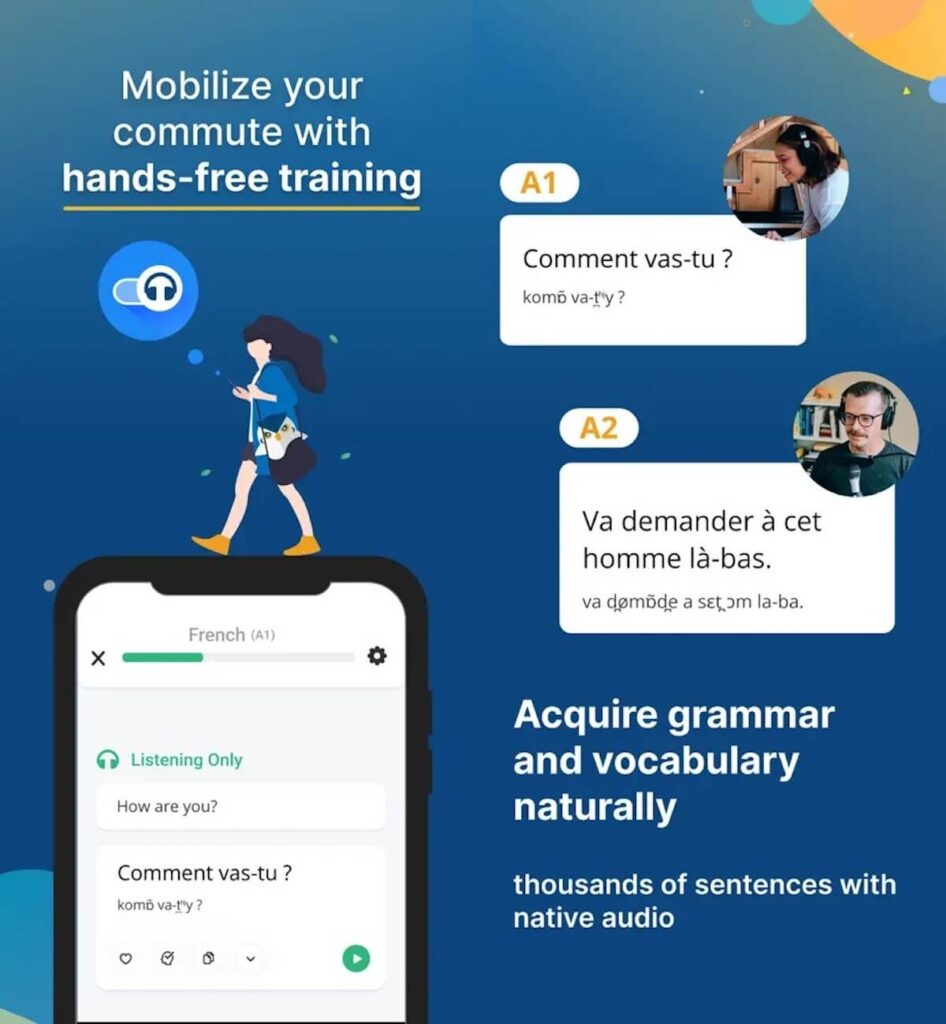
Forget the dry grammar rules and isolated word drills; Glossika treats language learning like a workout for your brain and mouth.
This app mimics the natural way you acquired your first language as a child by immersing you in thousands of full, contextual sentences. Instead of over-analyzing “why” a sentence works, you simply listen to native speakers and repeat, allowing your brain to intuitively map out patterns.
It’s a challenging but rewarding “mass sentence” method that gradually increases in difficulty, building the muscle memory you need to actually hold a conversation without stuttering through mental translations.
What I love about Glossika:
- Natural acquisition of vocabulary and grammar through full sentences
- High-quality recordings featuring native speakers
- Customizable learning modes, with option to “listen only”
Pricing: A Glossika subscription starts from $16.99/month. You can try it for free first! If you’d like to support Learn Languages From Home, make sure to complete your purchase through the Glossika website (not the mobile app). You can sign up and use whatever platform you want, but if you make the purchase using the website, I make a small commission. Thanks!
8. Rosetta Stone

Learn a language on Rosetta Stone
Rosetta Stone hardly needs an introduction — this software has been around for nearly 30 years. The mobile app is a more recent development but it mirrors the program’s established approach called Dynamic Immersion.
A great Babbel alternative, Rosetta Stone teaches vocabulary and grammar through images, text, and audio mostly through context and not translation. The program also uses spaced repetition to help hammer down language concepts.
To make the learning more practical, the phrases and sentences are recorded by native speakers using real-life vocabulary. Plus, you can correct your pronunciation with the app’s speech recognition engine, TruAccent.
What I love about Rosetta Stone:
- Reputable language courses covering the essentials
- Emphasis on immersion and contextual learning
- App lessons take as short as 10 minutes
Pricing: Subscription starts at $7.99/month. Sign up now for the latest Rosetta Stone promo.
9. Busuu
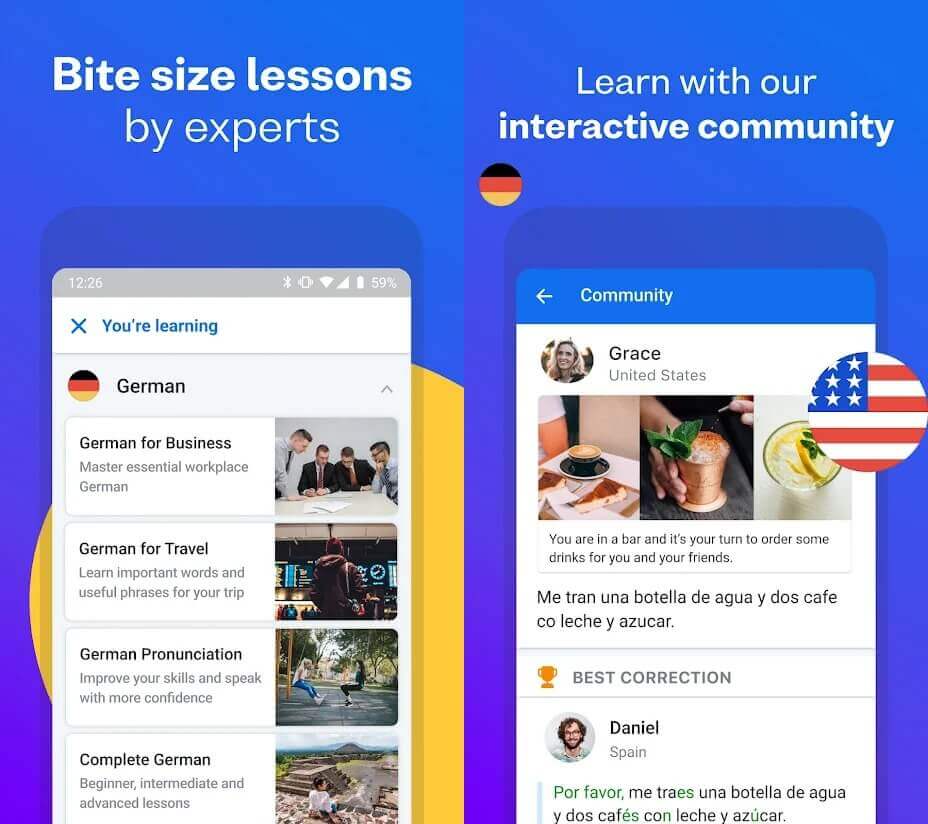
Like Babbel, Busuu also provides courses in 13 languages, although they match in only nine languages. If you wish to learn Japanese, Chinese, Arabic, and English, Busuu is a great Babbel alternative.
Busuu is designed for learners who like structured learning with a dash of fun. Though it promotes learning at your own pace, the app features a study plan that keeps you motivated and aware of your progress.
Busuu also lets you learn with professional tutors in live one-on-one lessons or group classes so you can either get dedicated coaching or a more interactive learning setup. Either way, you get lots of speaking practice.
What I love about Busuu:
- Smart study tools to keep you motivated and on track
- Structured curriculum that caters to learners of all levels
- Live lessons and an interactive community of native speakers and learners
Pricing: Free with limited features. Get premium membership for complete access to more useful features starting at $5.83/month with the annual plan.
10. Mango Languages
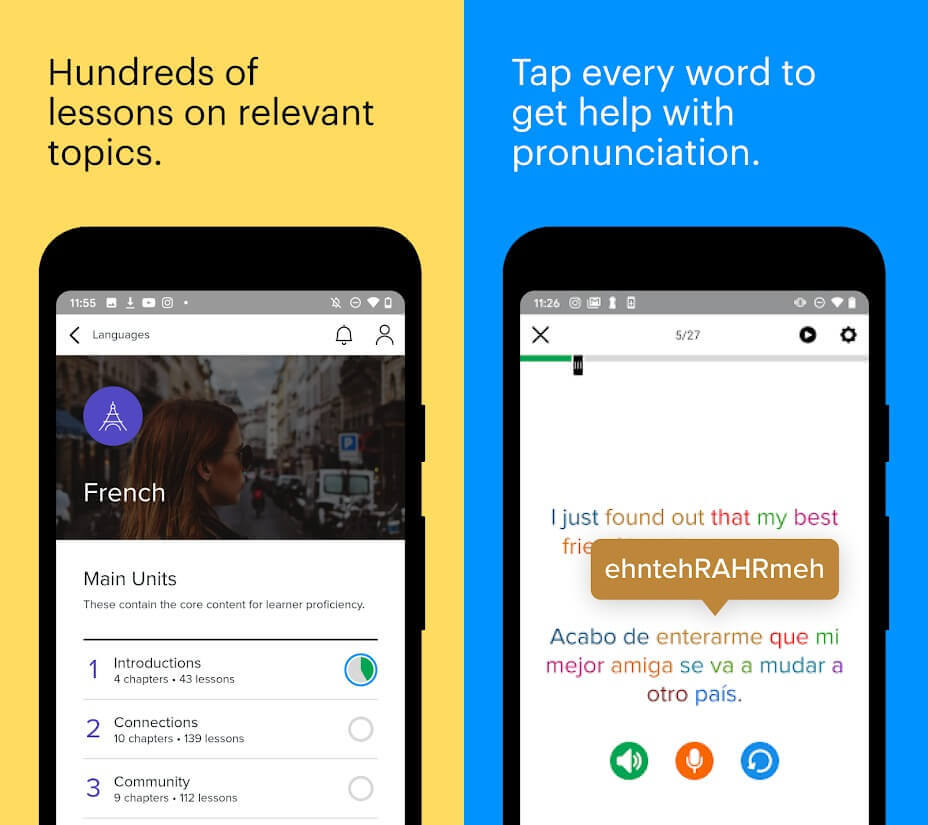
Learn a language on Mango Languages
With over 70 languages and even specialty courses (e.g., Oktoberfest German, Latin American Spanish for business) on offer, Mango Languages is a great Babbel alternative if the course you’re looking for isn’t on Babbel.
Mango Languages teach languages using a variety of tools but the premise, at its core, is simple: you learn through reading and listening to conversations, practice what you learn by speaking, and retain knowledge through a personalized review sequence.
What’s great about Mango Languages is that it provides extensive grammar lessons and culture notes to add depth to the lessons. You can also record your speech and compare it with native-speaker audio to tone your pronunciation!
What I love about Mango Languages:
- Context-based learning and relevant learning materials
- Voice comparison tools
- Systematic review system
Pricing: $7.99/month for a single language and $17.99/month for all languages. Try it FREE here!
11. LingChat
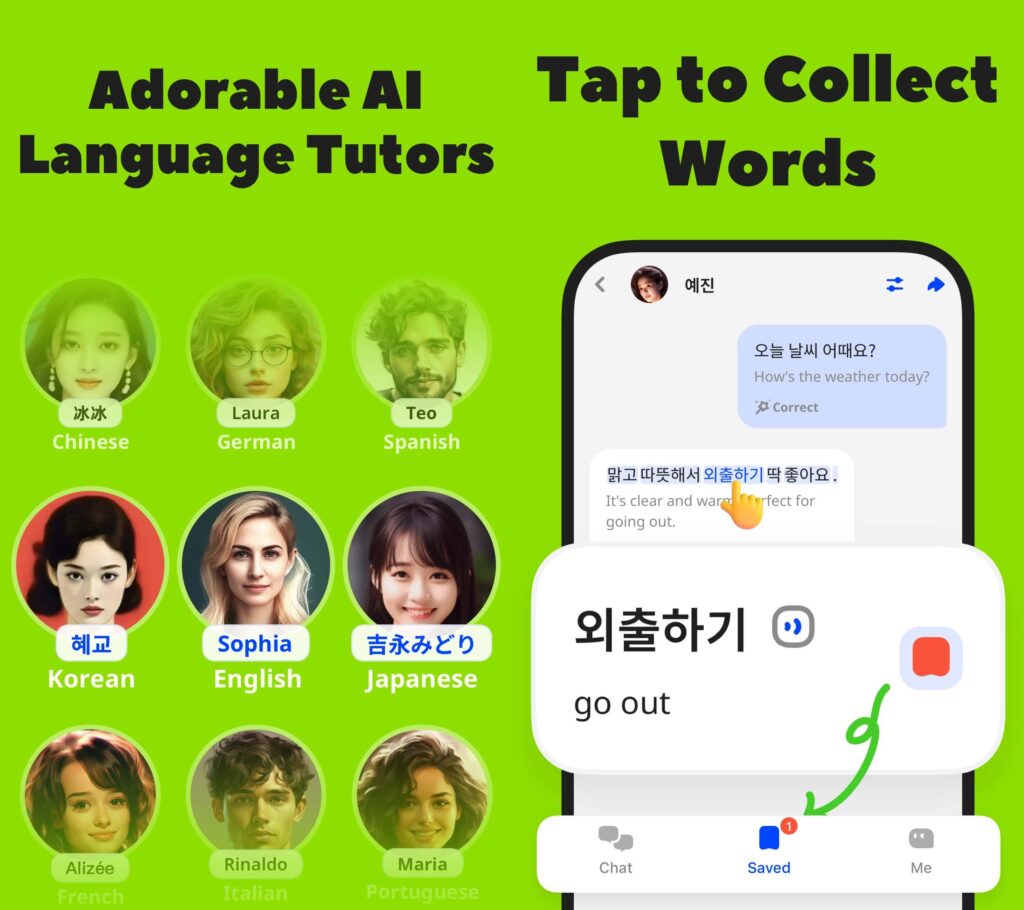
If you’ve ever wished you could practice speaking a new language sans the self-consciousness, LingChat is your new best friend. This GPT-powered AI tutor is designed to feel less like a textbook and more like a chat with a very patient, very smart friend who is available 24/7.
LingChat focuses on immersive, real-time conversations where you get instant feedback on your grammar and pronunciation. Because it’s built on advanced AI, the dialogue isn’t just scripted; it’s a fun exchange that pushes your reading, listening, and speaking skills through organic, high-interest interactions.
The app keeps things fresh with a variety of engaging modes that turn study time into a series of fun challenges. It also offers real-time grammar corrections, speaking improvement suggestions, and a word lookup feature that lets you easily look up unfamiliar words.
What I love about LingChat:
- Integrates reading, listening, and active speaking in every session
- Free-flowing, natural conversation practice
- Immediate corrections on your vocabulary, sentence structure, and pronunciation
Pricing: Starts from $2.5/month with LingChat’s discounted annual plan
12. Promova
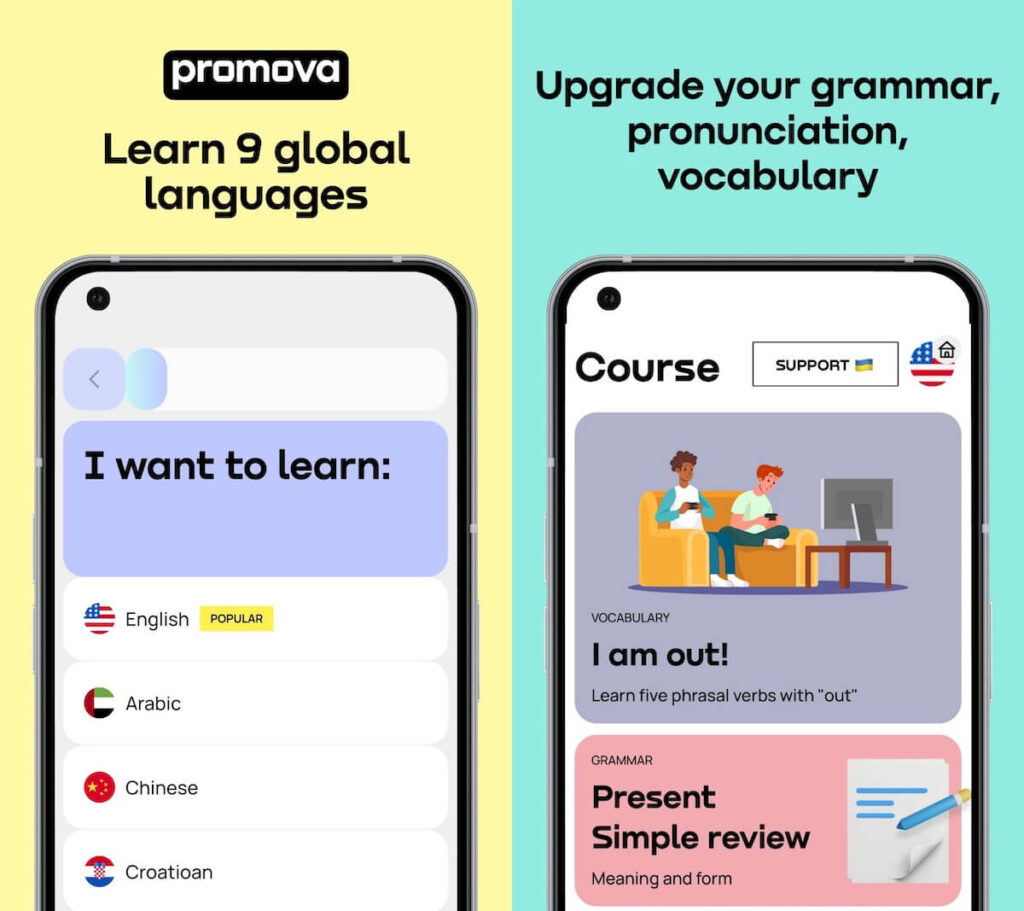
If you’re tired of the “one-size-fits-all” approach to studying, Promova can craft a custom path just for you.
This sleek, AI-powered platform makes it easy to master the basics or polish your fluency in languages like Spanish, French, Korean, and Arabic through bite-sized, 5-minute lessons. Whether you’re diving into complex grammar or practicing real-life dialogue with the AI Tutor, every exercise is balanced across reading, writing, listening, and speaking.
With its mix of fun quizzes and personalized plans, Promova keeps you coming back without the dread of a heavy textbook. You can even supplement your practice with small group classes or 1-on-1 tutor sessions.
What I love about Promova:
- Personalized learning plans
- AI-powered speaking practice
- Option to study with a live tutor
Pricing: Starts from $9.99. Snag deals here.
13. Langua
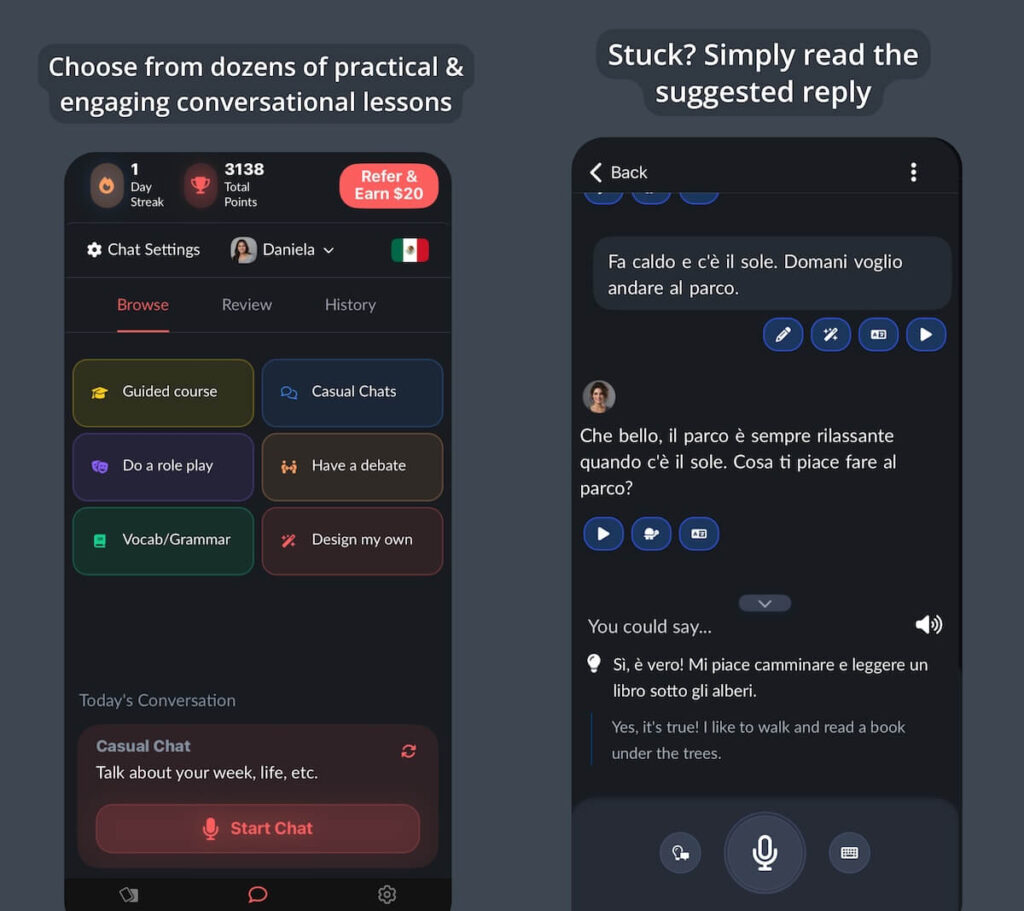
If you’re tired of clicking multiple-choice boxes and want to actually talk, Langua is a game-changer.
Unlike typical scripted apps, this app uses advanced AI characters—some cloned from popular YouTubers—that let you express yourself freely. You can dive into a massive library of role-plays and debates, or just chat about your hobbies. It even offers a “Call Mode” for hands-free practice while you’re on the move.
With instant corrections and the ability to weave your saved vocabulary into future chats, Langua feels less like a lesson and more like a real conversation.
What I love about Langua:
- Diverse and realistic AI characters
- Smart vocabulary integration
- Instant feedback and clear explanations
Pricing: Starts from $12.50/month if billed annually. Check out the latest Langua promo here!
14. FluentU

For conversational language, realistic examples, and curated content that interests you, FluentU is an awesome Babbel alternative.
FluentU makes language learning engaging and challenging at the same time through videos that are painstakingly translated and subtitled. You get to pick what type of material to watch. News clips, music videos, TV commercials, movie trailers — it’s up to you!
And then, you can tap the subtitles to learn every word. Not only does this help with building vocabulary but also understanding the tone and context of the phrases. While it doesn’t directly help with speaking, you get lots of listening practice.
What I love about FluentU:
- Learning resources that can cater to your interests
- Exposure to native speakers and real-life content
- Learn vocabulary and grammar in context and at your own pace
Pricing: Free for 14 days. Subscriptions start at $19.99/month.
15. LingoDeer
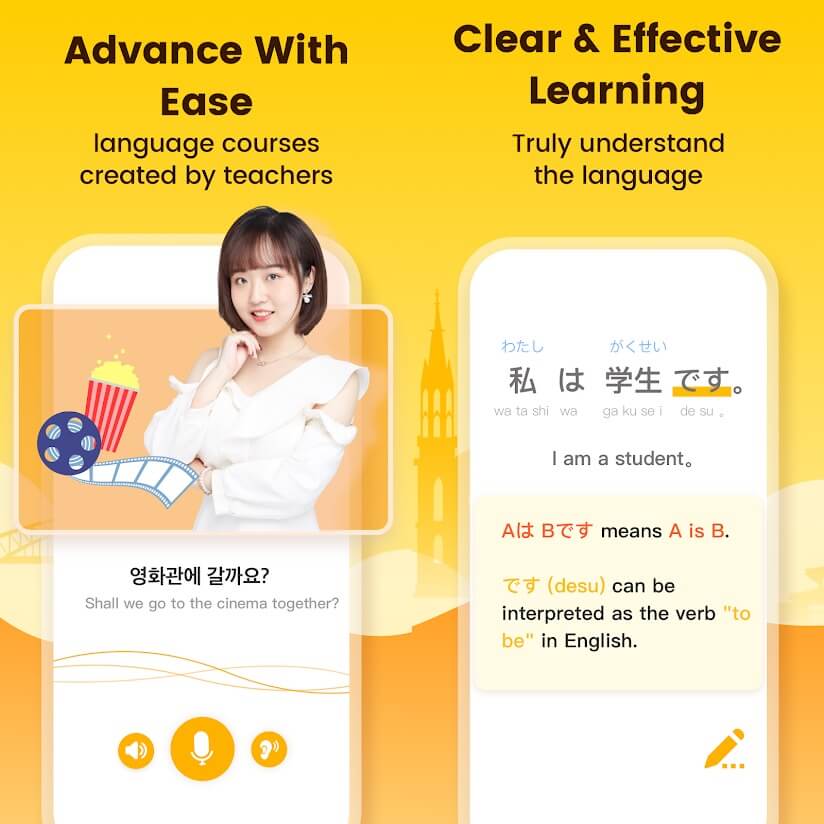
If you’re looking for a Babbel alternative that’s just as comprehensive and smart, I highly recommend LingoDeer. It is especially awesome if you’re learning Asian languages, which Babbel lacks.
Like most apps on this list, LingoDeer also uses real-life conversations and gamification to teach languages. But what it does differently is that it emphasizes grammar alongside vocabulary to help you master a language.
I also find LingoDeer’s writing lessons to be particularly impressive, which makes this app a good choice for learning Korean, Japanese, and Chinese.
What I love about LingoDeer:
- Expert curricula crafted by language experts
- Detailed explanations on vocab, grammar, and writing
- Cultural insights and lessons voiced by native speakers
Pricing: Starts at $14.99/month
16. Memrise
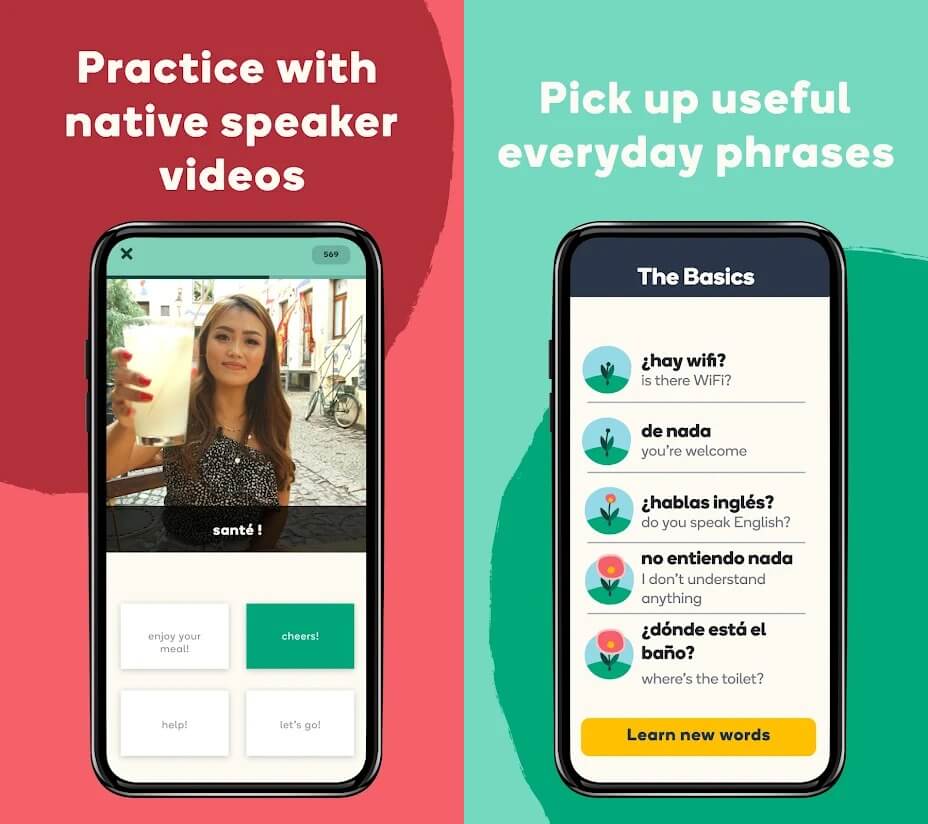
Memrise has official courses in over 20 languages but it also supports user-generated lessons in over 200 languages. If a language you want to learn isn’t on Babbel, there’s a high likelihood that you’ll find it on Memrise.
Like Duolingo, Memrise is a free app with a paid version. The free app is robust enough, however, and offers both immersive audio and video clips of native speakers as well as flashcards to aid long-term recall.
Memrise’s courses cover various topics that prove relevant to learners. And that’s what’s great about this app: it helps you not just remember but also understand what you’re learning because it applies to real-life settings!
What I love about Memrise:
- Practical vocabulary lessons taught through flashcards, audio, and videos
- Plenty of listening and speaking practice
- Several official courses and lots of user-generated courses
Pricing: Some features are available for free. Get complete access with Memrise Pro, starting at $5/month.
17. Duolingo
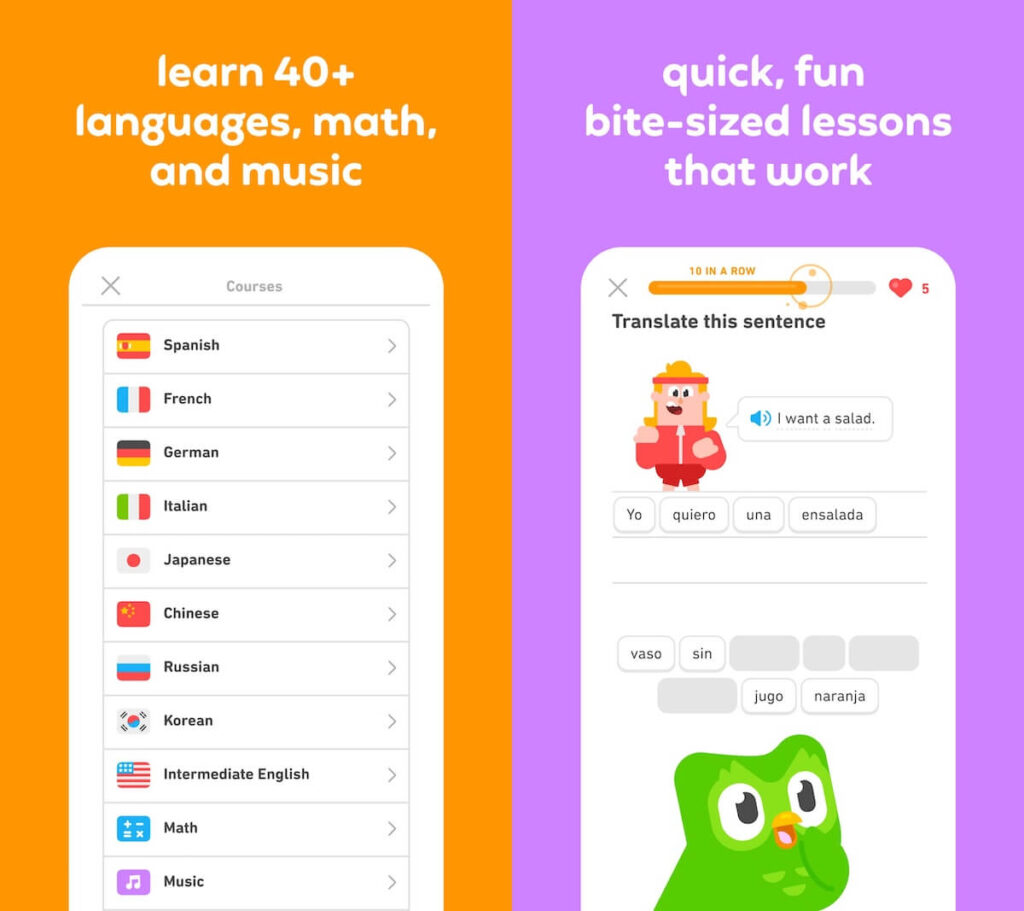
Looking for free alternatives to Babbel? I’m sure you’ve heard of Duolingo. And if you haven’t yet, this Duolingo review will help you get more acquainted with the popular app.
Duolingo is loved by many for its seamless gamification of the language learning process. Sure, it shouldn’t be your first choice if you want to be conversational. But for beginners, Duolingo remains one of the best free options.
Duolingo will help you build a good vocabulary foundation and improve your reading and listening skills. But here’s the best part: because the app is highly gamified, it won’t feel like you’re studying at all.
What I love about Duolingo:
- Large collection of languages to choose from, which you can study from languages other than English
- Almost all features are available for free
- A gamified environment that keeps you motivated to learn
Pricing: Free. Duolingo Premium starts at $6.99/month.
18. Clozemaster
Learn a language on Clozemaster
Want to step up your language game… literally? Clozemaster just might be the right Babbel alternative for you.
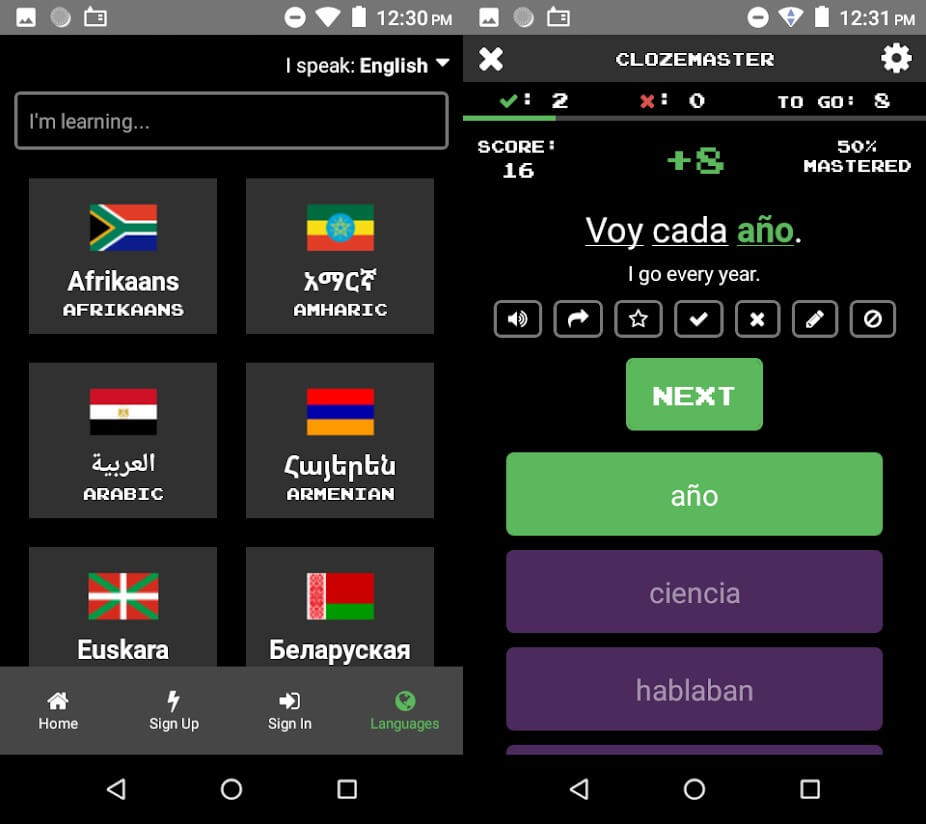
Let me just get it out of the way: Clozemaster is not for beginners. Instead, this gamified (and mostly free) app is designed for intermediate and advanced learners who are reading to take their learning to the next level.
With Clozemaster, you can learn more than 50 languages in context. You learn vocabulary by filling in the missing word for thousands of sentences. If you ask me, that has to be one of the best ways to test your knowledge.
What I love about Clozemaster:
- Learning vocabulary in context
- Building recall through spaced repetition
- Catered to intermediate and advanced learners
Pricing: Free. For advanced features and stats, get Clozemaster Pro starting at $8/month or $60/year.
Conclusion

Babbel is an amazing app with lots of useful features, whether you seek to improve your reading, writing, listening, or speaking skills. I can personally attest to how well-rounded its lessons are and how effective the review sessions are in strengthening memory.
But effective apps are not a one-size-fits-all thing. It’s perfectly reasonable to look for other apps and resources if you feel like Babbel is not meeting your goals and preferences.
Besides, even if you’re satisfied with it, it won’t hurt to find apps that can complement your Babbel lessons. If a combination of apps, books, podcasts, and other materials can get you to fluency faster, there’s no reason why you shouldn’t try it!
And with that, I hope you find a good app from the list above. Happy learning!
Top Babbel alternatives for language learners – Pin it!