
*This article may contain affiliate links. For full information, please see the disclaimer here.
Fluency in a foreign language is a common goal for many people. But, getting there has the potential to be a long and complicated process.
No fear! If your goal is to become fluent in Portuguese, you’ve come to the right place.
You may be asking how to be fluent in Portuguese, or how long to be fluent in Portuguese. With this guide and its handy tips, I believe it’s more than possible to be fluent within one year.

I went to Brazil at the beginning of this year with very little knowledge of Portuguese. With the help of immersion, and the best learning methods (my prior basis in Romance languages did help), I left fluent after seven months.
So let me tell you how I did it. Here are 12 tips to become fluent – in just one year!
1. Define your goals

Setting a goal before you begin a task will increase your progress and achievement, that’s scientifically proven. And it’s no different for language learning or Portuguese fluency either.
Yes, you may say that your goal is to become fluent in Portuguese but what does this actually mean? Fluency has different meanings for different people, and different people will also prioritize different skills.
The fact is fluency is not an easily definable concept. There is no one definition for fluency. Do you want to get by in the Lusosphere? Or do you want to get yourself immersed in complex Portuguese literature?
When I first began learning Portuguese, my initial goal was to be able to speak to other Brazilians on the street and amongst my friends. This meant that I could focus my learning practice on this area of communication and understanding.
Once my Portuguese was good enough to communicate, I turned to being able to read Portuguese, and adapted my methods appropriately. After all, you’re never going to improve your listening skills by reading a vocabulary book, so it’s important to know what you really want from the work you’re putting in.
Maybe you want to move to Portugal for work, or perhaps you’ve always dreamed of traveling to Rio and being able to talk to the locals. Whatever your goal, remember it, use it to push you in your language learning, and let it inform the methods you use.
2. Choose to focus on a specific dialect of Portuguese

There are a number of countries and regions in the world that speak Portuguese, as a result of the extent of the former Portuguese empire. And, due to different cultural and linguistic factors, these regions do not all speak the same form of Portuguese.
Though the language is largely similar and mutually intelligible, key differences do exist, meaning that if you aren’t aware of different Portuguese dialects, you may get quite confused.
For example, in Portugal, tu is used to mean “you”. But, in Brazil, it is você, which follows the third-person conjugations rather than the second-person. Angolan and Mozambiquan Portuguese on the other hand have many African influences, particularly from Bantu languages.
When learning Portuguese, I recommend you pick the dialect that interests you most and try to stick with it where possible. I, for example, decided to focus on Brazilian Portuguese, meaning I could target my resources more effectively and hone my learning.
3. Experiment with study methods

There are a wide variety of study methods available to language learners who want to become fluent in Portuguese. But, like any form of learning, different people will prefer some methods over others.
The best approach will apply a mix of methods that put into practice a variety of skills (reading, writing, listening, reading, grammar, vocabulary, etc.). Experiment with the following study methods and combine them in the way that works best for you:
Learn Portuguese with apps
Language learning apps have exploded over the past few years, and there are plenty of choices available for those who prefer this learning method.
While Duolingo is the most commonly used and my personal favorite, do consider what apps work best for you.
Babbel is great for those on tight schedules, as its content is condensed into 15-minute lessons. Mondly, on the other hand, focuses on learning grammar through fun, holistic, and immersive approaches.
For more, check out this article on Brazilian Portuguese apps.
Learn Portuguese with textbooks
Whereas some may find apps useful, others may prefer more traditional methods such as textbooks.
There are a variety of textbooks available for all the various forms of Portuguese dialects and each specific language skill. For example, you may want to focus just on Portuguese grammar for now.
Do be sure to select a textbook that’s respective to your language level. You can browse some options here, with our recommendations of the 12 best Portuguese textbooks.
Learn Portuguese with audio courses
If you’re looking for good ways to improve your listening skills, audio courses can be a good method to try. And, it’s not just listening skills that you’ll improve, but speaking skills, pronunciation, and vocabulary as well.
Pimsleur and Rocket Languages are two audio-based courses that you may find useful. And, of course, Rosetta Stone has stood the test of time. Portuguese courses on Cudoo and Skillshare are also worth exploring.
Learn Portuguese with a tutor
Of course, a great way to develop and practice your Portuguese is to hire a private tutor. Search for tutors in your local area, or try apps like Italki or Preply to find affordable tutors specific to your needs. We recommend even more in this guide to online tutors.
4. Integrate Portuguese into your hobbies

Consistent practice plays a large part in truly becoming proficient in any target language. And one of the key ways to make sure you’re consistently practicing your Portuguese is to make sure that you’re also enjoying it and will continue coming back for more.
So when choosing your study methods, also try and include methods that you may enjoy.
For some people, podcasts can be an interesting and productive way to learn. Maybe you love listening to English podcasts, so why not try some of these 15 Portuguese podcasts?
Or maybe you enjoy reading? In which case, pick up a Portuguese novel. Reading Capitães da Areia by Brazilian author Jorge Amado was not only incredibly enjoyable for me, and a great way to learn about Brazil, but it was also a very useful form of language learning.
Find a way to integrate your own hobbies into language learning.
5. Track your progress

An important step on the road to Portuguese fluency is tracking your progress. After all, how will you know how you’re doing if you don’t stop to consider it?
Remember the goals that you made back on tip 1 and check in every now and then to evaluate how your learning is going. This could mean doing some language review exercises (you’ll find plenty online or in textbooks) or just stopping to consider how comfortable you feel in the language compared to three months ago.
Maybe you’re making progress in some areas, but not others. In which case, you can adapt your methods and learn appropriately.
Or maybe you’re pleased with the progress you’ve made and want to ramp up your learning.
However you decide to track your progress, just remember to check in every now and again. After all, it can actually be a great opportunity to realize how much progress you’ve made and feel positive about your work.
Also read: How Long Does It Take to Learn Portuguese? The Real Answer
6. Get into a learning routine

While practice is clearly an important component of language learning, consistent practice is crucial. One of the reasons that many people don’t make it very far with their language learning is that they don’t practice consistently enough to make visible progress, and then they lose interest.
By establishing a learning routine, you can make language learning a core part of your everyday life, therefore maximizing your progress.
Maybe you want to set aside an hour of your evening to watch Portuguese TV or read up on Portuguese grammar. Or maybe make a habit of learning vocabulary on the train to work every day.
That said, you don’t need to make a rigorous schedule if this isn’t your style. I’m personally pretty sporadic with my use of Duolingo, but I find that the desire to maintain my language streak drives me to learn at least some point in the day.
As long as you consistently practice your Portuguese each day or even week, you will make progress to Portuguese fluency.
7. Find a speaking buddy

Knowing how to speak fluent Portuguese is its own skill, like any part of the language. And speaking with a native Portuguese speaker is a guaranteed way to improve your speaking and listening skills, as well as your pronunciation, your vocabulary, and your grammar.
If you don’t have any Portuguese-speaking friends, there are plenty of language exchanges available. These could be in your local area, or also online through platforms such as Tandem. You can also find plenty of fellow language learners through online forums and Facebook groups.
You could even try throwing in some funny phrases to impress your speaking buddy.
8. Watch TV shows or TikTok

Watching content in Portuguese can be one of the best ways to learn Portuguese, especially if you already like watching TV and want to combine your hobbies with your language learning.
Netflix has a wide variety of series and films in Portuguese. My personal favorite is Coisa mais linda, which follows the story of a group of women in 1950s Rio. And if you’re into reality TV, Brazilian content will not disappoint, while also using more contemporary language and slang relevant to everyday usage.
You can also turn this activity into active learning by using apps like Lingopie and FluentU. Both apps feature clickable subtitles and flashcards that help you learn words from the TV shows and movies you watch.
I also found it very useful to turn my TikTok addiction into Portuguese practice. All you need to do is go into the language settings on the app and select which languages you speak so that the algorithm adapts what content it shows you.
9. Text in Portuguese

Texting and messaging are unavoidable parts of modern life. After all, I’m sure you send at least one virtual message or e-mail every day. Why not make use of the prevalence of technology to make texting a modern form of language pen pal?
If you have a friend who speaks Portuguese, you could ask to message them in the language. This is easier than talking over the phone for example as you’ll have time to put together your messages.
If you don’t yet have any Portuguese-speaking friends, then try Tandem, an app that links you with fellow language learners in the form of a language exchange. It’s also a great way to make new friends from across the world.
Alternatively, you could also join a language forum to make connections with fellow learners and experts, and even ask questions about concepts that confuse you. Reddit, Duolingo, WordReference, and Linguaholic all have friendly and informative forums that receive daily contributions.
10. Change the language of your technology
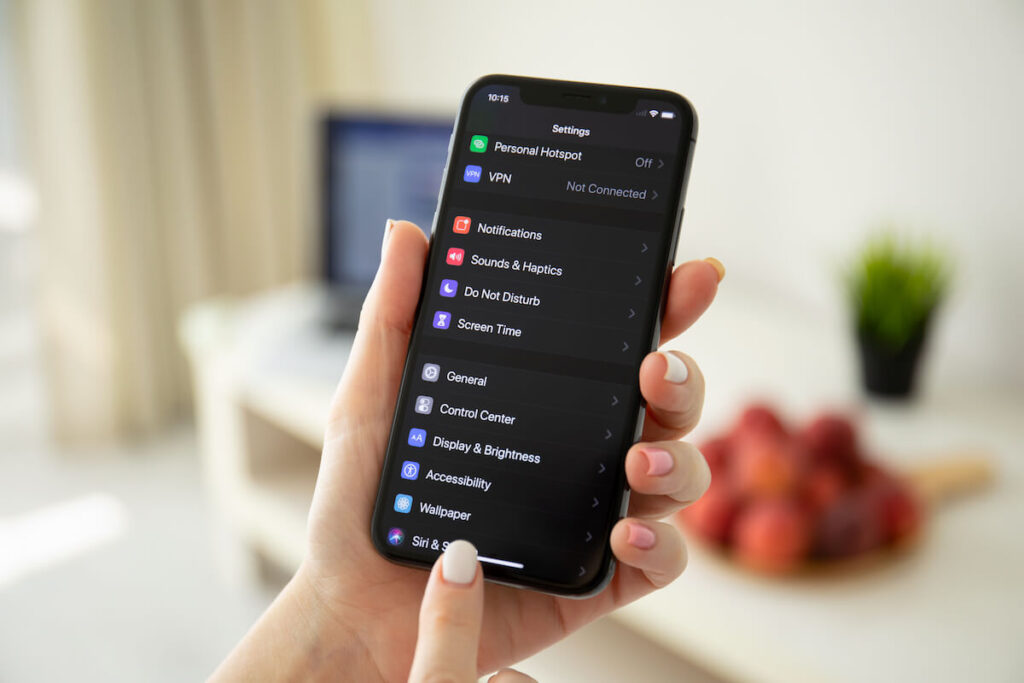
Changing the language of your technology can be one of the easiest ways to learn Portuguese. Rather than having your phone in English, switch it to Portuguese.
Since we all use our phones so often, this is an effective method to be immersed in the language and make sure you’re consuming it every day. After all, once it’s changed, you have little choice but to read and make sense of it.
Just make sure you have basic Portuguese knowledge before you do this, to avoid miscommunications and pressing a button you shouldn’t!
11. Think in Portuguese

To be fluent in Portuguese, you’re eventually going to have to think in Portuguese. While at the beginner stages of language learning you’ll likely be translating between Portuguese and your native language, this is not sustainable.
To fast-track your language progress, try thinking in Portuguese right now, no matter what level you’re at. This can be simply 10 minutes a day in which you try to process your inner thoughts in Portuguese rather than your native language. You’ll be surprised at how quickly it works!
12. Travel to a Lusophone country
The key to language learning is immersion. I knew this before I traveled to Brazil, but it was my time there that really confirmed this to me.
After about four months in the country, I was pretty much fluent, simply because I was surrounded by Portuguese and used it daily.

Of course, I had a background in Romance languages and used the tips in this article, but nothing prepared me for quick immersion that would help me in my Portuguese-learning pursuits.
Traveling to a Lusophone country will really maximize your learning by bringing you into daily contact with the language and its speakers.
Of course, it’s not always possible for people to uproot their lives and move to another country, but this isn’t the only method at your disposal.
For example, everyone loves a holiday! Why not try and combine your holiday to a Portuguese-speaking country with a language course while you’re there? You can really get to know the culture while meeting new people and also working on your Portuguese. It’s a win-win.
And that concludes my 12 tips on how to become fluent in Portuguese in one year! Do you already follow any of these tips? Chime in on the comment section below!