
*This article may contain affiliate links. For full information, please see the disclaimer here.
There’s one thing about learning a language that you simply can’t escape from and that’s learning vocabulary. While some people love learning new words, others find it really tricky.

The best way to learn new vocabulary is organically, so by seeing the word or hearing it in context. When I lived in France as a student, I would buy a sandwich from a takeaway counter every Monday.
Each time I ordered, the lady behind the counter would hand me my sandwich and ask voulez-vous des couverts? I would reply non, merci after which I’d then ask puis-je avoir une fourchette s’il vous plait? She’d smile with a little bien sûr and I’d be on my way. It was only three months later that I realized she had been asking me if I wanted cutlery all along!
Anecdotes aside, for obvious reasons, it’s not possible to learn everything organically. As foreign language learners, we need to find ways that get the job done in the most interesting ways possible! So, let’s look at how to improve your French vocabulary in 12 interesting ways.
1. Use flashcards
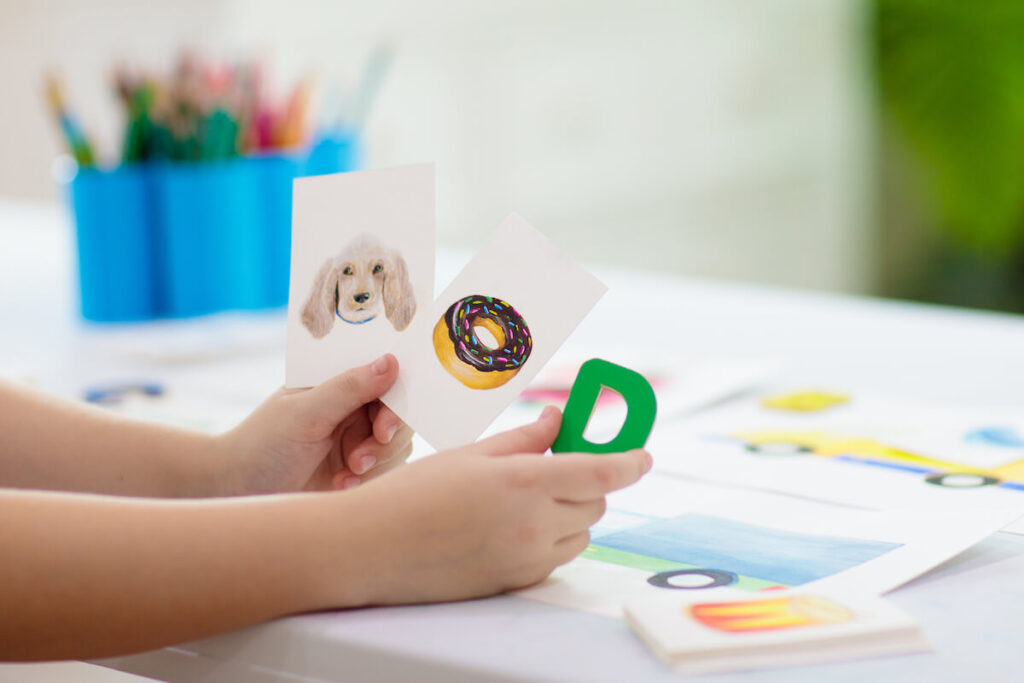
For reasons unknown to me, flashcards seem to have gone out of the window when it comes to teaching a foreign language. In my early days as a French teacher, I would print out and laminate many A4 clip art pictures a week and use them to teach vocabulary. They were always a staple when I was a learner too and for good reason – they work!
It’s easy to make your own flashcards. All you need is some small index cards or cut-up pieces of card to write the French on the one side and the English equivalent on the other. Don’t forget to include any genders when it comes to French nouns (or adjective spelling changes too).
If making your own flashcards doesn’t appeal, there are some amazing pieces of flashcard software out there that help you learn vocabulary. Two free open-source programs are Anki and Mnemosyne. These programs work on tablets, smartphones, and desktops.
2. Use apps focused on vocabulary-building

There are loads of French learning apps that offer fun ways to improve French vocabulary. One such app is Drops. Drops is an immersive and fun way to learn French vocabulary in just five minutes a day.
With Drops, you can learn over 2,000 words by creating visual associations, thanks to their uniquely illustrated app. The app also reviews words previously covered so that you don’t forget them.
Read more: 15 Best French Vocabulary Apps to Build Your Word Bank
3. Have a translation app (or dictionary app) on your phone
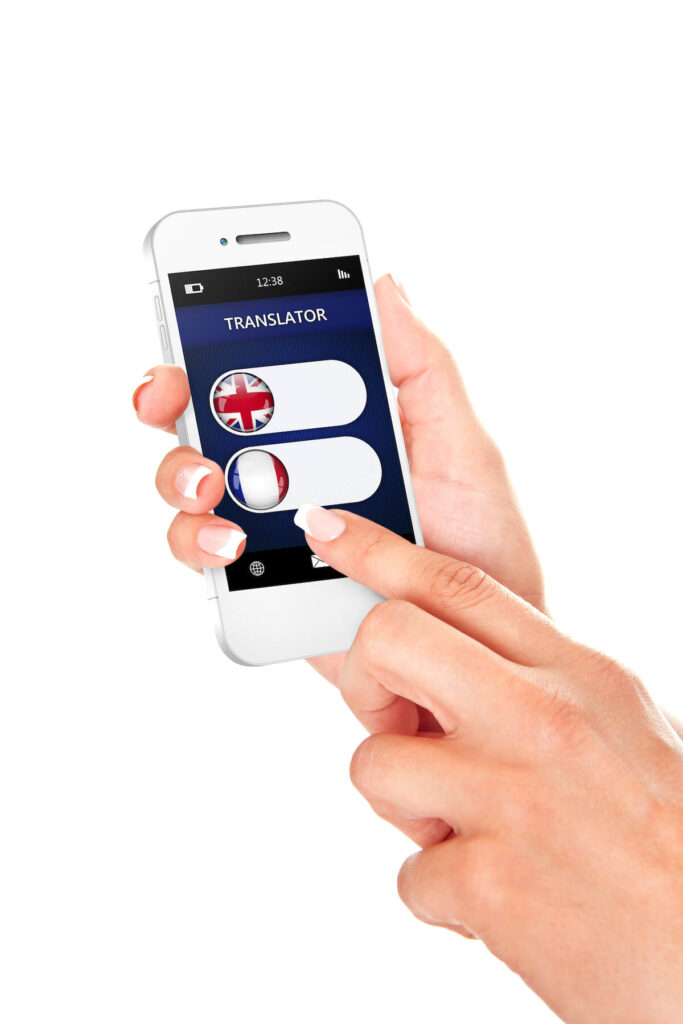
When I was teaching high-school French, I really hated it when students used translation apps because it often meant they’d not thought about their work or tried hard enough (and let’s not even talk about the ones who insisted they hadn’t used a translator but were suddenly using the subjunctive mood!).
Having said that, when you’re learning a language and you just want to learn new words, a translation app can be really handy.
Even better than that, an online dictionary app like WordReference is a fantastic tool. I would have loved to have had a huge dictionary at my fingertips when learning instead of my 5kg hard-backed French dictionary!
The difference between a translator and a dictionary is that a dictionary will tell you much more. You’ll know the gender of the word, whether its spelling differs in the plural, whether there are verbs linked to it or more than one meaning.
Take the English word “light” for example. Google Translate tells me the French for “light” is “lumière” but there are actually many different French words for “light” depending on the context and whether we’re talking about the noun, verb, or adjective, for example.
4. Jot down new words in a special notebook

If you’re going to make learning vocabulary a habit, it’s a good idea to have somewhere special to write it down. A simple notebook that you always have with you is a great place to start. Not only will you always have it to hand to note down any new words as you learn them, but you’ll also be able to pick it up and flick through it whenever you have a minute to spare.
5. Get to the language roots
When you learn a new word, it’s a good idea to look up and note down linked words at the same time. For instance, if you’re learning to conjugate the verb écrire (to write), you should also note down the noun écrivain (writer). This can make learning basic French vocabulary much quicker.
In a similar vein, if you memorize French prefixes and suffixes, you’ll be able to decode any new words you come across more easily. Knowing them will help you determine whether the word is a noun, adjective, or verb, and will provide extra context too. Some prefixes and suffixes are similar to English too, which makes things even easier!
6. Learn cognates
One way how to learn French vocabulary quickly is by learning cognates. Cognates are words that are the same (or very similar) in both languages. There are thousands of cognates between French and English so you can improve your French vocabulary without much effort at all!
Be careful though, some words in French that look like cognates aren’t! This is what we call “false friends” or faux amis. Funny examples include excité (meaning “aroused”), joli (meaning “pretty”), slip (meaning “underwear”), préservatifs (meaning condoms), and figure (meaning face).
7. Practise daily

Learning a language is a skill; it’s not like learning facts and recalling pieces of information (though individual pieces of vocab might be). When developing any skill, you’ve got to put time into it. For language learning, it’s best to practice every day. If you only have one French lesson a week, you need to keep on top of it in your own time.
You don’t need to spend hours a day poring over vocab lists and books. Little and often is the best strategy I find. Don’t forget, you won’t have fluency overnight so lower your expectations and have fun along the way!
8. Play games or do crosswords

If you like word games like Boggle or enjoy crosswords, then why not try out French games and puzzles? Crosswords are great because the clue is often the definition of the word! Online games and apps are also a fun way of learning new vocabulary in French.
9. Label everything!
An easy way to immerse yourself in the language is to surround yourself with French labels on your everyday items. Label your flour farine, your coffee café, and your butter beurre.
You can also do this with other items around the house too – a post-it note on each door to learn the rooms of the house, for example. It’s also a way of getting others in your household involved too!
10. Sing along

Have you ever thought about just how many songs you know all the lyrics to? I bet it’s hundreds, if not thousands. That’s because singing is a great tool for memorizing.
As a teacher, I’d often teach my students verb endings to tunes of their favorite TV shows or nursery rhymes but singing along to any French song will really help.
Want to learn all the body parts? Try Heads, Shoulders, Knees, and Toes in French!
11. Use a vocabulary textbook

For anyone wanting to know how to learn French vocabulary quickly, a French textbook like this one in the Practice Makes Perfect series is really handy for learning all of the basic French vocabulary. It even has exercises to help you practise.
12. Turn on French subtitles

Finally, no matter what you’re watching, stick to the French subtitles. You’ll be surprised how much you take in! It’s a great way to learn new words and re-visit words you’ve already met before. Remember, even the most complicated sentences in French still use beginner French vocabulary!
You can also watch French TV shows and films on apps like Lingopie or FluentU and click on the French subtitles or follow along with the transcripts to learn new words and phrases.
Final thoughts
Whether you’re a complete beginner or almost fluent, there’s always vocabulary to be learnt! I hope this article has given you some good ideas on how to improve French vocabulary learning! Bon courage!*
*courage is another false friend in this sentence – when preceded by bon, it means ‘luck’.