
Should I learn Korean or Japanese? If you’re asking yourself this question, I feel you. I love both cultures and languages so, like you, I also found myself in this dilemma.
The Korean and Japanese languages share a lot of historical and structural similarities, which shouldn’t be a surprise given the geographic proximity of Korea and Japan. Both countries are also known for their soft power and being among the top economies of the world.

Choosing which one to study is not an easy decision. But with this guide, you might just make up your mind faster.
Learning Korean vs. Japanese: Factors to consider
1. What’s your motivation?

This is the first thing you should take into consideration when learning any language. Why are you learning a language? What are your goals? You will be devoting a significant amount of time regardless of which language you choose, so make sure you have a pretty good reason to do so.
Doing business, finding a job, and studying in Japan or Korea are some of the common reasons why people learn Japanese or Korean. Indeed, the benefits of learning Japanese include having more job opportunities and raising your status in the workplace, especially if your employer has partnerships with Japanese companies.
The same is true with learning Korean. Speaking the language will give you a leg-up if you decide to join Korean corporations or if you deal with Korean business partners. Both countries offer attractive scholarships for international students too.

Some people learn a second language for various reasons: for a fuller travel experience, to make foreign friends, or to learn new cultures. Some learn just for fun!
I was exposed to both cultures, but I got hooked on Korean culture. It started with K-dramas, then K-pop, and before I knew it, I was already watching Korean travel reality shows and frequenting Korean restaurants near my workplace. Learning Korean was the natural next step.
Which leads me to the second point…
2. Which culture appeals to you more?

As East Asian neighbors who were both influenced by another East Asian country (China), Korea and Japan share a lot of cultural similarities. You’ll find these in their work culture, food, language, love for nature, use of honorifics, educational systems, Confucianism, the concept of “saving face”, and the collectivist mindset.
The long-standing customs and beliefs of each country might appeal to you. Or maybe it’s the food that does the trick. At the very least, knowing either language will help you better navigate the Asian aisle in grocery stores.
That said, if you’re like many learners today, understanding pop culture is probably a big motivation for you.
For me, I wanted to watch Korean shows and movies without subtitles and sing along to my favorite Korean songs without sounding like a moron. But I also love watching anime and Studio Ghibli movies and I want to read Japanese novels in their original language.

Consider what shows and films you enjoy watching, what music you like listening to, and what kind of content you gravitate toward when deciding if you should learn Korean or Japanese.
Conversely, you can identify which culture you would like to get to know better. Even if you’re not invested in Japanese culture right now, you may feel that it’s something you’d like to get into in the future. Knowing the language will definitely give you a powerful lens into the country’s cultural views and ideas.
3. Which is easier to learn?
Both are considered hard languages to learn for English speakers. Depending on the structural elements that you’re looking at, you may find one or the other easier. Here are some points for comparison:
Writing system
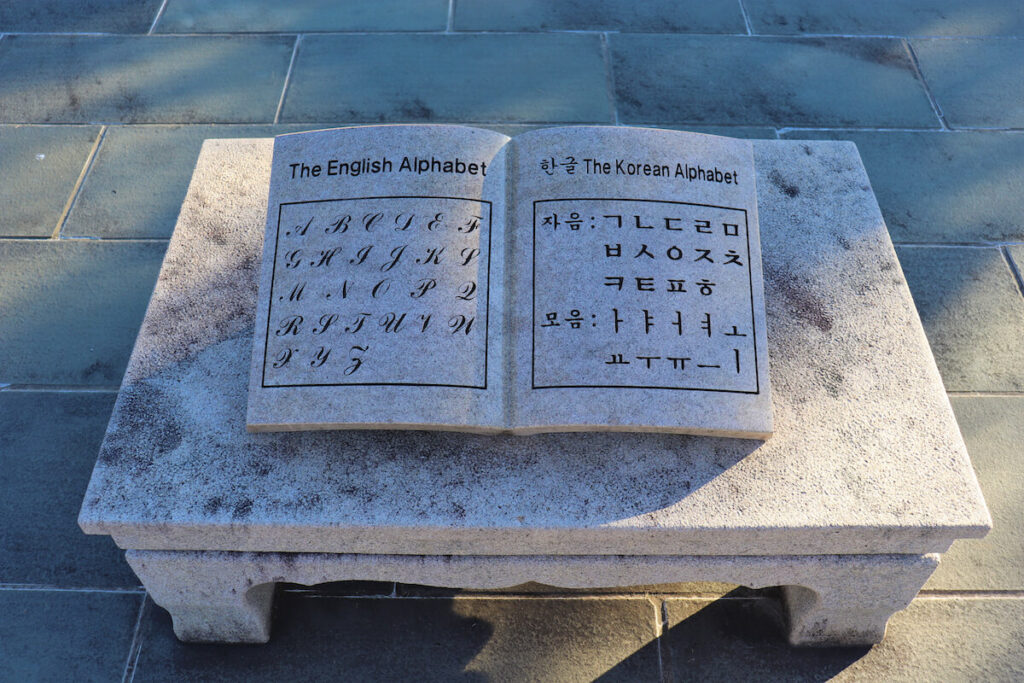
One of the benefits of learning Korean is that it has one of the most logical writing systems in the world.
The Korean writing system, known as Hangeul, has 14 consonants and 10 vowels — a total of 24 basic characters. There are five compound consonants and 11 compound vowels, so the grand total is 40 characters. But once you’ve mastered the basic characters, you can easily learn the compounds too. It took me only about a couple of hours to memorize all 40 — it’s that easy!
Read more: 25 Fun Facts About the Korean Language
Japan, on the other hand, uses two syllabic scripts: hiragana and katakana. Each script has 46 basic characters, comprising 92 characters, not including diacritics and functional marks.
The Japanese writing system also uses logographic Chinese characters called kanji. There are tens of thousands of kanji characters but most people know only around 2,000, which is also the number of kanji required to pass the highest level of the Japanese Language Proficiency Test (JLPT).
All three Japanese scripts may be used in a single sentence, so you’ll have to know all of them to master the language.
Sentence structure and particles
Korean and Japanese follow the same SOV (subject + object + verb) sentence structure. This is one of the most common sources of confusion for English speakers, as English follows the SVO structure. Here’s a simple sentence to illustrate:
In English:
I ate a banana.
- I – subject
- ate – verb
- a banana – object
In Korean:
나는 바나나를 먹었다 (naneun bananaleul meogeossda)
- 나는 (naneun) – subject
- 바나나를 (bananaleul) – object
- 먹었다 (meogeossda) – verb
In Japanese:
私はバナナを食べました (Watashi wa banana o tabemashita)
- 私は (Watashi wa) – subject
- バナナを (banana o) – object
- 食べました (tabemashita) – verb
Particles are used in both Korean and Japanese sentences to indicate relationships between words and offer context. In the above examples, the Korean particles are 는 (neun) and 를 (leul), while the Japanese particles are は (wa) and を (o).
Also read: 25 Fun Facts About the Japanese Language
The number of articles in both languages — around 128 in Korean and over 180 in Japanese — can scare anyone away but you don’t have to know all of them right away. You can focus on the most common ones and pick up the rest along the way.
That said, Korean particles can be a bit more confusing because there are more options for the same particle. For instance, the particle can be 은 (eun) or 는 (neun), depending on whether the noun it follows ends in a consonant or vowel.
Korean particles also vary widely based on politeness levels and honorifics. While this is also true to some extent in Japanese, Korean has more than twice the number of polite speech levels, resulting in more particle variations and more complex conjugation.
Also worth noting is the lack of spaces in Japanese sentences. If you’re a beginner, this can throw you off, which makes learning the Japanese script critical.
Vocabulary and homonyms

Korean and Japanese are not mutually intelligible languages and they don’t share cognates, except for loanwords. But because both languages were heavily influenced by Chinese, they have a lot of words that sound similar. Here are some examples:
| English | Korean | Japanese | Chinese (Mandarin) |
| time | 시간 (sigan) | 時間 (jikan) | 时间 (shíjiān) |
| tofu | 두부 (dubu) | 豆腐 (tofu) | 豆腐 (dòufu) |
| courage | 용기 (yong-gi) | 勇気 (yūki) | 勇气 (yǒngqì) |
| market | 시장 (sijang) | 市場 (shijō) | 市场 (shìchǎng) |
If you already know Chinese, you’ll find some vocabulary words familiar. You’ll probably have an easier time with Japanese since it uses kanji.
Another lexical trait — and a common stumbling block — that you’ll encounter are homonyms or words that are spelled or pronounced the same way but have different meanings. For example, the word 차 (cha) in Korean can mean ‘car’ or ‘tea’. You will simply have to rely on context to distinguish between words.
In Japanese, however, homonyms are often not written the same way and kanji can help you differentiate them. For instance, the words ‘death’ and ‘grease’ are pronounced ‘shibou’ but are written differently — 死亡 in kanji and 脂肪 in hiragana.
Pronunciation
Despite both being non-tonal languages, Japanese has a more obvious edge over Korean when it comes to pronunciation.
Japanese has five vowels, ten if you count the long vowels which are pronounced twice as long as a normal vowel. Korean, on the other hand, has ten basic vowels and 11 complex ones, which are formed by combining the basic vowels.
In addition, Korean has basic consonants, aspirated consonants, and double consonants. Here’s one example:
- ㄱ – basic, pronounced like the English ‘g’ as in ‘garden
- ㅋ – aspirated, pronounced like ‘k’ as in ‘king’
- ㄲ – double, pronounced in a tense way, like a hard “g” that almost sounds almost like a ‘k’ as in ‘ski’
Some consonants also change their standard sound when they are placed as an additional consonant at the bottom of a syllabic block.
All to say that Korean has more sounds and Japanese is far easier in this aspect.
4. Which is more popular or widely spoken?
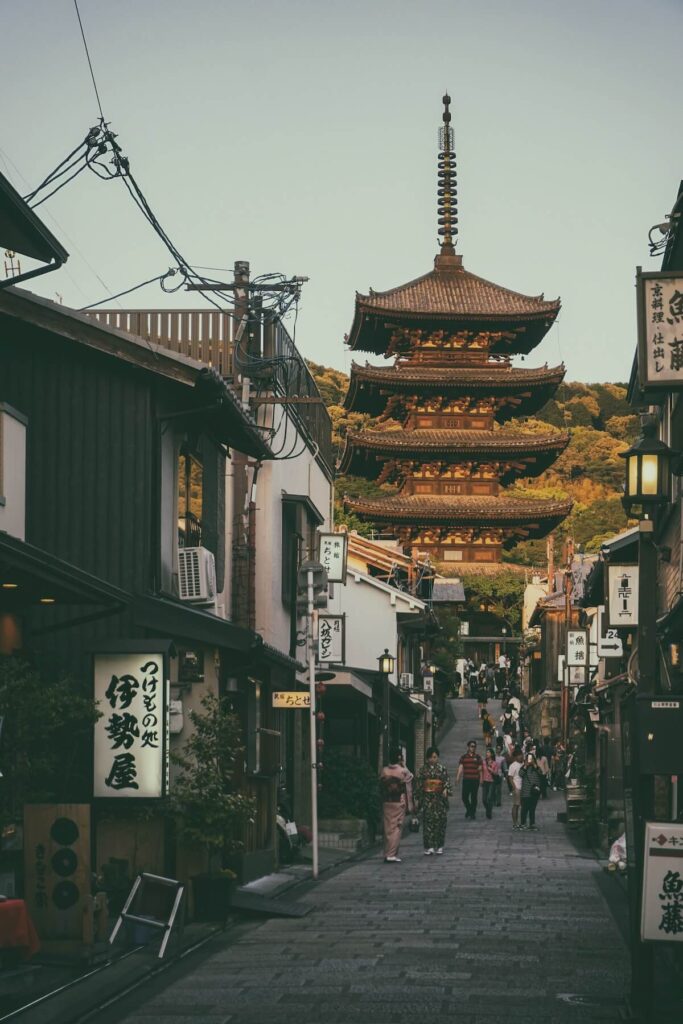
About 128 million people speak Japanese as their mother tongue. Most of them live in Japan, the only country where it is the national language. But there are also large Japanese communities in the U.S., the Philippines, and Brazil.
There are around 82 million native speakers of Korean, with the majority of them living in North and South Korea. It’s also a minority language in some parts of China, in parts of the Russian island Sakhalin, and in parts of Central Asia where ethnic Koreans reside. The language is also spoken by the Korean diaspora in the U.S., Canada, Japan, and elsewhere.

Personally, this isn’t a big consideration for me (I even tried to study Latin, which is no longer spoken as a native tongue). But if you find yourself living in a country or territory where either Japanese or Korean is widely spoken, it would make sense to learn that language.
5. Which one has more available resources?

Finally, how easy or difficult is it to obtain learning materials for either Japanese or Korean? If you live in Korea or Japan, you already have the advantage of having access to native speakers. But these days, learning from anywhere only takes a few clicks on your computer or phone.
Because Japan has a larger economy and the language has been popular among learners for a long time, there are a lot of Japanese learning resources such as apps and reputable Japanese books.
Korean became a popular language to learn with the advent of Hallyu (the Korean wave) in the last couple of decades or so. But there are already tons of Korean learning tools available online and offline. From apps to books to online courses, you can easily find a good resource for mastering Korean.
That said, these materials are mostly available in English. If you’re going to study Korean or Japanese from a non-English language, it’s best to choose the one that has more learning materials in your source/native language.
Can I learn Korean and Japanese at the same time?

What if you want to learn both Korean and Japanese? Can you learn both at the same time?
Technically, yes. The similarities in grammar may make it easier for you to learn both. It’s been done by others so it’s not impossible.
Do I recommend it? No. Studying one language is hard enough. Why make it even harder?
Both languages have different writing systems. Committing all these characters and their pronunciation to memory is a painful process and it can be easy to get confused. Learning the grammar is also time-consuming and if you do this for both languages simultaneously, you’ll probably make a lot of mistakes.
I recommend choosing either Korean or Japanese based on the factors I listed above. When you’ve mastered it or you feel comfortable enough with the first one, then you can proceed with the next one.
Conclusion

Should you learn Korean or Japanese? By now you’ve probably realized that it’s a decision that ultimately comes down to your personal preferences, goals, and commitment level.
Assess your goals. What do you want out of this experience? More importantly, are you willing to commit to learning despite the challenges you will likely face? Once you’ve answered these questions, you’ll find it easier to choose a language.
Whether you end up learning Korean or Japanese, you’re in for an exciting ride. And if you’re still undecided after all, explore any of these language learning resources, try out both languages, and see which one you enjoy more!