
*This article may contain affiliate links. For full information, please see the disclaimer here.
If you’ve been learning languages for quite some time, you’ve likely heard of Rosetta Stone. Nope, not the black inscribed stone at the British Museum, but the language learning software with 30 years of experience under its belt.
Rosetta Stone is one of the oldest and most popular language-learning resources. It’s known for its highly immersive method of teaching languages and for focusing on helping learners be conversational.

That said, some learners might not be convinced or satisfied with what Rosetta Stone offers. If the language you’re looking for is not available on the program, or you think their method doesn’t work for you, it makes sense to look for a Rosetta Stone alternative.
What is Rosetta Stone?
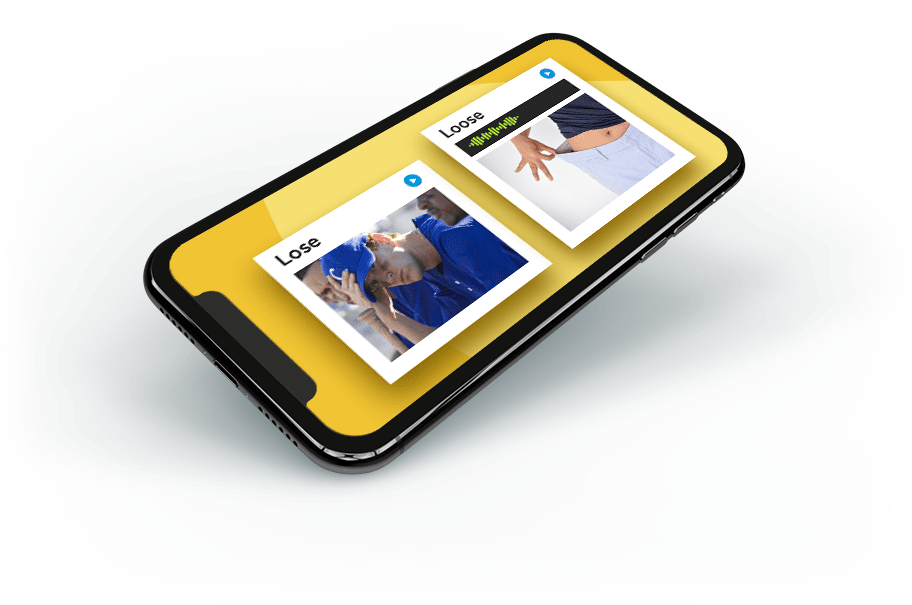
A well-established language learning software with courses in 25 languages, Rosetta Stone first became available in CD-ROM versions for Windows and Macintosh. It later became available as downloadable software, and now, a mobile app that you can access with a monthly subscription or one-time lifetime access.
One thing that sets Rosetta Stone apart from other platforms or apps is its Dynamic Immersion method. Rosetta Stone believes that the best way to learn a language is to be immersed in it and use it.
Want to learn French through Rosetta Stone? Be prepared to take the entirety of the course in French.
Rosetta Stone teaches languages the way many of us learned languages when we were kids — through trial and error. Even the grammar is taught in context and you learn from the repetition of various examples.
Furthermore, the program focuses on helping you become confident in speaking. So, right from the first lesson, you will be asked to repeat phrases. Its voice recognition engine, TruAccent, expertly detects any mistakes and will not let you move on until you fine-tune your pronunciation.
The mobile app version mimics the software, except the courses are broken down into lessons that last for 5-10 minutes, making them perfect for learning on the go.
Why look for alternatives to Rosetta Stone?

I admit that the first time I tried Rosetta Stone, I was a bit surprised. The Korean course was entirely in Korean, and except for the instructions, there wasn’t any English. No translations or Romanizations, too.
While this can be an effective way to learn a language, I understand why it would be uncomfortable for some, especially for complete beginners.
It’s particularly difficult for visual learners who rely on reading materials to speak. If you’re a beginner who’s not familiar with the alphabet of languages like Korean, Japanese, or Arabic, you would struggle to make sense of what the app is asking you to repeat.
It would be fair to look for a Rosetta Stone alternative if this is your reason.
Some potential learners also turn to Rosetta Stone competitors because of budget constraints. An online subscription starts at $19.95 per month for a 12-month subscription and $399 for the lifetime subscription. Discounts are available though.
Some may not mind and may even see this as a worthy investment. But others may want to find more affordable alternatives.
And then, of course, there are also learners whose target language is not offered by Rosetta Stone. Some also look for features that are not readily available on the app.
Regardless of your reason, there are plenty of apps that can meet your requirements.
Best Rosetta Stone alternatives for language learners
1. Pimsleur

One of the best programs similar to Rosetta Stone, Pimsleur also relies on immersion to teach languages. The difference is that the program is mostly audio-based. And with 50 languages on its roster, there’s a higher chance that you’ll find your target language on Pimsleur.
Like Rosetta Stone, Pimsleur recognizes that fluency can be achieved by improving one’s conversational ability. To do this, Pimsleur breaks down courses into 30-minute audio lessons that get you speaking from day 1.
To strengthen recall, Pimsleur uses an SRS-based system of teaching vocabulary at systematic and well-timed intervals. You can also review using digital flashcards, quizzes, and games. To know more about the app’s features and advantages, you can check out this Pimsleur review.
What I love about Pimsleur:
- Helps you gain conversational skills and confidence
- Teaches essential vocabulary
- Authentic tone and voice from native speakers
- A scientific and systematic review system
Pricing: $14.95/month for Audio-Only; $19.95/month for Premium (with bonus materials), or $20.95/month for All Access. Get full access via the 7-day free trial.
2. Babbel

One of the most comprehensive Rosetta Stone alternatives, Babbel is for learners who want a bit of everything in one place.
Babbel provides a holistic learning experience through well-structured lessons and a variety of review exercises targeting your reading, writing, listening, and speaking skills. Yes, you get to do all of those with Babbel’s 10-minute lessons, live online classes, podcasts, and games.
Babbel gamifies the learning process without sacrificing the quality of its material. Expect that you’ll be quizzed on spelling and that accuracy of your pronunciation will be tested. No shortcuts here.
Check out this in-depth Babbel review for more details.
What I love about Babbel:
- Well-rounded and high-quality courses chopped up into bite-sized lessons
- Variety of engaging exercises for learning and remembering
- Caters to learners of all levels
- Option to take live online classes with language tutors
Pricing: Subscriptions at $13.95/month. Find the latest Babbel promotions.
3. Mondly

If you’re looking for a Rosetta Stone alternative that will take only 10 minutes of your day, look no further than Mondly. Be warned, however; the app is so engaging that you might want to use it for more than 10 minutes.
While Rosetta Stone throws you into the language you want to learn, Mondly somehow eases you in and even gives you the option to learn from your mother tongue (available for some languages). So, if you speak Turkish and want to learn Swedish, you definitely can.
The best thing about Mondly is that it makes language learning fun. You learn by playing games and speaking with the Mondly bot while listening to native speakers. For extra motivation, you can view your stats and beat other learners on the leaderboard. Perfect for competitive types!
Want to know more? This Mondly review has all the deets!
What I love about Mondly:
- Short but fun lessons that focus on phrases, not individual words
- Engaging exercises that target vocabulary and grammar
- Native voiceover for authentic pronunciations and accents
- Effective intervals for repetition
Pricing: Free daily lessons. Get full access for $9.99/month or $47.99/year. Check out the latest promo here.
4. Memrise
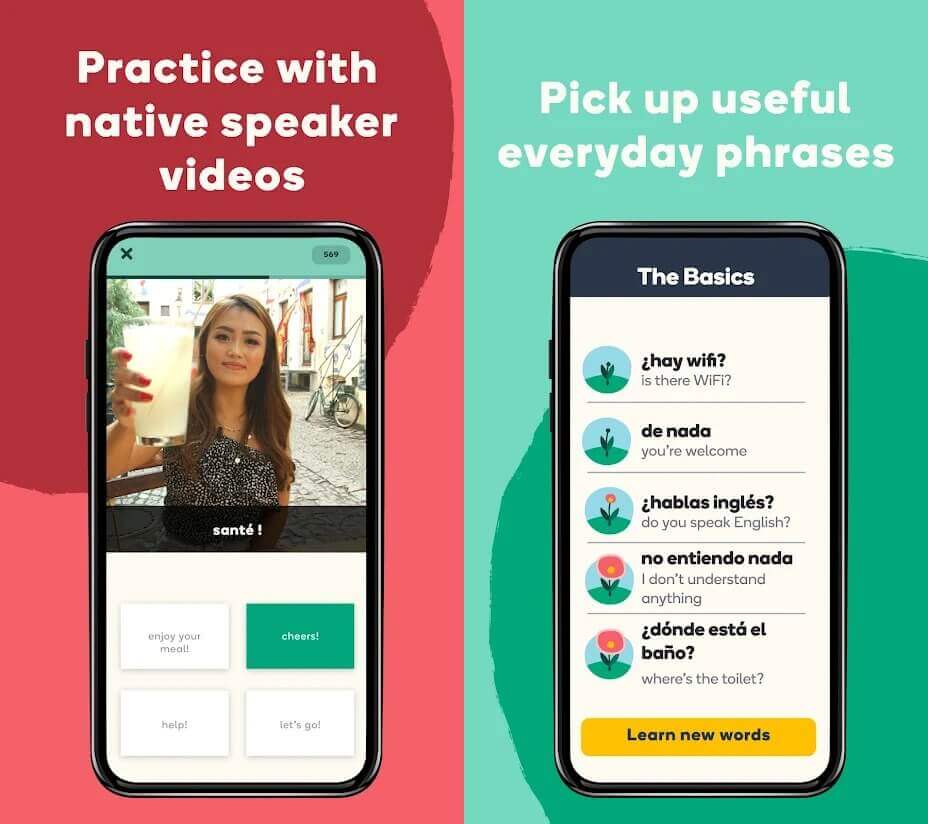
If you’re a learner looking for immersive language apps that don’t burn a hole in your pocket, Memrise is well worth considering. This free app is a robust Rosetta Stone alternative if you’re on a budget.
Memrise teaches languages through thousands of video examples featuring native speakers. This means you learn phrases used in real life and said in the local tone and accent, with context to boot. Afterward, your memory is tested through games.
What makes Memrise unique is that it has courses in over 20 of the most popular languages in the world but it also lets you access more free stuff from its users. There are lots of user-generated lessons in over 200 languages, ranging from general subjects like grammar to the more specific ones like dating expressions and swear words!
What I love about Memrise:
- Focus on learning to speak like locals
- Lots of listening and speaking practice
- Practical vocabulary taught through context
Pricing: Free with some features. Complete access is available through Memrise Pro, which starts at $5/month.
5. Rocket Languages

Learn a language on Rocket Languages
For a Rosetta Stone alternative that features a variety of learning tools and lots of culture notes, Rocket Languages is one of your best options.
A huge chunk of the lessons on Rocket Languages come in audio, podcast-style format. However, the app makes it more interactive by letting you speak and perfect your pronunciation, too while teaching vocabulary that matters to you.
Even better, Rocket Languages helps you understand the local culture through culture lessons. For languages with different writing systems, Rocket’s writing lessons also come in handy.
Find out how Rocket Languages helps you improve your language skills with this review.
What I love about Rocket Languages:
- Learning vocabulary through audio lessons
- Grammar explanations and cultural insights
- Quality voice recognition for practicing pronunciation
Pricing: Varies per language. Try it now.
6. italki

If you’re looking for more guidance and a solid way to be more conversational, the best alternative to a Rosetta Stone course is to get coaching from a native speaker. Enter italki, one of the best sources for online language tutors.
As of writing, italki offers more than 150 languages and has over 20,000 tutors on board. These instructors are either community tutors who can provide casual lessons (i.e., free-flowing conversation practice) or professional teachers with certifications and years of experience.
Either way, italki is a great platform if you want to improve your listening and speaking skills with the help of a native speaker. Your tutor can also customize a learning path for you so you can get the most out of your sessions. Find out more about italki with this detailed review.
What I love about italki:
- Dedicated coaching from a language tutor
- Choose tutors based on experience, nationality, budget, and schedule
- Competitive tutor rates
Pricing: Varies per language and tutor. You can find tutors for as low as $5 per lesson. Check out the discounted trial lesson here.
7. FluentU
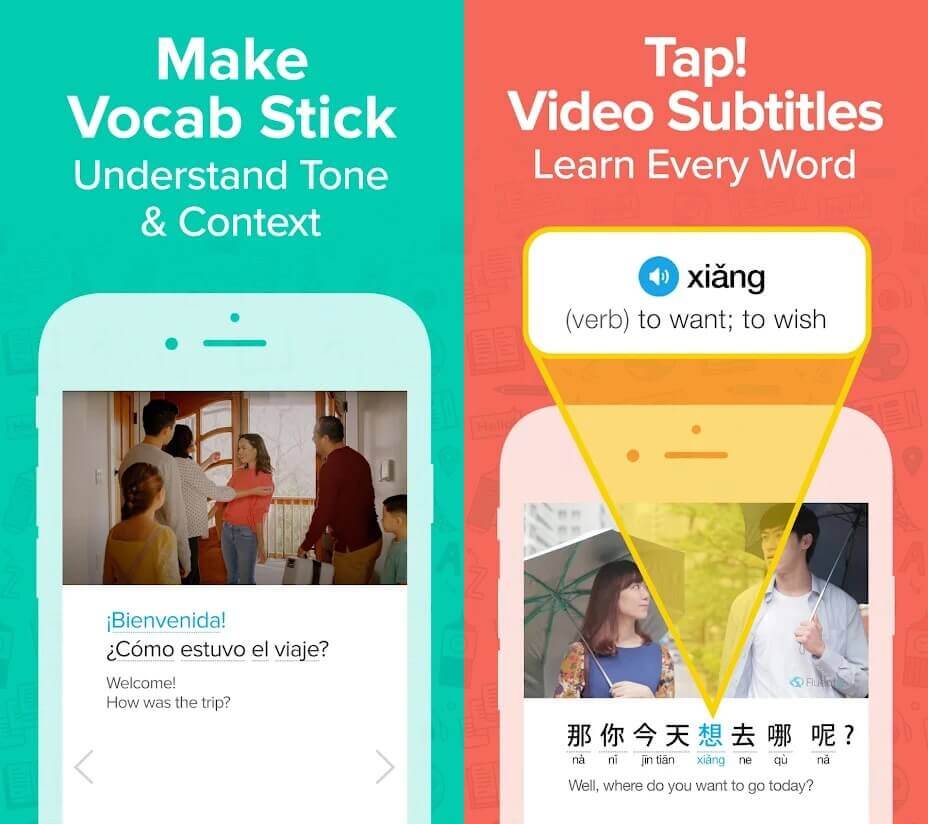
Another immersive app like Rosetta Stone, FluentU adds authenticity to the language learning process with real-world videos. The best part? You can learn using content that interests you.
Whether you’re into watching movie trailers, the news, music videos, inspiring talks, or TV commercials, you’ll find video content that’s not only appealing but also educational and instrumental to your learning.
The videos on FluentU’s library are painstakingly translated and subtitled. Clicking on the subtitles will teach you the definition of the word and help you understand the tone and context of phrases.
An engaging Rosetta Stone alternative, FluentU can help you get lots of fun listening practice while building comprehension.
What I love about FluentU:
- Content that appeals to your interests
- Learn native pronunciation, tones, and accent
- Contextualized and self-paced learning
Pricing: Subscriptions start at $19.99/month. Get full access with a 14-day trial.
8. Mango Languages
Learn a language on Mango Languages
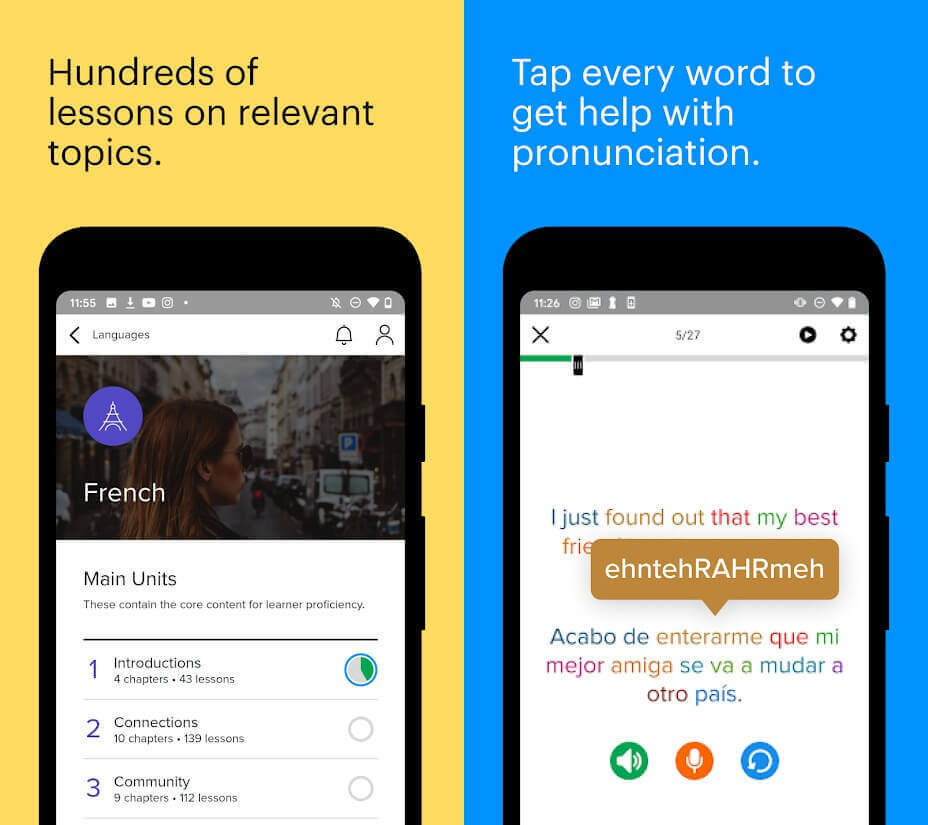
Boasting over 70 languages (plus specialty courses such as Mandarin Chinese for Feng Shui and Russian slang), Mango Languages is a practical Rosetta Stone alternative. This is especially true if you like courses that are conversation-based.
Ideal for serious and long-term learners, Mango Languages has a simple interface (images are rare) that relies on text and audio materials to teach languages. There are useful grammar and culture notes that aid learning as well.
Particularly noticeable is the quality of audio in Mango Languages. Audio is crystal-clear and features native speakers to teach nuanced pronunciation, tones, accents, as well as implied meanings.
What I love about Mango Languages:
- Relevant and challenging learning materials
- High-quality audio of native speakers
- Teaches vocabulary, grammar, pronunciation, and culture
Pricing: Starts from $10/month for the annual plan. Try Mango Languages for free here!
9. LingQ
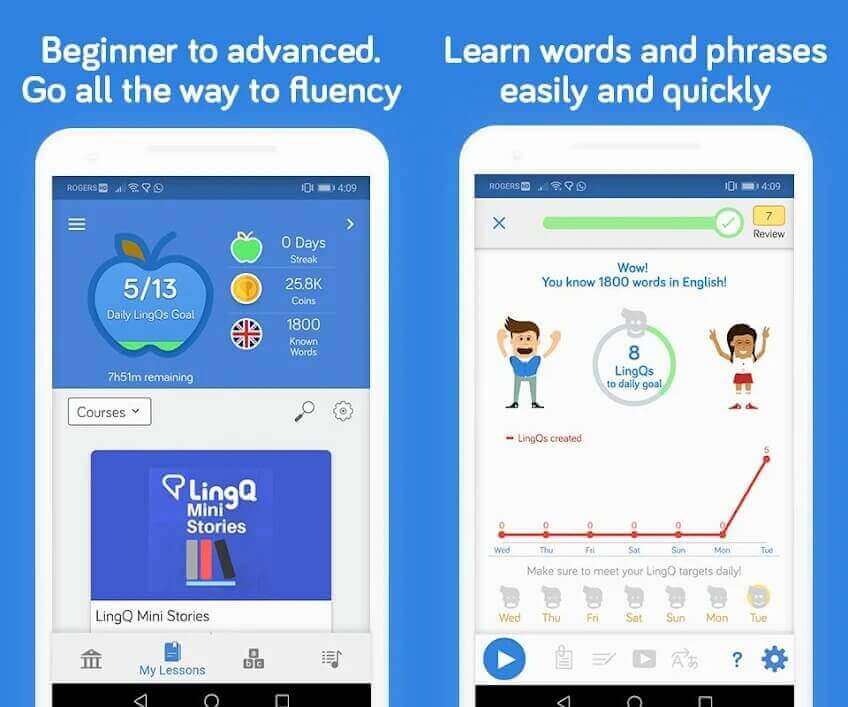
Speaking of immersive and contextual learning, another great app that uses those methods is LingQ.
You can think of LingQ as the audio version of FluentU. The app contains thousands of audio materials covering various topics – news, entertainment, travel, technology, food, and more — along with matching transcripts that let you learn vocabulary and grammar in context.
To aid recall, the app’s spaced repetition system helps you learn the words that matter to you most. And because you hear content in native speakers’ voices and accents, you also learn the natural phrasing of words.
What I love about LingQ:
- You can learn from your favorite content
- A vast library of topics and themes to choose from
- Systematic review methods and tracking of progress
Pricing: Some features for free. Monthly premium access starts at $7.99/month for the 24-month plan.
10. Clozemaster
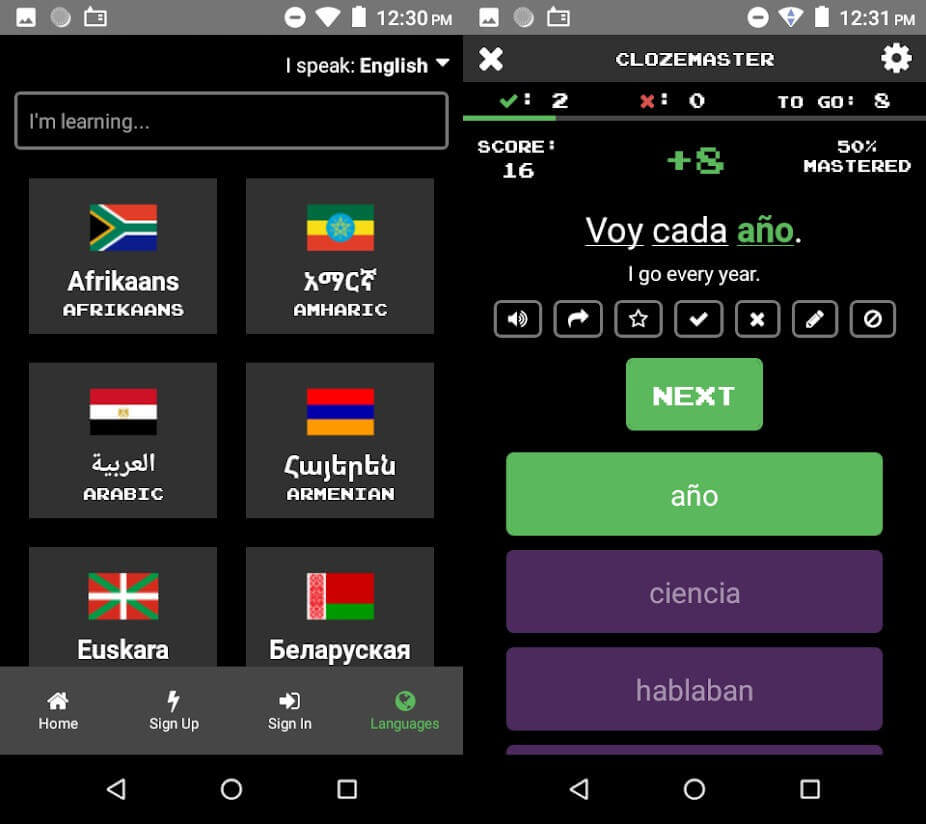
Learn a language on Clozemaster
If you crave the challenge but don’t necessarily want to spend on courses, Clozemaster can be a great Rosetta Stone alternative.
Rosetta Stone’s “fill-in-the-blanks” exercises are, in fact, similar to Clozemaster’s “cloze test”, except Clozemaster includes translations in its challenges. You’re not entirely in the dark and you can rely on context to pass the test.
And that’s how you learn on Clozemaster — through context. You’ll be filling in the missing words for thousands of lessons and expanding your vocabulary along the way. Like many of the apps on this list, you’ll remember words and phrases through SRS. The best part? It’s free!
What I love about Clozemaster:
- Learning vocabulary in context and through challenging games
- Gamified experience
- More than 50 languages are available in over 170 language pairings
Pricing: Free. Clozemaster Pro, which starts at $8/month or $60/year, gives you advanced features and stats.
11. Tandem

Learning a language and making friends at the same time? Completely possible with Tandem!
Part language exchange app, part social media network, Tandem is a great Rosetta Stone alternative if you’re looking to learn with fellow learners and native speakers. The app lets you connect to over 15 million language learners and supports 300+ languages.
Tandem is for learners who crave human connection. Here, you’ll learn languages by talking to actual people via text, voice notes, audio, or video calls. The two things it asks of you are your willingness to learn (e.g., expect to be corrected by your language partner) and your willingness to also teach your native language. I think that’s not a bad deal at all.
What I love about Tandem:
- Social way of learning languages
- Learning with native speakers and fellow language learners who can relate to your struggles
- Correction and translation tools
Pricing: Free with limited features. Access to unlimited translations is available with Tandem Pro for $6.99/month.
12. Duolingo

Do you prefer fun and gamified learning environments over Rosetta Stone’s unadorned context-based lessons? If you answered yes, Duolingo is a must-try. That is if you’re not already one of the over 500 million users of the app.
Duolingo is famous for its game-like features that make language learning more like play and less like a chore. While it’s not the best for building conversational skills, you can do worse than learning vocabulary and some knowledge of grammar from Duolingo.
More developed courses like French and Spanish are particularly impressive as they feature a lot of grammar and pronunciation tips as well as more varied ways of learning (e.g., stories and podcast-style audio). Get to know the Duolingo app with this in-depth review.
What I love about Duolingo:
- Engaging and highly motivating lessons
- A great introduction for beginners and refresher course for intermediate learners
- Free!
Pricing: Free. For an ad-free experience, you can get the Duolingo Premium for $6.99/month.
Conclusion

Rosetta Stone is popular and well-established for a reason. Many learners find its contextualized and highly-immersive method effective.
But just like any language learning program or app, it’s not for everyone. And why stick it out if it’s not working for you?
There are plenty of apps that can meet your needs. Hopefully, with the list of Rosetta Stone alternatives above, you have a better idea of which app to try out. Whichever you go with, all the best and have fun!