
Ever watched a K-drama and felt like you missed the punchline despite knowing your grammar? That’s the power of Korean slang.
Mastering these casual expressions is the secret key to unlocking K-pop lyrics and sounding natural in daily conversation. In Korea, slang evolves at breakneck speed, often blurring the line between 속어 (sogeo or general slang) and 은어 (euneo or jargon specific to distinct groups). To truly connect with the culture, you simply have to go beyond the textbook definitions.

Below, I’ve compiled 100 Korean slang words to help you sound like a local. To make them easy to learn, I’ve broken the list down into practical categories: daily essentials, emotions, dating and relationships, and specific personality types. I also covered terms for work and school life, food and drinking culture, cryptic text slang, and the newest Gen Z trends.
Let’s dive in!
The essential Korean slang words you have to know
These daily essentials are the absolute building blocks of casual conversation. From agreeing enthusiastically to expressing shock, mastering these common slang words in Korean will instantly level up your daily interactions.
1. 대박 (daebak) – awesome

Originally meaning a ‘big hit’ or ‘jackpot,’ this is now the universal term for ‘amazing’ or ‘awesome’ in Korean slang.
You can use it on its own (“Daebak!“) to express shock, or to describe something cool (“His voice is daebak“). It’s so popular that it recently got remixed into “bakbak” (박박) to sound even cuter and more emphatic.
2. 헐 (heol) – OMG, whoa
This is the quintessential Korean exclamation of surprise, disappointment, or shock. It’s the closest thing to saying “OMG,” “whoa,” or “no way” in a casual conversation.
Heol is a phonetic sound, often said to resemble someone sucking air in quickly. You can use it when you see something shocking, hear bad news (“Heol, you lost your wallet?”), or are simply bewildered by a friend’s behavior.
3. 짱 (jjang) – The best

짱 (jjang) is a classic piece of Korean slang that translates simply to “the best,” “top,” or “awesome.” Though it has been used for decades (it literally means ‘leader’ or ‘chief’), it remains a common way to express genuine enthusiasm, making it feel fresh even now.
You can use it as a standalone reaction, like “Jjang!” or put it after a noun: “이거 짱이야!” (This is the best!).
4. 콜 (kol) – Deal!
Simply put, 콜 (kol) means “Deal!” or “I’m in!” It’s derived directly from the English word “Call” (as in, “I’ll take that call” or “I’ll match that bet”). This is what you say when you instantly and enthusiastically agree to a suggestion, request, or proposal.
For example, if a friend asks, “Want to grab tteokbokki?” you just respond, “콜!” to confirm you’re game. It’s snappy, easy to remember, and perfect for casual use.
5. 아이고 (aigoo) – Oh my

This Korean slang is one of the most versatile and frequently heard expressions in Korean.
아이고 (Aigoo) serves as a universal sigh of exasperation, fatigue, sympathy, or even mild surprise—think of it as “oh my,” “geez,” or “oops.” It’s commonly used when you feel tired (“Aigoo, I have so much work to do”) or in response to hearing a friend’s dilemma (“Aigoo, that’s rough”). It can convey a wide range of emotions without needing extra words!
6. 화이팅 / 파이팅 (hwaiting / paiting) – Fighting!

Don’t let this word fool you! 화이팅 (hwaiting) is not about literal fights—it’s the ultimate cheer, meaning “You can do it!” or “Cheer up!”
Taken from the English word “fighting,” it’s used to wish someone good luck before a test, a presentation, or any challenge. You’ll hear it yelled everywhere. Both hwaiting and paiting (파이팅) are commonly used to show your full support.
7. 진짜 (jinjja) – Really?
This word is the backbone of casual Korean conversation. 진짜 (jinjja) literally means “real” or “truly,” but it can also function as a question (as in “Really?”) or an intensive adverb, “very.”
If a friend tells you a wild story, you can interject with “Jinjja?” to show surprise. If you want to emphasize something, you say “Jinjja mashi-sseo!” (It’s really delicious!). This Korean slang is great for expressing disbelief or sincerity.
8. 그래 (geurae) – Sure
그래 (geurae) is the casual, highly versatile equivalent of saying “Sure,” “Okay,” or “Got it.” Depending on your intonation, it can also mean “Really?” or “Is that so?” when you are checking or showing mild surprise at new information. You can also use it to prompt someone to continue speaking.
A conversation can go like this:
Your friend: 나는 지금 간다 (I’m going now. / Naneun jigeum ganda.)
You: 그래! (Okay! / Geurae!)
9. 안녕 (annyeong) – Hi / Bye (Informal)

안녕 (annyeong) is the most basic, casual greeting you’ll learn, and it means “Hi” or “Bye.” It literally means “peace,” implying a wish for the other person to be well.
Do remember that annyeong is only used informally, with friends or people younger than you. Use it when passing a friend, answering the phone casually, or saying goodbye. It’s a staple in friendly, non-polite interactions.
10. 대박사건 (daebak-sageon) – A big event or incident
대박사건 (daebak-sageon) combines the slang 대박 (daebak) with 사건 (sageon), meaning ‘incident’ or ‘event’. The resulting phrase translates to “A huge incident!” or “A massive event!”
You use this Korean slang phrase when you hear about something truly incredible, shocking, or utterly surprising. It’s much stronger than just saying daebak alone. For instance, “Did you see the drama finale? Daebak-sageon!”
Korean slang words and expressions about emotions and reactions
Now that you know the basics, let’s get expressive. These Korean slang words let you perfectly capture every feeling—from pure joy to utter annoyance—with authentic, dramatic flair.
11. 꿀잼 (kkul-jaem) – fun
This clever phrase combines ‘꿀’ (kkul, honey) and ‘재미’ (jaemi, fun) to describe something that is highly enjoyable, or ‘honey-fun.’ It means fun, interesting, or ‘lit’ in the best way possible.
You can use it for anything that captivates you, like a movie or a book. For example: “어제 본 영화 진짜 꿀잼이었어!” (The movie I saw yesterday was truly kkul-jaem!).
12. 노잼 (no-jaem) – not fun

This is the perfect opposite of kkul-jaem, meaning something is thoroughly not fun or boring. It combines the English word “no” with ‘재미’ (jaemi, fun).
If you’re stuck watching a dull movie or listening to a rambling speech, you can call it 노잼. If someone asks you to go somewhere you don’t want to, you might say, “That sounds like no-jaem.” It’s a quick, clear way to voice disappointment or boredom.
13. 웃프다 (ut-peu-da) – funny but sad
Have you ever encountered a situation that was so absurdly tragic it was hilarious? 웃프다 (ut-peu-da) perfectly captures this feeling.
It means “funny but sad,” or “laughing through tears.” This blended word combines utda (to laugh) and seulpeuda (to be sad). It’s used often in K-dramas and online to describe relatable, pathetic, or slightly tragic events that make you smile anyway, like a failed but determined effort.
14. 멘붕 (men-bung) – mental breakdown
Ever felt so overwhelmed you just shut down? 멘붕 (men-bung) is the go-to term for a “mental breakdown” or panic attack, short for 멘탈 붕괴 (mental bung-goe, meaning mental collapse).
This Korean slang is used casually when you are completely stressed, confused, or faced with an insurmountable challenge. For example, “시험 때문에 멘붕 왔어!” (I’m having a men-bung because of the test!).
15. 심쿵 (sim-kung) – heart throbbing

This is the sound of your heart skipping a beat!
심쿵 (sim-kung) is a sweet phrase combining simjang (심장, heart) and the sound effect kung (쿵, thump/thud). It means your heart is fluttering, usually because you see someone attractive or something adorable. It’s the Korean equivalent of “My heart went thump” or “Swoon!”
For instance, you could text a friend: “New K-pop bias? 완전 심쿵!” (Totally sim-kung!).
16. 극혐 (geuk-hyeom) – extreme disgust
Need to express extreme distaste? 극혐 (geuk-hyeom) is the modern, punchy way to express total disgust or repulsion. It’s an abbreviation of geukdo-ui hyeomo (극도의 혐오), meaning “extreme disgust.”
Use this when something is seriously gross, frustratingly bad, or you just hate it intensely—like a terrible meal or an annoying online comment. For example, “That whole situation? 극혐!”.
17. 빡치다 (bbak-chi-da) – to be really pissed off

This intense verb is the most common way to say you’re absolutely furious or highly annoyed. It’s generally used among close friends when you are genuinely frustrated, such as when your boss asks you to work late again. The feeling is stronger than just being upset—it’s boiling mad!
You can use it in phrases like: “아, 진짜 빡쳐!” (Ah, I’m really bbak-chyeo!) or “That queue made me bbak-chi-da!”
18. 소확행 (so-hwak-haeng) – small but certain happiness

This phrase captures the essential Gen MZ (referring to Millennials and Generation Z in Korea) desire to appreciate simple pleasures.
소확행 (so-hwak-haeng) is an abbreviation for “small but certain happiness” (sojaehago hwaksilhan haengbok). It originated from a Japanese essayist’s work but became viral in Korea, emphasizing the value of easily accessible joy, like a perfect cup of coffee or finishing a workout.
It’s perfect for describing those little moments of everyday contentment: “This blanket and K-drama combo is my absolute so-hwak-haeng.”
19. 현타 (hyeon-ta) – reality check
That moment when the high wears off and you’re left staring at the ceiling has a name.
현타 (hyeon-ta) is a popular abbreviation for hyeon-sil ta-gyeok, meaning “reality hit.” It perfectly captures the feeling of post-excitement emptiness or sudden clarity after an intense period, like finishing a huge project or waking up from a binge-watch session.
You can use this Korean slang phrase when you realize the fun is over and normal life is calling. “Concert’s done, now I’m having serious hyeon-ta.”
20. 킹받네 (king-bad-ne) – I’m so annoyed/triggered
When you’re annoyed but need to keep it playful, use 킹받네 (king-bad-ne). This term is a fun mashup of the English word “king” (referencing ‘the best’ or ‘most extreme’) and badne (받네, indicating receiving an annoyance). It means “I’m so triggered” or “This is extremely annoying.”
This phrase often describes a situation that’s irritating but not serious, like a friend teasing you too much. You can use it directly: “Stop, 킹받네!” or “That comment is pure king-bad-ne.”
21. 어이없다 (eoi-eop-da) – dumbfounded

This is the perfect expression for when a situation is so utterly ridiculous or absurd that you are left completely speechless.
어이없다 (eoi-eop-da) literally means ‘to be without eoi‘ (meaning reason or wits). It’s used when something is unbelievable, frustratingly illogical, or makes you feel dumbfounded by the sheer lack of sense.
For example, “They canceled the train again? 어이없다!” or “The price is insane—완전 어이없어.”
22. 감동 (gam-dong) – touched
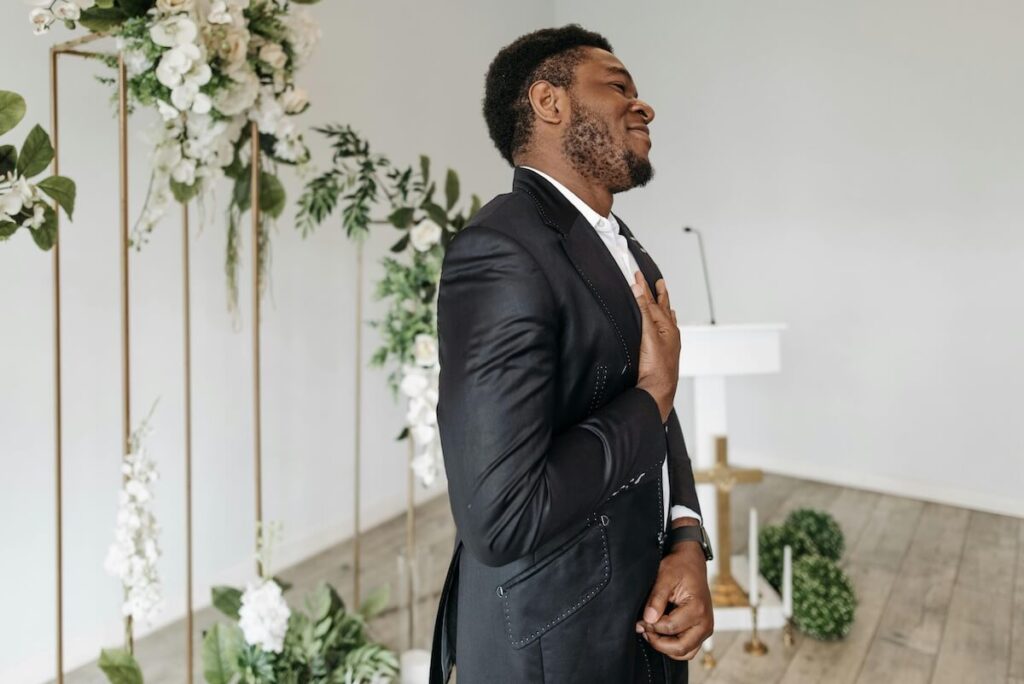
When a situation, person, or piece of media truly moves you emotionally, you use 감동 (gam-dong). It means “to be touched” or deeply affected, often resulting in sentimental or inspired feelings.
While it’s not exclusive slang, it’s used casually every day to express genuine appreciation. If a friend does something sweet, say: “완전 감동이야!” (Wan-jeon gam-dong-iya! – That’s so touching!) or describe a movie as “감동적” (gam-dong-jeok, moving).
Korean slang words and expressions about dating and relationships
Ready to find your oppa or noona? Navigating the complex world of modern Korean romance requires the right vocabulary. These essential Korean slang phrases will help you understand the stages of dating, from the first confession to the status updates in between.
23. 남친 / 여친 (nam-chin/yeo-chin) – boyfriend/girlfriend

Skip the long formal titles! 남친 (nam-chin) and 여친 (yeo-chin) are the essential, abbreviated Korean terms of endearment for “boyfriend” and “girlfriend.”
Nam-chin combines namja (man) and chin-gu (friend), and yeo-chin uses yeoja (woman) and chin-gu. These casual abbreviations are used constantly when talking about your significant other.
You could ask a friend, “Nam-chin saeng-gyeot-sseo?” (Did you get a boyfriend?)
24. 썸 (sseom) – “something”
Ever felt that confusing, exciting spark with someone? 썸 (sseom) is the official term for the “something” stage—the thrilling, non-committal period of flirting before a relationship starts.
This pre-dating phase is so iconic in Korean culture that it inspired the famous K-pop song “Some” by Soyou and Junggigo.
To use it, you “ride the sseom” (sseom ta). For instance, “우리 썸 타는 중이야” (We’re in the middle of sseom-ing).
25. 썸남 / 썸녀 (sseom-nam/sseom-nyeo) – a guy/girl you are in the “sseom” phase with
If you’re riding the sseom, then the person you’re interested in is a 썸남 (sseom-nam, guy) or 썸녀 (sseom-nyeo, girl). It literally combines sseom with namja (man) or yeoja (woman), but only refers to someone who is not yet a partner.
You’d say: “나 어제 썸남이랑 영화 봤어” (I watched a movie with my sseom-nam yesterday), clearly indicating the status is still ambiguous!
26. 밀당 (mil-dang) – push and pull

Ready for some romantic strategy? 밀당 (mil-dang) literally translates to “push-pull” (mil is push, dang is pull) and is the Korean term for “playing hard to get.”
This Korean slang describes the common dating strategy of alternating between showing interest and pulling back to create tension and test the other person’s sincerity. For example, “He’s not texting back right away—it’s classic mil-dang, don’t fall for it!”
27. 모솔 (mo-ssol) – someone who has never dated
This term is the perfect, casual way to describe a single person who has never dated anyone.
모솔 (mo-ssol) is a snappy abbreviation of motae solo (모태 솔로), meaning “solo since the womb.” It’s used humorously and lightly among friends to describe someone inexperienced in romance.
For example, “Don’t ask him for dating advice; he’s a total mo-ssol!”
28. 품절남 / 품절녀 (pum-jeol-nam/pum-jeol-nyeo) – married man/woman

This fun slang playfully refers to someone who is successfully married.
품절남 (pum-jeol-nam) and 품절녀 (pum-jeol-nyeo) literally mean “sold-out man” or “sold-out woman.” It implies that they were so highly sought after, they’re now permanently unavailable!
This term is often used for celebrities. Example: “Did you hear that actor got married? 완전 품절남 됐어!” (He’s totally pum-jeol-nam now!)
29. 남사친 / 여사친 (nam-sa-chin/yeo-sa-chin) – a male/female friend

This one’s for platonic friendships. 남사친 (nam-sa-chin) and 여사친 (yeo-sa-chin) are snappy abbreviations for “male personal friend” and “female personal friend,” used to confirm that absolutely no romantic sseom (something) is happening. They are just friends, end of story!
Example: “Don’t worry, he’s just my nam-sa-chin—no feelings.”
30. 짝사랑 (jjak-sa-rang) – one-sided love/crush
This romantic term is a classic, meaning “one-sided love” or “having a crush.” It combines jjak (one of a pair) and sarang (love). It perfectly describes the painful but sweet experience of liking someone who doesn’t know or doesn’t feel the same way.
K-dramas are full of jjak-sa-rang situations. Example: “I’ve had a jjak-sa-rang on my coworker for months now.”
31. 금사빠 (geum-sa-bba) – someone who falls in love easily/quickly
When someone’s heart is moving faster than a K-pop debut, you call them a 금사빠 (geum-sa-bba). This highly popular phrase is short for geum-se-sa-rang-e-ppajin-saram (quickly falling-in-love-person).
It describes someone who gets infatuated very easily and quickly. It’s often used humorously to tease a friend about their ever-changing crushes. For instance, “Don’t introduce him to anyone—he’s such a geum-sa-bba!”
32. 사랑꾼 (sa-rang-kkun) – a romantic/someone full of love

Need a word for a super devoted partner? 사랑꾼 (sa-rang-kkun) translates to “love expert” or “love master,” combining sarang (love) with kkun (a suffix for someone skilled or passionate about something).
This Korean slang describes a very romantic, often overly affectionate person who isn’t afraid to show their love publicly. Example: “He posted a sweet birthday message; he’s a total sa-rang-kkun.”
33. 바람둥이 (ba-ram-dung-i) – playboy/player
Be careful who you trust! 바람둥이 (ba-ram-dung-i) is the common term for a “playboy” or “player.” It literally means “wind-person” (ba-ram is wind), implying someone who is fickle and easily distracted by new romantic interests.
This person never commits to a single relationship. You can say: “Don’t date him; he has a reputation as a ba-ram-dung-i.”
34. 돌싱 (dol-sing) – divorced/single again
Ready for a new chapter after a major breakup? 돌싱 (dol-sing) is a popular and very common term, short for dol-a-on sing-geul (“returned single”).
It specifically refers to someone who is divorced and actively back on the dating scene. It’s used casually and often carries a slightly hopeful or supportive tone, signifying a fresh start. For example: “Is he a dol-sing?” or “She’s a proud dol-sing and ready to date again!”
Korean slang words about people and personality types
Moving beyond romance, this set of Korean slang helps you label everyone in your social circle, from the overly dedicated worker to the friend who gives terrible advice. Mastering these terms is key to gossiping like a local and recognizing key personality types in dramas.
35. 인싸 (in-ssa) – insider

If you’re a total social butterfly, you’re an 인싸 (in-ssa), which is simply short for “insider.” This is the highly popular term for someone who is cool, trendy, and dominates the social scene.
An in-ssa knows the latest trends and is always invited to the best gatherings. You can describe someone as in-ssa (“He’s totally in-ssa“) or ask a friend, “Are you in-ssa?”
36. 아싸 (a-ssa) – outsider
If you’re not an in-ssa, you’re probably an 아싸 (a-ssa), short for “outsider.” This person is the opposite of a social butterfly, preferring to stay out of the spotlight.
An a-ssa can be a quiet loner by choice, enjoying hobbies alone, or involuntarily excluded from social groups. It’s often used jokingly: “I stayed home all weekend, total a-ssa life.”
37. 엄친아 / 엄친딸 (eom-chin-a/eom-chin-ttal) – perfect child

This term is the ultimate, slightly exasperated praise, literally meaning “Mom’s friend’s son/daughter.” An eom-chin-a (son) or eom-chin-ttal (daughter) is a hypothetical perfect person who excels at everything: studies, career, looks, and personality—the impossible standard parents often compare you to!
Use it ironically or to genuinely compliment someone ridiculously talented. Example: “He got a scholarship and he speaks five languages? Total eom-chin-a.”
38. 꼰대 (kkon-dae) – old boomer
Ever met someone who loves telling you, “Back in my day…”? That person is a 꼰대 (kkon-dae).
It refers to a condescending, often older person who constantly lectures others, usually about how things were better in their time. The term has evolved beyond age and now describes anyone who acts arrogantly or is overly traditional.
Use it to vent about a boss or senior: “우리 상사는 완전 꼰대야.” (My boss is a total kkon-dae.)
39. 라떼는 말이야 (Latte-neun mal-iya) – “Back in my day…”
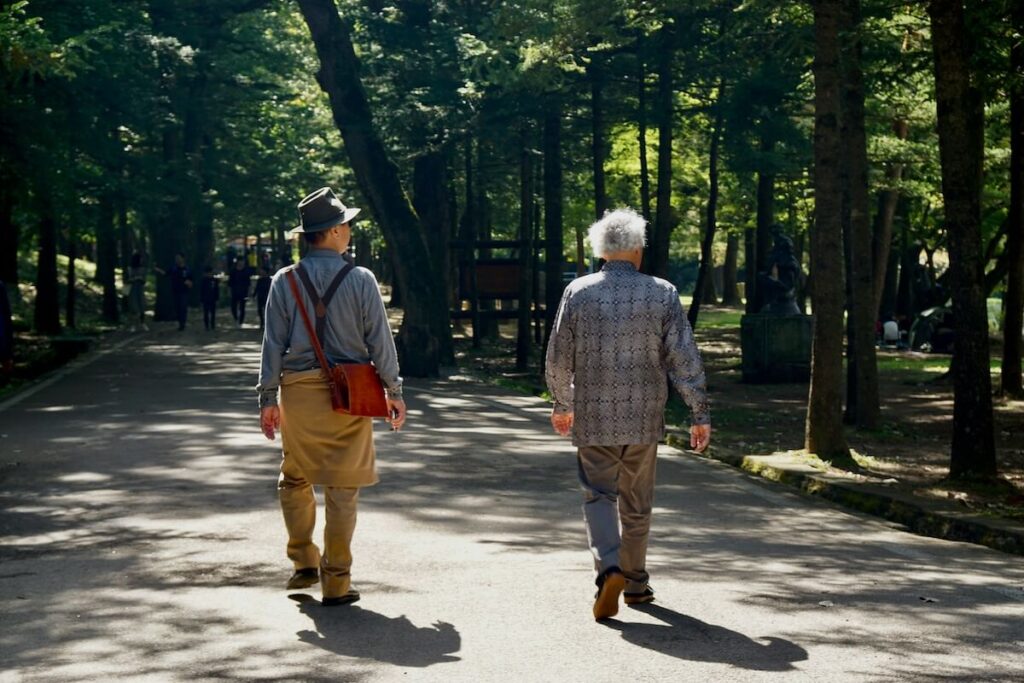
As I said earlier, this is what you usually hear from a kkon-dae. If you want to playfully troll the kkon-dae in your life, this is your phrase.
라떼는 말이야 (Latte-neun mal-iya) is a playful corruption of “나 때는 말이야” (“Back in my day”). The humor comes from the phonetic similarity, making it sound like “Latte is horse” (라떼 is latte, 말이야 is like horse).
It’s used ironically to mock people who lecture using outdated experiences. Example: “Oh, are we starting the latte-neun mal-iya session now?”
40. 마당발 (ma-dang-bal) – someone with a wide network of friends
This charming term literally means “yard foot” (ma-dang is yard, bal is foot). It’s used to describe a popular person who knows everyone and has an impressively wide social network.
Think of someone whose influence stretches everywhere, covering all areas like a big yard. Use it when you need a connection: “Ask her, she’s a total ma-dang-bal.”
41. 갑분싸 (gap-bun-ssa) – mood killer

Need a term for an awkward moment? 갑분싸 (gap-bun-ssa) is a super popular Gen Z term for a “mood killer.” It’s an abbreviation of gapjagi bun-wigiga ssahaejinda, which literally means “suddenly the atmosphere becomes cold.”
You use this phrase when someone says or does something that instantly kills the vibe of a gathering or conversation. Example: “That off-color joke was totally gap-bun-ssa.”
42. 핑프 (ping-peu) – finger princess/prince

This playful, slightly critical Korean slang is for someone too lazy to search for information themselves.
핑프 (ping-peu) is a combination of “finger” and “princess/prince.” It refers to a person who demands others look up simple, easily searchable facts (like movie times or directions) rather than moving their own fingers to Google it. Example: “Don’t be a ping-peu, just search the address yourself!”
43. 답정너 (dap-jeong-neo) – “The answer is already set, you just need to agree”
답정너 (dap-jeong-neo) is a super useful abbreviation for “The answer is already set, you just need to agree.” This term describes someone who is aggressively fishing for compliments or validation. They ask a question, but any answer other than the one they want will be dismissed!
It combines the phrases dab-eun jeong-hae-jyeot-da and neo (the answer is set, you). Don’t fall for it! Example: “She asked if her new haircut looked good, but she’s just being a total dap-jeong-neo.”
44. 호구 (ho-gu) – pushover
Need a word for that friend who always gets tricked? 호구 (ho-gu) is a very popular, slightly deprecating term for a gullible person, pushover, or easy target—someone easily exploited or fooled into bad deals.
It derives from an older word for a black spot on a Go board, but today it just means “sucker.” Example: “Don’t lend him money again; you’re being a ho-gu!”
45. 관종 (gwan-jong) – attention seeker

Does that person constantly post dramatic selfies just for likes? They are a 관종 (gwan-jong), a snappy abbreviation for gwan-sim jong-ja (attention seed/person).
This popular Korean slang is used for anyone who craves attention, often through annoying or over-the-top behavior, especially online. You might hear: “Stop being a gwan-jong!” or use it to describe a dramatic celebrity.
Korean slang words about work, school, and life struggles
The Korean work and school grind is real! These slang words capture the intense pressure, late nights, and the never-ending struggle against exhaustion that defines the modern hustle culture.
46. 갓생 (god-saeng) – living a diligent, productive, and exemplary life

The ultimate Gen Z goal is the 갓생 (god-saeng), meaning a ‘god-like life.’
This slang combines “god” (갓) and saeng (생, life), reflecting a hyper-productive, self-improvement lifestyle. It’s all about waking up early, working out, studying, and achieving personal goals.
If you see someone successfully sticking to a strict daily routine, they are living the god-saeng. You might say, “나도 갓생 살고 싶어!” (I want to live a god-saeng too!).
47. 워라밸 (wo-ra-bael) – work-life balance
Tired of the endless Korean hustle? 워라밸 (wo-ra-bael) is the widely used Konglish abbreviation for “work-life balance,” representing the ideal boundary between career and personal time.
It became hugely popular as young Koreans pushed back against the traditional, all-consuming work culture. Everyone’s chasing that sweet spot! You can ask, “요즘 워라밸 어때?” (How is your work-life balance these days?)
48. 퇴근 (toe-geun) – getting off work

퇴근 (toe-geun) literally means ‘retreat from work’ and is the most important word in the vocabulary of any Korean office worker or student.
This word signifies the sweet moment you finally clock out and head home, especially after long hours. It’s used as a verb: you toe-geun at a specific time. You can ask a friend: “오늘 몇 시에 퇴근해?” (What time are you getting off work today?) or shout “Happy toe-geun!”
49. 칼퇴 (kal-toe) – leaving work exactly on time
The ultimate dream of the Korean office worker! 칼퇴 (kal-toe) literally translates to “knife exit,” referring to the precise act of leaving work exactly at closing time without staying a second late. It’s the goal of achieving wo-ra-bael and implies you cut off work sharply, like a knife.
Example: “Did you manage a kal-toe today?” or “I hope I can kal-toe!”
50. 야근 (ya-geun) – overtime work

The opposite of kal-toe is the constant reality for many: 야근 (ya-geun), meaning ‘overtime work.’
This simple term combines ya (night) and geun (work), describing the frequent act of staying late past closing time. It’s often viewed as a necessary evil in the intense Korean work culture.
You can use it as a verb ya-geun-ha-da: “Sorry, I have to ya-geun tonight.” or “My schedule is full of ya-geun.”
51. 벼락치기 (bye-rak-chi-gi) – cramming
This term is painfully relatable to students everywhere! 벼락치기 (bye-rak-chi-gi) literally means ‘lightning strike hitting’ and refers to frantically cramming just before a test or deadline.
This phrase perfectly captures that sudden, intense burst of last-minute studying. It’s definitely not recommended, but everyone does it!
You use it as a noun or a verb (bye-rak-chi-gi-ha-da): “I only passed thanks to some serious bye-rak-chi-gi.
52. 수포자 (su-po-ja) – someone who gave up on math

This term is sadly relatable and sums up the stress of the Korean education system. 수포자 (su-po-ja) is a portmanteau for suhak po-gi-ja, meaning “math abandonment person.”
This person has thrown in the towel on math because it’s too difficult or stressful. It’s used casually, often as a badge of honor, to complain about the subject. For example: “I don’t get the homework—I’ve been a su-po-ja since middle school.”
53. 고생했어 (so-saeng-hae-sseo) – You worked hard / Good job

Ever need a phrase that’s deeper than “thanks” but less formal than a bow?
고생했어 (go-saeng-hae-sseo) means “You worked hard” or “Good job.” It is the ultimate expression of respect and encouragement, recognizing the effort or struggle—the go-saeng—someone went through to complete a task, like a major test or a long day at work. It’s a genuine show of appreciation. Use it constantly!
Example: After a long shift, tell a coworker, “오늘도 고생했어!” (You worked hard again today!).
54. 백수 / 백조 (baek-su/baek-jo) – unemployed man/woman
If you’re between jobs, you’re a 백수 (baek-su) (man) or 백조 (baek-jo) (woman). Baek-su literally means ‘white hands,’ implying hands clean from work. Baek-jo means ‘white swan,’ a more flattering term for a jobless woman.
Both are common, casual terms for being unemployed or “resting” at home. You can use it humorously to describe your current state: “I’m a baek-su right now.” or “My sister is a baek-jo this month.”
55. 알바 (al-ba) – part-time job

Need to talk about that side gig? 알바 (al-ba) is the essential shorthand for a “part-time job,” derived from the German word arbeit (work). It’s used universally by students and young adults hustling for extra cash.
Because of the long hours and low pay, al-ba often comes with a degree of struggle. You frequently hear it as a verb: “나 오늘 알바 해야 돼” (I have to al-ba today) or “Where should I get an al-ba next?” It captures the temporary grind perfectly.
Korean slang words and expressions about food and drinking culture
Get ready to eat and drink! From ordering like a pro to cheering on your friends, these essential slang words in Korean are used constantly when dining out.
Also read: Korean Food Vocabulary: From Basic Ingredients to Dining Etiquette
56. 치맥 (chi-maek) – chicken + maekju
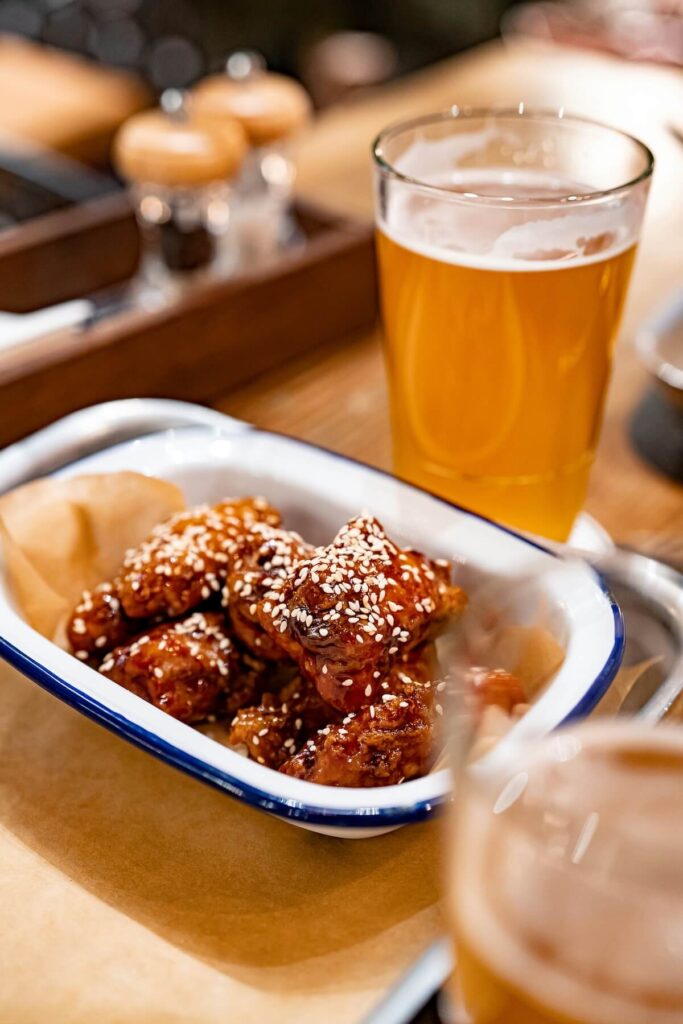
This combination is basically the national anthem of casual Korean dining, a hallmark of modern Korean food culture.
치맥 (chi-maek) is the glorious pairing of fried chicken and maekju (beer). It’s the ultimate comfort food for watching sports, celebrating, or just having a low-key night with friends. It’s so famous that it has its own festival!
You’ll often hear someone say: “오늘 밤 치맥 콜?” (Chi-maek tonight, deal?)
57. 존맛탱 (JMT/jon-mat-taeng) – F***ing delicious
Want to sound really enthusiastic about your food? 존맛탱 (jon-mat-taeng) is the ultimate, highly-slang expression for “f***ing delicious.” It’s so popular that it’s usually abbreviated to JMT.
This term combines jon (an intensifier, similar to the F-word) with mat (taste) and taeng (an added syllable for rhythm). Use it only with close friends to praise amazing food: “이 떡볶이 완전 JMT!” (This tteokbokki is totally JMT!)
58. 맛저 / 맛점 (mat-jeo / mat-jeom) – have a delicious dinner/lunch
When signing off from a chat before mealtime, skip the long formal greetings! These snappy abbreviations are the go-to way to wish someone a great meal.
맛점 (mat-jeom) means “Have a delicious lunch” (mat + jeomshim), and 맛저 (mat-jeo) means “Have a delicious dinner” (mat + jeonyeok). They’re casual, sweet, and perfect for texting friends: “맛점 콜!” (Delicious lunch, deal!)
59. 혼밥 / 혼술 (hon-bap/hon-sul) – eating alone/drinking alone

These are the perfect terms for the “hon-jok” (혼족, solo tribe) lifestyle. 혼밥 (hon-bap) is short for honja bap (eating alone), and 혼술 (hon-sul) means honja sul (drinking alone).
While dining alone was once seen as sad, this slang celebrates the freedom and comfort of solo activities. Use it to check on a friend: “오늘 혼밥이야?” (Are you eating alone today?) or to announce your plans: “난 오늘 혼술 할 거야.” (I’m going to hon-sul today.)
60. 내가 쏠게 (nae-ga ssol-ge) – It’s on me / I’ll pay
When you want to treat your friends, ditch the formal language and say this instead!
내가 쏠게 (nae-ga ssol-ge) literally means ‘I’ll shoot,’ and it’s the coolest way to announce you’re paying for the meal or drinks. It’s snappy, confident, and very common.
Use it at the counter: “오늘은 내가 쏠게!” (Today, I’ll pay!) or when making plans: “치맥은 내가 쏜다!” (I’m paying for the chimaek!).
61. 원샷 (won-syat) – bottoms up

If you’re drinking with Korean friends, you’re guaranteed to hear this! 원샷 (won-syat) is the energetic, fun way to say “bottoms up” or “down it in one shot.”
Taken directly from the English phrase “one shot,” it’s used when encouraging someone to finish their drink—especially soju or beer—without pausing. It’s the essential cheer for parties and toasts. Just raise your glass and shout: “원샷!”
62. 폭탄주 (pok-tan-ju) – bomb drink
Ready to kick the party into high gear? A 폭탄주 (pok-tan-ju) is a “bomb drink,” typically a shot of soju submerged in a glass of beer (like a boilermaker). It’s designed to be drunk in one go and often involves fun, loud rituals, like slamming the glass on the table to mix the contents perfectly.
Just be careful: this explosive mix lives up to its name!
63. 불금 (bul-geum) – Fire Friday

Forget TGIF—in Korea, Friday is the night the week catches fire!
불금 (bul-geum) literally means ‘fire Friday’ (bul is fire, geum is Friday) and is the ultimate slang for “Thank God It’s Friday!” It represents the celebratory feeling of leaving work or school to go out, eat, and drink with friends.
Use it to make plans: “오늘은 불금!” (Today is bul-geum!) or “Let’s enjoy bul-geum properly!”
64. 먹방 (meok-bang) – eating show

This is the term for the global phenomenon of watching someone eat large amounts of food online.
먹방 (meok-bang) combines meokneun (eating) and bangsong (broadcast). Originating on Korean streaming sites, these shows feature “mukbang streamers” who interact with viewers while consuming vast meals.
Search “meok-bang” and watch it while enjoying your food, or use the word in conversation: “나 오늘 밤에 치맥 먹방 할 거야!” (I’m doing a chi-maek meok-bang tonight!)
65. 배달 (bae-dal) – delivery
Korea doesn’t just do delivery; it has perfected it!
배달 (bae-dal) is the essential term for delivery, referring to the massive, hyper-efficient culture of getting virtually anything delivered—from a single cup of coffee to full-course meals—quickly and affordably.
If you don’t want to cook, call a friend and ask, “Bae-dal, call?” or say, “오늘 밤은 치킨 bae-dal 하자.” (Let’s get chicken bae-dal tonight.)
Korean text and internet slang
Ready to text like a real native? Korean text slang is a whole language of lightning-fast abbreviations and phonetic shortcuts. Learn these to ace your KakaoTalk conversations and prove you’re an in-ssa!
66. ㅋㅋ (keke) – Hahaha

This is the essential Korean noise that indicates laughter, similar to “lol” or “haha.” It’s formed by the consonant ‘ㅋ’ (k/g) and represents the sound of giggling or snickering. The more ‘ㅋ’s you add, the harder you’re laughing—so, ㅋㅋㅋㅋ is a strong guffaw!
You can use it after a joke: “That was ridiculous ㅋㅋㅋ” or when you’re mildly amused: “I see ㅋ.”
67. ㅎㅎ (hehe) – Hehehe
If ㅋㅋ is a guffaw, then ㅎㅎ is a sweet smile or gentle chuckle. This text slang uses the consonant ‘ㅎ’ (h) to represent soft, gentle laughter (hehe).
It’s typically used to show mild amusement or a friendly, polite reaction without being over-the-top. The tone is warmer and less sarcastic than ㅋㅋ.
Try using it to politely acknowledge a friend’s comment: “오늘 칼퇴했어 ㅎㅎ” (I managed to kal-toe today ㅎㅎ) or “That was a good photo ㅎㅎ.”
68. ㅇㅇ (eung-eung) – Yes

This is the ultimate text message shortcut for showing you agree with zero effort.
The simple double-consonant ㅇㅇ is the most casual way to say “yes” or “ok,” representing the sound of eung-eung (응응), which is the highly informal version of ne (yes).
While it’s considered too abrupt for seniors, it’s perfect for fast, friendly chats.
Friend: “오늘 밤 8시에 콜?” (Tonight at 8, deal?).
You: “ㅇㅇ.” (Yep.)
69. ㄴㄴ (nono) – No no
This piece of Korean internet slang is the ultimate rejection shortcut.
ㄴㄴ comes from the sound of “no no” and is the fastest way to decline a suggestion or answer a question negatively in a casual chat. It’s incredibly informal, using the consonant ‘ㄴ’ (n) twice for speed.
Friend: “오늘 너 혼자 밥 먹어?” (Are you eating alone today?)
You: “ㄴㄴ, 치맥 콜.” (No no, chi-maek, deal.)
70. ㅇㅋ (ok) – OK

“ㅇㅋ” is the ultimate speedy confirmation in Korean text chats. It’s the initialism for “오케이” (o-ke-i), which simply means “OK” in Korean slang.
Because it uses only two consonants (ㅇ and ㅋ), it’s incredibly fast to type, making it essential for rapid conversation in KakaoTalk or DMs. Think of it as the Korean version of “k” or “kay.”
Use it like this: “오늘 저녁에 치맥 ㄱ?” (Chicken and beer tonight?) -> “ㅇㅋ!” (OK!). Save this casual shorthand for your friends!
71. ㄱㅅ (gamsa) – thanks
Need to shoot off a quick word of thanks without the formality? “ㄱㅅ” is your keyboard shortcut!
This piece of Korean text slang is short for gamsahamnida (감사합니다), the standard, polite way to say “thank you.” It strips the phrase down to just two consonants (ㄱ and ㅅ), making it perfect for rapid-fire chats, gaming, or DMs when formality is unnecessary.
It’s ultra-casual, so only use it with close friends. For example: “Here’s the address, ㄱㅅ!”
Also read: 40+ Ways to Say Hello in Korean & Other Greetings
72. ㅈㅅ (joesong) – sorry

Made a mistake in a group chat? Need to apologize quickly? “ㅈㅅ” is the digital-age expression of “sorry.” This casual, two-consonant abbreviation is short for joesonghamnida (죄송합니다), the standard, polite way to say “I apologize.”
Because it avoids the full formality, it’s perfect for minor slip-ups or rapid responses in chat rooms and gaming. Just remember: it’s too brief for serious apologies! Example: “Omg, wrong address ㅈㅅ!”
73. ㅊㅋ (chuka) – congrats
Someone’s celebrating a win, and you need to cheer them on fast? “ㅊㅋ” is the quick and casual way to say “congrats” or “celebrate.” This Korean text slang is an abbreviation of chukahaeyo (축하해요), meaning “congratulations.”
Using only the initial consonants (ㅊ and ㅋ) makes it perfect for quick messages about minor achievements in DMs or group chats. Example: “Finally got kal-toe today! -> ㅊㅋㅊㅋ!”
74. ㅎㅇ (hai) – hi

Need a fast way to greet your friends online? “ㅎㅇ” is the ultra-casual, lightning-fast text version of “하이” (hai), which is just the Korean pronunciation of the English word “hi.”
By using only the initial consonants (ㅎ and ㅇ), it saves time while chatting on KakaoTalk or in game lobbies. It’s an informal opener, perfect for instantly starting a conversation. Example: “ㅎㅇ! 오늘 뭐 해?” (Hi! What are you doing today?)
75. ㅂㅂ (ba-ba) – bye bye
Need to know how to say goodbye in Korean in the fastest way possible? Look no further than ‘ㅂㅂ’!
This two-consonant piece of Korean text slang is the ultra-fast text equivalent of ‘bye bye,’ taken directly from the English term. It’s perfect for signing off in a casual group chat, leaving a gaming session, or ending a short DM exchange.
Just make sure you’re talking to a friend! Example: “Got to go! ㅂㅂ.”
76. ㅁㄹ (mol-la) – IDK

When you have no idea and need to communicate it instantly, you use “ㅁㄹ.” This is the essential text slang for “I don’t know” or “IDK,” short for molla (몰라).
As with most Korean internet slang, this is highly casual and should only be used with close friends when the topic isn’t serious. Example: “Where is the meeting today? -> ㅁㄹ, I’ll ask.”
77. ㅇㅈ (in-jeong) – admitted
“ㅇㅈ” is the quick, casual way to signal instant agreement in Korean chat. It stands for in-jeong (인정), meaning “acknowledgment” or “admitted.”
When a friend makes a great point, or states an undeniable observation, you hit them with “ㅇㅈ.” It’s essentially the digital version of “I concede!” or “truth,” perfect for fast-paced conversation. Example: “That daebak chicken was JMT. -> ㅇㅈ!”
78. 솔까말 (sol-kka-mal) – to be honest

Need a fast way to get straight to the point? 솔까말 (sol-kka-mal) is your go-to abbreviation for 솔직히 까놓고 말해서 (honestly speaking, putting it bluntly).
This text slang acts as a preface, signaling that you’re about to share a raw, honest opinion. It gives you the digital green light to “speak openly” with friends, whether it’s about a bad movie or a harsh truth. Example: “솔까말, that hairstyle is total 극혐.”
79. TMI – Too Much Information
TMI is a ubiquitous piece of English slang adopted directly into Korean, especially in pop culture. While it still means “too much information,” in Korea, it often refers to unnecessary but sometimes charming trivia about yourself or others.
Idols frequently share “TMI” facts. Example: “My TMI for today is that I wore mismatched socks.”
80. 케바케 (ke-ba-ke) – case by case

When an answer isn’t clear-cut, the answer is often 케바케 (ke-ba-ke). This highly popular Konglish abbreviation stands for “case by case.” It’s another way to say “it depends” when discussing plans, rules, or unpredictable situations with friends.
This is used constantly in casual conversation because it manages to acknowledge flexibility without being overly detailed. Example: “Should I wear a suit? -> Hmm, 케바케 on the company vibe.”
81. 사바사 (sa-ba-sa) – person by person
Need to explain that there’s no universal rule? 사바사 (sa-ba-sa) is the clever Konglish abbreviation for saram by saram (person by person).
This Korean slang signifies that a situation, preference, or outcome is “different for everyone” and completely depends on the individual involved. It’s the ideal way to acknowledge variability when talking about tastes, dating, or job requirements.
Example: “Is this job hard? -> Hmm, it’s totally 사바사 depending on your team.”
The freshest Korean slang words and expressions
Korean slang evolves constantly! This final section dives into the newest, most viral terms trending across social media and gaming right now. Master these expressions—from fresh abbreviations to updated Korean text slang—to sound totally current and in the know.
82. 추구미 (chu-gu-mi) – “The image I’m pursuing”

Looking for the perfect word to define your current aesthetic? 추구미 (chu-gu-mi) is a highly viral Gen Z term, short for chu-gu-ha-neun mi-ji (the pursued image).
This word perfectly encapsulates your current “vibe” or desired aesthetic goal—be it minimal, sporty, or dark academia. It’s used across social media to discuss fashion, home decor, or even a desired personality trait. Example: “My current 추구미 is the ‘clean girl’ aesthetic.”
83. 럭키비키 (Lucky Vicky) – “positive thinking”
Here’s a dose of main character energy. 럭키비키 (Lucky Vicky) is a viral term, popularized by K-pop star Wonyoung, and it means having unshakeable positive thinking. It’s the belief that even minor inconveniences are secretly signs of good luck.
For example, if you miss a bus, you might just say, “Oh well, 럭키비키! I was meant to walk and enjoy the weather.” It’s all about maintaining pure confidence.
84. 원영적 사고 (Wonyoung-jeok sa-go) – Wonyoung-esque thinking
Lucky Vicky was so popular that it has become a sort of philosophy. 원영적 사고 (Wonyoung-jeok sa-go), or “Wonyoung-esque thinking,” is the concept of confident, extreme optimism inspired by previously mentioned K-pop idol Wonyoung.
This term means interpreting every event, positive or negative, as proof that the universe is aligning perfectly for you. It’s all about maintaining an unshakeable belief in your own luck.
For example, “The café ran out of my usual coffee? Wonyoung-jeok sa-go! Now I get to try something new and even better.”
85. 중꺾마 (jung-kkeok-ma) – “What matters is an unbreaking heart”
Need a boost of resilience? 중꺾마 (jung-kkeok-ma) is a powerful, trending abbreviation for jung-yo-han geon kkeok-ji-ji ahn-neun ma-eum (“What matters is an unbreaking heart”).
Originating from the e-sports world, this term encapsulates the spirit of mental toughness and resilience, signifying that attitude trumps skill. Use it to encourage a friend who’s struggling or after facing a tough setback. For instance, “The project failed, but it’s fine, 중꺾마!”
86. 농협은행 (nong-hyeop eun-haeng) – Sounds like “Nomu yeppeuneyo”

Want to compliment someone in a coded, hilarious way? 농협은행 (Nong-hyeop Eun-haeng) is the name of a famous bank, but its pronunciation sounds exactly like Nomu yeppeuneyo (너무 예쁘네요), meaning “You’re so pretty.”
This playful slang is used when you want to give an indirect, unexpected compliment, often online or when you want to sound funny while admiring someone’s visuals. You can use it like this: “Your new profile picture is pure 농협은행!”
87. 구라치지마 (gu-ra-chi-ji-ma) – Don’t lie
If you need to call out a friend’s tall tale, try this phrase.
구라치지마 (gu-ra-chi-ji-ma) is a super casual, direct phrase that means “Don’t lie” or “Don’t BS me.” It’s used when you highly suspect someone is exaggerating or making up a story, often in a playful or slightly irritated way.
구라 (gu-ra) is the slang word for “lie,” and chi-ji-ma means “don’t do.” It’s perfect for expressing disbelief among close friends. For example: “You ate 10 bowls of rice? 구라치지마!”
88. 억텐 (eok-ten) – forced tension/excitement

Ever been so tired you had to fake being happy? 억텐 (eok-ten) is the perfect term for “forced tension” or faking high energy.
It’s an abbreviation of eok-ji-ro and tension (forced tension) and is used to describe someone deliberately acting overly excited or energetic when they are secretly exhausted or bored. It’s often used to gently tease friends. Example: “I know you’re tired, stop the 억텐!”
89. 찐텐 (jjin-ten) – real tension/excitement
찐텐 (jjin-ten) is the authentic, genuine opposite of 억텐. Short for jjin-jjin tension (real tension), it describes someone whose energy or excitement is 100% genuine and sincere.
This portmanteau is used to highlight someone’s true feelings, often when they are expressing infectious joy or enthusiasm. For example: “Are you 찐텐 excited about the concert?” or “Look at his reaction, that’s pure 찐텐!”
90. 스불재 (seu-bul-jae) – trouble you brought upon yourself

스불재 (seu-bul-jae) is the perfect term for the chaos you create yourself. This highly popular Gen Z abbreviation stands for seu-seuro bu-reu-neun jae-ang (disaster brought upon oneself).
It humorously describes getting into a tough or overwhelming situation—like starting a massive project right before a deadline—because you chose to do it. It implies self-aware suffering, like here: “I just decided to bake a five-tier cake. Total 스불재!”
91. 갓벽하다 (god-byeok-ha-da) – absolutely perfect
Want to describe something that transcends mere perfection? 갓벽하다 (god-byeok-ha-da) is a powerful combination of god (갓, meaning ‘ultimate’ or ‘best’) and byeok-ha-da (perfect).
This popular slang means “absolutely perfect” or “god-tier.” It’s used to express high praise, especially for stunning visuals, flawless performance, or an impeccable aesthetic. Example: “Her vocals? They are 갓벽하다!”
92. 점메추 (jeom-me-chu) – lunch menu recommendation
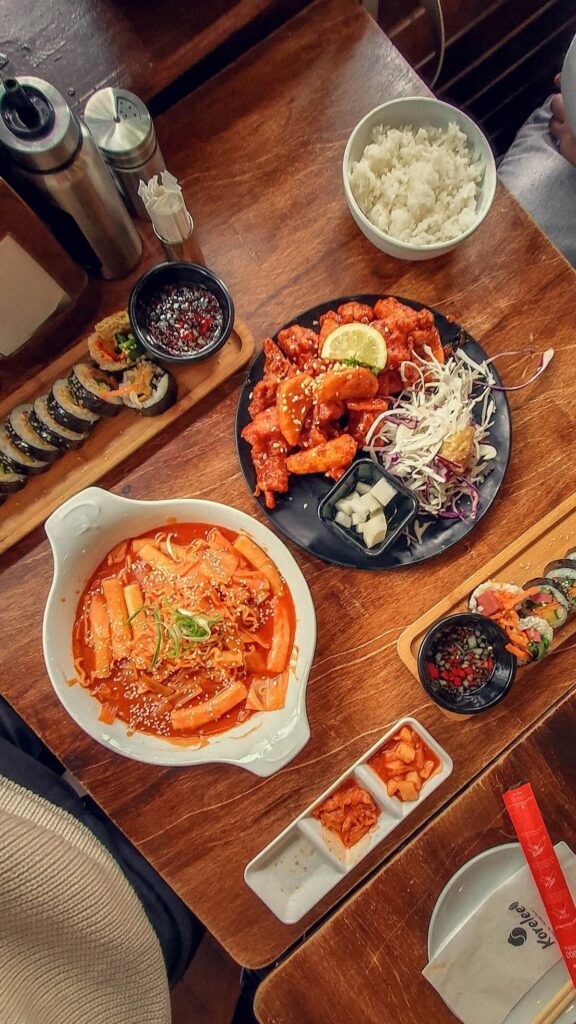
Don’t know what to eat for lunch? Just ask for 점메추!
This highly used abbreviation stands for jeomshim menu chucheon (lunch menu recommendation). It’s the essential modern way to ask friends or coworkers for food suggestions when you’re indecisive or tired of the same options. It’s incredibly fast to type, making it perfect for DMs and group chats every day.
Example: “점메추 콜! I’m starving, what’s good?”
93. 저메추 (jeo-me-chu) – dinner menu recommendation
But what about if you need to figure out dinner plans after a long day? 저메추 is your savior!
This highly practical abbreviation stands for jeonyeok menu chucheon (dinner menu recommendation). Like 점메추 (jeom-me-chu), it’s a modern way to poll friends or your chat group for quick food suggestions when evening fatigue hits. Example: “It’s time to toe-geun! Send me a 저메추 ASAP.”
94. 만렙 (man-lep) – expert at something

Time to level up your compliments! 만렙 (man-lep) is pure gaming slang, literally meaning “max level.” It’s used to describe someone who is a master, or “expert at something,” far beyond the average skill level.
You can use it to praise anyone who has totally dominated a specific field, from a difficult hobby to a specific task at work. Example: “Her Korean speaking skills are 만렙!”
95. 쪼렙 (jjo-lep) – noob/beginner
If 만렙 means maximum level, then 쪼렙 (jjo-lep) is the humble opposite!
Short for jjo-dal-li-da level (struggling level), this term is pure gaming slang that means “low level” and is used to describe a beginner or “noob” at something. It’s used casually to describe yourself or a friend who is just starting out or lacks skill in a specific activity.
Example: “I’m totally 쪼렙 at cooking,” or “Don’t worry, we all start as 쪼렙.”
96. 손절 (son-jeol) – cutting someone off
Need a clean break? 손절 (son-jeol) literally means “cutting one’s hand off,” but metaphorically, it means abruptly ending a relationship, friendship, or even an investment.
Originating from stock market terms for “cut loss,” it’s now widely used in daily life to describe cutting someone off who is draining your energy or time. Example: “After he lied again, I decided to son-jeol.”
97. 뇌피셜 (noe-pi-syeol) – your own unfounded theory/opinion

Ever heard a ridiculous theory that only exists in one person’s head? 뇌피셜 (noe-pi-syeol) is a clever mashup of noe (뇌, brain) and official (오피셜), meaning “brain official.”
This is used to call out an unfounded theory or highly biased opinion that lacks concrete evidence. It’s the perfect term to jokingly dismiss someone’s wild speculation or conspiracy theory among friends. For instance, “Where did you hear that rumor? That’s just 뇌피셜.”
98. 팩폭 (paek-pok) – dropping a hard truth
When someone delivers an uncomfortable, undeniable reality, they’ve dropped a 팩폭 (paek-pok). This slang is a powerful abbreviation of paek-teu pok-haeng (fact violence) and means “truth bomb.”
It’s used to describe a sharp, fact-based observation that hits hard because it’s absolutely true. Use it when someone needs a reality check, delivered casually among friends. Example: “You spent all your money on snacks? That’s a 팩폭.”
99. 비번 (bi-beon) – password
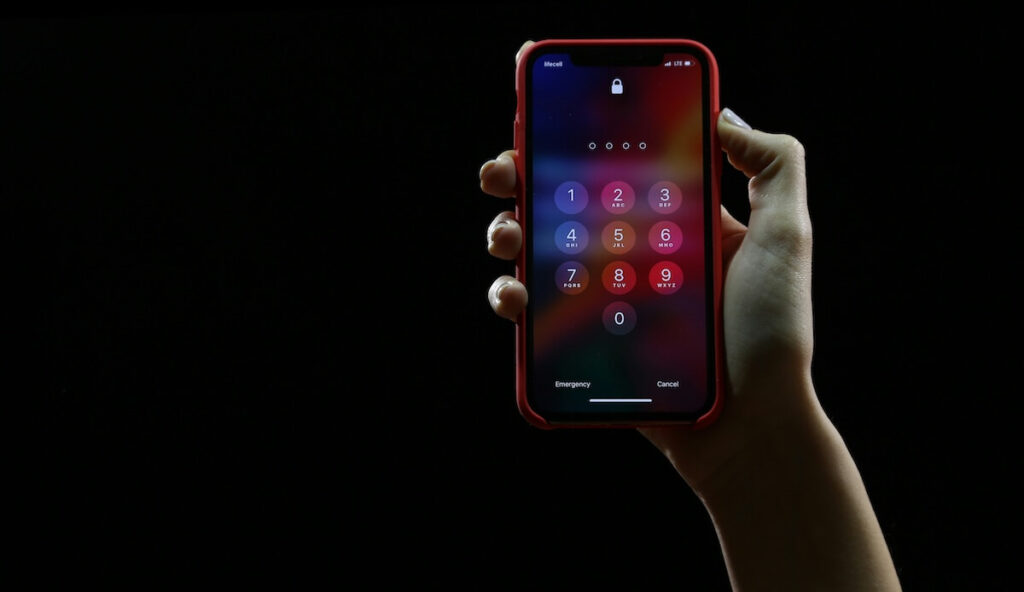
Need to quickly ask for login details? 비번 (bi-beon) is the essential shorthand for “password.” It’s an abbreviation of bimil beonho (비밀번호), which literally means “secret number.”
Because asking for a password is so common online, this two-syllable slang has become the standard in daily text exchanges, whether you’re trying to log into a shared streaming service or connect to a friend’s Wi-Fi, as in “What’s the Wi-Fi 비번?”
100. 폼 미쳤다 (pom mi-chyeot-da) – “Form is crazy”

Want to praise someone who is absolutely dominating? 폼 미쳤다 (pom mi-chyeot-da) literally means “form is crazy,” but it’s used to declare that someone is performing or looking incredibly good right now.
The slang, which is popular in sports and gaming, is now widely used to describe anyone who is at the peak of their game—whether in looks, skill, or performance. For example: “Did you see that dance performance? 폼 미쳤다!”
Conclusion
And that’s a wrap—you now know 100 essential Korean slang terms!
Remember, most of this vocabulary is banmal (informal), so save it for friends or people your age. To start, pick three favorites to drop into your next conversation or text message.
Bookmark this article for easy reference, and check out our full list of Korean learning resources to keep your fluency up-to-date!