
So, you’ve somehow persuaded Swedes to start speaking Swedish instead of English with you (congrats!). Of course, you’ve already passed a few hurdles. Fart means speed, puss means kiss and bra means good.
But just as you started celebrating and ordering your kanelbullar like an undercover spy, someone told you there was no cow on the ice. Or maybe you’ve realized how literal and onomatopoeic Swedish can be.

Rest assured, the humor doesn’t end with the basics. Funny Swedish phrases, words and sayings are absolutely everywhere. Let’s take a look at 20 of them!
1. Pappaledig

Translation: Dad-free
Let’s kick the list off with a funny Swedish word: pappaledig. When someone is “dad-free”, it means a father is taking paternity leave, thus making him: dad-free!
This word came about in the 1970s when paternity leave was introduced in Sweden and it’s been a staple word ever since.
Example:
– Ska Håkan jobba idag?
– Nej, han är pappaledig!
– Is Håkan coming to work today?
– No, he’s on paternity leave!
2. Ingen ko på isen

Translation: No cow on the ice
This one of the most quirky and funny Swedish sayings but all it basically means is “no rush” or “no worries”. It’s hundreds of years old and is actually a shortened version of a longer phrase: “ingen ko på isen så länge rumpan är i land” (No cow on the ice as long as its butt is on land).
In old times, cows would wander over frozen bodies of water by mistake. If the ice underneath melted or cracked, then the cow would get stuck or even drown. But if half of the cow is on land, you can usually persuade it to come back. Hence, no worries!
Example:
– Jag har glömt min plånbok!
– Ingen ko på isen, jag kan betala.
– I’ve forgotten my wallet!
– No worries, I’ll pay.
3. Suga på ramarna

Translation: Suck on the frames
This baffling but funny Swedish saying has nothing to do with dismounting paintings or snacking on eyeglasses. Its real meaning indicates that someone is poor or has limited resources. The origin of this expression is actually pretty adorable, though.
In 1748, the renowned Swedish botanist and naturalist Carl von Linné wrote: “The bear, when in hibernation, has no other source of food other than to suck on its frames”. By frames, Linné meant paws – people believed bears survived hibernation by sucking on their paws!
Example:
– Studenter suger på ramarna innan studielånen kommer på kontot.
– Students are dirt poor before student loans are paid out.
4. Ana ugglor i mossen

Translation: To suspect owls in the moss
Quite what is suspicious about owls in moss is anybody’s guess, but “att ana ugglor i mossen” is the Swedish equivalent of “smelling a rat” in English. Basically, something seems off or suspicious.
The phrase comes from Denmark and can be dated to the 1600s, although in Denmark it was “ulver” or “wolves” that were suspicious. And that makes way more sense, in my opinion.
Example:
– Han klär sig annorlunda och luktar bättre nuförtiden.
– Anar du ugglor i mossen?
– He dresses better and smells better these days.
– Are you suspicious?
5. Ge tillbaka för gammal ost

Translation: To give back for old cheese
Did a colleague do you dirty? Well, you can give them back for old cheese.
This funny Swedish phrase basically means to get revenge, and whilst it’s hard to take it seriously, remember that, in this case, “old cheese” means beware!
Example:
– Du stal min godispåse!
– Jag gav tillbaka för gammal ost.
– You stole my bag of candy!
– It’s my revenge!
6. Elda för kråkorna

Translation: To heat for the crows
Ah, my dad’s favorite phrase! If you’re “heating for crows” in Sweden, you’re wasting resources.
This phrase is typically used during the winter time, when leaving the front door open and letting all the warmth escape is a silly, silly thing to do. Or if you’re just doing something pointless.
Example:
– Kom in och stäng dörren annars eldar vi för kråkorna.
– Come in and shut the door, otherwise we’re letting the heat escape!
7. Lägga lök på laxen
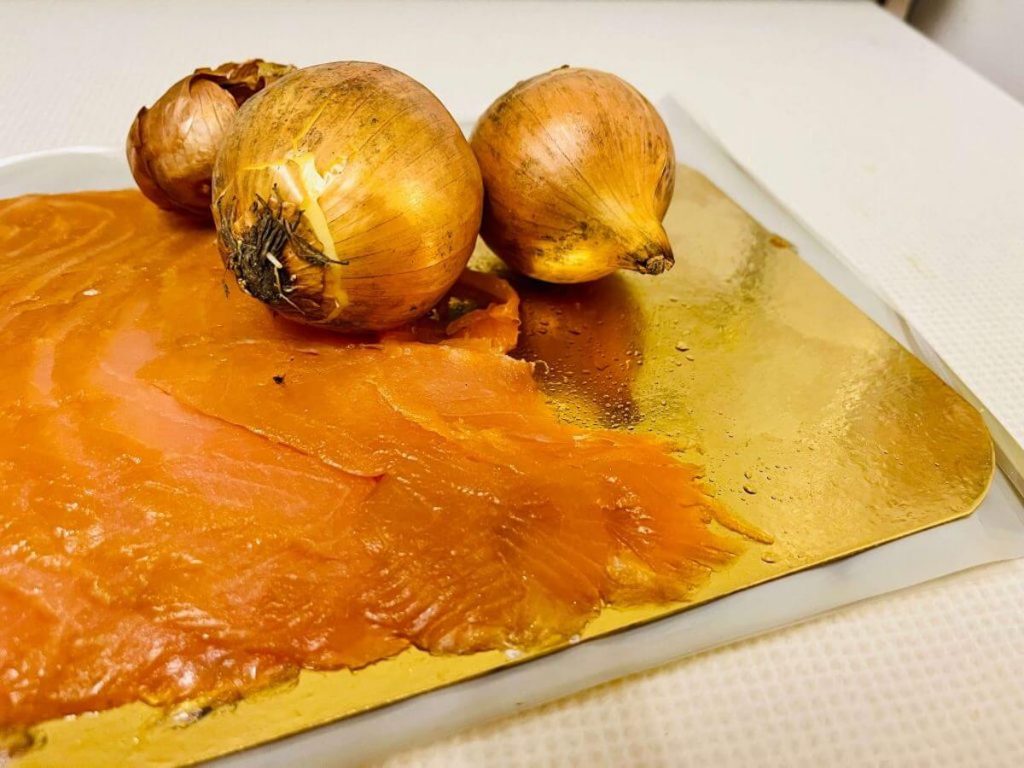
Translation: To put onion on salmon
Swedes, like many other nations, like to use food to describe things. This funny Swedish phrase basically means “to make a bad situation worse”.
It’s been in circulation since the mid 1500s and is super handy if you’re telling someone a bad story. Because what could be worse than putting onion on salmon, am I right?
Bonus fact: “lök på laxen” is the negative equivalent of “grädde på moset” (cream on the mash). Putting cream on mash makes it taste better, but onion on salmon, we can all agree, is gross.
Example:
– Jag missade bussen och som lök på laxen var alla tåg inställda!
– I missed the bus and to make matters worse all the trains were canceled!
8. Tidens tand

Translation: Time’s tooth
Tidens tand is a funny Swedish phrase which is almost untranslatable. Simplified, tidens tand is a metaphor that shows how time, like teeth, degrades and breaks down.
But it’s more than that. It’s that feeling you get, as you get older, that reminds you that things change and not always for the better.
Example:
– Förr i tiden jobbade ingen gratis. Det fanns inga obetalda praktikplatser.
– Det är tidens tand.
– Back in my day, nobody worked for free. There weren’t any unpaid internships.
– That’s how it is, these days.
9. Att ha en räv bakom örat

Translation: To have a fox behind your ear
As in many cultures, foxes get a raw deal in Swedish. Having a fox behind your ear is an abstract way of telling someone they are sly or likely to pull one over on you.
Nobody’s quite sure how old this phrase is, but it has changed over time. The fox part is fairly new, but having “something” behind your ear in Swedish has been around for hundreds of years. Back along, having big or unconventional ears was a physical manifestation of having a sly personality!
Example:
– Min lärare sa att jag hade en räv bakom örat!
– Ja, men det är för att du fuskar jämt på dina prov.
– My teacher said I had a fox behind my ear!
– Yes, but that’s because you always cheat on your tests!
10. Fan och hans moster

Translation: The devil and his aunt
Did someone really just say that the devil and his aunt were at the supermarket? Yes, and what they mean is: everyone was there.
Similar to the English expression “every man and his dog”, the devil and his aunt is a funny Swedish phrase that means somewhere was packed full of people.
Example:
– Var det mycket folk på stan?
– Fan och hans moster var där.
– Were there lots of people in town?
– It was packed!
11. Få sina fiskar varma

Translation: Get your fish warm
Another food related idiom, if a Swede tells you you’re going to get your fish warm, you’re in for some bad news.
This expression means that someone is about to get their comeuppance or a telling off. In the Swedish etymological dictionary, it dates back to the 1600s.
Example:
– Nu ska du få dina fiskar varma!
– You’re about to find out what’s what!
12. Klockrent

Translation: Bell-clean
Klockrent or klockren is one of those funny Swedish words that just doesn’t make any sense to English speaking ears. A joke can be bell-clean, but so can a dish, a person – you get the idea.
It’s undergone some changes over the years. Back in the 1930s, klockrent could only be used to describe a sound – to describe a clear, ringing bell (hence, bell-clean).
It caught on and transformed to mean “perfect” or “awesome”. Suddenly, there were “klockren” goals in soccer and “klockrena” comedians. These days, it is synonymous with either “perfect” or “awesome”.
Example:
– Har du smakat på såsen? Den är klockren!
– Have you tasted the sauce? It’s perfect!
13. Pest eller kolera

Translation: Plague or cholera
Granted, this is a pretty dark Swedish phrase. But asking someone if they would prefer plague or cholera is usually used sarcastically or with a heavy dose of irony.
The phrase predates modern conceptions of germ theory, thus people at the time saw no difference between plague and cholera as both were likely to kill you.
These days, it’s often used in reference to two poor choices such as in elections.
Example:
– Vem ska du rösta på i år?
– Ja, pest eller cholera?
– Who will you vote for this year?
– Yeah, plague or cholera?
14. På kanelen

Translation: On the cinnamon
If you’re “on the cinnamon” in Swedish then you’re unlikely to be baking. This funny Swedish phrase is just one of many to mean “drunk” and its exact origin isn’t easily traced.
However, some people reckon that homemade vodka used to be flavored with cinnamon to make the taste more bearable, and that might be where the phrase originates.
Example:
– Är han på kanelen? Han bad om ursäkt till postlådan när han gick in i den!
– Is he drunk? He said sorry to the post box when he walked into it!
15. Summan av kardemumman
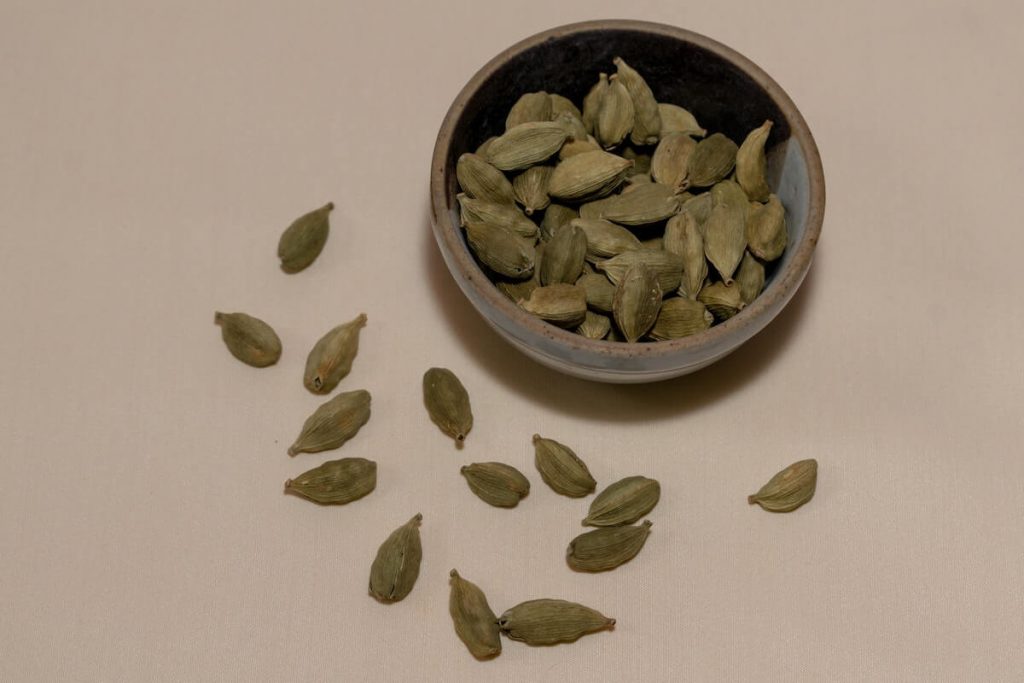
Translation: The sum of the cardamom
Another spice-related funny Swedish phrase, the “sum of the cardamom” is a common way to sum up a story. It’s got nothing to do with cardamom, but it rhymes and rolls off the tongue nicely. Try it!
Example:
– Summan av kardemumman är att det var inte gubben men gumman!
– The sum of the cardamom is that it wasn’t the old man but the old lady!
16. Rent mjöl i påsen

Translation: Clean flour in the bag
If you have “clean flour in the bag” in Swedish, it means you have nothing to hide.
Presumably, someone had dirty flour once and they were guilty. Or something. Either way, clean flour = cleared of all charges!
Example:
– Nej, jag har rent mjöl i påsen!
– No, I have nothing to hide!
17. Godissugen

Translation: Candy-craving
This funny Swedish word has its place as one of my all-time favorites. It’s a compound noun, and you can add “sugen” to mean that you’re craving something to pretty much anything else.
So you could be “badsugen” (craving a swim), “matsugen” (craving food in general), or even “pratsugen” (desiring conversation).
Example:
– Jag är godissugen, ska vi köpa lite choklad?
– Okej, men jag är badsugen så vi gör det efter vi har badat.
– I’m craving candy, can we buy some chocolate?
– Okay, but I really want to go swimming so we’ll do that after we’ve had a swim.
18. Nu blir det andra bullar
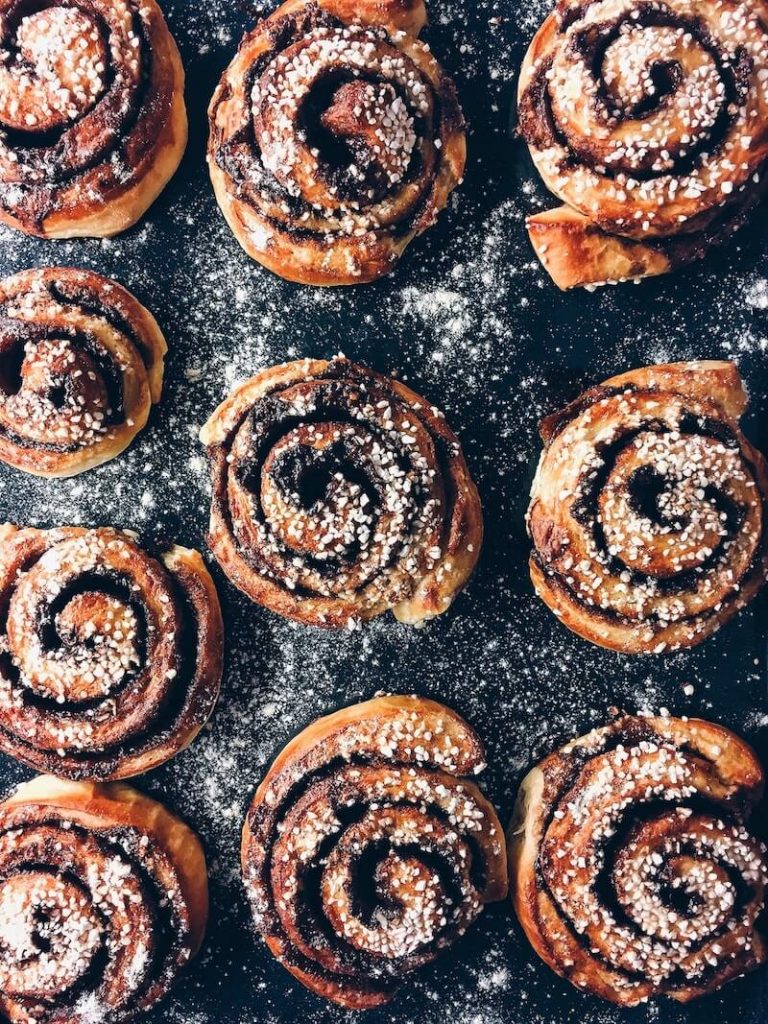
Translation: Now there will be different buns
If you didn’t imagine Fika could be fear-inducing, think again. When a Swede cracks out the “nu blir det andra bullar”, you know you’re in for some changes.
Often said by teachers or parents who want to give kids a reality check or by a particularly cranky boss.
Example:
– Ni har haft det alldeles för lätt, nu blir det andra bullar. Imorgon ska vi studera algebra!
– You’ve had it way too easy, things are going to change around here! Tomorrow we’re studying algebra!
19. Fartdåre

Translation: Speed-idiot
You know when you’re trying to sleep and you hear a car screeching its brakes as it flies off into the distance? Well, that car is being driven by a “fartdåre”.
A fartdåre is someone who has a need for speed and usually annoys the pants off of everyone they meet. I don’t make the rules.
Example:
– Såg du fartdåren som körde förbi oss?
– Ja, det såg ut som han körde sin farmors bil.
– Did you see the speeding idiot who overtook us?
– Yes, it looked like he was driving his grandma’s car.
20. Lägga en pizza

Translation: Lay a pizza
Lastly, a gross but funny Swedish saying. Sorry to finish on this note, but if someone’s laid a pizza, then they’ve puked. There’s no nicer way to say it.
I won’t go into too much detail, but someone who has had a few too many might “lay a pizza” as a result. Apologies again, but I just don’t want you to get your hopes up about getting a pizza when the reality is bleaker!
Example:
– Jag var så full inatt.
– Jag vet, du lade en pizza på trottoaren.
– I was so drunk last night.
– I know, you laid a pizza on the sidewalk.
Bonus funny Swedish words
Sometimes, funny Swedish words don’t need explanation. Before we sum up, feast your eyes on these:
- Skitstövel = Poop-boot (insult)
- Sköldpadda = Shield-toad (tortoise)
- Träskalle = Wood-head (insult)
- Hockeyfrissa = Hockey-hairdo (Mullet, hairstyle)
- Ordbajsare = Word-pooper (Someone who talks nonsense or too much).
Conclusion
So there you have it, 25 funny Swedish words, phrases and sayings that will make you giggle. As you can see, Swedish can be a very expressive language. Sometimes it makes sense, and other times, there’s a cow on the ice far away from land. But the sum of the cardamom is, languages are full of oddities!
We could use a laugh too. What’s your favorite funny Swedish word, phrase or saying? Tell us in the comments below!