
Picture yourself flying to Brazil, Portugal, or any other Portuguese-speaking country for a relaxing vacation. In that case, it’s always a good idea to know a few key phrases to communicate with locals in their language. And what better way to start than learning to say cheers in Portuguese?

Whenever you want to make new friends, express gratitude to your hosts, or simply order a drink at the bar, there are a bunch of words and expressions that can save the day.
No matter if you’re new to Portuguese or just need a refresher, I’ll give you a list of key phrases that translate as “cheers” in Portuguese and will help you break the ice and make a good impression.
Best ways to say cheers in Portuguese
1. Saúde!

If you’ve ever raised your glass with a group of Portuguese speakers, you might have heard someone say saúde! before taking a sip.
And if you’ve ever sneezed in the presence of a Portuguese or Brazilian, you might have heard someone else say saúde! as a response as well. So, what exactly does this word mean?
In Portuguese, saúde means “health.” When used as a drinking toast, it is the equivalent of “cheers” or “to your health”. It’s a way of wishing everyone present good health and a pleasant time while enjoying a drink together.
For example, imagine you’re at a bar with some Portuguese friends, and you want to make a toast before taking a sip of your beer. You could raise your glass and say saúde, pessoal!, which means “Cheers, guys!”
But “saúde” has another meaning in Portuguese. When someone sneezes, it’s common for a Portuguese speaker to say “saúde!” as a way of wishing the sneezer good health and warding off any illnesses that might be lurking around; it’s similar to saying “bless you” in English.
So, whether you’re raising a glass or responding to a sneeze, saúde! is a versatile expression that conveys good wishes and goodwill.
2. Um brinde!

Um brinde! is another way to say cheers in Portuguese. Literally translating to “a toast,” this phrase is commonly used in social settings to acknowledge a moment of celebration, such as raising a glass of beer, wine, or any other drink.
Apart from the basic um brinde! you can also use the expression um brinde a [something or someone] to add a specific subject to the toast. For example, um brinde à vida! means “a toast to life!” and um brinde à nossa amizade! means “a toast to our friendship!”.
Similar to saúde!, um brinde! is often accompanied by eye contact and clinking glasses. Here are a few examples of how to use um brinde! in context:
- Um brinde à nossa equipe, que trabalhou duro por esta vitória! (“A toast to our team, who worked hard for this win!”)
- Um brinde à noite de hoje, que promete ser inesquecível! (“A toast to tonight, which promises to be unforgettable!”)
- Um brinde ao amor e à felicidade! (A toast to love and happiness!)
3. Tchim-Tchim!

The expression tchim-tchim is one of the most common ways to say cheers in Brazilian Portuguese. But where does this curious expression come from?
Well, some people believe that tchim-tchim comes from the sound that glasses make when they clink during a toast.
Others claim that the expression derives from the French word tchin-tchin, which is used in a similar way. Regardless of its origin, tchim-tchim is an easy and fun word to say, which makes it a popular choice for toasting in Portuguese.
If you’re planning to use tchim-tchim to say cheers, keep in mind that it’s a casual and informal expression. It’s perfect for hanging out with friends and family, but if you’re in a more formal situation, you might want to use a different expression.
Also, bear in mind tchim-tchim sounds slightly old-fashioned these days. Young people hardly use it, probably because unlike saúde! it doesn’t really mean anything.
Here are some examples of how you can use “tchim-tchim” in a sentence:
- Vamos beber uma cerveja, tchim-tchim! (“Let’s have a beer, cheers!”)
- Tchim-tchim! Este vinho está uma delícia. (“Cheers! This wine is delicious.”)
- Vou brindar a essa noite maravilhosa. Tchim-tchim! (I’m going to toast to this wonderful night. Cheers!)
4. À tua…! / À sua…! / À nossa…!

À tua!, à sua!, and à nossa! are all variations of the same expression that essentially mean “to yours!” for the first two, and “to ours!” for the last one. These phrases are typically used when making a toast and are among the most popular ways to say cheers in European Portuguese.
Now, it’s not uncommon to add well-wishes after the pronouns. For example, à tua saúde! means “to your health!” and à nossa amizade! translates as “to our friendship!”. It’s a lovely way to express good wishes and strengthen the bonds of friendship or family.
Keep in mind that the use of “à tua!” and similar expressions is typically reserved for informal occasions, such as social gatherings with friends and family.
In more formal settings, you may opt to use saúde! or à sua saúde! instead, which mean “health!” and “to your health!”, respectively.
5. Parabéns!

Parabéns! is a popular expression in Portuguese that is used to congratulate someone. It literally means “congratulations!” and is often used on happy occasions. While it is not typically used as a direct equivalent to “cheers,” it can definitely be used in the same spirit.
For example, if you and your friends are raising a glass to celebrate a special situation, you might say something like Um brinde aos bons momentos! Parabéns! (“A toast to good times! Congratulations!”).
Besides its celebratory use, parabéns is also commonly used to wish someone a happy birthday. Instead of saying “happy birthday,” (i.e. feliz aniversário) Portuguese speakers often say parabéns pelo seu aniversário! (“congratulations on your birthday!”).
So next time you’re in a lively mood with Portuguese-speaking friends, don’t hesitate to raise your glass and shout parabéns! if it’s someone’s birthday or if they’ve just got a new job.
6. Bom apetite!
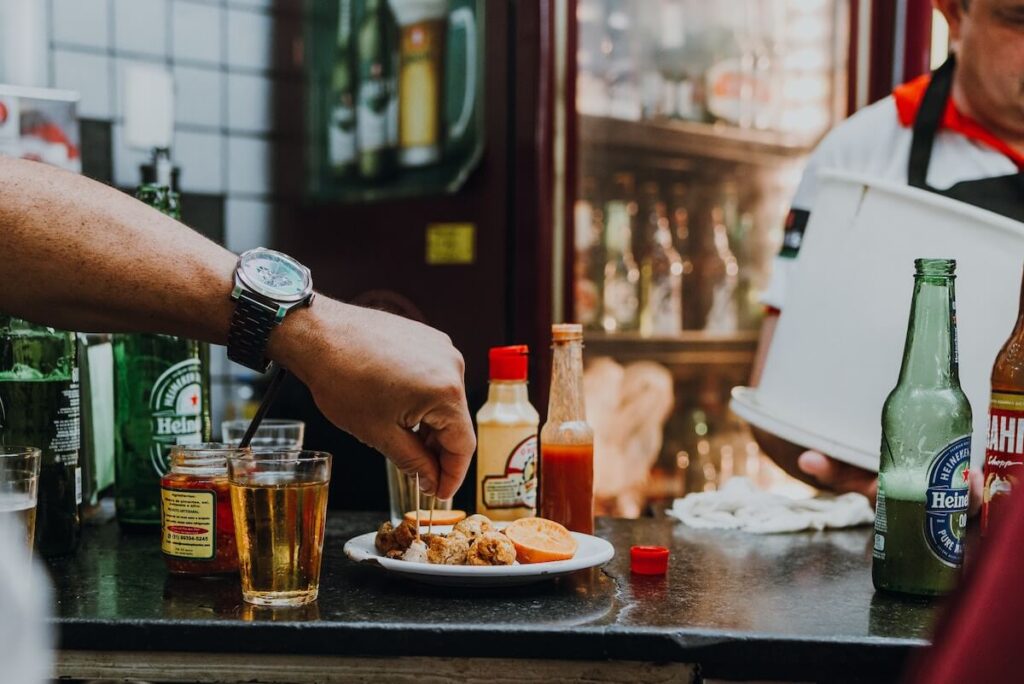
Bom apetite! is a classic expression that you may hear at the start of a meal in Portuguese-speaking countries. It translates to “good appetite!”, and it’s the equivalent of bon appétit! in French or “enjoy your meal!” in English.
You can use bom apetite! to wish someone a good meal, especially if you’re dining with friends or family. It’s common to say it before everyone starts eating, almost as a way of saying “let’s dig in!”. It’s a nice way to express your good wishes to the people you’re sharing a meal with.
Here’s an example: you’re sitting down with some friends to enjoy a big Brazilian feijoada. As everybody takes their seats, one of your friends raises their glass and says saúde!
Then, another friend goes bom apetite, galera!, which means “enjoy your meal, everyone!”. That’s the cue for everyone to start filling their plates and enjoy the food.
It’s worth noting that, in Portugal, it’s more common to say bom proveito! instead of bom apetite. Bom proveito has a similar meaning, yet it’s more commonly used in Portugal.
7. Valeu!

Valeu! is a versatile expression that you’re likely to hear a lot in Brazil — often accompanied by a thumbs up. While it can have a few different meanings, it’s mostly equivalent to saying “cheers” or “thanks.”
The word valeu comes from the verb valer, which means “to be worth” or “to count.” In this case, it’s a colloquial way of saying “thank you” or “I appreciate it.”
For example, imagine you’re at a bar with some Brazilian friends, and someone buys a round of beers for the group. To show your gratitude, you could say valeu! in response.
The great thing about “valeu” is that you can use it to thank someone for a favor, acknowledge a compliment, or even just say goodbye. It’s a sort of all-purpose expression that you’ll find yourself using in many situations.
8. Tudo de bom!

Tudo de bom! is a popular expression in Portuguese that roughly translates to “all the best” or “all the good things.” Though it may not be the first thing that comes to mind when thinking of cheers, it’s a common way to wish someone well during a toast or happy occasion.
It can be used as a way to express good wishes for the future, as a friendly and informal way to say “here’s to hoping everything turns out great!”
In addition to being used in place of saúde!, tudo de bom! can also be used as a general expression of well-wishing. For example, if you’re saying goodbye to a friend, you could say tchau, tudo de bom! i.e. ”goodbye, all the best!”.
Drinking etiquette
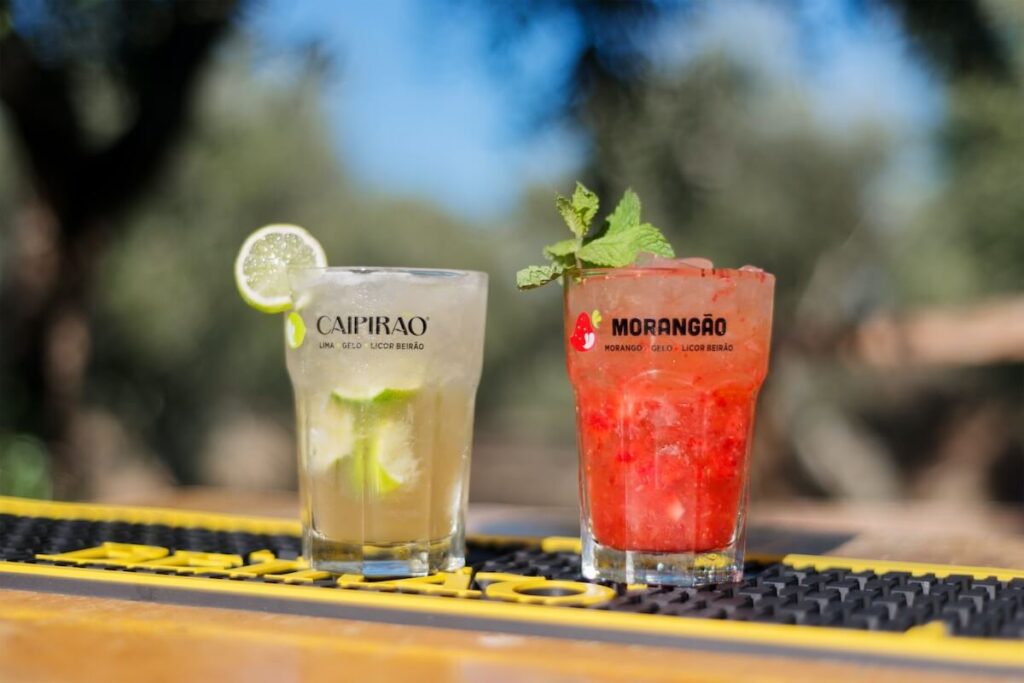
When it comes to drinking etiquette in Brazil and Portugal, there are a few key things to keep in mind. While both countries have their own unique customs and traditions, a few similarities between them are worth noting.
First and foremost, it’s important to know that in both Brazil and Portugal, drinking is often a sort of excuse to enjoy a good time.
For that reason, it’s considered polite to maintain eye contact while clinking glasses and to wait until everyone has been served before taking a sip. The whole thing is less about the actual drinking than about being together!
Also, in both Brazil and Portugal, it’s customary to say saúde! or um brinde! when toasting. This is similar to saying “cheers” in English-speaking countries.
Be sure to order an appetizer, i.e. a petisco, to pair with your drinks. Olives and codfish fritters are the way to go in Portugal. In Brazil, you can’t go wrong with so-called pastéis (deep-fried dumplings) or some good old fries.
Notes on formality

Now, let’s talk about formality when it comes to drinking in Brazil and Portugal. As in many countries, drinking etiquette varies depending on the occasion, the company, and the setting. In general, the more formal the occasion, the more traditional the drinking etiquette will be.
In Brazil, for example, it’s customary to offer a toast to the host before starting to drink. This is often done by shouting saúde! or ao/à… (i.e. “to…”) followed by the host’s name.
In a formal setting, it’s also polite to offer drinks to others before serving yourself. Yet, in a more relaxed setting, it’s common to serve yourself and then offer drinks to others.
In Portugal, drinking etiquette is more formal and follows a set of unwritten rules. On formal occasions, it’s common to wait for the host to raise the first toast.
And if you’re in a formal setting, it’s best to address people by their names or titles (e.g. senhor/senhora or doutor/doutora) instead of either você in Brazil or tu in Portugal, which are both reserved for colloquial interactions.
But remember that regardless of the drinking etiquette, the most important thing is to enjoy yourself. Cheers — or, if you will, saúde!
Final thoughts

You’re now ready to raise a toast, wish luck, or just congratulate your Portuguese-speaking friends like a pro. From the classic saúde! to the colloquial valeu!, you have plenty of options to choose from.
Don’t forget, though, that greetings are just the first step in bonding with someone; understanding the nuances of drinking etiquette can make a big difference.
As you learn Portuguese, you’ll discover even more idiomatic ways to express the feeling of joy, gratitude, and hope that “cheers” embodies so powerfully — just keep practicing with Portuguese learning books, apps, and every sort of resource that suits your learning needs.