*This article may contain affiliate links. For full information, please see the disclaimer here.
So, you’ve decided to learn Latin? Major props to you for choosing one of the oldest languages in the world!
Latin is a dead language — no country or community in the world speaks it as a native language — but it’s still well worth learning, especially if you plan to study Romance languages later on.
Plus, you probably already speak it! So much of the English vocabulary has roots in Latin after all.

When learning a new language (or brushing up on what you’ve learned), an app offers convenience that no other resource does. Babbel is one of the apps that’s often recommended for beginners and seasoned learners alike.
Unfortunately for Babbel fans, there’s no Babbel Latin course. But, as you can glean from this article’s title, there are a few alternatives that can help you master this beautiful, rich language.
Read on to see your best options.
What is Babbel?

First off, what is Babbel and why do so many language learners love it?
Babbel is a subscription-based app that teaches languages through authentic, native speaker-voiced conversations. Its holistic courses help develop your reading, writing, listening, and speaking skills while also building your vocab and grammar knowledge.
Because Babbel uses recordings of native speakers and features a solid speech recognition tool, it’s great for acquiring conversational skills. It helps that the activities are diverse and challenging. Some courses even include games, podcasts, and live classes.
If you’ve tried Babbel for other languages (I have and I loved it), you probably wished it was available for more languages. Currently, the app offers courses in 14 languages. Most Romance languages are on it but Latin, the “mother” of these languages, is not part of the list.
It’s unfortunate but I say, ad meliora. There are many alternatives to Babbel and the internet has a wealth of resources for Latin learners like you and me.
The best Babbel alternatives
Using apps to learn Latin is definitely one of the best ways to get started with this language. Here are the best three:
1. Mondly
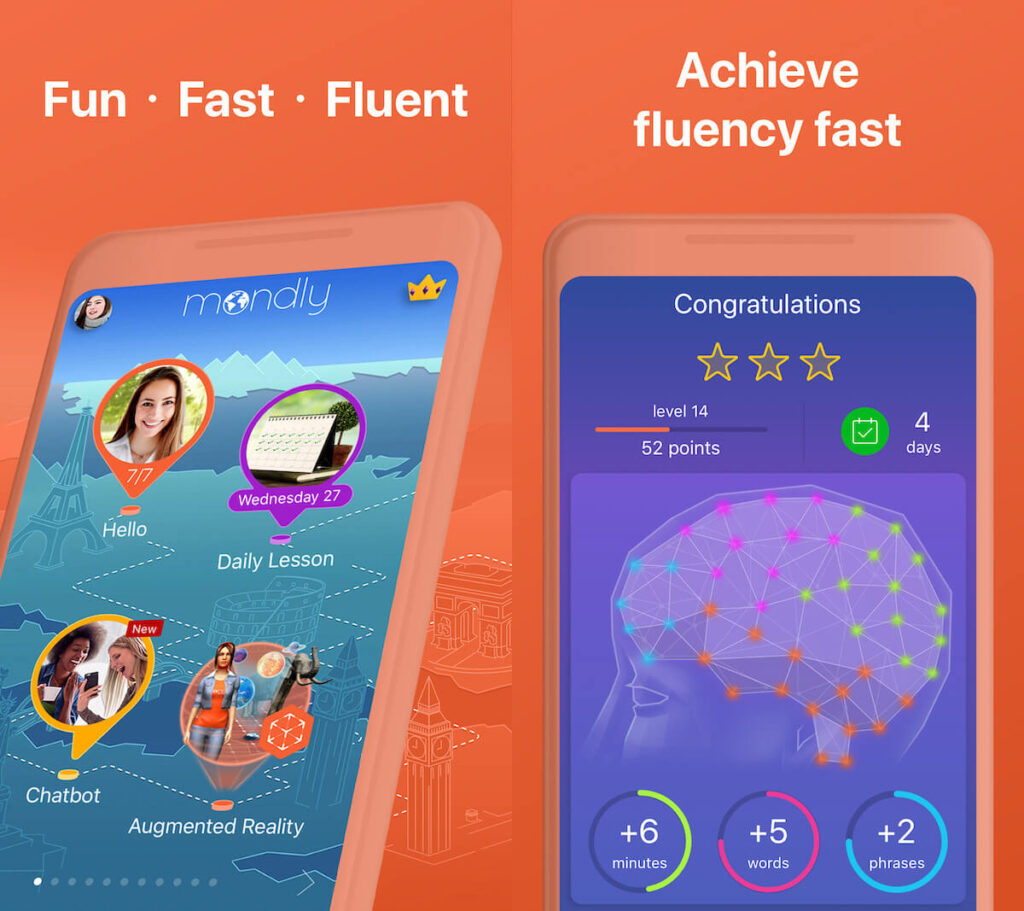
Mondly Latin was a course borne out of popular demand and it’s one of the few apps that gamified Latin lessons.
Like Babbel, Mondly also offers a variety of exercises that trains your core language skills. What I like here is that the lessons are bite-sized (very easy to squeeze into your daily routine) and engaging. Plus, you’re not stuck with the English interface; Mondly lets you learn Latin from any language.
For an authentic experience of Latin, I suggest taking advantage of Mondly’s conversation mode. Here, you can talk to a chatbot and learn new vocabulary while listening to audio recordings of Latin speakers. Not a bad way of learning Latin pronunciations and accents.
Key features:
- Quick and engaging lessons
- Learn Latin vocabulary and grammar through fun exercises
- Ample listening and speaking drills
2. Rosetta Stone
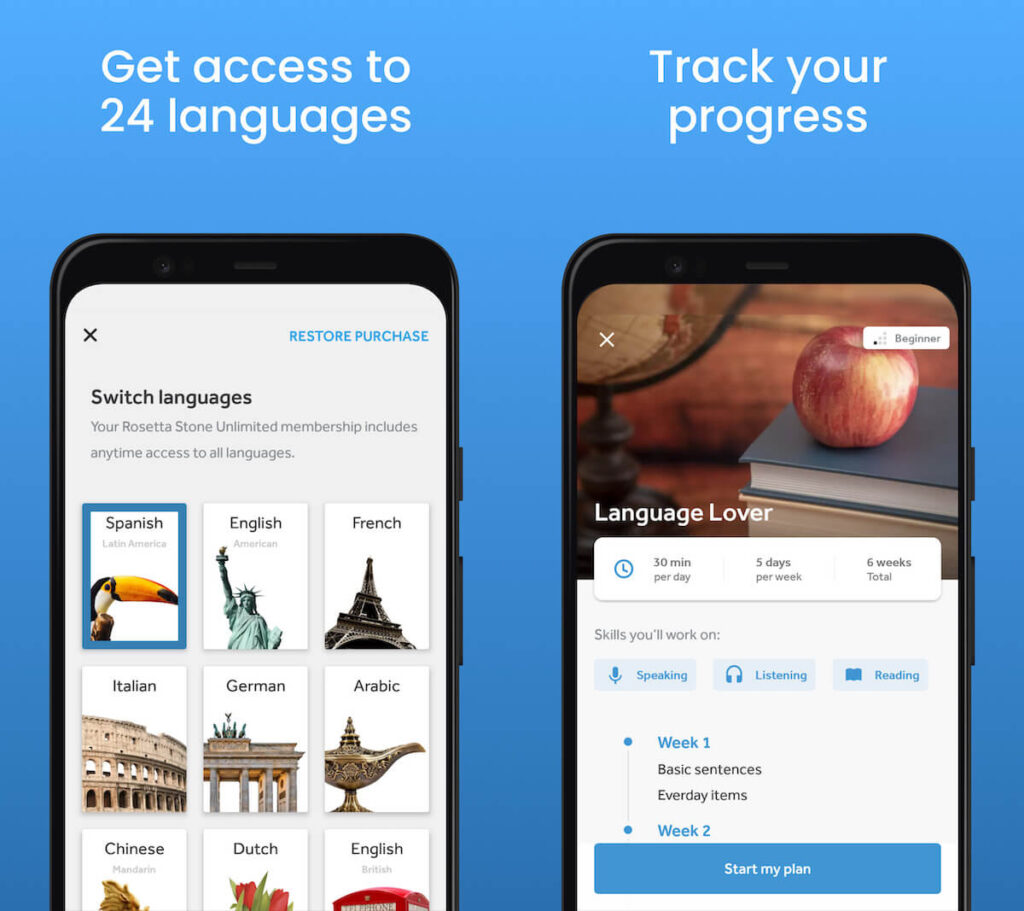
Listening to real Latin speakers is a great way to immerse yourself in the language. But if you want something even more immersive, I recommend the oldie-but-goodie Rosetta Stone.
Rosetta Stone is best known for its learning approach called Dynamic Immersion. In a nutshell, the app teaches you Latin words and phrases through images, text, and audio that are all in Latin. No translations, just context.
It is challenging and I can tell you from experience that it can be very confusing at first. That being said, this is exactly how we learned languages as children, so it does work.
You can also think of it as being in a country where no one speaks your language and you have to learn their language. It’s as immersive as an app can be. The vocabulary used is also relevant and useful for real-life conversations.
Key features:
- A well-established program that covers essential skills
- Focus on immersion and contextual learning
- Short but challenging lessons
3. uTalk
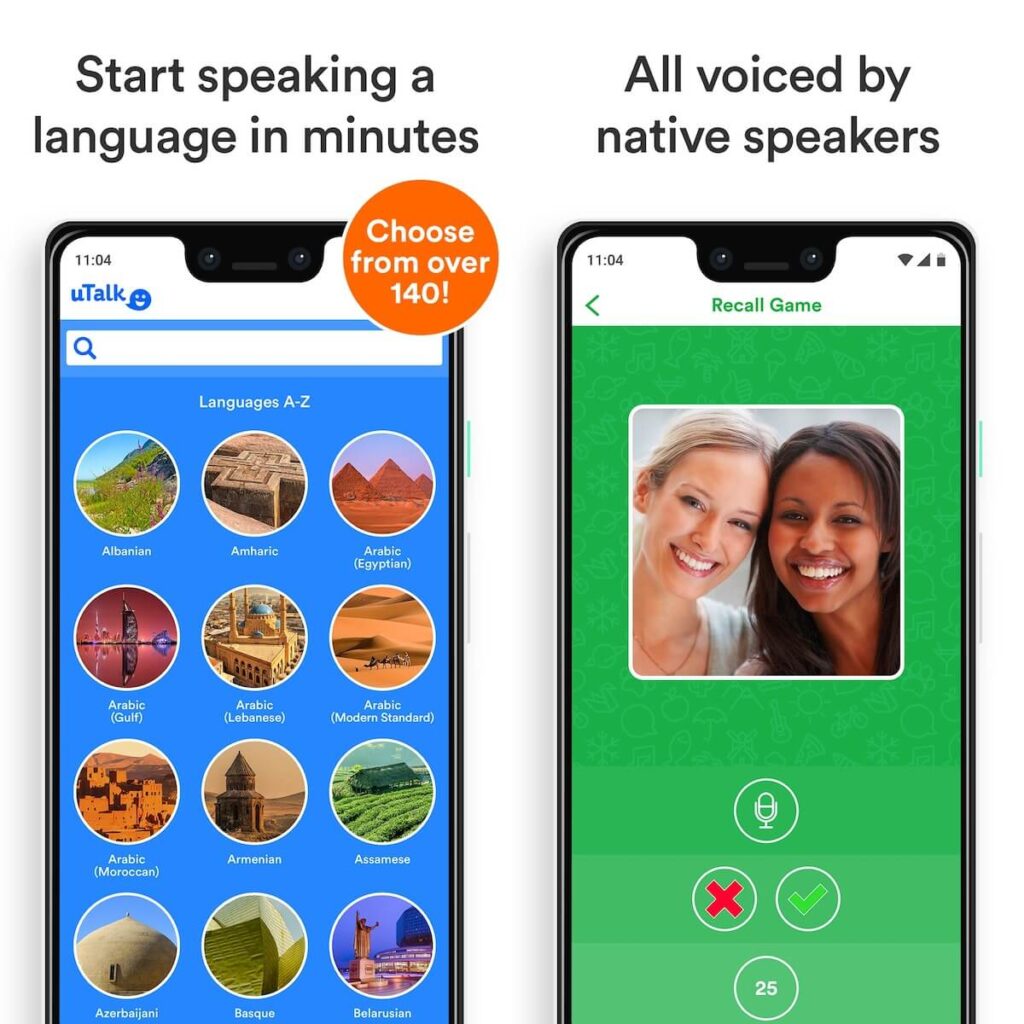
If you want a quick and enjoyable way to boost your Latin vocabulary, uTalk is a solid pick. It’s not interested in complicated grammar drills, but it excels at immersing you in a ton of practical words and phrases.
You get access to over 2,500 words across more than 60 everyday topics—including modern concepts cleverly translated into Latin—all voiced by both male and female experts to give you authentic pronunciation practice.
The whole process is turned into a game, with a variety of engaging, difficulty-graded exercises that help you acquire new terms and even practice your own speaking and listening skills.
Key features:
- Rapidly builds your Latin vocabulary
- Uses engaging, progressively difficult gamified exercises
- Includes a feature to record and compare your pronunciation
Other great resources to learn Latin
While it’s true that Latin is not as popular as other languages, many educational institutions still make it part of their curriculum. A quick scroll through this Latin subreddit will tell you that the language is very much alive and commands interest to this day.
And so, unsurprisingly, there are plenty of resources available for Latin learners. From apps to Latin learning books to YouTube channels, here are the best you can find online.
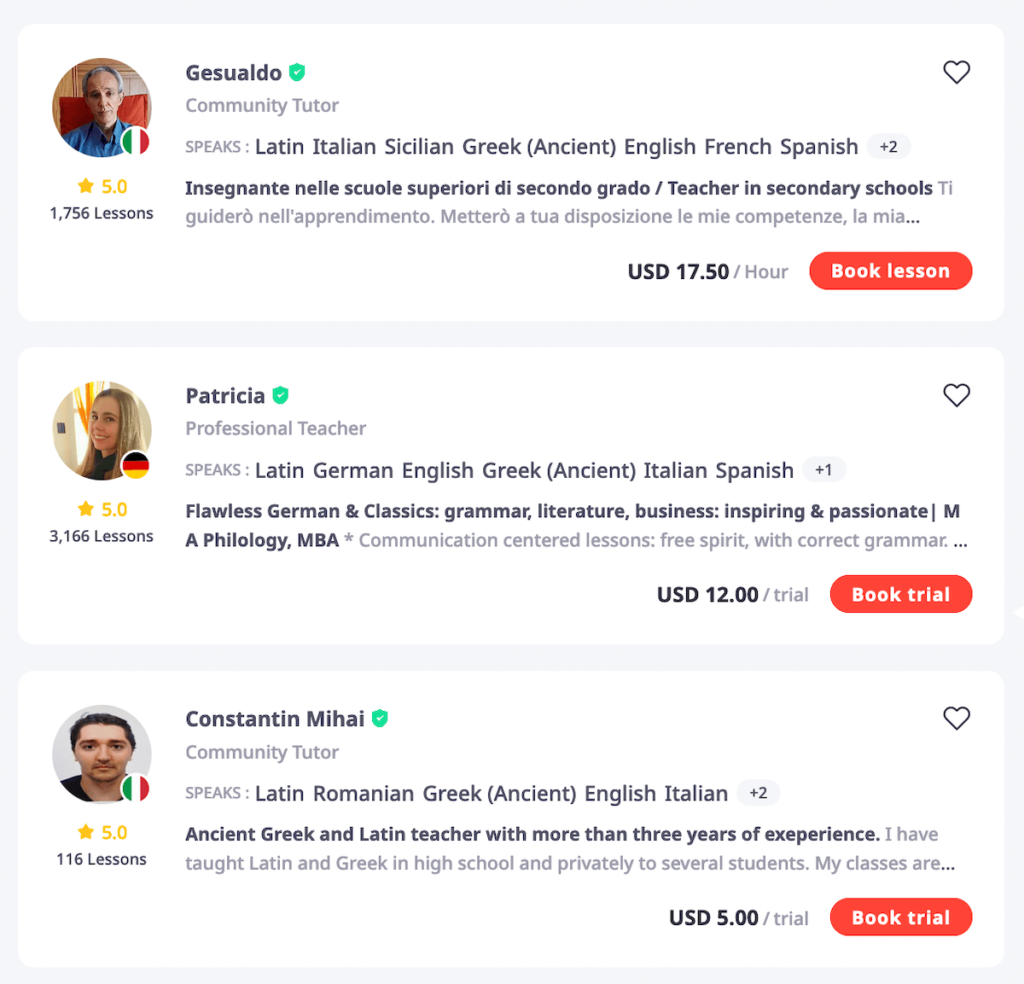
italki: Whatever your reason for taking up Latin, Italki can hook you up with professional teachers and community tutors who’ll guide you in this journey. Browse tutor profiles to find one who meets your requirements and budget, then book a session that fits your schedule. It’s that easy! You can also find tutors on Preply.
Cudoo: Cudoo’s Latin course is available in only one level. While I wouldn’t recommend it for intermediates and advanced learners, it’s a good starter course if you want to learn the essentials. It doesn’t hurt that it comes with a certificate of completion. Check out this comprehensive list of Latin online courses here.
No products found.
Wheelock’s Latin: No list of Latin resources is complete without the mention of this best-selling and comprehensive textbook. This book is a go-to for extensive Latin grammar explanations and readings from ancient Roman writers.
Mango Languages: Want to read and understand original Latin works like Caesar’s Gallic Wars, Phaedrus’ fables, and Cicero’s Pro Archia? Mango helps you do that, all while breaking down vocab and grammar. Plus, it offers heaps of cultural insight for better comprehension.
No products found.
Getting Started with Latin: I love this book by William E. Linney for its simple, clear, and easy-to-follow lessons. Perfect for beginners, it introduces new vocabulary and grammar concepts in a fluid manner. It also comes with pronunciation guides on YouTube.
Udemy: This is a treasure trove for learners who want more structure than a typical app. You’ll find everything from deep-dives into Classical Latin to Roman history courses, all taught by experts through video lessons you can tackle at your own pace.
Duolingo: Duolingo was the first app I used to learn Latin and it’s indeed the quickest way to get started with Latin. The gamified interface makes it super engaging. You’re also motivated to keep amassing new vocabulary, thanks to this app’s incessant reminders.
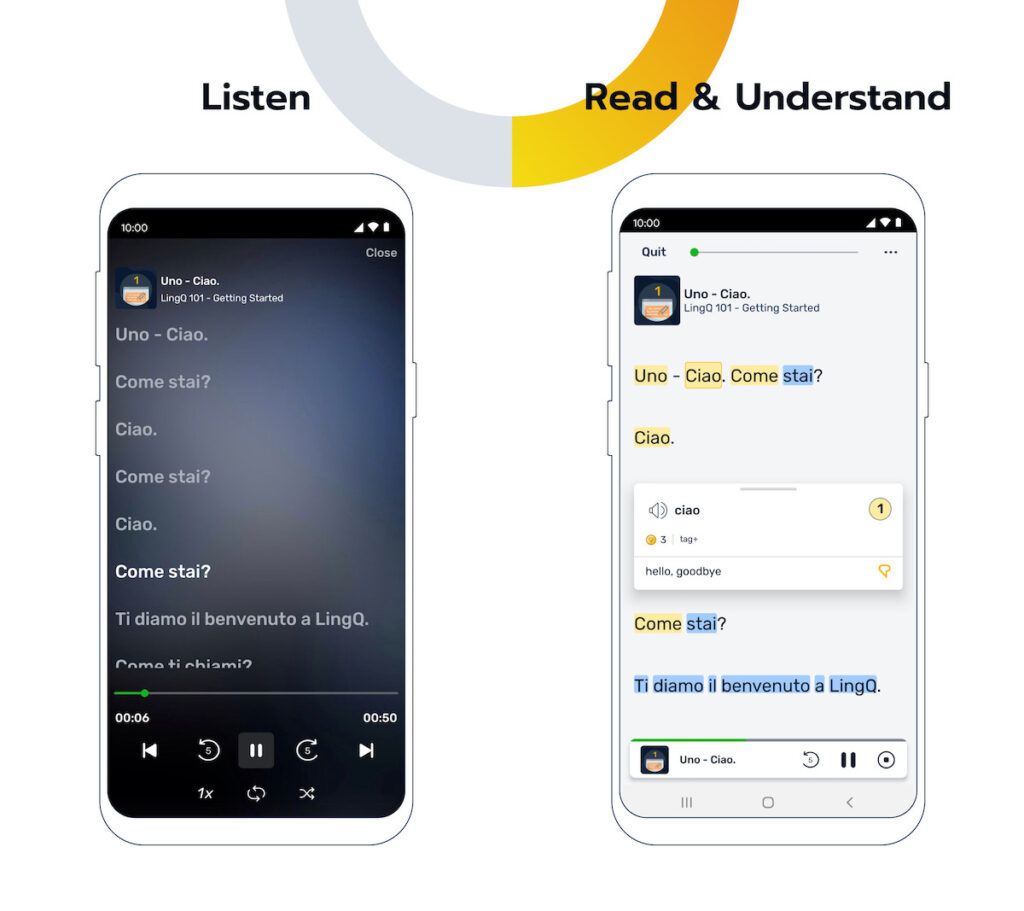
LingQ: If you want to consume as much Latin content as possible, immersing yourself in LingQ’s vast audio library is a must. Learn Latin through a variety of topics (e.g., books, news, science, food) and study the transcripts. This way, you’re learning from content that actually interests you.
The Latin Library: The Holy Grail of Latin books, you’ll find Latin works here from the classical to the modern era. You can also access Latin courses, grammar handouts, a declension exerciser, history courses, and more.
ScorpioMartianus: Luke Amadeus Ranieri has videos about anything and everything under the sun, all in Latin! Imagine listening to “Hooked on a Feeling”, “White Christmas”, or Encanto’s “We Don’t Talk About Bruno” in Latin… well, you don’t have to because this guy had done it! If this doesn’t motivate you to keep learning Latin, I don’t know what will.
Satura Lanx: A Latin podcast for beginners, Satura Lanx takes you through Latin literature, introducing authors and various concepts of the language along the way. The podcast uses beginner-friendly spoken Latin. It’s also on YouTube!
Conclusion
No Latin on Babbel? No problem!
Volenti via est — if there’s a will, there’s a way — and there’s definitely more than one way to Latin proficiency. Armed with the excellent apps and bonus resources above, you can learn Latin and be good at it. Remember to embrace the process and you’ll get there!
Babbel alternatives for learning Latin – Pin it!