*This article may contain affiliate links. For full information, please see the disclaimer here.
I’ve tried just about every language app under the sun, and for a long time, my daily routine was all about hitting those satisfying milestones and maintaining my streaks. Those traditional platforms laid a great foundation, turning the daunting task of learning a new language into something approachable and consistent.
But lately, the experience has evolved into something much more dynamic, more engaging.
Thanks to generative AI, the tools we use have graduated from being helpful study guides to becoming true conversational partners. These AI language learning apps make the process feel alive, offering a level of interaction that was hard to imagine just a few years ago.
AI in language learning involves two types of apps. First, there are the “AI-first” tools built from the ground up on Large Language Models (LLMs) to facilitate free-flowing, open-ended dialogue. Then, there are the “AI-assisted” platforms—the trusted, curriculum-based apps that have integrated AI to make their lessons feel more personal and adaptive than ever.
In this article, I’m diving into 22 of the best apps across both categories, showing how you can use this tech to move beyond the basics and start genuinely communicating.
The future of AI in language learning
The benefits of bringing artificial intelligence into our study routines are hard to ignore. From instant feedback on that tricky rolling “r” to lessons that actually adapt when you’re struggling with the subjunctive mood, AI has turned learning into a tailored experience.
In fact, research shows that adaptive AI systems can improve learning outcomes by as much as 42% compared to traditional methods, simply by personalizing the pace and content for every individual learner.
Of course, the big question is: will bots eventually replace our favorite human teachers? Personally, I don’t think so. While 87% of students now find AI explanations as effective as human ones for structured tasks, the “Hybrid Model” is the ideal formula.

Humans are still the undisputed champions of cultural nuance, emotional support, and “reading the room”—things a Large Language Model can mimic but not truly feel. Therefore, the future isn’t a choice between a bot and a person. It’s a world where AI language learning apps handle the heavy lifting of vocabulary and grammar drills, leaving our time with human tutors for deep, meaningful cultural exchange.
There is also a lot of talk about real-time translation—why learn a language if your earbuds can just do it for you? But for me, it comes down to “brain training.” Relying on a device might get you a coffee in a foreign city, but it doesn’t give you the cognitive benefits or the personal connection that comes from actually knowing the words. Learning a language is one of the best ways to keep your brain sharp and empathetic.
So, while the tech is getting incredibly smart, the goal remains the same: human connection.
Ready to see which tools are leading this new era in language learning? Read on.
Top AI-enhanced apps
These are the heavy hitters we’ve all had on our phones for years. But don’t let their familiar faces fool you—these established AI language learning apps have recently integrated powerful artificial intelligence to make your daily practice feel way more personalized and interactive.
1. Babbel
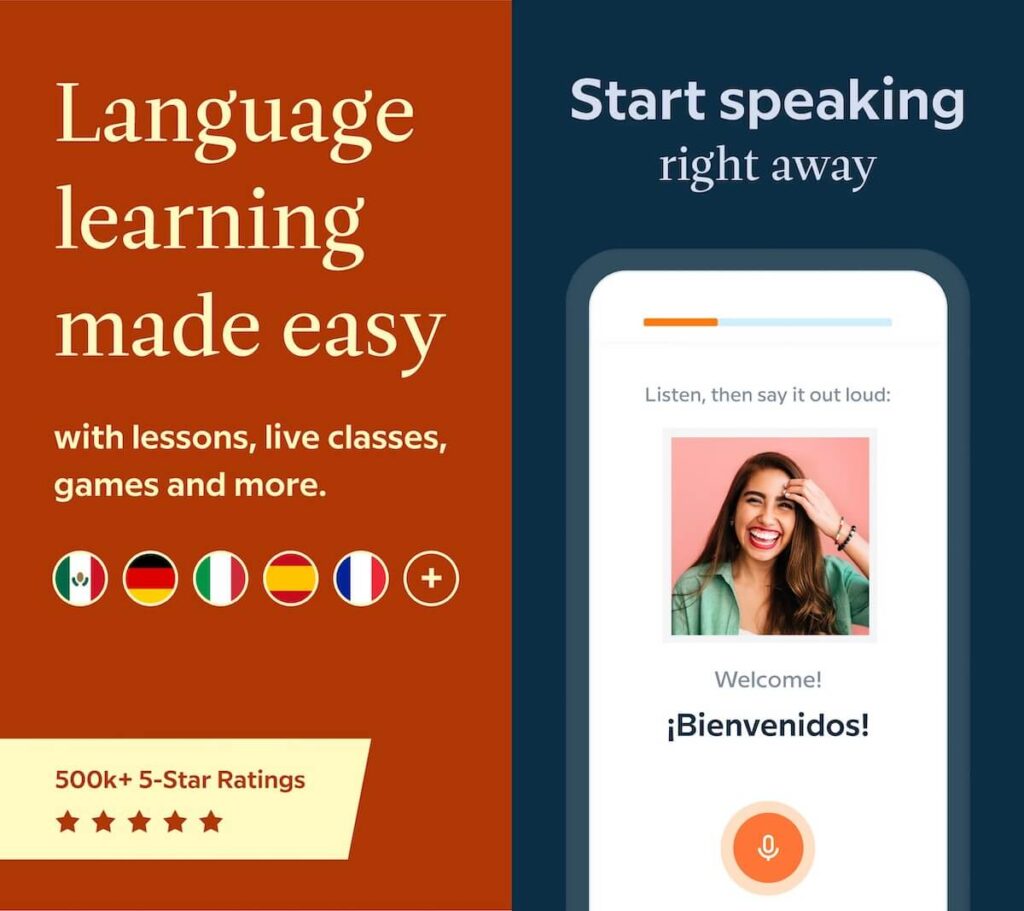
Long known as the “grown-up” of the language app world, Babbel focuses on practical, real-life conversation rather than matching pictures of apples to the word manzana. Its curriculum, centered on holistic 10-to-15-minute lessons, is built by over 200 linguists who ensure you’re learning phrases you’ll actually use at a dinner party or a train station.
While it’s always been a powerhouse for structured learning, Babbel has recently supercharged its system with artificial intelligence. The standout update is “Babbel Speak,” an AI-powered conversation partner that lets you practice free-form dialogue in a judgment-free zone.
The app also uses smart speech recognition to fine-tune your pronunciation and an adaptive review system that monitors your progress, ensuring you only revisit words when your brain actually needs the refresher. By blending its expert-authored lessons with reactive AI, this AI language learning app provides both structure and practice.
What I love about Babbel:
- Babbel Speak feature that simulates real-life conversations
- Smart speech recognition
- Comprehensive coverage of core skills
Pricing: Starts from $8.95/month on the annual plan. Find the latest Babbel sale here!
Devices: iOS, Android
2. Busuu
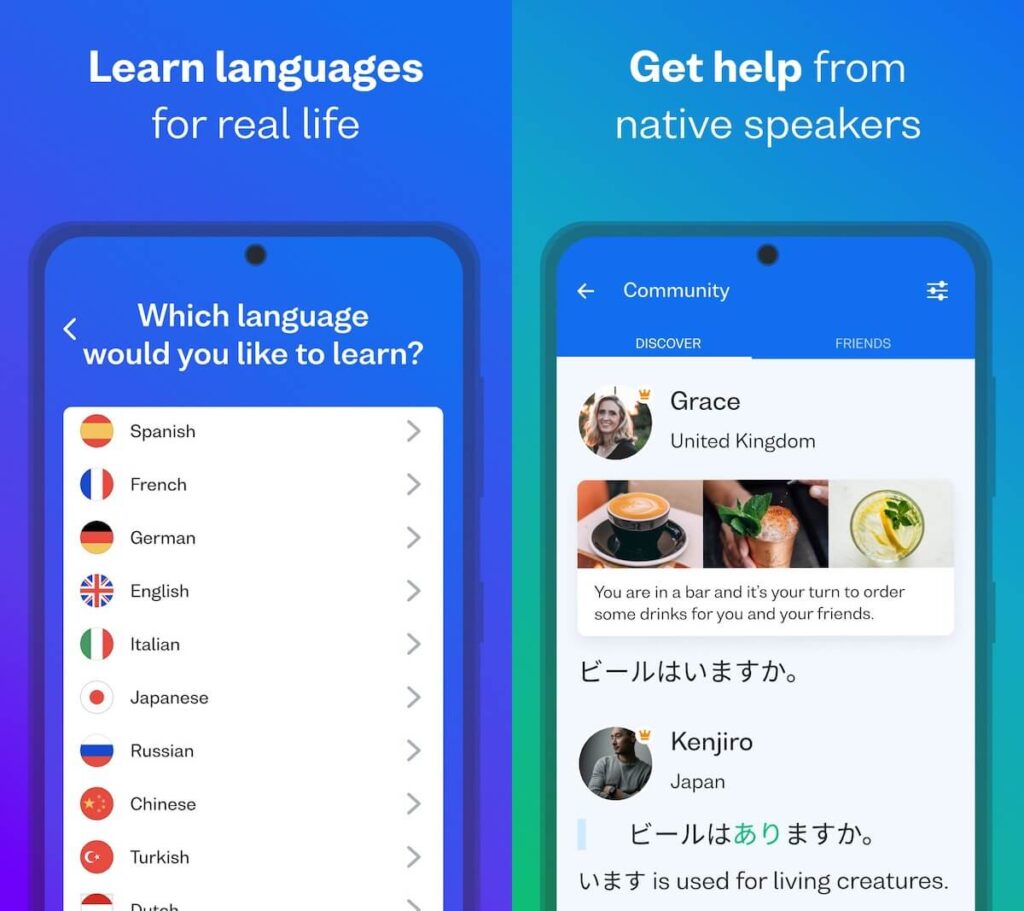
If Babbel is the “grown-up” of language apps, Busuu is the one with the best social life.
It has long been a favorite for its structured, CEFR-aligned courses in 14 languages—including favorites like Spanish, Japanese, and Korean—but its real magic lies in its community of 120 million learners.
Recently, Busuu has leveled up by adding “Conversations” to its toolkit. This AI-powered feature lets you practice two-way, open-ended dialogues in a fun, non-intimidating space. Your AI-powered speaking partner listens and responds to you in real-time, then provides a detailed breakdown of your performance once the chat ends. How convenient is that?!
What I love about Busuu:
- Interactive AI roleplays that mimic real-life scenarios
- Post-chat feedback and corrections
- AI-powered review of your “weak words”
Pricing: Starts from $12.49/month, but you can save more with Busuu’s annual plan.
Devices: iOS, Android
3. Duolingo
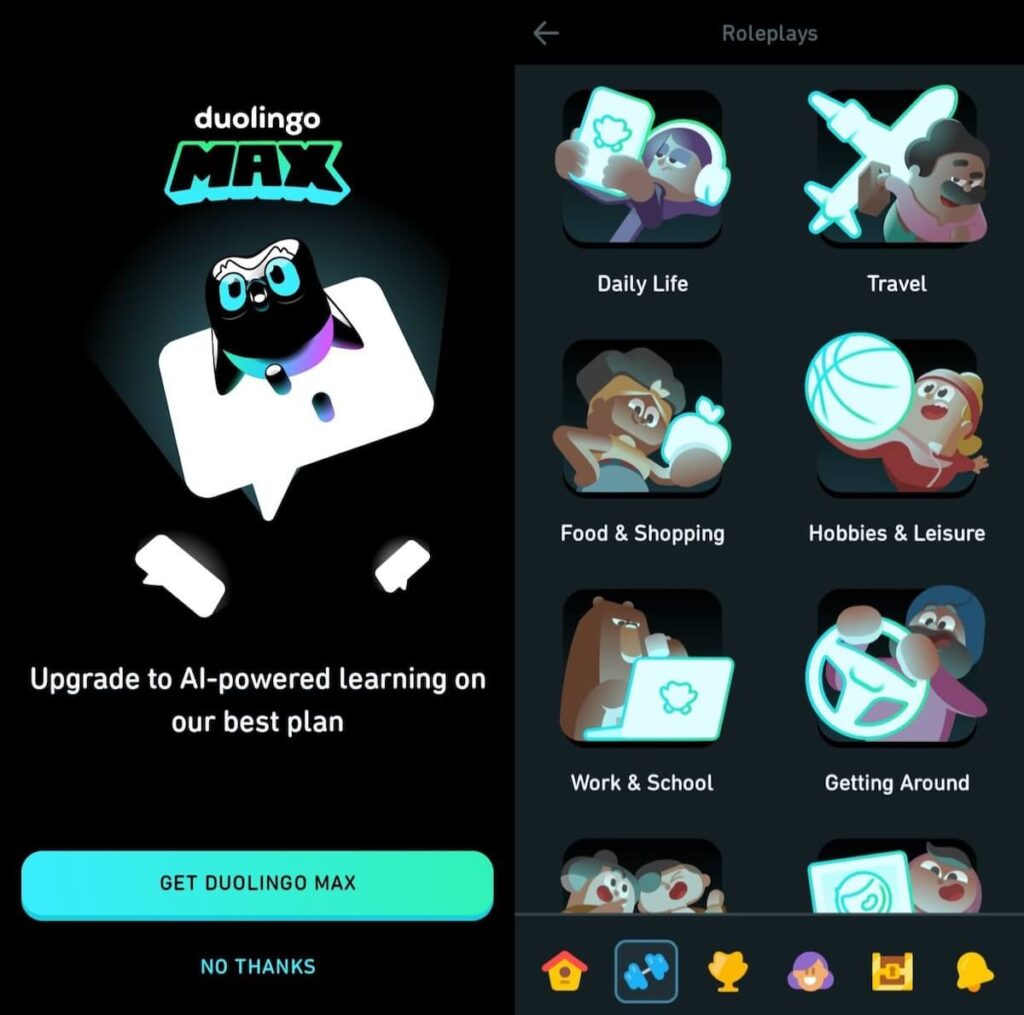
Ah, the green owl. Duolingo remains the world’s most popular way to learn, offering courses in over 40 languages, from Spanish to conlangs, and even math and music.
While the game-like streaks keep you coming back, it’s the artificial intelligence under the hood that really does the heavy lifting. Duolingo’s custom AI model, “Birdbrain,” acts like a personal conductor, analyzing every mistake to adjust lesson difficulty in real-time.
With the premium Duolingo Max tier, this becomes even more interactive, offering features like AI-powered video calls with Lily, detailed explanations for your errors, and adaptive difficulty levels, making it one of the most comprehensive AI language learning apps on the market.
What I love about Duolingo:
- Face-to-face, spontaneous speaking with an AI character (Lily)
- Deep, personalized breakdowns of mistakes
- Comprehensible input and spaced repetition system
Pricing: Duolingo is mostly free, but Duolingo Max costs $30 per month or $168 per year.
Devices: iOS, Android
The conversational “AI tutors”
These are the “AI-first” innovators, built from the ground up around technology meant to boost conversational skills. In this category, the traditional textbook takes a backseat to open-ended dialogue, making your primary feature a dedicated AI bot ready to chat 24/7.
4. Langua
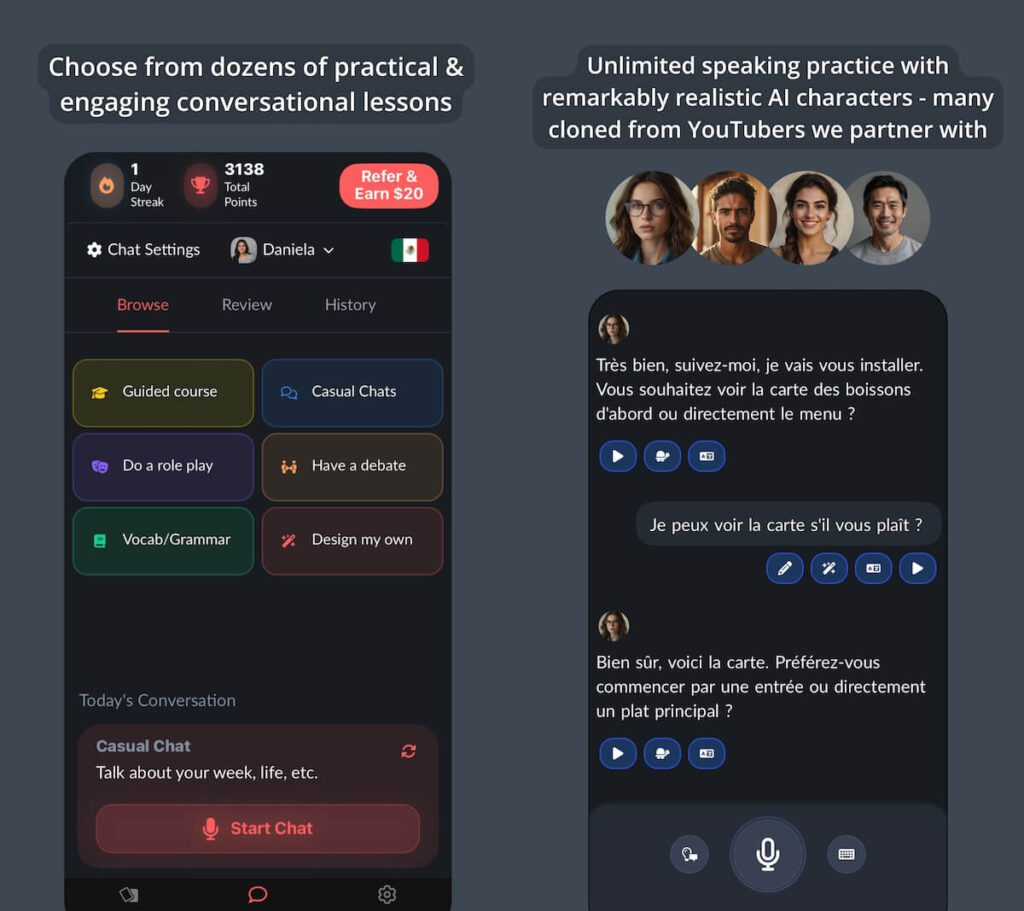
If you’ve ever felt that “frozen” feeling when trying to speak to a local, Langua is basically the antidote.
This AI language learning app is built for the sole purpose of getting you comfortable with speaking. It covers over 20 languages—including Spanish, French, German, Italian, Japanese, and Korean—and uses some of the most human-sounding AI voices I’ve heard. Instead of just picking from multiple-choice boxes, you’re engaged in full, open-ended conversations.
The app also features instant transcriptions and corrections on word choice and grammar. It also allows you to save words into flashcards for longer retention.
What I love about Langua:
- Human-like AI voices, complete with regional accents and dialects
- Instant corrections and explanations
- Hands-free mode that you can use while driving or doing chores
Pricing: Starts from $12.50/month if billed annually. Try Langua for free today!
Devices: iOS, Android
5. LingChat
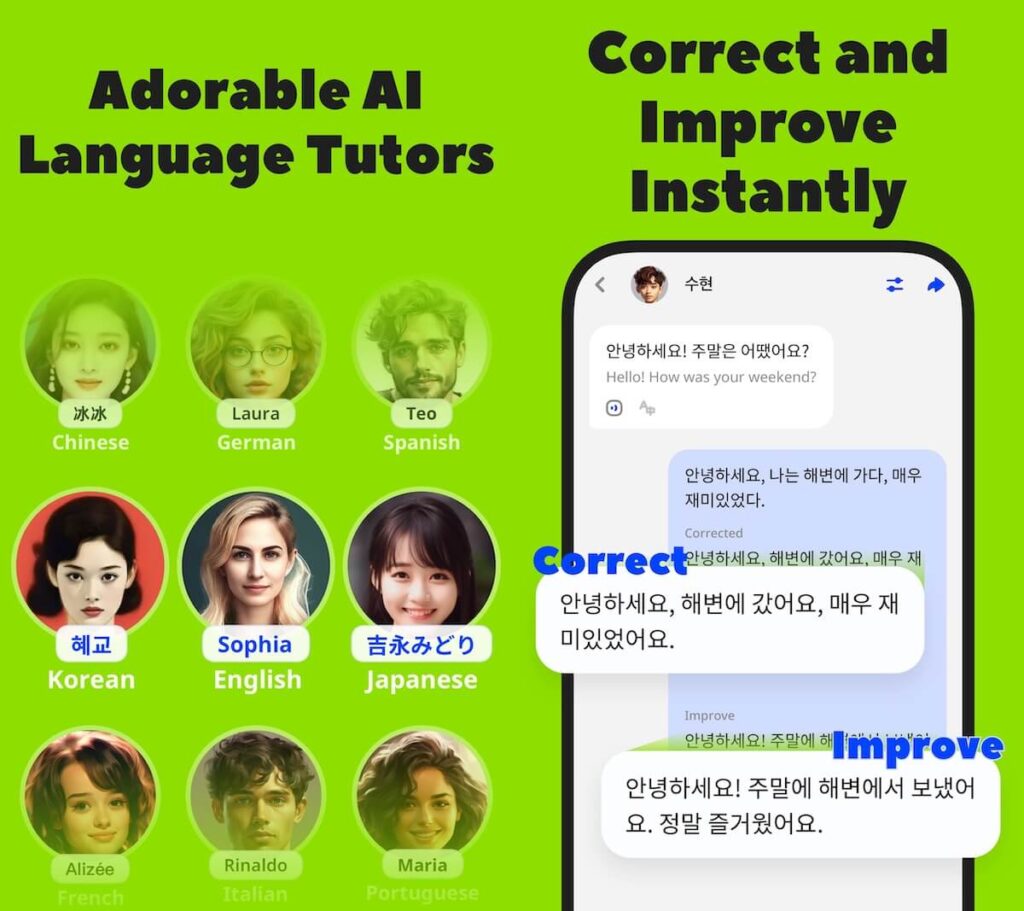
If you’re the type of learner who wants the best of both worlds—cutting-edge tech and a human touch—LingChat is a great middle ground.
Basically, LingChat is an interactive AI language learning app that focuses on breaking the “speaking barrier” by giving you a safe space to practice over 60 languages, including favorites like Japanese, Korean, and French.
What makes it stand out is the flexibility. You can spend your morning chatting with a quirky AI character who never judges your mistakes, and your evening connecting with real people in their global language exchange community. You get those reps in, and you won’t freeze up when it’s time for the real thing.
What I love about LingChat:
- Lots of AI characters you can role-play with
- Real-time grammar help and sentence optimizer
- Translation and word lookup features
Pricing: Starts from $6.99/month. Snatch the LingChat deal here!
Devices: iOS, Android
6. Loora
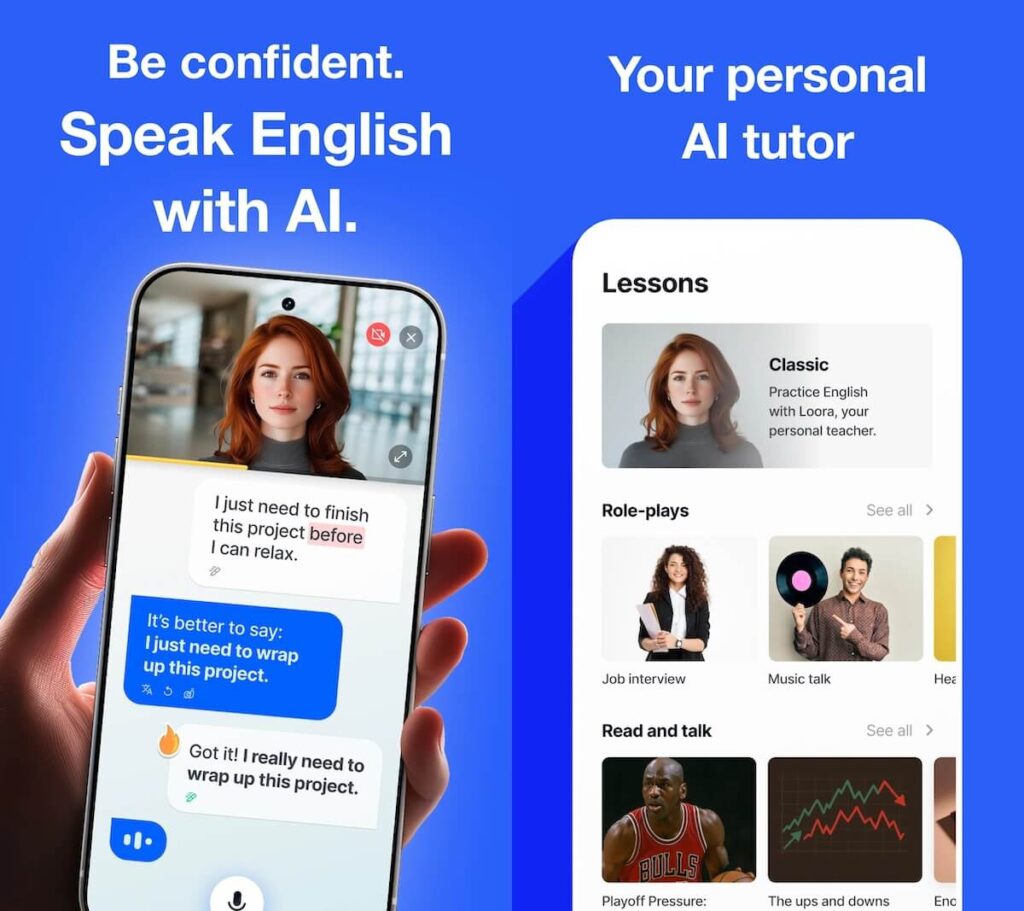
For those serious about moving past “textbook English” and actually sounding like a local, Loora is basically your high-end personal coach.
This appis built specifically for English learners who already have the basics down but want to achieve professional-level fluency. Instead of asking you to match pictures to words, Loora lets you have real, spontaneous voice conversations.
Whether you’re prepping for a high-stakes job interview or just want to chat about a recent news article, Loora’s AI provides instant, nuanced feedback on your grammar, pronunciation, and even your tone, helping you polish your speech until it feels completely natural.
What I love about Loora:
- Helps you learn how native speakers sound
- Real-time and visual feedback on accent and intonation
- Lets you discuss real-world articles to improve your ability to summarize complex ideas
Pricing: Starts from $19.99/month
Devices: iOS, Android
7. Speak
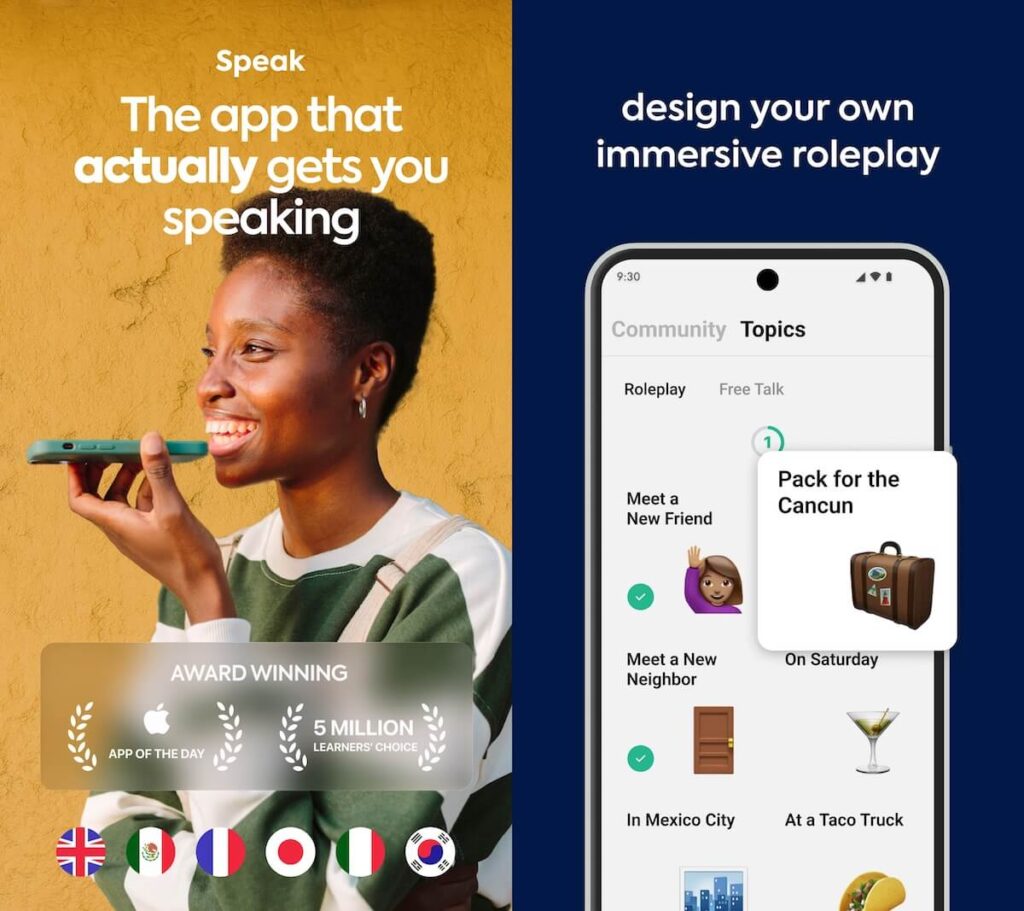
Speak is a breath of fresh air for those who hate the “robotic” feel of older apps. This AI language learning app focuses almost entirely on the mechanics of speaking—speed, rhythm, and flow—rather than just memorizing vocabulary lists.
This app currently offers comprehensive courses for learning English, Spanish, French, Italian, Japanese, and Korean. What makes it a standout is its incredibly low-latency AI, which makes it feel like a real-time call.
The app guides you through video-based lessons where you’re constantly prompted to speak out loud, followed by AI-driven roleplays that push you to use what you’ve learned in spontaneous, unscripted ways.
What I love about Speak:
- High-accuracy analysis (and correction) of your speech
- Hundreds of scenarios to engage in
- Video-integrated, guided practice
Pricing: Starts from $17.99/month
Devices: iOS, Android
8. Univerbal

Univerbal (formerly Quazel) is essentially an open-world adventure for your brain, developed in collaboration with linguistics experts at the University of Zurich.
Instead of following a rigid path, it uses a “sandbox” approach where you talk your way through real-world missions—like haggling at a market or explaining a symptom to a doctor. It currently supports over 20 languages, including Spanish, French, German, Italian, and Chinese.
Univerbal’s AI acts as a dynamic partner that adapts to your skill level in real-time. Whether you’re typing or speaking, the app doesn’t just wait for you to finish. It actively guides you through specific tasks within each conversation to ensure you’re actually making progress.
What I love about Univerbal:
- Engaging role-play missions
- AI tutor mode that lets you “break character” when you’re stuck
- Personalized study plans
Pricing: Paid plans start from $10/month
Devices: iOS, Android
9. Talkpal
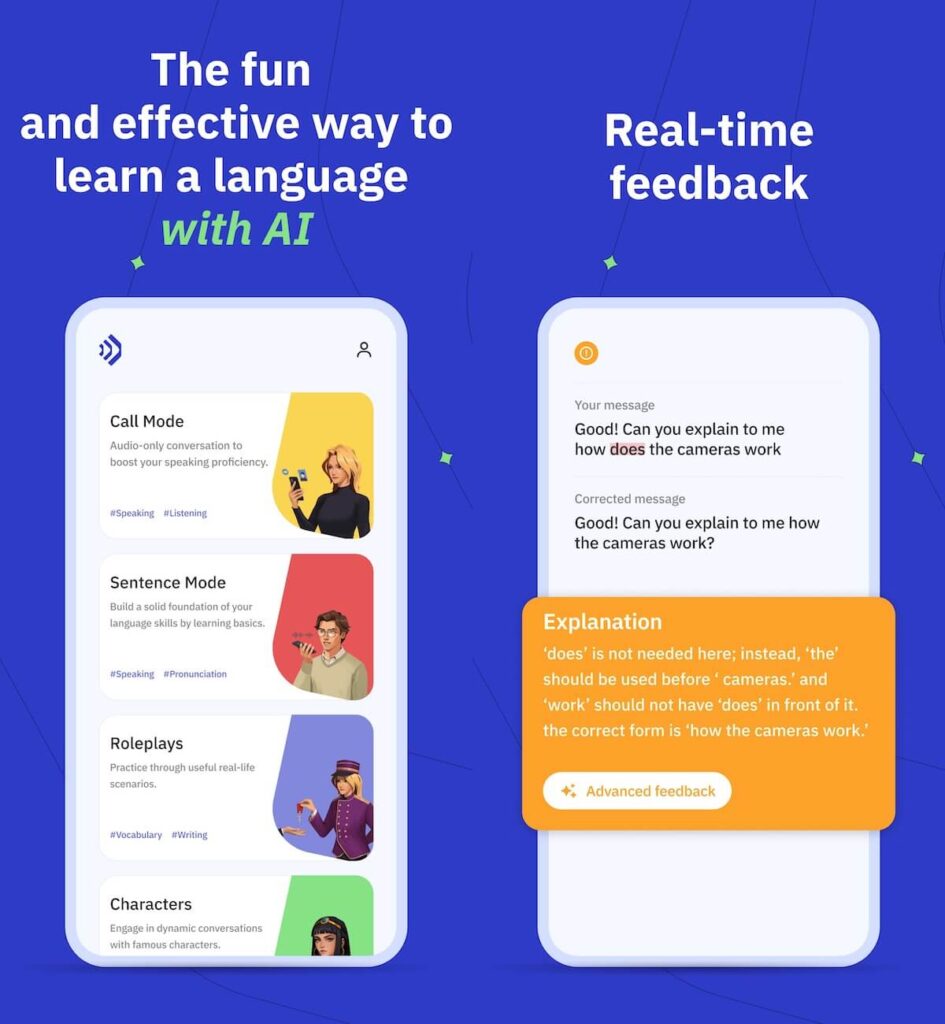
Want to practice your small talk without the actual social anxiety? Talkpal is your playground.
This app is a standout in the AI-first world because it ditches the rigid curriculum for a “freestyle” approach. It covers an impressive range of over 80 languages—including Spanish, French, Japanese, and even niche options like Finnish or Hebrew.
What makes it unique is the variety of ways you can interact. You can engage in audio “calls,” get into spirited debates, or chat with fictional characters like Frankenstein’s Monster, all while the AI provides real-time feedback on your grammar and flow.
What I love about Talkpal:
- An extensive collection of languages
- Variety of learning modes (e.g., character mode, debate mode, call mode, etc.)
- Real-time grammar insights
Pricing: Starts from $14.99/month or $4.99/month on the annual plan
Devices: iOS, Android
Smart content and immersion specialists
These apps are the “immersion experts,” using AI to curate and explain native-level media. Instead of static lessons, they adapt real-world content—like news, videos, podcasts, and real-world conversations—to your specific level, making authentic fluency feel much more attainable.
10. Mondly

Even before all this AI rise, Mondly was making tech innovations. It was an early pioneer in using VR and AR to make engaging and immersive lessons. And with a sleek, map-based interface and bite-sized lessons in 41 languages—ranging from Spanish and French to Persian and Bengali—it’s designed to fit into even the busiest professional schedules.
While the core experience is gamified and easy to digest, its integration of artificial intelligence really shines through its speech recognition and chatbot features. This allows you to grow your vocabulary and conversational skills.
Recently, Mondly even introduced “LUNA,” an AI voice assistant designed to help a select group of users practice natural, hands-free conversations.
What I love about Mondly:
- Daily quick lessons that you can easily fit into any schedule
- Chatbot for conversational practice
- Immersive content that covers all core skills
Pricing: A subscription for one language costs $12.90/month or $61.92/year. Try it free first or find Mondly discounts here!
Devices: iOS, Android
11. Glossika
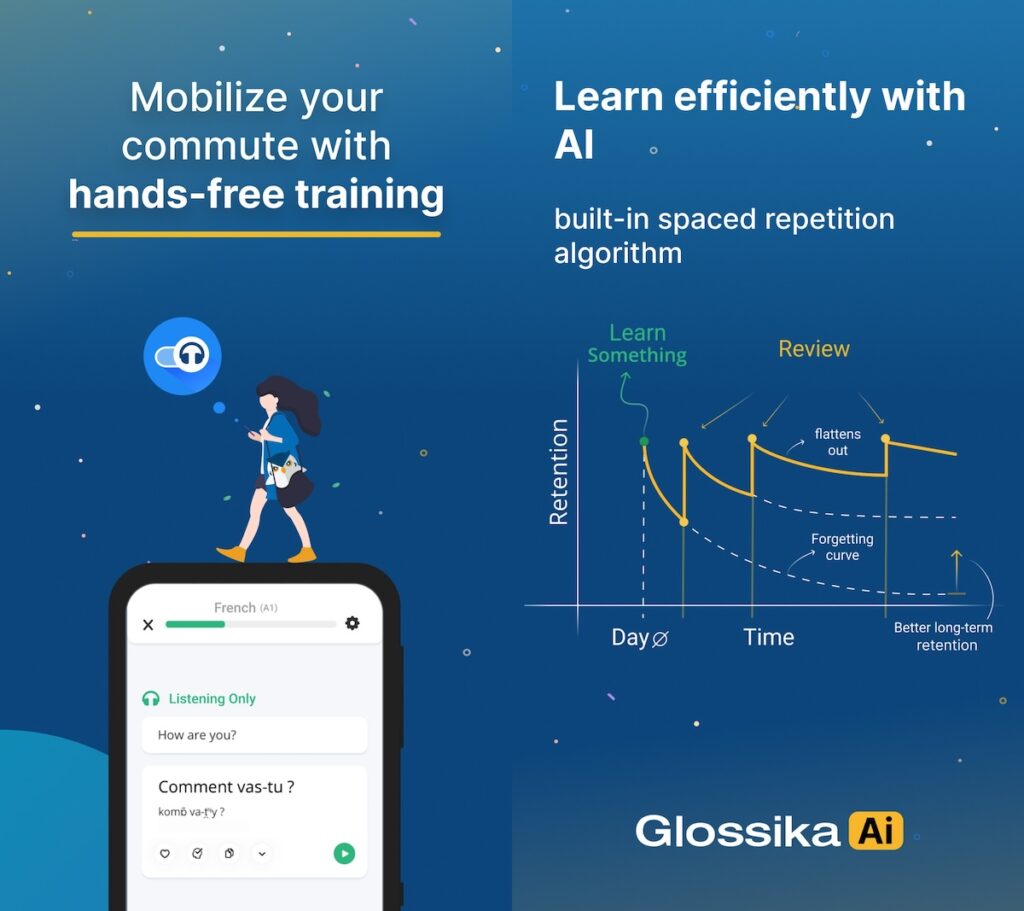
If you’re the type of person who would rather do “reps” than study grammar charts, Glossika is your gym buddy.
This AI language learning app specializes in a “mass input” method, focusing on thousands of natural sentences to build intuitive muscle memory rather than memorizing random words. It covers over 60 languages—including majors like Spanish and French, plus harder-to-find options like Gaelic, Hakka, and Taiwanese Taigi.
Glossika has been using AI for a long time, primarily to analyze your skill level and serve up sentences that are just challenging enough. Its AI-driven spaced repetition system ensures you never forget what you’ve learned.
What I love about Glossika:
- Mass sentence training for contextual learning
- AI-optimized review
- Listening-only mode and native audio voice comparison
Pricing: A Glossika subscription starts from $16.99/month. You can try it for free first! If you’d like to support Learn Languages From Home, make sure to complete your purchase through the Glossika website (not the mobile app). You can sign up and use whatever platform you want, but if you make the purchase using the website, I make a small commission. Thanks!
Devices: iOS, Android
12. FluentU
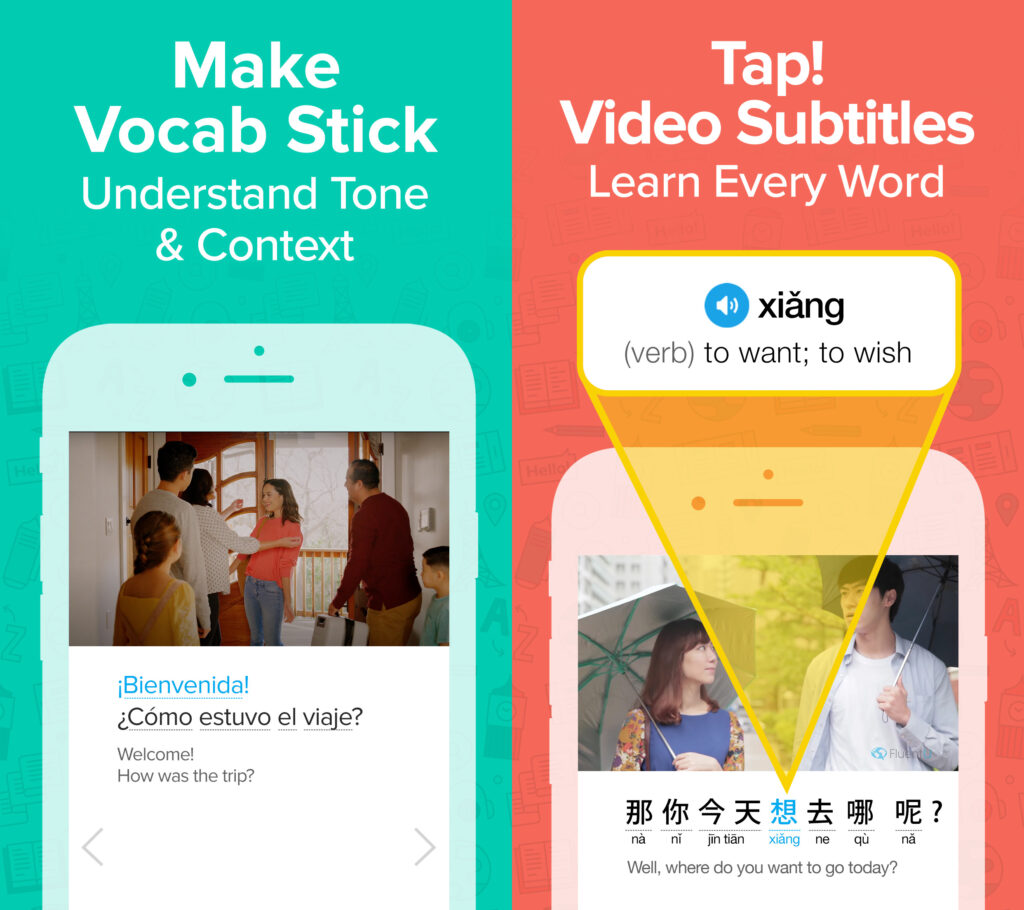
Sure, good ol’ textbooks are helpful, but if you’d rather binge-watch a drama, FluentU is for you. Essentially a “smart” layer for the internet’s best videos, this app transforms real-world content—like movie trailers, music videos, and news clips from Netflix or YouTube—into personalized language lessons.
It currently supports 10 major languages, including Spanish, French, Mandarin Chinese, Japanese, Korean, and German. The platform uses AI to power its “smart subtitles,” which aren’t simply translations but interactive learning tools that you can click on for further study.
As you watch, the AI tracks which words you know and which ones you’re struggling with, ensuring that the quizzes and recommendations you see are perfectly calibrated to your current level.
What I love about FluentU:
- Interactive smart subtitles
- Adaptive flashcard system and contextual dictionary
- Personalized video lessons
Pricing: Costs $29.99/month, but currently on sale at 40% off!
Devices: iOS, Android
13. Mango Languages
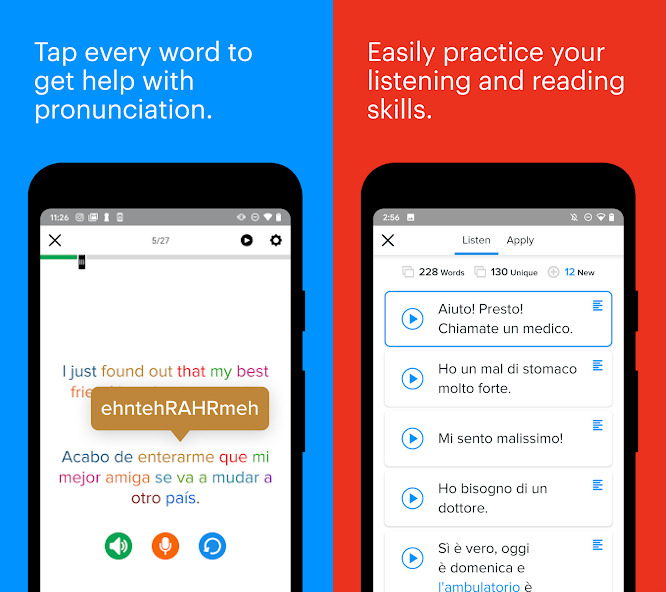
Learn languages on Mango Languages
Mango Languages is for those who appreciate a logical, pattern-based approach to learning.
This app focuses on “Intuitive Language Construction,” breaking down real-world conversations into color-coded building blocks so you can see exactly how grammar fits together. Plus, it offers an impressive library of over 70 languages—including Spanish, French, Korean, and even specialty courses like Pirate or Ancient Greek.
While Mango Languages feels like a traditional course (and it is, because its curriculum is largely human-made), the AI works quietly in the background, using sophisticated text-to-speech for realistic audio and intelligent algorithms to map out cultural nuances and grammar patterns that adapt as you progress.
What I love about Mango Languages:
- Color-coded grammar mapping for visual and contextual learning
- Voice comparison tool
- Intelligent review system
Pricing: Starts from $10/month on the annual plan. Try Mango Languages for free here.
Devices: iOS, Android
14. Lingvist
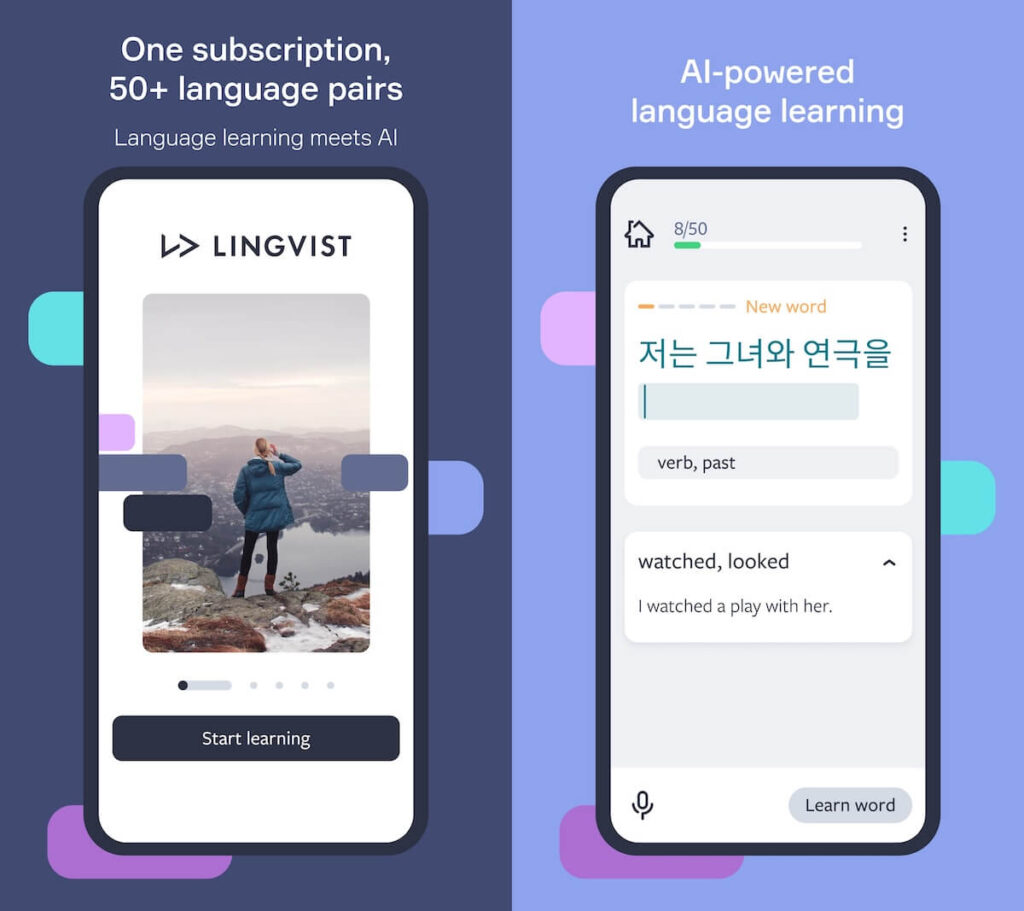
Lingvist is the ultimate efficiency hack for anyone who wants to spend less time “learning” and more time actually knowing a language. This AI language learning app is built on the philosophy that you shouldn’t waste a single second on words you already know.
The app offers 16 languages—including Spanish, French, German, Japanese, and Korean—and uses a sophisticated placement test to map your current vocabulary instantly. Through AI, it then builds a personalized bridge to fluency, skipping the basics and serving up high-frequency sentences that challenge you just enough to build real-world proficiency without any of the fluff.
What I love about Lingvist:
- AI-driven vocabulary mapping
- Decks customized to your interests and needs
- Adaptive spaced repetition for long-term retention
Pricing: Starts from $9.99/month
Devices: iOS, Android
Memory & retention masters
These apps focus on building long-term retention. By applying AI to the science of flashcards, these tools calculate exactly when your brain is about to forget a word, ensuring every minute of study counts.
15. MosaLingua
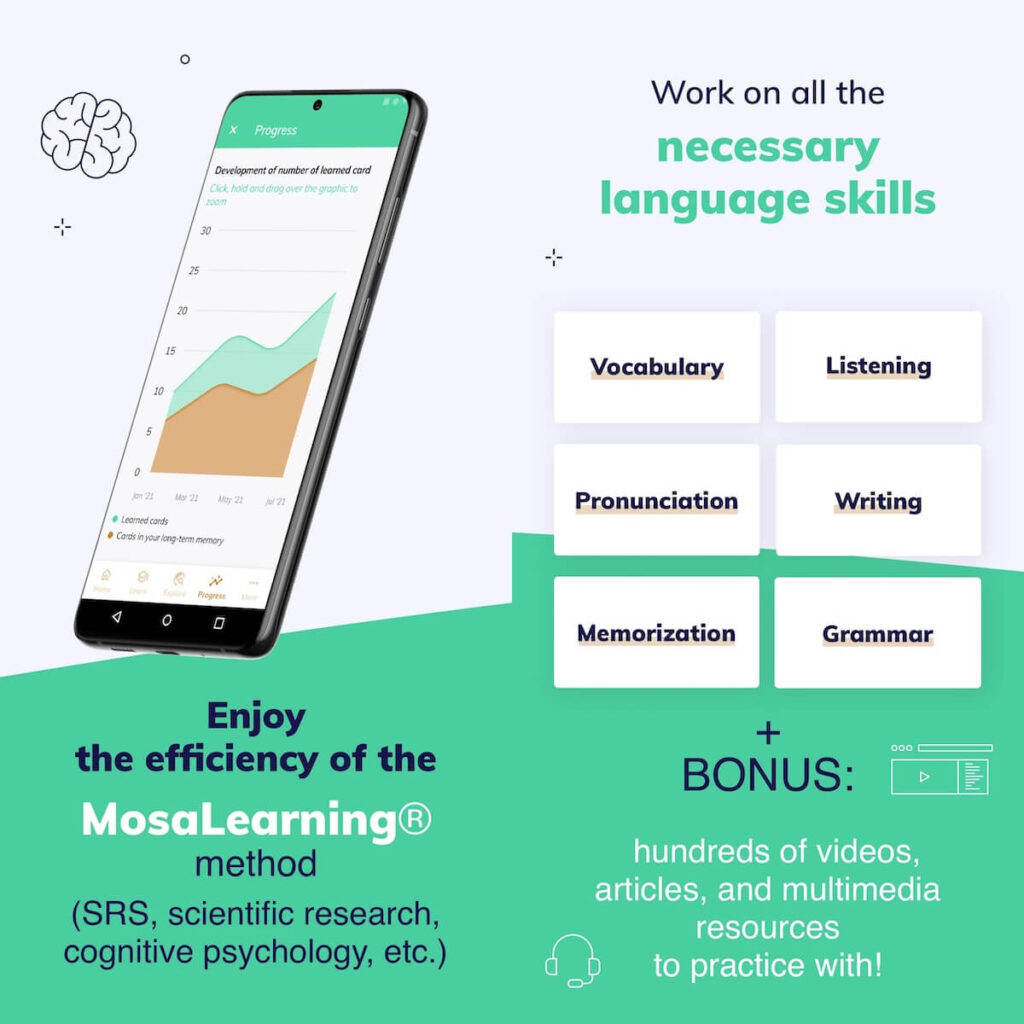
MosaLingua is essentially a high-tech personal coach that lives in your pocket, focusing heavily on the Pareto Principle—teaching you the 20% of vocabulary that applies to 80% of real-world situations.
The app covers 11 major languages, including Spanish, French, Italian, German, Russian, Mandarin Chinese, Japanese, Korean, Arabic, and Portuguese. It also uses a science-backed Spaced Repetition System (SRS) to ensure you memorize phrases exactly when your brain is prone to forgetting them.
MosaLingua’s AI integration is mostly done through MosaChat-AI (powered by an e-tutor named Aida), which provides a safe space for real-time conversation practice. As you chat with Aida, she corrects your mistakes on the fly and can even turn those specific corrections into personalized flashcards for your study deck.
What I love about MosaLingua:
- 24/7 AI tutor that grows your conversational skills and helps improve grammar
- Conversation-to-flashcard pipeline
- Lets you grow your vocabulary through content from the web
Pricing: Starts from $9.99/month. Save more with MosaLingua’s free trial and promos here.
Devices: iOS, Android
16. Promova
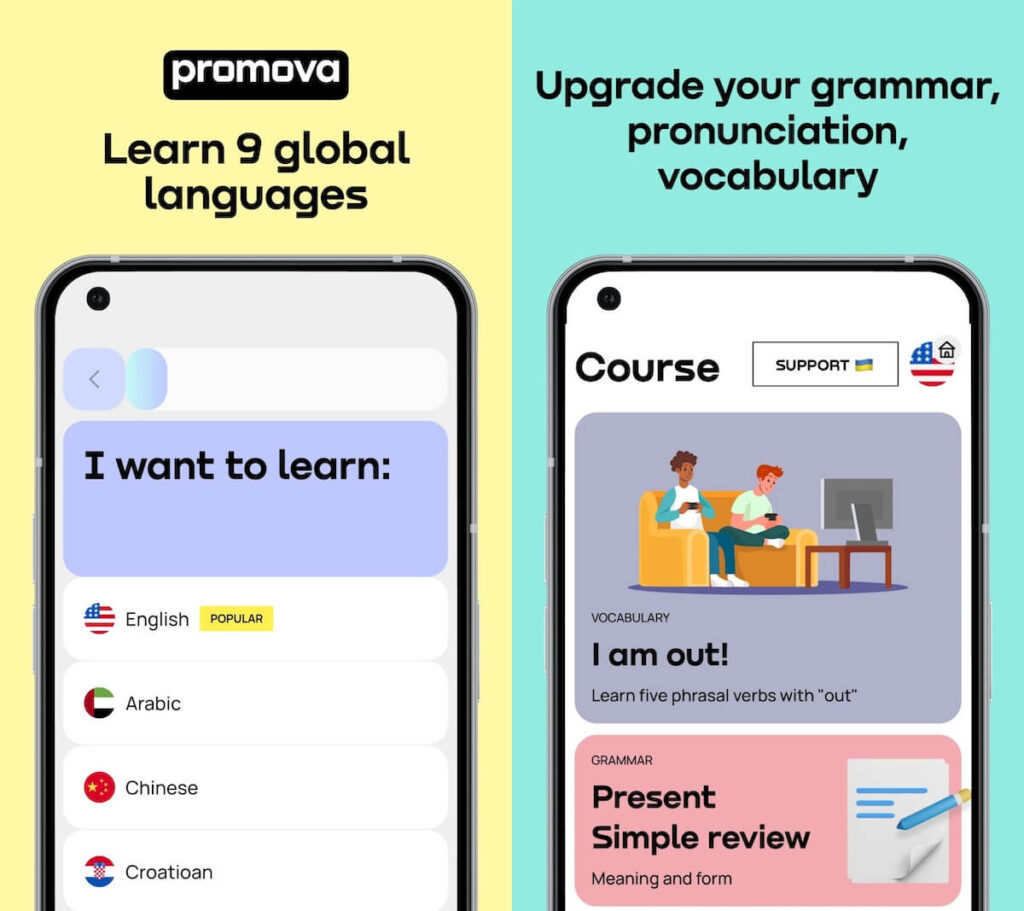
For a “holistic but bite-sized” approach to learning, consider Promova.
This app currently offers 13 languages, including English, Spanish, French, Korean, and even American Sign Language (ASL). This AI-powered app offers a private curriculum, which basically means that the app’s algorithms monitor your reading speed, how long you hesitate, and which words you skip to tune your daily lessons in real-time.
What’s more, Promova lets you use an AI tutor for role-playing and even comes with a voice call interface that feels like you’re chatting with a friend… except this friend is always patient and ready with helpful feedback.
What I love about Promova:
- 24/7 AI tutor with instant feedback
- Adaptive learning paths
- Inclusive dyslexia mode
Pricing: Starts from $30/month. Find limited-time deals here.
Devices: iOS, Android
17. Pimsleur
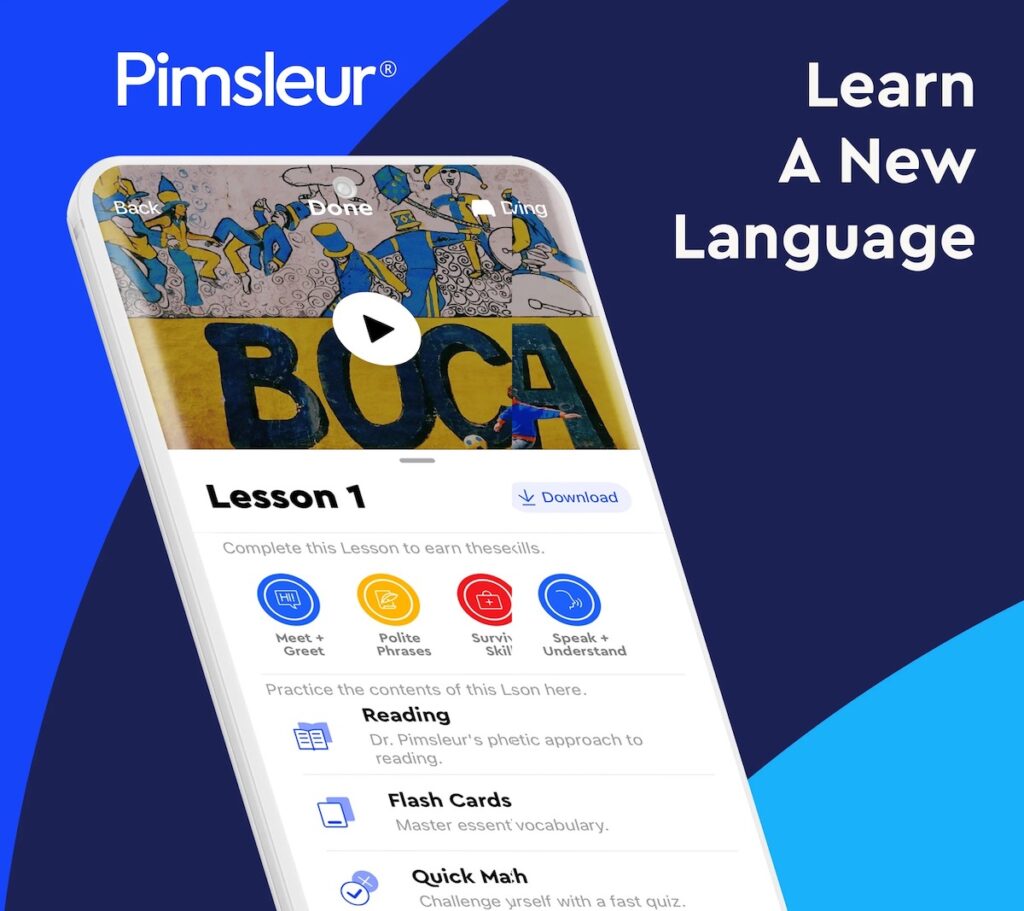
Pimsleur is a classic that has finally moved from cassette tapes to a high-tech app experience, making it perfect for anyone who wants to learn while they commute or cook.
This app is built on a decades-old research-backed method that uses “graduated interval recall” to ensure you never forget a word. It covers an impressive 51 languages—including German, French, and Japanese, but also rarer options like Dari and Ojibwe.
The program is built around 30-minute audio lessons that let you grow your listening and speaking skills. But it has recently integrated AI through its “Voice Coach” feature. This update provides real-time pronunciation feedback, helping you refine your accent before you ever have to speak to a real person.
What I love about Pimsleur:
- Instant, detailed feedback on pronunciation and intonation
- Hands-free mode
- Additional interactive features like quizzes, reading materials, speed games, etc.
Pricing: Pimsleur subscription is $14.95/month for Audio-Only; $19.95/month for Premium (with Bonus Materials), or $20.95/month for All Access. Try it free here.
Devices: iOS, Android
18. Memrise
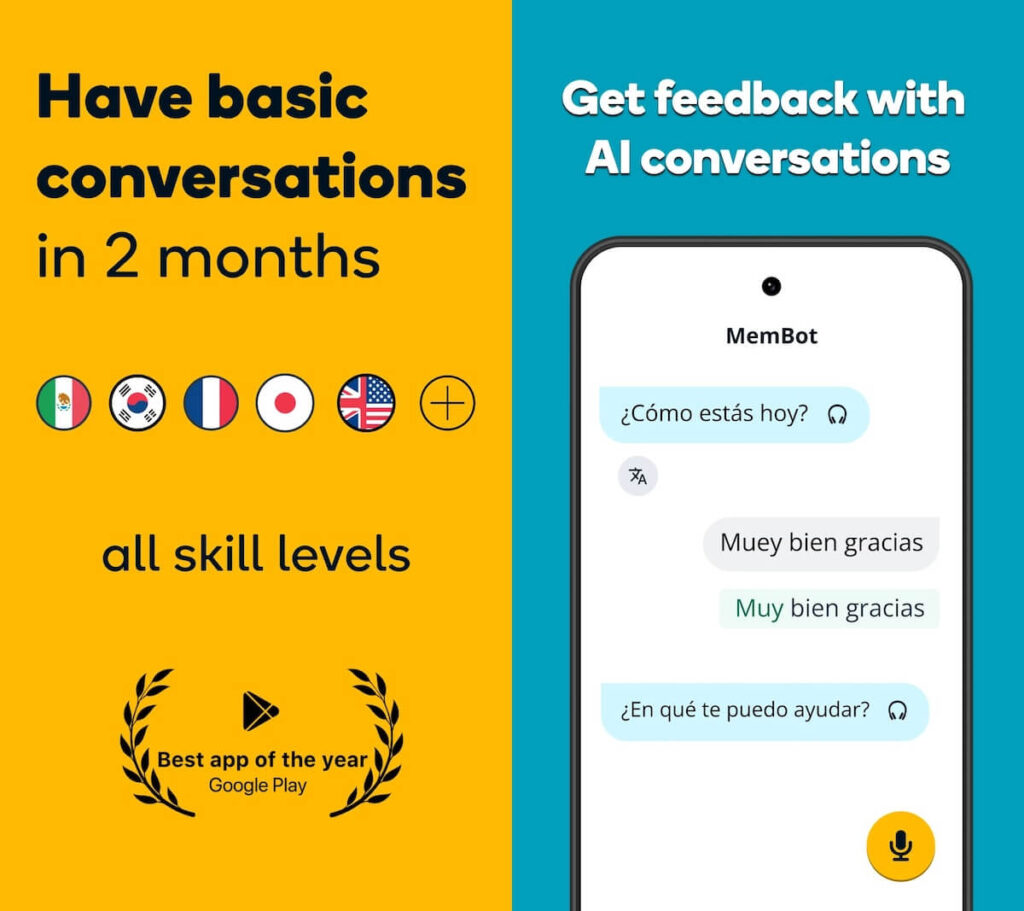
I remember using Memrise back when it was a simpler flashcard app, long before “AI” became such a buzzword. It has since evolved into a powerhouse for bridging the gap between formal language and the way people actually talk on the street.
Built around a “vocabulary-first” approach, the app uses a proprietary Spaced Repetition System (SRS) to drill words into your long-term memory across 23 official languages—including Spanish, French, Korean, and Japanese.
While Memrise’s core strength remains its “Learn with Locals” video clips, it has now integrated MemBot, an AI language buddy that brings your new vocabulary to life through unscripted, low-pressure conversations.
What I love about Memrise:
- Large collection of short, AI-curated video clips of native speakers
- GPT-powered chatbot for practicing realistic scenarios
- Lots of immersive scenarios to practice on
Pricing: Starts from $9/month
Devices: iOS, Android
Human-centric platforms with AI tools
These platforms combine the “human touch” with high-tech efficiency. Instead of replacing tutors, these apps use artificial intelligence to handle the heavy lifting—like lesson summaries and custom flashcards—ensuring your live sessions focus entirely on real human connection.
19. italki
Find language tutors on italki
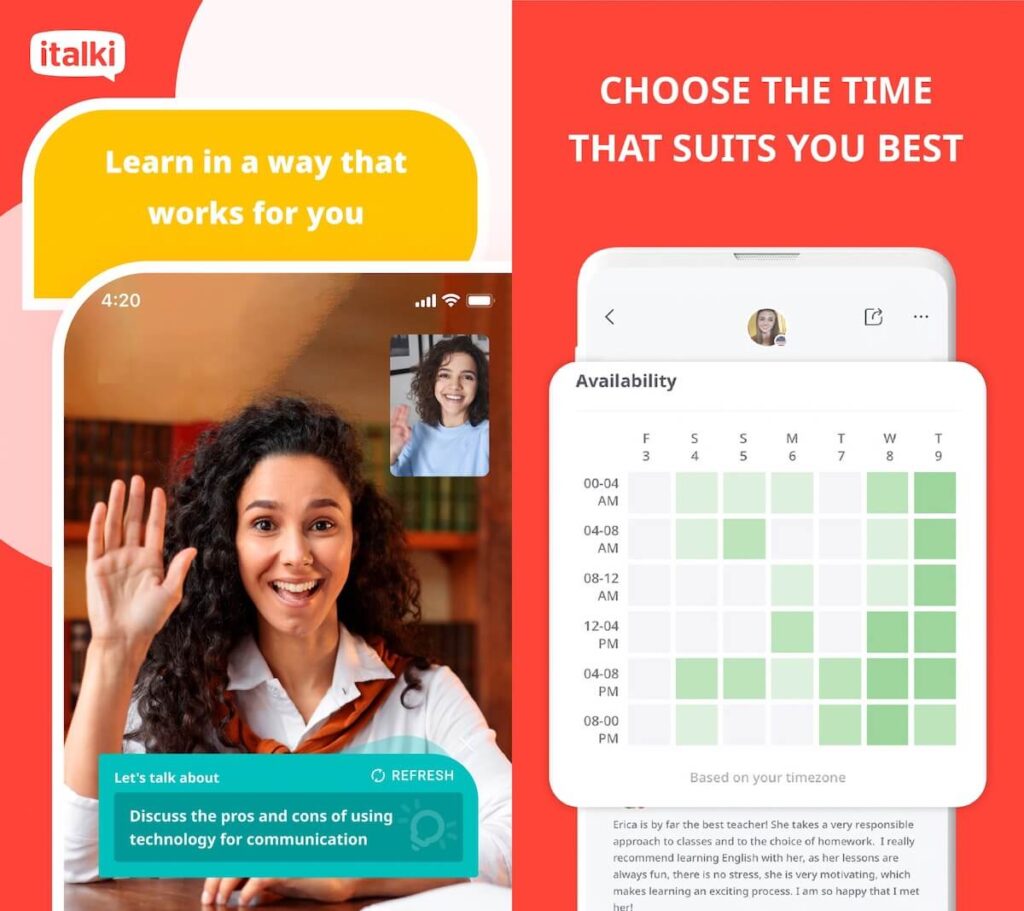
italki has always been amazing for finding conversation partners, but it has grown into an incredibly sophisticated marketplace.
This app connects you with over 30,000 tutors teaching a massive 150+ languages—from global heavyweights like Spanish, French, and Japanese to rare gems like Icelandic or even Esperanto.
While the heart of the app is still those 1-on-1 human connections, the new italki Plus feature brings in some clever AI to handle the “less fun” stuff. It creates automated summaries of your lessons and generates personalized practice exercises, so you can actually focus on talking during your session instead of frantically scribbling down notes.
What I love about italki:
- An AI assistant that generates detailed lesson summaries, corrections, vocabulary learned, and more
- AI bot for roleplay
- Smart flashcards for memory retention
Pricing: Price varies per tutor, while italki Plus is available for $4.99-$5.99/month. You can book a discounted trial lesson here.
Devices: iOS, Android
20. Preply
Find language tutors on Preply
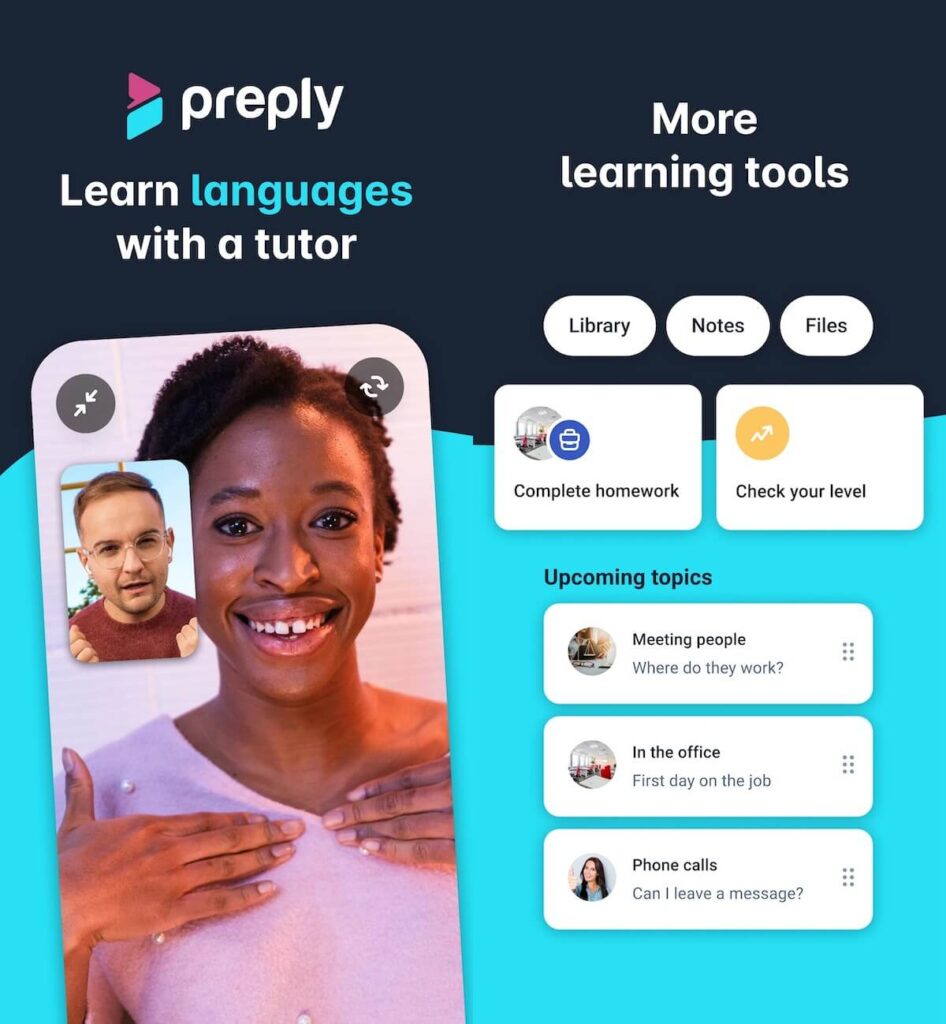
Preply is a major player in the human-led, AI-supported space, acting as a massive marketplace for finding professional tutors. It connects you with over 100,000 teachers covering 90+ languages, including common choices like English and Spanish, alongside more niche options like Hindi or Hebrew.
The core experience is still via private video lessons, but Preply has leaned into AI to maximize your progress. Its “Lesson Insights” tool automatically transcribes your sessions to highlight grammar and vocabulary wins, while the AI-powered “Scenario Practice” and daily exercises ensure you keep your momentum going between live calls.
What I love about Preply:
- Automated post-lesson summaries to track progress
- Daily smart exercises and scenario practice
- Intelligent tutor matching
Pricing: Tutors set their rates. Find Preply discounts here!
Devices: iOS, Android
21. Lingoda
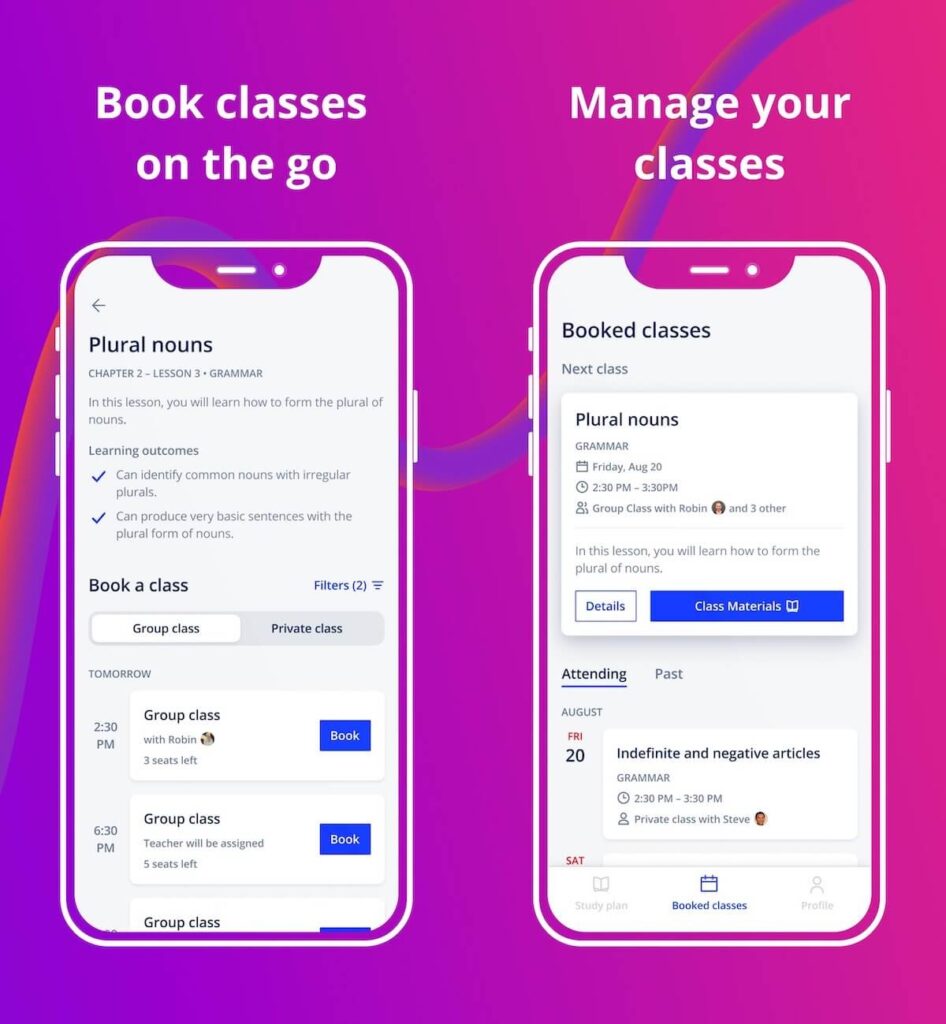
Lingoda is essentially a digital version of a prestigious language school, offering structured, CEFR-aligned courses through live online classes.
Unlike marketplace apps where you browse for teachers, Lingoda provides the curriculum and native-speaking instructors for you, focusing on English, German, French, Spanish, and Business English. And while the human element is still the star, the app now uses AI to fill the gaps between live sessions.
The LingoBot serves as a 24/7 AI conversation partner that offers interactive feedback, while the AI-driven “Lingobites” provide smart, bite-sized exercises that reinforce the exact vocabulary and grammar you just covered in class.
What I love about Lingoda:
- Conversational practice with LingoBot
- AI-powered exercises
- Option to have private lessons or group sessions
Pricing: Starts from $10.99/session. Check out Lingoda’s latest sale here!
Devices: iOS, Android
22. British Council
Learn English on British Council
The British Council’s English Online platform takes its decades of academic expertise and gives it a modern, high-tech upgrade.
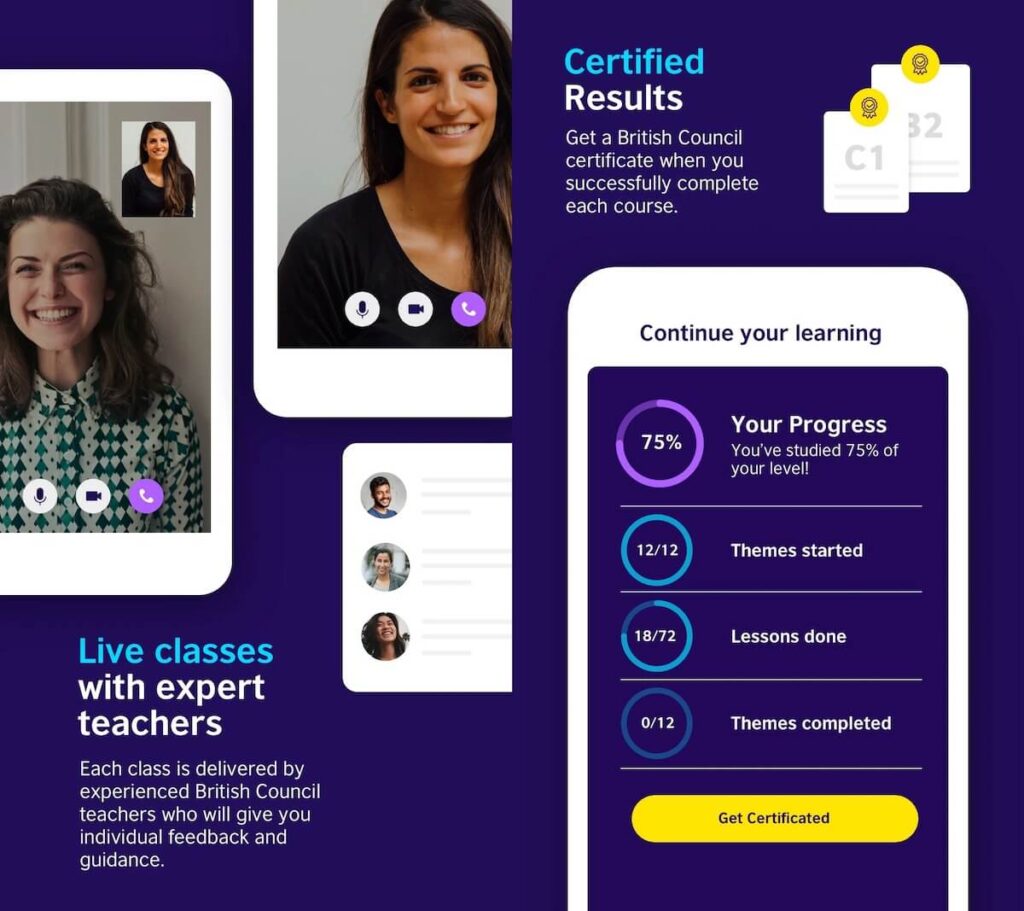
Unlike broad marketplaces, this is a dedicated ecosystem for learning English, offering 24/7 live classes with certified teachers. Its curriculum is massive, covering everything from general conversation to career-specific business tracks.
Its AI integration, known as AiBC, acts as a personalized bridge between your live sessions. It powers a sophisticated AI speaking tool that analyzes your recordings to provide instant, actionable feedback on your fluency and clarity, allowing you to refine your skills in a low-pressure environment before your next class.
What I love about British Council:
- AI-powered speaking practice
- Flexible teacher-led classes
- Instant, personalized feedback
Pricing: Starts from $65/month. Find British Council’s limited-time offers here.
Devices: iOS, Android
Which AI language learning app is for you?
Choosing the right app is less about finding the “best” one and more about matching a tool to your current headspace.
If you’re an absolute beginner just trying to get your feet wet, Babbel, Mondly, or Duolingo are perfect for building a consistent habit with low-pressure, gamified lessons. For those stuck in the dreaded intermediate plateau, you need something that forces you to produce the language. Langua, Glossika, or LingChat uses AI to push you into unscripted territory, helping you actually use what you learned in a sentence.
Busy professionals should look toward Pimsleur or Lingvist—they are designed for efficiency, focusing on high-frequency vocabulary and audio-first learning that fits into a commute. Finally, if you crave human connection but want AI to handle the prep work, Preply and italki offer the best of both worlds by pairing expert tutors with smart, AI-driven study tools.
Conclusion

Finding the right AI language learning app really comes down to your personal motivations and goals. Whether you need a 24/7 AI tutor for low-pressure speaking practice, a smart flashcard system to crush vocabulary, or a human-led platform with AI-powered insights, there is a tool designed for your specific lifestyle.
That said, don’t get too caught up in finding the most perfect, feature-heavy interface on day one. The reality of fluency is less about the algorithm and more about the habit. At the end of the day, the best app is the one you actually use. Pick the one that feels less like a chore and more like a hobby, and just keep showing up.
Happy learning!