
*This article may contain affiliate links. For full information, please see the disclaimer here.
Molo! (That’s “Hello!” in Xhosa). If you’ve ever watched Black Panther, you’ve actually heard isiXhosa—it was chosen as the language of Wakanda. Spoken by over 8 million people as a first language and another 11 million as a second, it’s one of South Africa’s official languages and is famous for its distinctive click consonants.

Whether you are planning a trip to the Eastern Cape, connecting with heritage, or just love the challenge of mastering those clicks, learning Xhosa opens the door to a vibrant and deeply historical culture. However, if you head to the app store looking for a dedicated Duolingo Xhosa course, you’re going to be disappointed—the famous green owl hasn’t added it to the nest yet.
But don’t worry; just because Duolingo hasn’t caught up doesn’t mean you’re out of luck. There are plenty of fantastic Duolingo alternatives, from interactive apps to comprehensive audio courses, that can guide you from your first molo to full conversations.
Why is Xhosa not on Duolingo?
Duolingo is famous for its massive course catalog, boasting over 40 languages ranging from global heavyweights like Spanish and French to endangered languages like Navajo and Hawaiian. You can even learn dead languages like Latin or conlangs like High Valyrian from Game of Thrones.

With such an eclectic mix, it feels strange that a major South African language is missing, especially since Duolingo actually announced a Xhosa course back in 2021. So, what happened?
The delay likely comes down to two main factors. First, Duolingo ended its volunteer incubator program—which relied on passionate community members to build courses—shifting instead to paid professionals. This slowed down the rollout of less commercially dominant languages.
Second, Xhosa presents a unique technical challenge: its three distinct click consonants (c, q, and x) are notoriously difficult to teach using Duolingo’s standard, automated audio exercises.
The result is that, for now, there is no Xhosa on Duolingo. The course appears to have been indefinitely paused or “vaporwared.”
The best Duolingo alternatives for learning Xhosa
Don’t let the green owl’s absence discourage you; Xhosa is thriving elsewhere. Below are some of the best places for you to start learning Xhosa immediately.
1. uTalk

Unlike traditional courses that bog you down with heavy textbook rules, uTalk is all about gamification. This app uses a series of increasingly difficult memory games to drill vocabulary directly into your brain.
On uTalk, you’ll cover over 2,500 Xhosa words and phrases across 60 everyday topics, ranging from food and travel to technology. Every single item is recorded by both male and female native speakers, so you get a genuine feel for the rhythm of the language.
While it won’t teach you how to conjugate complex verbs, it is hands-down one of the best tools for rapidly expanding your vocabulary bank.
Know more about this app with this detailed uTalk review.
Key features:
- Over 2,500 essential Xhosa words and phrases
- Hear every phrase pronounced by both male and female Xhosa speakers
- Allows you to record and compare your speech with the native speaker audio
2. Memrise

Memrise is a video-heavy app that ditches boring lessons for genuine, everyday isiXhosa. Its major selling point is “Learn with Locals”—thousands of short video clips featuring native speakers using the exact words and phrases you’re learning. This trains your ear to real accents, rhythm, and body language, ensuring you sound natural, not robotic.
Memrise’s Xhosa course is structured around real-life scenarios and vocabulary that is actually relevant to your interests. Whether it’s travel or food, you can learn words that appeal to you and challenge you without being overwhelming.
What’s more, you can practice conversing with MemBot, an AI language partner. This tool lets you build confidence and work on those distinctive Xhosa click sounds in a private, low-stakes environment, giving you instant feedback before you ever try them out in the real world.
Key features:
- Authentic listening practice through video clips of real Xhosa speakers
- AI conversation coach for speaking practice and instant feedback
- Personalized learning path
3. Tandem

Ready to move past apps and jump into real, messy, fun conversation? Meet Tandem, the app that replaces scripted lessons with actual human connections. Not only does it improve your speaking confidence, but it also helps you understand colloquialisms and gain cultural insight directly from a local.
Tandem is a global language exchange community that connects you directly with native isiXhosa speakers who are learning your native language. Basically, you spend half the time speaking Xhosa and the other half helping your partner practice, say, English.
The platform allows you to chat with your language exchange partner using text, voice notes, or full audio and video calls. The best part is the built-in language toolkit, which includes instant translation and message correction, allowing your partner to easily polish your Xhosa sentences right in the chat.
Key features:
- Lets you practice Xhosa with people who actually speak it
- Flexible communication features and in-app correction and translation tools
- Social and cultural exchange
Other great resources for learning Xhosa
Surrounding yourself with a variety of Xhosa learning resources is key to mastering this language. Don’t limit yourself to the apps above; I recommend building a solid toolkit that includes some of the resources below:
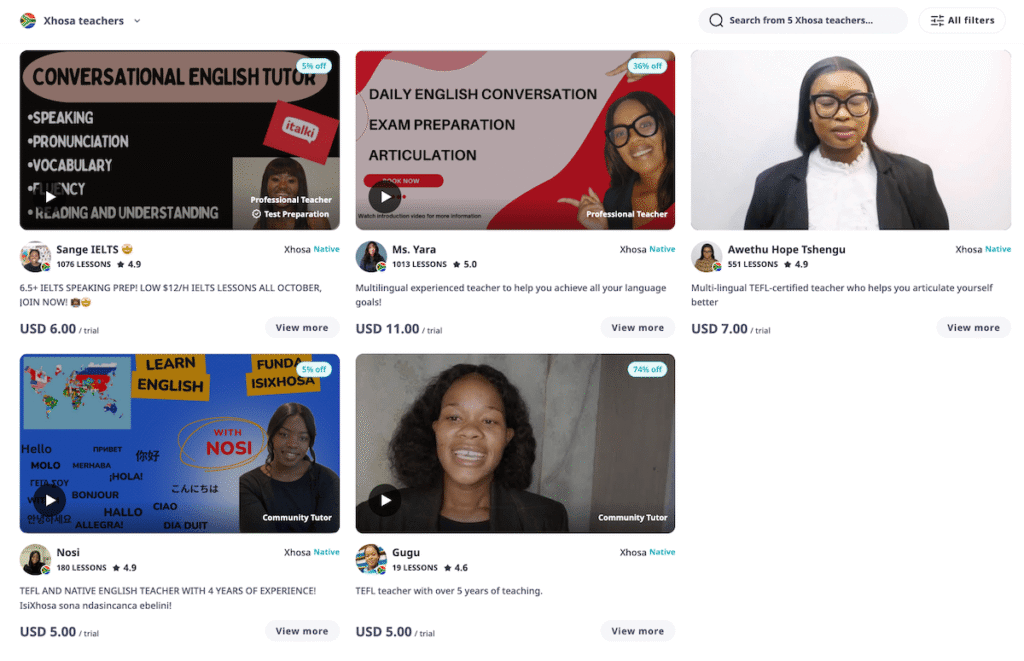
italki: This site connects you with professional and community Xhosa tutors for flexible, private lessons. It’s best for honing your conversational skills and customizing your curriculum, letting you pay per lesson with zero long-term commitment.
Preply: Like italki, this platform cuts out the app games and connects you directly with private Xhosa tutors. You get personalized, one-on-one video lessons tailored to your pace, ensuring you master those unique click sounds immediately. It’s the fastest way to real conversation, offering expert feedback from native speakers right from your first lesson.
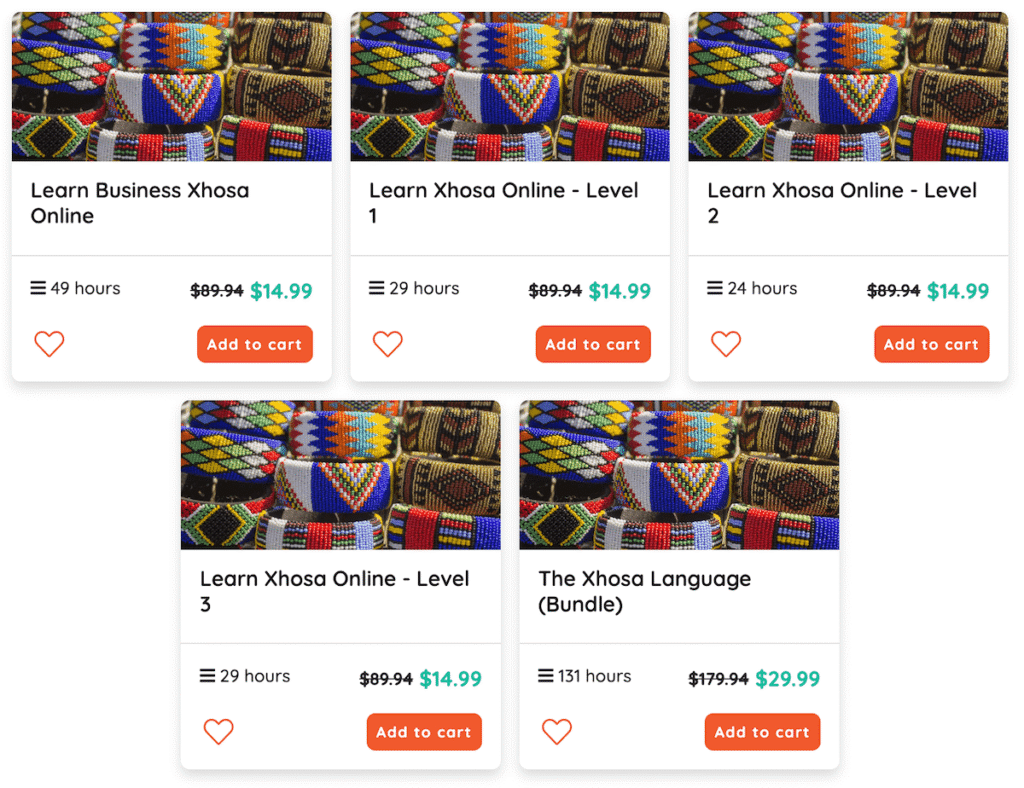
Cudoo: A hub for online courses, Cudoo offers structured, self-paced Xhosa courses across three levels, plus a specific Business Xhosa option—you can even grab a bundle for everything! These online modules give you lifetime access to the material and a certificate of completion to prove you’ve successfully mastered the course.
Xhosa Translator: This app is your instant pocket dictionary and phrasebook! While primarily a translator, it also helps with learning by providing voice translation, which is great for hearing pronunciation. You can also save a history of translations to use the app as a quick, self-made Xhosa study list.

Complete Xhosa: Forget the screens and go classic with this textbook-and-audio course that provides a clear, comprehensive path from beginner to intermediate levels (B2). It uses dialogues and cultural notes to introduce grammar gradually, ensuring you build a solid foundation in reading, writing, and speaking Xhosa.
Udemy: A marketplace for Xhosa video courses, Udemy lets you find lessons catering to a variety of levels. You’ll find everything from beginner conversational guides and grammar lessons to specialized courses like Xhosa for Healthcare. With a one-time payment and lifetime access, you can learn at your own pace from detailed lectures and quizzes.


Xhosa-English/English-Xhosa Dictionary & Phrasebook: This pocket-sized dictionary is a must-have travel companion, packing 4,000 entries and essential phrases. It includes concise pronunciation guides and grammar sections, giving you quick communication tools and a way to look up words instantly. Also available on Better World Books.
Learn Xhosa with Khanyi: Khanyi’s channel is a classic resource for Xhosa beginners, packed with over 100 fun videos covering everything from the unique click sounds to everyday greetings and emotions. While Khanyi hasn’t posted recently, her detailed, friendly lessons remain super relevant and are a great, free way to jumpstart your vocabulary.
Conclusion

While the absence of a Duolingo Xhosa course might seem frustrating at first, it actually forces you to engage with a richer, more diverse set of learning tools. Whether you choose the vocabulary games of uTalk, the native speaker videos on Memrise, or the crucial personalized feedback from a tutor on Preply or italki, there is a perfect starting point for you.
The key to mastering isiXhosa—and especially its challenging sounds—is consistency and genuine interaction. So, choose the resource that excites you most, show up daily, and look forward to the rewarding journey towards speaking Xhosa!