
While the mention of ‘Korea’ often calls to mind K-pop, K-dramas, and kimchi, there is one thing that many Koreanophiles and Korean culture enthusiasts like myself find interesting about this country: its language.
With over 82 million speakers and counting, an incredibly-designed writing system, and a rich history surrounding it, the Korean language (한국어 or 조선말) is one of the most popular Asian languages for non-native speakers.

Are you curious about the Korean language? You’ve come to the right place! These Korean language facts will help you understand it better and inspire you to keep learning.
Geography facts about the Korean language
1. Korean is spoken by 82 million speakers

Korean is the 20th most spoken language in the world, with some 82 million speakers spread across the world, mostly of Korean descent. It is the official and national language of the Korean Peninsula.
Beyond Korea, it is also spoken as a minority language in some parts of China, namely Yanbian and Changbai County in Jilin Province. It is also used among the Korean diaspora in Turkey, Japan, the United States, Canada, and the Philippines.
In Russia and other parts of Central Asia where Koryo-saram (ethnic Koreans) reside, a Korean dialect is also spoken.
2. Korean has several dialects
Owing to the country’s mountainous landscape, Korea developed several dialects, most of which are named after the provinces of Korea. These regional dialects include:
- Hamgyong – a dialect spoken in the eastern part of North Korea and Jilin, China
- Pyongan – a dialect spoken in the western part of North Korea, including the capital Pyongyang, and Liaoning, China
- Central dialects – used in the areas of Hwanghae Province, Gangwon Province, Chungcheong Province, Gyeonggi Province, and the capital Seoul
- Jeolla – Also known as the Southwestern dialect, this is spoken in the Jeolla region, including Gwangju City.
- Gyeongsang – spoken in Busan, Daegu, and Ulsan
3. But the Jeju language is considered a separate language

Although often classified as a South Korean dialect, many academic publications have started referring to Jejueo or Jejuan as a separate language in the Koreanic language family since the early 2010s.
This is because the Jeju language is not mutually intelligible with any Korean dialect, even the southernmost dialects of mainland Korea. This means many Korean speakers from other dialect zones like Seoul and Busan often don’t understand or understand very little of what Jeju native speakers say.
Jeju’s isolation from the mainland (further amplified by the Jeju Uprising and Korean War) resulted in Jeju developing a distinct culture and language.
However, the number of native speakers is diminishing and all fluent speakers of the language are now over 70 years old. UNESCO has designated Jeju as a critically endangered language.
4. The Korean languages used in the two Koreas differ in many ways

While the standard languages used in both South Korean and North Korea are based on the same dialect (Seoul) and the other dialects are mutually intelligible, many things separate the two.
Some words in South Korea are pronounced differently in North Korea, while some are spelled differently. In some cases, the pronunciation and spelling are different but the meaning is the same. Take a look at these examples:
- The phrase ‘thank you’ is spelled 고마워 and pronounced ‘gomawo’ in South Korea. In North Korea, it’s spelled 고마와 and pronounced ‘komawa’.
- ‘Cherry blossom’ is spelled 벗꽃 in North Korean and 벚꽃 in South Korean (note the slight difference in the first syllable) but both are pronounced ‘beotkkot’.
- The word for ‘woman’ in North Korea is 녀자 (nyoja). In South Korea, it is 여자 (yeoja).
Furthermore, there are grammar and punctuation disparities (e.g., guillemets (《 and 》) are the symbols used for quotes). Also, the North Korean language favors more traditional native vocabulary over Sino-Korean or loanwords. This is to eliminate foreign influences on the language.
Historical facts about the Korean language
5. There are four periods in Korean language history
Due to the limited research, not much is known about the origin of the Korean language. However, it is widely known that it descended from Old Korean. The language is traditionally classified into four periods:
- Old Korean – It is unclear when this period started but it ended in 1918, around the fall of Unified Silla. Koreans used Classical Chinese and idu script during this time. The only surviving literary works are vernacular poems called hyangga.
- Middle Korean (918–1600) – This language period covers Goryeo and Joseon and is considered the Golden Age of Korean Language due to the introduction of Hangeul (한글), the Korean writing script.
- Early Modern Korean (17th to 19th centuries) – This corresponds to the later Joseon Period.
- Modern Korean (from the beginning of the 20th century) – Following the Korean War, distinctiveness in pronunciation, verb inflection, and vocabulary between North and South Korea emerged.
6. Koreans used to write using Chinese characters…

When talking about Korean language facts, we can’t forget Korea’s influential neighbor, China.
Ancient Koreans used Classical Chinese from the fourth century or earlier. They wrote (or at least the nobles who could write) using the Chinese characters adapted for Korean known as hanja. Various phonetic scripts patterned after hanja included idu, gugyeol, and hyangchal.
Hanja was prominently used for over a millennium, with Hangeul replacing it in official and scholarly writing only in the 20th century. But even today, many schools in South Korea still offer Hanja classes as it’s believed to enhance Korean language proficiency.
7. …until Hangeul was created

And we have King Sejong to thank for it!
Until the 15th century, only Korean nobles and elites were able to write hanja as it was difficult for commoners to master. Enter King Sejong, one of the greatest kings in Korean history.
To promote literacy among commoners, he either ordered scholars to invent Hangeul or invented it himself. While his exact role is unclear, it is widely accepted that he promulgated the new alphabet.
Hangeul, or Chosongul in North Korea, has 10 vowels and 14 consonants, making up a total of 24 basic characters. There are also 11 complex vowels and 5 double consonants. The characters are grouped in syllable blocks, which is why Hangeul is often described as a “syllabic alphabet”.
8. There is a Korean holiday celebrating the alphabet
Korea is perhaps the only country in the world that celebrates the development of its alphabet. It does so every October 9.
Hangeul is said to be invented in the 25th year of King Sejong’s reign, between 1443 to 1444. The Hunminjeongum, or literally ‘The Proper Sounds for the Instruction of the People’, is a document describing the new and native writing system. It was published on October 9, 1446, now known as Hangeul Day.
The Hunminjeongum manuscript is now protected by UNESCO’s Memory of the World Programme.
9. Hangeul was traditionally written differently

As in traditional Chinese, Japanese, and other East Asian texts, Hangeul was traditionally written in columns, from top to bottom, right to left. Korean texts are occasionally still written this way for stylistic purposes, like for hanging scrolls.
In Modern Korean, syllabic blocks are written in rows, from left to right, top to bottom, as in English and other scripts. There are also spaces between words, unlike in Chinese and Japanese writing.
Linguistic facts about Korean
10. Korean may be a language isolate

One of the most fascinating Korean language facts is its classification, a tricky subject for linguists and historians.
For many years, Korean has been classified under the Altaic language group. This assumes that Korean is related to the Turkic, Mongolic, and Tungistic language families. Previously, this group includes Uralic languages (i.e., Ural-Altaic family), which then assumes that Korean is related to languages like Hungarian and Finnish. It has also been linked to the Japonic languages (e.g., Japanese).
These classifications have been largely discredited. Instead, linguists consider Korean as a language isolate. This means Korean shows no significant link to any other existing language. It is now widely classified under Koreanic language, along with the Jeju language.
11. But it shares some similarities with other languages
That said, we can’t dismiss the fact that Korean shares many similarities with other languages, particularly its neighbors China and Japan.
For centuries, China has exerted influence in Korea, from commerce to religion, cuisine, and ultimately, language. About 50-60% of Korean words are said to be Sino-Korean or Korean words with Chinese origins.
As for Japanese, there is some overlap in vocabulary as well as similar grammatical features (eg., the same subject-object-verb structure). It’s often said that if you know Korean, you’ll have a leg up in learning Japanese, and vice versa.
Also read: Should You Learn Korean or Japanese? A Decision Guide
12. Hangeul has been called the world’s best alphabet

Hangeul is one of the most systematic, logical, and brilliantly-designed writing systems in the world. It may be one of the youngest alphabets in the world but it is loved by linguists for being a perfect phonetic system.
The shapes and strokes of Hangeul characters mimic the articulations the tongue, palate, teeth, and throat take when making the sounds of the letters.
For example, when making the ㄱ (g/k) sound, part of the tongue touches the molar teeth and sticks near the uvula. With ㅁ (m), the upper and lower lips come in contact with each other. Pretty cool, right?
13. Korean has two counting systems

Who needs one counting system when you can have two?
In Korean, there are two sets of numeral systems: a native Korean system and a Sino-Korean system. What’s the difference, you ask?
The native Korean counting system goes up to 99. It is used for saying your age, counting objects, and expressing the hour when telling time. On the other hand, the Sino-Korean system uses numbers above 99 and is used for expressing distance, currency, dates, and minutes when telling time.
14. A collectivist language for a collectivist society
Korea, like most East Asian countries, is known for being a collectivist or communal society. Because Korean culture has been largely influenced by Confucius, many Koreans believe that the greater good of the group takes over one’s own desires.
This is why in many situations where English speakers would typically use I or my, Korean speakers would use 우리 (uri), the Korean word for ‘we’ or ‘us’ or ‘ours’. They do this to express something shared by a group or community, or simply to express a sense of belonging and closeness.
Fun facts for learning the Korean language
15. Korean is one of the hardest languages to learn for English speakers
According to the US Foreign Service Institute (FSI), Korean is one of the hardest languages for English speakers to master. Going back to point #10, being a language isolate means it relates to virtually no other language, especially to languages related to English.
Some of the reasons English speakers find Korean difficult include:
- Different word order
- Elaborate honorifics system
- Various noun and verb endings
- Two number systems
- Pronunciation and inflection
As a Korean language learner though, I can attest to how easy it is to memorize and understand Hangeul — way easier to grasp than Japanese or Chinese.
16. There’s an official Romanization system for Korean

If you’re learning Korean, you probably know what Romanization means. But for the uninitiated, Romanization means writing Korean words using Roman letters or the Latin alphabet instead of Hangeul.
Romanization is used to make Korean texts easier to read for people who don’t know or can’t read Korean. But if you’ve been relying on Romanization for quite some time, you’ve probably noticed that Romanization sometimes varies per word. For instance, you’ll see 한글 Romanized as Hangeul or Hangul.
This is because there are multiple Romanization systems used in Korea. Two of the most popular are the McCune-Reischauer (MR) and the Revised Romanization of Korean (RR). MR was published in 1939 and was used until the early 2000s before RR, developed by the National Institute of Korean Language, replaced it.
In the example above, Hangeul is the ‘official’ and correct Romanization. The question many ask is does it even matter? To some degree, yes, but if you want to be truly accurate, just learn to read Hangeul and expose yourself to more native speakers (e.g., watch Korean Netflix shows with subtitles, not dubbed).
17. The consonants can trip you up
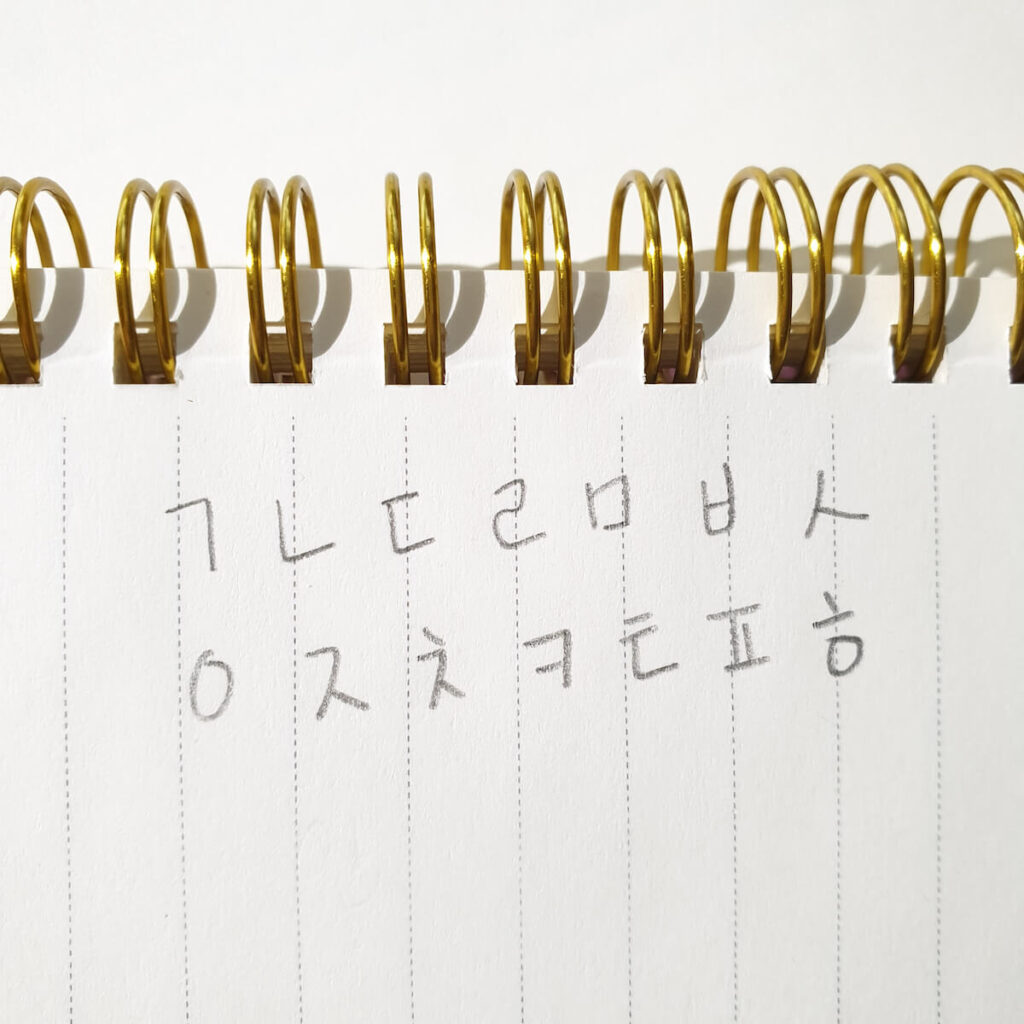
The basic 14 consonants are easy enough to learn — most learners can memorize them in less than a day. But when you add the tense or double consonants and try to distinguish the differences in the way they should be pronounced, you’ll most likely fumble.
Consonants are a common roadblock in a Korean language learner’s journey. That’s because they can be pronounced in three ways: plain, aspirated (with a burst of air), or tense. Here’s a good guide on how you can differentiate the three sounds.
18. There’s an elaborate honorifics system

Another stumbling block for those studying Korean is the complex system of honorifics, which involves different special nouns and verb endings to indicate the relationship you have with the person you are addressing.
Korean society is hierarchical and formality and politeness are highly valued. Someone can be considered of superior status if they are older or hold a higher position at school or work. In general, polite vocabulary is favored even when talking to strangers.
While Korean honorifics can be confusing, the basic rule is ‘making oneself lower’. When in doubt, it’s best to use the humble or polite form when talking to Koreans.
19. Verbs always come last
An often-mentioned reason for Korean being a challenging language to learn is its word order or basic sentence structure.
While English is an SVO (subject-verb-object) language, Korean is an SOV language. This means the verb always comes last.
To illustrate, if you want to say “I study Korean” in Korean, you will say 나는 한국어를 공부한다 (naneun hangugeoleul gongbuhanda), which is literally “I Korean study” in Korean.
20. Korean has no grammatical gender
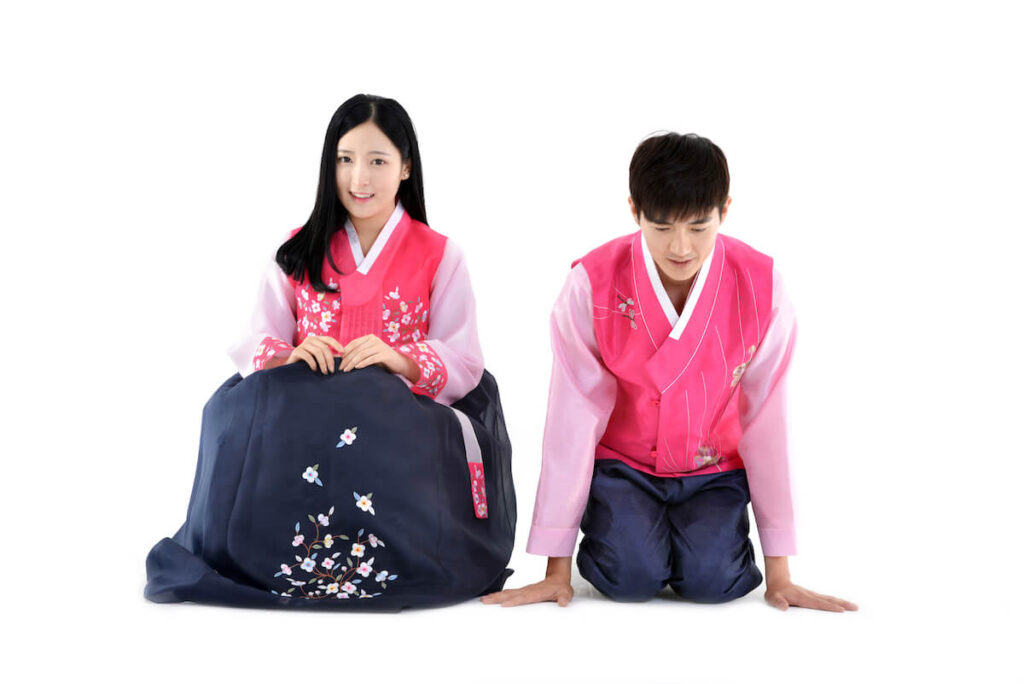
Something of a consolation if you’re struggling with Korean: at least it doesn’t have grammatical gender.
Unlike in French where wine (le vin) is masculine and la Mercedes-Benz is feminine, Korean nouns and adjectives are gender-neutral.
That being said, there are gender-distinguishing words, like in many other languages. The prefix 여 (yeo) is added to indicate that a noun or title refers to a female, and 남 (nam) if referring to a male. Some examples:
- 사장 (sajang) is Korean for boss. 여사장 (yeosajang) is female boss.
- 학생 (haksaeng) is Korean for student. 여학생 (yeohaksaeng) is female student and 남학생 (namhaksaeng) means male student.
- 의사 (uisa) is Korean for doctor. 여 의사 (yeo uisa) is female doctor.
21. The Korean vocabulary can be ridiculously easy at times…
Although for the most part challenging, there are also times when Korean vocabulary seems ridiculously logical and easy. This is especially true for native compound words. Here are some fun examples:
- 눈물 (nunmul) means ‘tears’. It combines눈 (eyes) and 물 (water). Eye + water = tears!
- 목걸이 (moggeoli) means ‘necklace’ and combines 목 (neck), 걸 (hang), and 이 (this or to act)
- 물개 (mulgae) is Korean for seal, which combines 물 (water) and 개 (dog).
22. There are lots of loanwords…
Another thing that makes learning Korean vocabulary easier is the number of loanwords in the language. Loanwords are vocabulary derived from another language and share the same meaning with the origin language.
As mentioned earlier, about half of the Korean vocabulary has Chinese origins. That’s already a huge advantage for Chinese speakers who wish to learn Korean! In addition, there are also common loanwords from Japanese, English, and even German.
Some examples:
- Cake – 케이크 (keikeu)
- Dessert – 디저트 (dijeoteu)
- Cup – 컵 (keop)
- Camera – 카메라 (kamera)
- Bus – 버스 (beoseu)
23. …and Konglish!
Konglish (a portmanteau of Korean and English) is often confused with English loanwords, but they’re not necessarily the same. While an English loanword is sounded out in Hangeul but has the same meaning as its English spelling and pronunciation, a Konglish word or phrase has a different or slightly different meaning.
In some cases, although the word originated from English, it might not be easily understood by an English speaker if he or she doesn’t understand the meaning.
For instance, when Koreans say the word 사이다 (saida), which is Hangeul for ‘cider’, they mean Sprite (or Chilsung Cider, which is the Korean Sprite). Another example is 나이트 (pronounced na-i-teu, as in night), which refers to ‘nightclub’.
Just one of those weird but fun things about the Korean language, if you ask me.
24. You can test your Korean fluency with TOPIK

Suppose you’ve been studying Korean for quite some time and you want to know if you’re proficient enough to gain a work visa or permanent residency in Korea. Well, you can with TOPIK.
TOPIK stands for the Test of Proficiency in Korean and it is a Korean language test for non-native speakers of Korean. The test measures fluency in reading, writing, and listening, with mostly multiple-choice questions and a short-answer writing exam for the higher levels.
There are two TOPIK levels and six sublevels, with different passing scores for each.
25. Korean shows and K-pop continues to spur interest in learning Korean.

In the last decade or so, more and more people have shown interest in learning the Korean language and the Korean culture in general. This coincided with the fact that K-pop, K-dramas, Korean films, and even Korean food have gained more attention worldwide.
That interest is not showing signs of slowing down.
In 2021, after the hit Netflix show Squid Game was launched, language learning app Duolingo reported a 76% rise in new users signing up to learn Korean in Britain. Two weeks after the show’s premiere, there were roughly 40% more new Korean learners in the US.
With the rising popularity of Korean entertainment, we can only expect more people to start learning Korean.
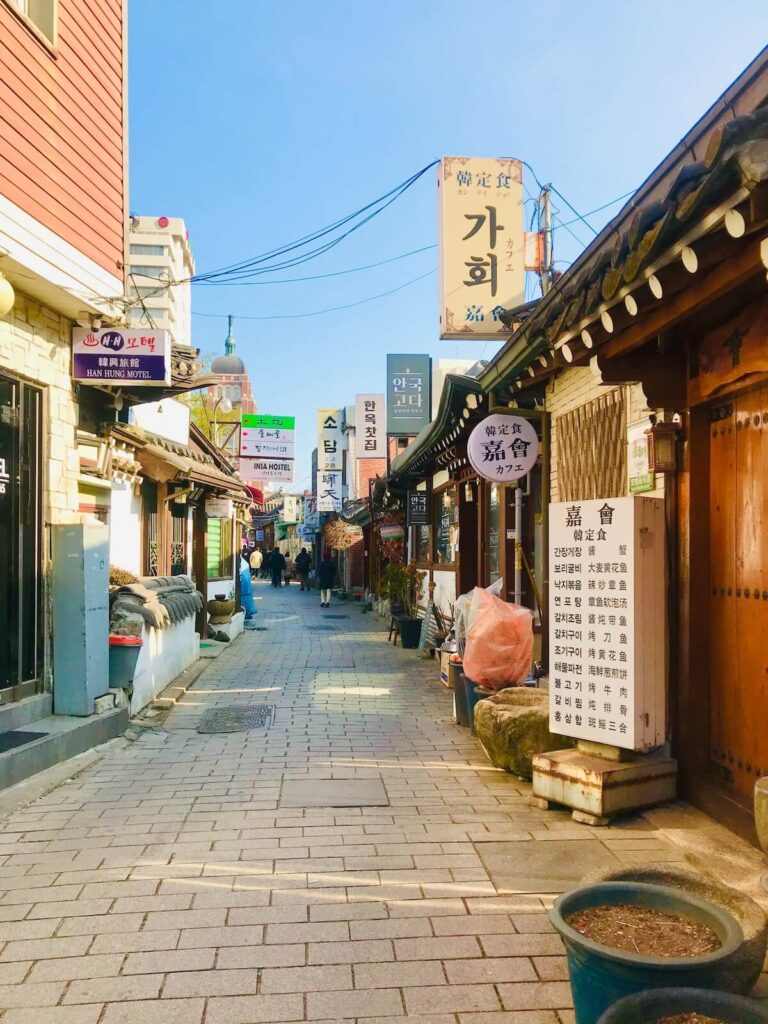
And that’s a wrap! I’ve always found Korean to be a fascinating language but writing this reminded me of the many things I — and many other Korean learners — love about it.
Which of these Korean language facts did you find most interesting? Chime in on the comments!