The German language has a long history and a wide geographic reach that has allowed it to develop lots of fun intricacies and beautiful words. Interested in learning more about the language? Dig into our awesome facts about the German language. If you aren’t already studying German, perhaps this will inspire you!
Geography facts about German

1. German is the 11th most widely spoken language
About 100mil people worldwide claim German as their first language! On top of that, another several million people speak a German minority language, such as Pennsylvania Dutch. If we include people who learn German as a foreign language, there are over 130mil people who speak German.
It’s a prevalent language in the fields of technology and business, and if you’re an artist you might recognize it as one of the primary languages on art supplies.
2. German is the official language of 5 EU countries
So…where is the German language spoken? Many German speakers live in the EU, with five EU countries naming it as one of their official languages.
Aside from being the native and sole official language of Germany, it is also an official language in Austria, Luxembourg, Liechtenstein, and Belgium.
These aren’t the only German-speaking countries, and the language is also spoken in as a minority language in many eastern European countries, Switzerland, Namibia, Brazil, South Africa, and the US!
3. Some dialects are almost unintelligible to one another
Germany has 16 Bundesländer, or federal states, and many of them have their own dialect(s) of German. Northern German dialects tend to be quite different from southern dialects. These differences arose due to consonant and vowel shifts that occurred along ‘lines’ in Germany.
The Uerdingen line marks a difference in pronunciation of -k vs. -ch. This turns ‘ich’ (I) into ‘ik’ above the Uerdingen Linie, but ‘ich’ south of the line. ‘Machen’ for ‘to make’ follows the same rule in what’s known as the Benrather Linie. Likewise, the Speyer line differentiates between dialects that use a fricative vs. a full stop in words like ‘apple’ à ‘Apfel’ or ‘Appel,’ with full stops (Appel) being used in the north.
4. The Bavarian dialect is considered the hardest to understand
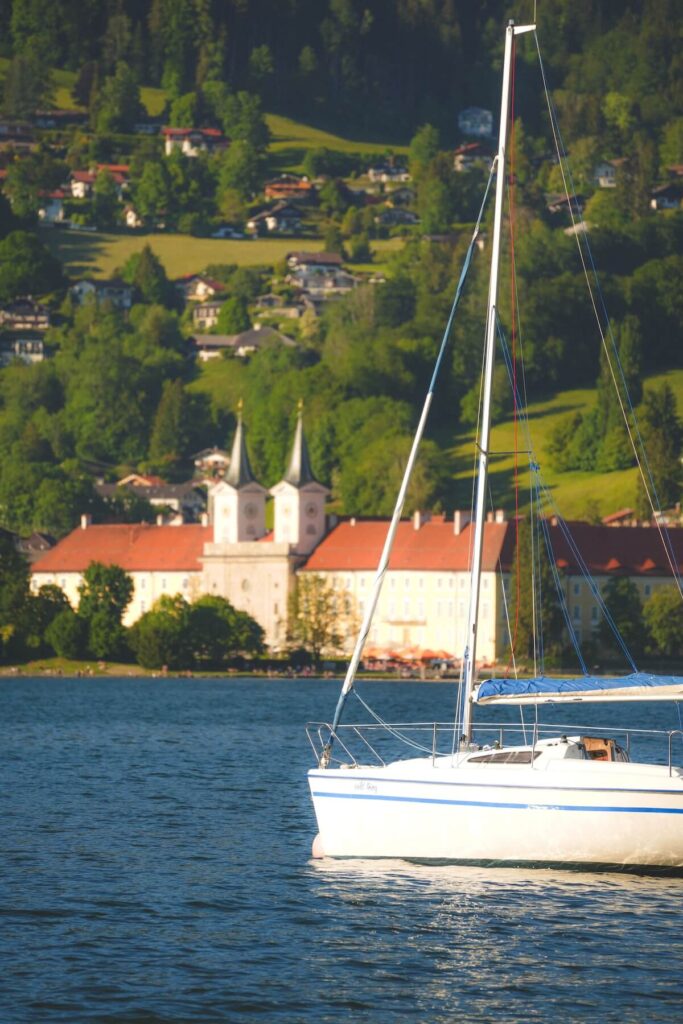
In the fun fact above, I noted how German dialects can be very different from one another. Well, many native German speakers, particularly from the north, say that the Bavarian dialect is the hardest to understand!
On top of the Uerdingen and Benrather Linien, Bavaria has an additional two dialectal lines. One of these alters how the plural/accusative ‘you’ is pronounced (euch –> enk) and another determining plural conjugations.
Other differences in pronunciation and vocab exist as well and make it hard for even native German speakers to understand the dialect. There has even been some contention as to whether Bavarian is a dialect of the German language or its own language altogether!
5. There are also accent differences between countries that speak German
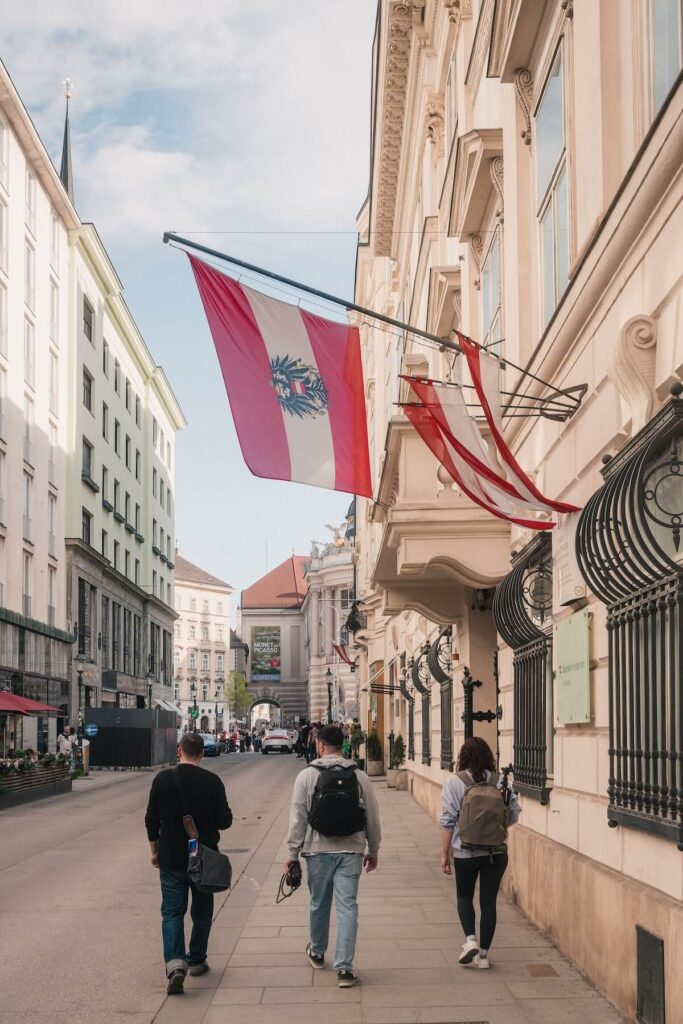
Just like how British English sounds different than American English, German accents also vary between countries. While Austrian German can sound pretty similar to German from Germany (Hochdeutsch for simplicity), there are several vocab differences. Austrian German also tends to add a rising inclination at the end of words, though this can be subtle.
Of the three accents I’m mentioning here, Austrian German and Hochdeutsch are the most similar. Swiss German, on the other hand, can be quite different! Swiss German, or Schweizerdeutsch, also has vocab differences, but perhaps more noticeable is the strong rising inclination in words.
If you’re interested in learning more, or just in hearing the differences for yourself, I definitely recommend looking up videos of people speaking each accent.
6. German was once a lingua franca of Central Europe
The Holy Roman Empire once consisted of a good chunk of Central Europe, stretching from parts of France and Italy east into Czechia, Slovenia, and parts of Poland. It even included Sardinia and Corsica!
Perhaps it’s no surprise then that Germany was the lingua franca, or common language, of Central Europe for a while. This also partially explains why German today is considered a minority language in several Central and Eastern European countries.
Linguistic facts about German

7. German has lots of compound words
For many, German is known as the language with ‘Frankenwords.’ German noun structure allows for just about any two words to be combined into a new one, like Schlüsselbein (bowl + bone) for collar bone or Fahrräder (drive + wheels) for bicycle.
This definitely allows for a lot of flexibility in the language and you can find a lot of interesting words in German because of it. You can make up new words this way too!
Compound words in German aren’t confined to just nouns; the verb meaning ‘to get to know’ is a combination of ‘to know (someone, a place, a thing, etc.)’ and ‘learn.’ It’s a bit trickier to make new German verbs compared to nouns, though, so you tend to see fewer ‘new verbs.’
8. German has a special letter
While many European languages using the Latin alphabet have accents or tonal marks, German is the only one with a Latin alphabet that also has a special letter!
The eszett is that squiggly ‘B’-like letter, ß, that you sometimes see in German words. You don’t pronounce it like a b, however, but an s. Writing German and don’t have the eszett? No worries, you can replace it with two ‘s’s and have it mean the same thing!
9. The German language and the English language are closely related

While today it may seem that German and English aren’t that similar, English is actually a Germanic language! Both languages were descended from an older form of German and still share a lot of their grammatical structures and vocab.
Looking at family words really illustrates just how similar they are: Mutter à mother, Vater à father, Bruder à brother, Sohn à son, Tochter à daughter, Onkel à uncle, Familie à family, etc. Looking beyond just vocab, certain verb structures and patterns are also similar between the two!
But don’t be fooled by all the similarities, there are still loads of false cognates in German. Make sure you aren’t giving your German friend a Gift, but a Geschenk; otherwise you probably wouldn’t be friends for very long (Gift means poison in German, not very friendly)!
Also Read: English vs. German: 17 Similarities and Differences Between Them
10. Like English, German has a lot of homonyms
While the German language doesn’t quite have English’s there-their-they’re problem, it’s certainly got a number of its own homonyms. For example, Alter can mean age, maturity, or seniority, and der Band means a volume (such as in a book series), die Band is a music band, and das Band is a ribbon, tape, or belt.
Context can generally help distinguish between these, but like with Band, articles can also help.
11. Some letters sound different in German
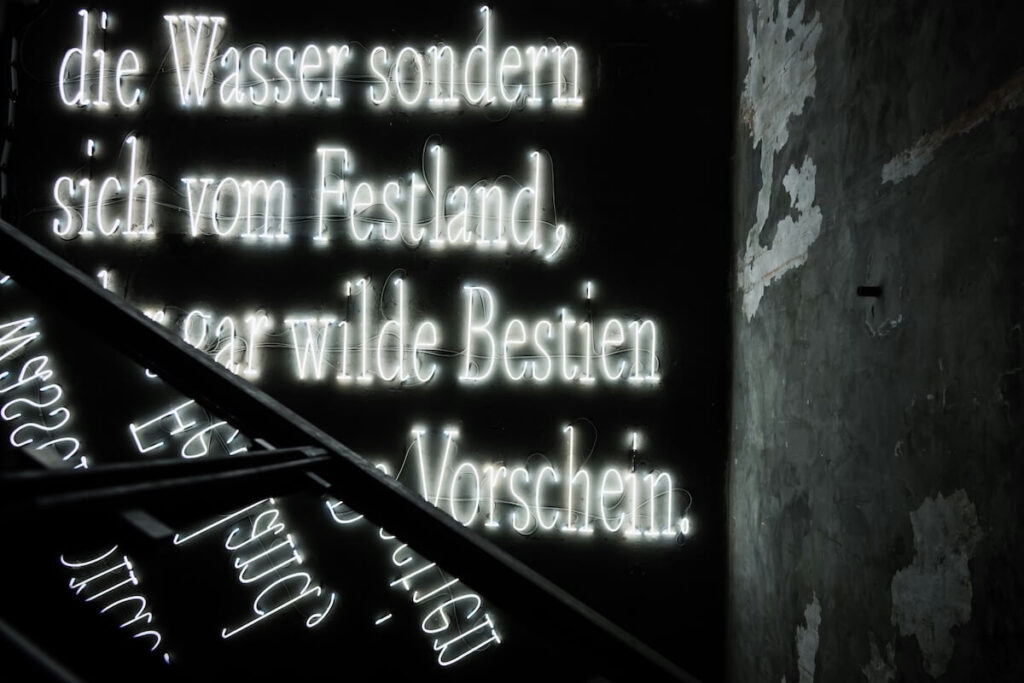
While that might be a bit of an obvious fact about the German language, it’s a critical one! I’ll stick to some of the major ones for this fun fact to avoid giving a whole school lesson on it.
Perhaps the most well-known letter switch is the German w, which sounds like a v. But did you also know that v in German instead sounds like an f? So, if you were going to ask someone wie viel (how many) you would pronounce it vee FEel.
z, which occurs a lot more in German than it does in English, is pronounced ts, sort of like if you were going to make the cymbal noise. Another one that crops up a lot is s, which, depending on what it’s next to, can be pronounced as either s, z, or sh!
Finally, like s, g can be pronounced more than one way depending on where in the word it is. Generally, it’s a g sound, but if the word ends in a ‘vowel + g’ combo then it’ll probably sound like a k instead.
History facts about German
12. German spelling rules changed in 1996
The Reform der deutschen Rechtschreibung von 1996, or the German Orthography Reform of 1996, was intended to make German spelling and reading easier for students without significantly changing the language. The new rules dictated changes to ß vs. ss, triple consonant combos, special cases, loanwords, and to make words related or derived from one another more similar. Some compound verbs were also changed under this rule.
But German language history is still chugging along, and some of these rules were further refined in 2006.
13. German used to be written in a different script than other languages
In early German printing, the lettering known as Schwabacher was the primary typeface used to print German documents. However, a new typeface was commissioned by Emperor Maximilian I in the 16th century.
This lettering, known as Fraktur, was to be used specifically for the Triumphal Arch woodcut by artist Albrecht Dürer, but Maximilian liked it so much he began asking for it in other commissions. Soon it was the most popular type face in the Germanic world, including places like Scandinavia, the Baltic States, and Central Europe.
Even when most of Central Europe switched to a different typeface, German-speaking countries continued to widely use Fraktur until the Nazis outlawed it in 1941.
14. There are three periods in German language history
The first, or I should say oldest, period began before there were written records in German, but the earliest text is from around 750 CE/AD. There wasn’t any standardization yet, so different areas would write German differently.
The next stage begins around 1050 CE/AD and is actually split into two substages: New High German and Middle Low German. Middle Low German was used in the north while New High German was used more in the south. Over time, New High German spread north and became the dominant dialect/language by the end of the period ~1650 CE/AD.
Modern German is the last period and was helped in part by the rise of the printing press. The writers and philosophers of the 18th century helped to further standardize the language.
15. Low German still exists today
Low German, or Plattdeutsch, is still spoken today, mostly in northern Germany and the Netherlands. It is also spoken in some areas of eastern Europe, Central and South America, and the US and Canada. Some Mennonite communities in these regions use Plattdeutsch in the general community and for religious services.
Plattdeutsch was not impacted by the 300-500 CE German consonant shift, and so a lot of words sound similar to English and Danish equivalents. For example, ‘pepper’ is Pfeffer in High German and Peper in Low German. Likewise, Plattdeutsch has a change in pronounce that turns wir –> wi, more similar to English’s ‘we,’ and er –> he, corresponding to ‘he’ in English.
Of course, there are still differences between Plattdeutsch and English, and similarities between Platt- and Hochdeutsch. In fact, Low German is still similar enough to High German that there’s a debate as to whether it should count as another dialect or a separate language.
16. The Brothers Grimm wrote the first comprehensive German dictionary
The Brothers Grimm, yes, the ones of fairytale fame, were the first people to publish a comprehensive German dictionary, or Wörterbuch. The dictionary was published in 16 parts between 1854-60, though it continued to be added to after 1860. The most recent addition to the dictionary was made in 1971. Today it has 33 volumes and has been worked on by a number of different scholars.
While the Duden may be the preeminent German language dictionary, the Grimms’ Deutsches Wörterbuch remains the earliest and most comprehensive German dictionary.
Fun facts to know for learning German

17. Every noun is capitalized
While many languages capitalize their proper nouns, German capitalized all nouns. So if you want to say ‘your dog’ –> dein Hund or ‘I’m reading a book’ –> ich lese ein Buch. The capitalization certainly helps with scanning text and its helpful when you’re first learning vocab. It may take a while to get used to in your own writing though!
It’s important to note that pronouns are not capitalized unless they’re at the beginning of the sentence. So: Wo bin ich? (where am I?) vs. Ich bin hier (I am here).
18. German has 3 genders
Like Romance languages, German also has gendered verbs. However, German doesn’t just do feminine and masculine, but also neuter!
The articles for gender undergo declension based on word positioning, but the basic articles are der (m.), die (f.), and das (n.). For some objects the gender is intuitive, such as der Junge (the boy) and die Frau (the woman), but other times it’s more complicated, like in das Mädchen (the girl).
These tend to trip up speakers who come from languages without gendered nouns, so I recommend learning them with the noun when possible.
19. German doesn’t distinguish between the habitual present and the present progressive
For non-grammarians out there, the habitual present is a verb conjugation that indicates an action that recurs while the present progressive is a conjugation indicating an action is actively occurring. This can be illustrated in the difference between ‘I drink tea’ and ‘I am drinking tea,’ respectively.
In English, and in Romance languages, this conjugation marks an important distinction in the action. In German, however, this distinction is not made. Both ‘I drink tea’ and ‘I am drinking tea’ are conjugated as ich trinke Tee, and the same is true for all verbs in the present tense.
Like with noun capitalization, this rule can take a bit for non-native speakers to get used to.
20. The German keyboard is slightly different than the English one
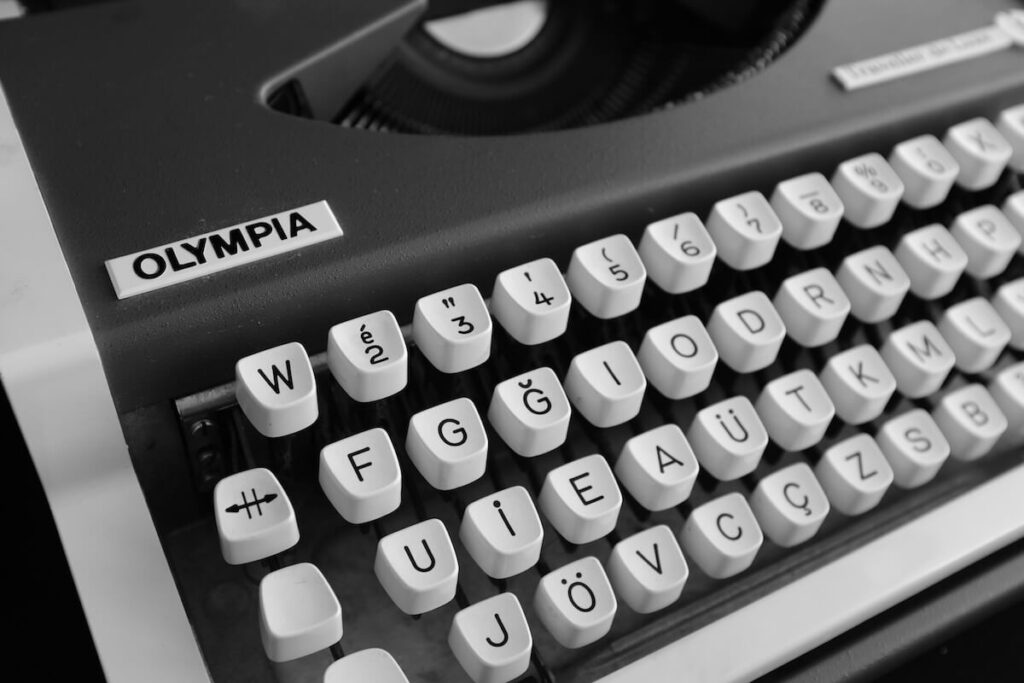
Aside from having some additional letters—ä, ö, ü, and ß—to accommodate, German keyboards also place the z in a different location. To account for the umlauts and eszett, the keyboard moves the semi/colon, quotes, brackets, and hyphen/underscore to a new location and replaces them with the umlaut letters. And since the letter z is used more in German than y, the two letters are switched!
Those aren’t the only changes of course. To make room for the umlauts some of the symbol keys have been switched around or moved to a new location as well.
21. There are 6 ways to say ‘why’
The first three ways to say why are basically interchangeable, only with slightly different connotations. Warum is for motive or cause, wieso is for is for causation and tends to be used more in spoken German, and weshalb asks for the purpose and additional detail, but is a bit outdated.
Wieso is also commonly used to say things like ‘how come.’ Wofür generally means ‘for what’ and wozu is ‘for what reason,’ meaning they’re both pretty interchangeable as well and use the same um…zu construction in responses, though wofür can also use damit in responses. Finally, weswegen means ‘because of what’ and cannot be used rhetorically.
22. There are also multiple ways to say ‘what’ and ‘where’
Much like with ‘why,’ Germans also use more than one word to ask ‘what’ and ‘where.’ Was is the base form of ‘what’ and is used similarly to the English form of the word. Wofür means ‘what for.’ Both worüber and wovon mean ‘what about.’ Womit is ‘what…with’ (or ‘with what’).
Additional forms include ‘on what,’ ‘from what,’ ‘against what,’ ‘in what/wherein,’ ‘after what/whereupon,’ and ‘of what.’ These aren’t to be confused with the ‘where’ words, which use a base form of wo. Wo is used much the same way as the English word ‘where,’ while woher means ‘where from’ and wohin means ‘where to.’
Keep in mind that while these words are compounded when asking a question in German, they might not be in English! For example, worüber redet ihr –> what are you (guys) talking about? or woher kommst du –> where are you from?
Wacky facts about the German language
23. Compound nouns in German have gotten famously long
Perhaps you’ve heard German described as a ‘Franken-language’ before, and you probably read that linguistics German fun fact above that says you can combine words to create new ones.
Well, perhaps it’s not surprising then that German has had some famously long words. These are generally created for professional jargon, especially in the legal field, and so don’t tend to be used by everyday people, but they’re still impressive.
Rinderkennzeichnungsfleischetikettierungsüberwachungsaufgabenübertragungsgesetz is the longest at a whopping 79 letters and refers to a law regarding the overseeing of meat labeling, or literally, “task transfer law concerning the supervision of the labeling of beef as meat on sale tags.”
24. A survey was conducted to find the most beautiful German word
In 2004, the German Language Council sent out a survey to find the most beautiful German word. Nearly 23,000 suggestions were received from 111 countries. There was even a children’s jury convened to determine what kids thought was the most beautiful German word.
Habseligkeiten (treasured belongings) took first place, followed by Geborgenheit (emotional security), lieben (love), and Augenblick (fleeting moment), with Rhabarbermarmelade (rhubarb marmalade/jam) coming in 5th. The kids’ pick was Libelle for dragonfly.
25. German is called the language of poets and thinkers

Considering the long list of writers, musicians, and philosophers that came from Germany, perhaps it comes as no surprise that German is known as “the language of poets and thinkers.”
Many great writers and philosophers came out of Germany in the 18th, 19th, and early 20th centuries, most famous among them von Goethe, Kafka, Nietzsche, and Kant. The proliferation of writers and philosophers during these centuries is likely to credit with the German language’s scholarly reputation.
But even if you aren’t into older texts, the German language still has authors and poets producing fantastic work. Authors such as Celan, Lasker-Schüler, Erpenbeck, and Grass show that German is still “the language of poets and thinkers.”
26. There are some pretty cool German words without an English equivalent
Every language has its intricacies and the German language is no exception. Everyone’s probably heard of German’s Schadenfreude, or happiness you get from someone else’s misfortune, but there’s a whole slew of beautiful words without an easy English equivalent.
Heimweh, or a longing for home that is deeper than homesickness, is one such word. Erklärungsnot is one that every kid instinctively knows but can’t put a name to—or more simply, the moment when you’re caught in the act and need a quick excuse.
My personal favorite is probably Sehnsucht, which is a yearning for a utopian ideal or a nostalgia for things that are incomplete.
27. German has some pretty fun colloquialisms
Some of the sayings that come from German are pretty funny! The most useful one for travelers is likely ich verstehen nur Banhof, which literally means “I only speak train station.” It essentially means that one only speaks enough German to get where they need to go.
If you’re looking for a funny, but comforting saying, you might try Alles hat ein Ende, nur die Wurst hat zwei. This one literally translates to “everything has an end, only wurst/sausage has two,” and more metaphorically means ‘all good things come to an end.’
If you work in retail, you’re probably familiar with people who Haare auf den Zähnen haben, literally “have hair on the teeth,” or who might be better known as ‘tough customers.’
Conclusion
Have you enjoyed our facts about the German language? If any of these have piqued your interest, check out some podcasts, apps, or videos and books to get your language learning journey started. Or, if you’ve already started, there are some great translator apps to help with those long compound words and tricky declensions.
Surprising facts about the German language – Pin it!
This is really cool!
Hi Ellie – really well researched and definitely promoting the German language on a positive note 🙂
A few little things: Sehnsucht is easily translated with “longing”.
Also: ich verstehe nur Bahnhof means “I don’t understand nada (referring to context, gist etc.)”. It is used usually when a person talks rather quickly about a subject unknown to the other person or listener. Comparable to “This sounds like Spanish/Chinese to me”.
As for the Present Progressive: It is not an official tense in German but we sometimes say “ich bin gerade dabei Tee vorzubereiten” – the word “gerade” indicates that you are litterally doing it whilst talking to someone.
Loved your contribution and I can only refer to the different Swabian dialects in Germany…they vary within one county/state (Baden-Wuerttemberg) and will be a massive challenge for anyone on a German as a Foreign Language B2 or even C1 level 😀
Thank you again for this great capture of my mother tongue <3
Thanks for the tip on the present progressive!
Glad you liked the article 🙂
Really cool article,
just one thing you said some people speak German in Brazil, sort but despite de German decedents nobody speaks German in Brazil, noooo body at all.
otherwise i loved the article, very instructive and interesting congratulations
I absolutely love this. Thank you, Ellie! I’m coming up on A1 at a fairly rapid clip, and my favorite word in the world, in any language, is gemütlichkeit. It makes me feel at home and like I’m wrapped in a blanket with bits of love, from, to, and with all of my friends and family. Thank you again for the great article!