
Beyond the iconic anime and delicious ramen, there’s an aspect of Japanese culture that holds a unique charm: the Japanese language. The language of ancient traditions and modern marvels, Japanese or Nihongo has rich historical roots, linguistic peculiarities, and global significance.
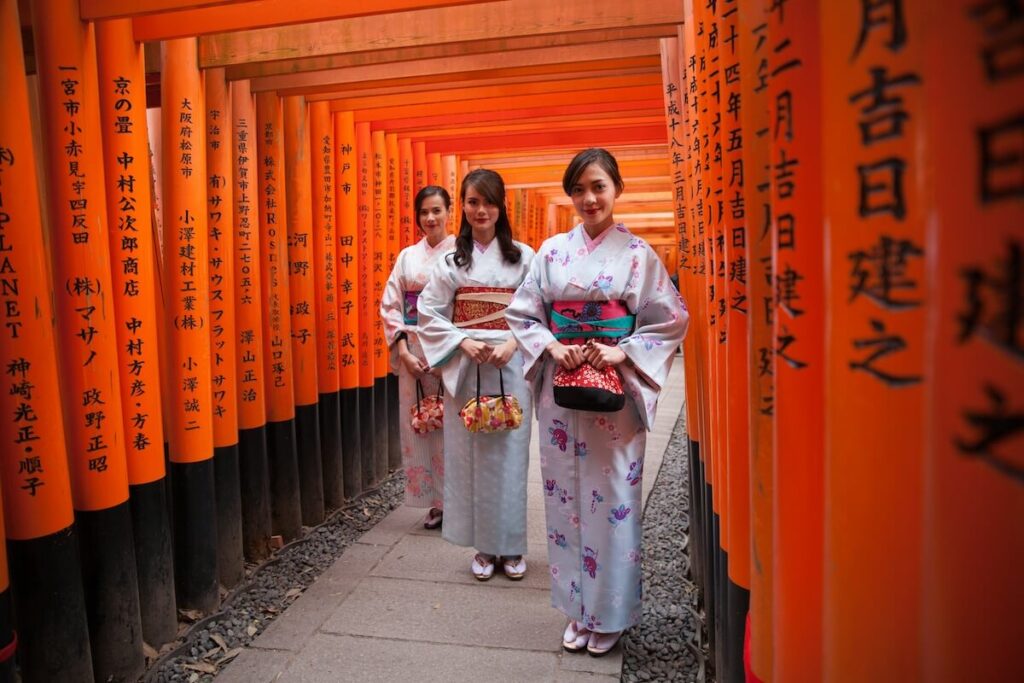
While Japanese is said to be one of the hardest languages to learn, it’s also one of the most fascinating. A fun part of learning Japanese is getting to know its history, quirks, and remarkable qualities. And so, from one Japanese learner to another, I’m here to share with you some of the most interesting Japanese language facts.
Grab your metaphorical teacup and prepare to be enlightened and entertained!
Geography facts about the Japanese language
1. Japanese is spoken by over 125 million speakers.

With more than 125 million people conversing in this beautiful language, Japanese is one of the most spoken languages in the world. It is predominantly spoken in Japan, where 99% of Japanese speakers reside.
But sizeable Japanese communities exist in other countries like Brazil, the United States, and Canada, contributing to its global presence. Aside from migration, Japan also has a strong cultural influence from food to anime to J-pop. Those who are drawn to Japanese culture naturally take an interest in the language as well.
2. Various Japanese dialects exist.

Japan is an archipelago, which consists of several islands. This geographical trait has played a critical role in shaping the unique characteristics of the Japanese language.
With high mountains and deep valleys scattered across various regions, it’s no surprise that regional dialects developed. These regional Japanese dialects feature different pronunciations, accents, vocabulary, and even writing styles.
Depending on who you ask, the total number of Japanese dialects varies. But you can classify them into four major dialect groups: Eastern (which includes the Hokkaido, Tohoku, and Kanto dialects), Western (includes Kansai, Chugoku, and Shikoku), Kyushu (includes Kagoshima, Hichiku, and Honichi), and Hachijo (spoken in the Southern Izu Islands and the Daito Islands).
Standard Japanese is based on the Tokyo dialect, which is one of the many Kanto dialects. This form of Japanese is what most people study and it’s safe to say that you can get by in Japan armed with this language. That said, if you’re staying in a particular region for a long time, it might be worth knowing a few phrases in the local dialect. At the very least, it’ll impress the locals.
3. But the Ryukyuan languages are not Japanese dialects.

While it’s true that Japan is teeming with dialects, the Ryukyuan languages that are spoken in Okinawa and the Amami Islands aren’t among those.
The Ryukyuan languages, also known as Lewchewan or Luchuan, are distinct enough to be considered a separate branch of the Japonic family. They are unintelligible to Japanese speakers and in fact, they’re not even mutually intelligible with each other!
The Ryukyuan languages boast unique vocabulary, grammar, and phonology. Sadly, facing pressure from Japanese dominance, these languages fight for survival.
4. Some Japanese dialects are endangered.
Beyond the Ryukyuan languages, some Japanese dialects face a silent threat. Driven by urbanization, media influence, and a national language policy promoting standard Japanese, these regional variations are fading.
Imagine the lilting melodies of Kyoto, the robust twang of Tohoku, or the playful sing-song of Osaka — all losing their nuances. The threat is even more apparent in dialects that are spoken by smaller communities.
Thankfully, initiatives are emerging to document and revitalize these dialects, reminding us that language holds unique stories waiting to be shared and preserved.
Historical facts about the Japanese language
5. The exact origins of the Japanese language are unknown.

The Japanese language history is shrouded in mystery. Despite being a powerhouse language spoken by millions, its exact origins remain elusive.
Unlike many languages with traceable family trees, Japanese stands alone. One popular hypothesis links it to Korean, citing shared grammatical features and honorifics. Others propose connections to Austronesian or even Tibeto-Burman languages, based on vocabulary and historical migrations.
I don’t know about you but the ambiguity just adds fuel to the intrigue. Makes it even more fun to learn Japanese!
6. Japanese was heavily influenced by the Chinese language.
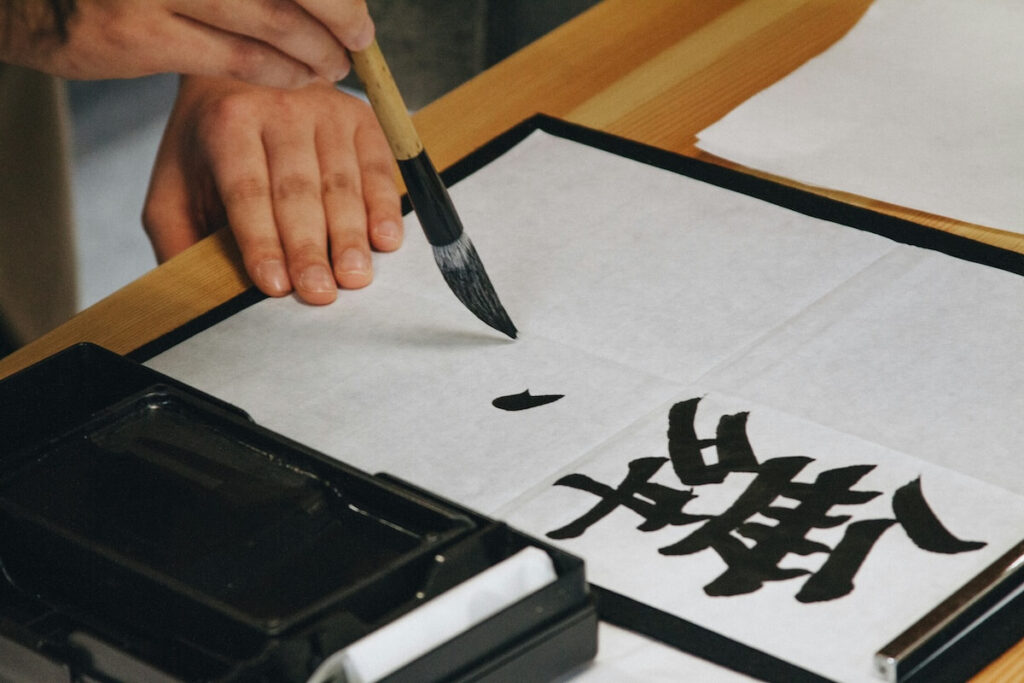
Origins aside, what’s certain is that the influence of the Chinese language on Japanese is vast and multifaceted, thanks to years of shared history and cultural exchange.
One obvious influence was in the writing system. The adoption of Chinese characters, kanji, around the 5th century CE provided a writing system for Japanese, which initially had no written form. While pronunciation and meaning often diverged from Chinese, kanji became essential for expressing complex ideas and cultural concepts.
Vocabulary is also a huge contribution. Thousands of Chinese words were borrowed into Japanese. As a result, you’ll find lots of Chinese loanwords in various domains like philosophy, religion, government, and technology. Words like densha (electric car) and sushi are just a few examples.
Many of these loanwords underwent semantic shifts, acquiring new meanings in Japanese while retaining their Chinese roots. For example, the Chinese word shin originally meant “heart” and/or “mind”, but in Japanese, it also took on the meaning of “god” or “spirit.”
The complex system of honorifics in Japanese is also thought to have been influenced by the hierarchical nature of Chinese society, though it developed its unique characteristics.
Also read: Should You Learn Chinese or Japanese? A Decision Guide
7. Japanese literature dates back centuries.

Japanese literature is proof of how vibrant Japanese language history is and how effective it is as a medium for conveying stories.
Japan’s literary history stretches back centuries. Among the earliest traceable works, 8th-century epics Kojiki and Nihon Shoki, laid the foundation for myths and legends.
Heian-era (794-1185) classics like The Tale of Genji transported readers to worlds of courtly intrigue and emotional depth. In fact, this work is touted as the world’s oldest novel, and it was written by a woman!
Through the ages, diverse genres flourished, from samurai epics to haiku’s poignant brevity. In the modern era, authors like Murakami and Mishima explored themes of identity, alienation, and social change.
8. Standard Japanese was born following the Meiji Restoration.

Before the Meiji Restoration in 1868, Japan lacked a unified national language. Dialects flourished regionally, reflecting diverse identities and histories.
However, the newly formed Meiji government sought to forge a national identity and modernize the country. They saw language as a crucial tool and promoted a standardized form based on the Tokyo dialect, officially introducing it in education and media.
This new “Standard Japanese” faced resistance from regions with distinct dialects, but its association with education, media, and government power led to its gradual dominance.
9. Writing was simplified after World War II.

In the aftermath of World War II, the Japanese government pushed for modernization and increased literacy. This resulted in a wave of reforms, including in the writing system.
Many complex kanji characters were replaced with simpler alternatives, reducing the number of characters required for everyday use. This new set, known as shinjitai, aimed to make writing and reading easier for the general public.
The use of kana or phonetic syllabaries was also standardized to reflect modern pronunciation. This gendai kanazukai (modern kana usage) eliminated inconsistencies and streamlined the writing system.
These reforms were not without controversy, with some seeing them as a loss of cultural heritage. However, the simplified writing system remains the standard today, contributing to increased literacy rates and a more accessible written language for all.
Linguistic facts about Japanese
10. The Japanese language doesn’t hold official status in Japan.
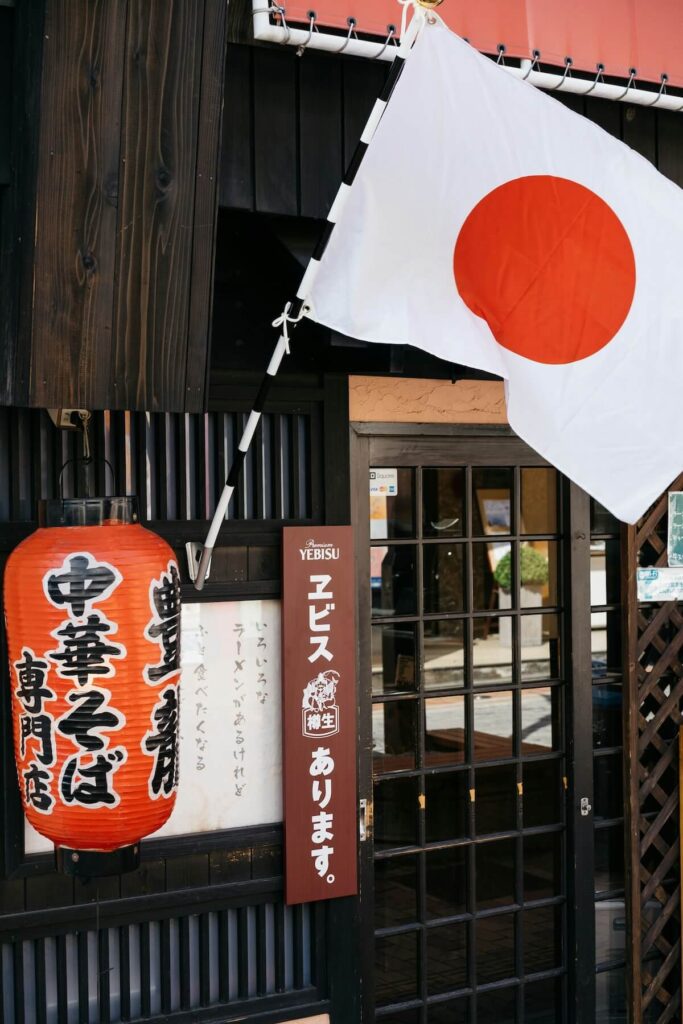
Here’s one of the most interesting facts about the Japanese language. Did you know that it’s not the official language in Japan?
Contrary to popular belief, the Japanese language doesn’t hold official status in Japan. While it’s considered the main language of Japan or the de facto national language spoken by the vast majority and used in education, media, and government, there’s no legal document explicitly declaring it as such.
This might seem surprising, but it reflects Japan’s emphasis on cultural unity rather than legal pronouncements. Additionally, officially recognizing one language could be seen as neglecting the existence and importance of regional dialects, which still hold cultural significance.
So, while Japanese reigns supreme in everyday life, its official status remains an interesting case study in language and national identity.
11. Japanese may be a language isolate.
Unlike most languages, which belong to families with shared ancestry, Japanese is widely considered a language isolate. This means it has no demonstrably close relatives.
Theories abound about its origins, with connections to Korean, Austronesian, or even Tibeto-Burman languages proposed, but none offer a definitive answer. And while the Ryukyuan languages are said to be related to Japanese, their exact affiliation remains uncertain.
12. There are three writing systems…
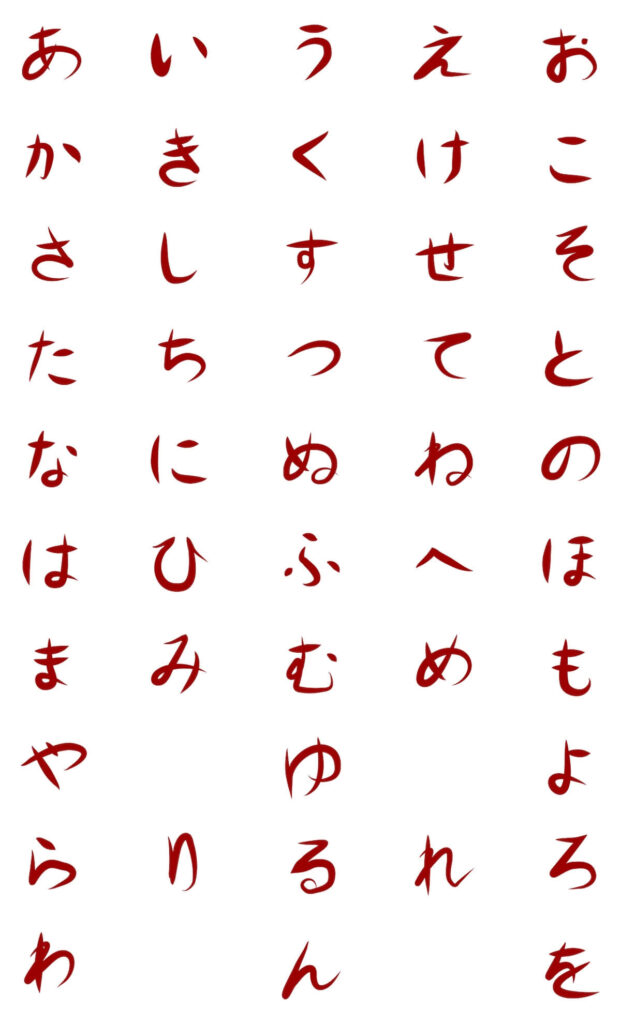
One of the most interesting facts about the Japanese language is the existence of three distinct writing systems: kanji, hiragana, and katakana. And each has its unique role and history.
The elder statesman of the trio, kanji characters are imported from China and represent whole words or concepts. Kanji consists of over 50,000 logographic characters. Think of them as picture-based symbols, carrying diverse weight, meaning, and multiple pronunciations depending on context.
Fun fact: You need to know at least 100 kanji to pass the JLPT N5 (easiest level) and about 2,000 kanji to pass N1 (hardest level).
Another writing system is hiragana, a system that’s all about flow and grace. Composed of 46 characters, hiragana handles native Japanese words and grammatical elements. It’s the most commonly used form of Japanese writing and it’s the first system that children learn.
Lastly, the sharp and angular katakana tackles foreign words and loanwords. It’s also used for emphasis and certain onomatopoeic expressions.
Make no mistake, all these three can be used in a single sentence. A sentence can include kanji for key concepts, hiragana for grammatical flow, and katakana for a foreign brand name, all within the same breath.
13. …And two number systems.

Like many of its neighbors, Japan also has two main number systems in use.
The Sino-Japanese counting system is based on Chinese numerals, with each character representing a number (一 for one, 二 for two, etc.). It uses counters to differentiate between different types of things being counted (e.g., 本 for books, 人 for people). This system is more commonly used for larger numbers, formal situations, and official documents.
The native Japanese counting system, on the other hand, uses native Japanese words for numbers (hitotsu for one, futatsu for two, etc.). It has no counters and is generally used for smaller numbers (1 to 10) and informal contexts.
Both systems are taught in Japanese schools, and understanding both is essential for navigating everyday life in Japan. Here’s a comparison to start you off:
| Number | Sino-Japanese | Native Japanese |
| 1 | 一 (ichi) | 一つ (hitotsu) |
| 2 | 二 (ni) | 二つ (futatsu) |
| 3 | 三 (san) | 三つ (mittsu) |
| 4 | 四 (shi) | 四つ (yottsu) |
| 5 | 五 (go) | 五つ (itsutsu) |
| 6 | 六 (roku) | 六つ (muttsu) |
| 7 | 七 (shichi) | 七つ (nanatsu) |
| 8 | 八 (hachi) | 八つ (yatsu) |
| 9 | 九 (kyū) | 九つ (kokonotsu) |
| 10 | 十 (jū) | 十 (tō) |
14. There are two writing styles.

Japanese characters can be written either vertically (tategaki) or horizontally (yokogaki).
Vertical writing or tategaki holds a deep-rooted tradition, dating back centuries and echoing Chinese influence. It reads from top to bottom, with columns moving from right to left. This type of Japanese writing style is frequently seen in formal contexts like novels, newspapers, and official documents.
On the other hand, yokogaki is inspired by Western writing styles. It reads from left to right, just like English. It’s often favored for modern, informal contexts like magazines, websites, and everyday notes.
15. Japanese follows the SOV sentence structure.

In Japanese, “I read a book” becomes “I book read.” Unlike English, which follows the Subject-Verb-Object (SVO) order, Japanese embraces Subject-Object-Verb (SOV), which makes it confusing for English speakers.
With this structure, the subject (the one doing the action) comes first, followed by the object (the recipient of the action), and finally the verb (the action itself). So, our simple sentence “I read a book” transforms into “Watashi (I) wa hon (book) o yomimasu (read).”
Here are some more easy examples:
English (SVO): The cat chases the mouse.
Japanese (SOV): ネコはネズミを 追いかけます
- ネコは (neko wa; the cat)
- ネズミを (nezumi o; the mouse)
- 追いかけます (oi-kake-masu; chases)
English (SVO): She eats an apple.
Japanese (SOV): 彼女はりんごを食べます
- 彼女は (kanojo wa; she)
- りんごを (ringo o; apple)
- 食べます (tabemasu; eats)
16. Japanese is not tonal.

Imagine the confusion if “dog” became “horse” just because you spoke in a different tone! That’s the case in the Thai language. Fortunately, unlike many Asian languages, Japanese isn’t a tonal language. While melody plays a role in conveying emotions and intentions, pitch doesn’t change word meaning as it does in tonal languages.
In Japanese, the pitch acts like emphasis within a melody, stressing certain syllables within a word but not altering its core meaning. 花 (hana or flower), for example, has a rising pitch on the first syllable, but saying it with a flat tone doesn’t change its meaning.
17. Knowing honorific speech is a must.

A crucial element in mastering the Japanese language is knowing keigo, the complex system of Japanese honorific speech.
In the Japanese language, different verb conjugations and vocabulary express respect and acknowledge social hierarchy. But knowing just the basic vocabulary isn’t enough. Understanding when and how to use these honorifics unlocks deeper connections and avoids unintentional offense.
Basic honorifics include using the following suffixes for people’s names:
- さん (san): The most common honorific suffix for people’s names. Example: Tanaka さん (Tanaka-san)
- 先生 (sensei): Used for teachers, doctors, and other professionals. Example: 田中 先生 (Tanaka-sensei)
- 奥さん (okusan): Used for married women. Example: 山田 奥さん (Yamada-okusan)
- 部長 (buchō): Used for department heads. Example: 佐藤 部長 (Satō-buchō)
Some words are added at the end of certain expressions to evoke increased formality. This is the case with ありがとう (arigatō) — you can sayありがとうございます (arigatō gozaimasu) どうもありがとうございます (dōmo arigatō gozaimasu) or to make it sound more formal.
There are many other ways to use honorific speech in Japanese and it’s one aspect of the language (and the culture) that you can spend a long time learning.
18. Japanese nouns have no grammatical gender or number.

In Japanese grammar, nouns shed the baggage of gender and number. Unlike their European counterparts, where objects can be “masculine,” “feminine,” or “neuter,” and come in singular or plural forms, Japanese nouns approach identity with simplicity.
This means a “book” isn’t bound by being “he” or “she,” and exists comfortably as hon (本) regardless of quantity. Neko (猫) can represent a single cat, multiple cats, or even a generic concept of “catness.”
That said, the absence of grammatical gender and number doesn’t imply a lack of nuance. The Japanese language uses particles like wa and ga to mark the grammatical roles of nouns (subject, object, etc.) and can use specific words or phrases to indicate gender when needed.
19. Some vowels may sound muted…

But they’re actually not. Let me explain.
While it’s true that pronunciation in Japanese can be nuanced, all five vowels (あ, い, う, え, お) are well articulated. However, there are some key features to keep in mind:
Firstly, vowel length can vary based on position and consonant combination. Short vowels, especially in unstressed syllables, may sound shorter or less emphasized compared to their long counterparts. For example, the “i” in sushi (スシ) is shorter than the “i” in inu (犬). This doesn’t make them silent, but it can create a subtle difference in perception.
Secondly, Japanese has vowel harmony, where vowels within a word tend to align in terms of their openness (front vs. back). This can sometimes lead to slight modifications in pronunciation, particularly for the vowels “u” and “i.” For instance, the “u” in kudasai (ください) becomes slightly closer to an “i” sound due to the influence of surrounding vowels. However, it remains distinct and audible.
Finally, some consonant combinations might obscure the full clarity of vowels, especially for non-native speakers. For example, the final vowel in desu (です) might seem muted due to the preceding alveolar consonant “s.” However, with practice and familiarity, even these subtleties become distinguishable.
Also read: 15 Best Japanese Speaking Apps to Get Fluent Quickly
Fun facts for learning the Japanese language
20. Japanese is the fastest spoken language.

Japanese, in several studies, often gets crowned “fastest spoken language”. This may be debated as these studies often include a small sample of languages.
What’s certain is that Japanese boasts a high syllable speed, averaging 7.84 syllables per second compared to English’s 6.19. This rapid-fire pace comes from several factors such as syllabic structure and pitch accent.
Japanese words tend to be shorter, built mostly on consonant-vowel combinations. And unlike English’s emphasis on individual words, Japanese relies on pitch and intonation to convey meaning. What’s more, In Japanese culture, efficiency is valued, which might contribute to a faster speaking pace compared to some other cultures.
21. But it has the lowest information density.
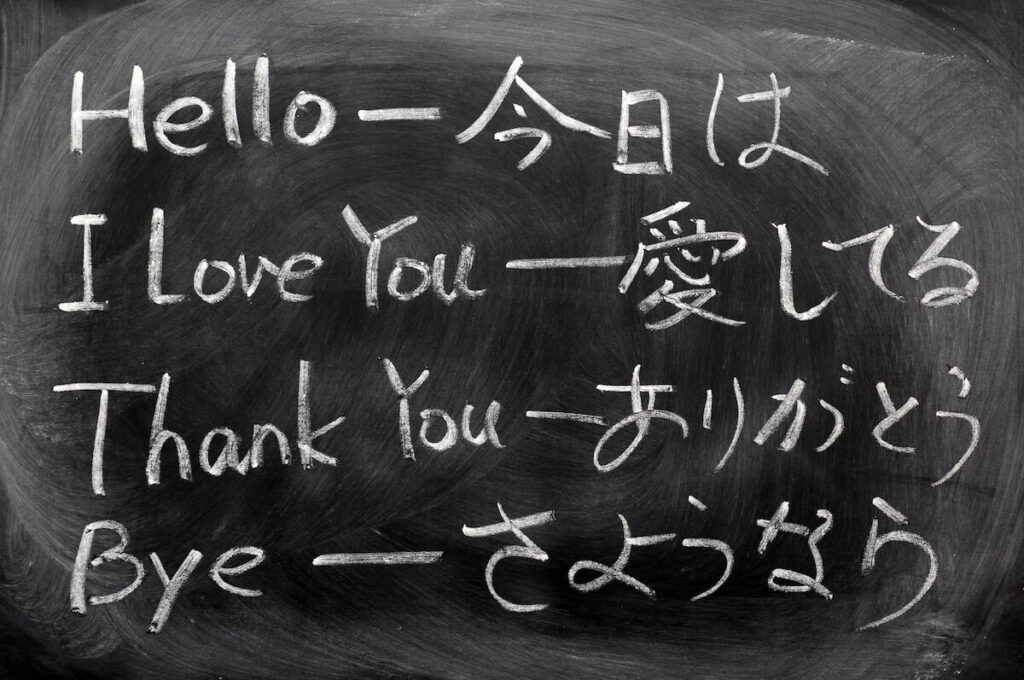
Here’s the catch: speed doesn’t equal information density.
While Japanese may pack more syllables and words, each syllable or word might carry less meaning compared to languages like English. So, while it sounds fast, the actual content conveyed might not be as dense.
Just think, how many syllables are in English’s “thank you” compared to Japanese’s ありがとう(arigato)? Here are more examples:
- It’s a red car = 赤い車ですね。(Akai kurumadesu ne.)
- I was disappointed with the ending = 結末にがっかりしました。(Ketsumatsu ni gakkari shimashita.)
- Where is the bathroom? = 化粧室はどこですか? (Keshō-shitsu wa dokodesu ka?)
22. Japanese has tons of onomatopoeia.
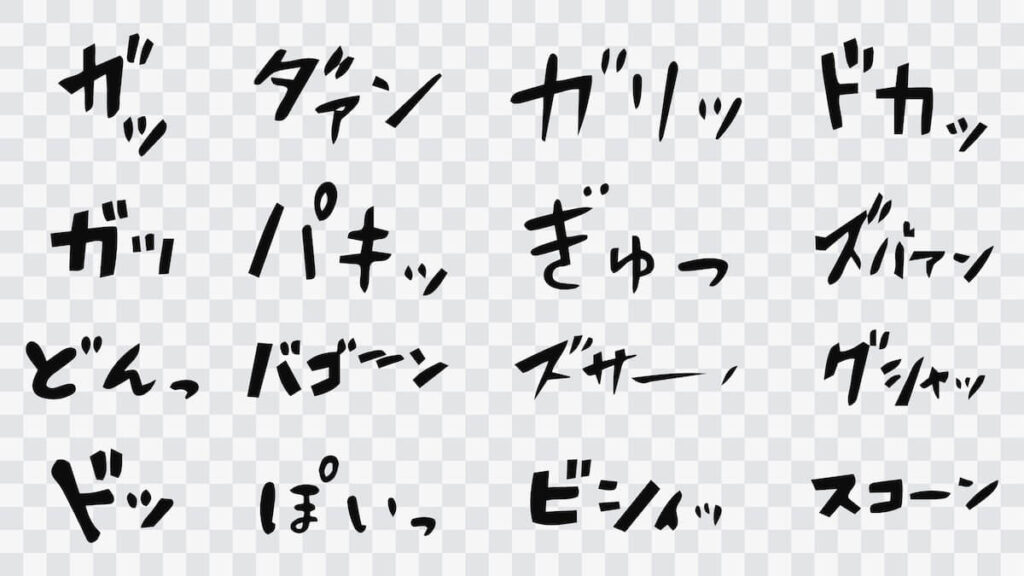
One of the fun facts about Japanese that you’ll notice when you start diving into this language is that it bursts with onomatopoeia — words that mimic the sounds they describe, from chirping birds to sizzling food.
Some of the easy-to-remember ones are:
- ふわふわ (fuwa-fuwa): This fluffy sound describes something soft and light, like clouds or freshly baked bread.
- ゴロゴロ (goro-goro): This rumbling sound represents a low growl, like a cat or thunder in the distance.
- ケロケロ (kero-kero): This is the Japanese version of a frog’s ribbit. Hence the Sanrio character Kero Kero Keroppi.
- バタン (batan): This slamming sound describes something closing forcefully, like a door or a book. Kind of like “bang” in English.
This love for onomatopoeia isn’t just playful; it’s deeply ingrained in Japanese culture. It reflects the emphasis on sensory details and the desire to vividly communicate experiences.
23. There are many borrowed words.
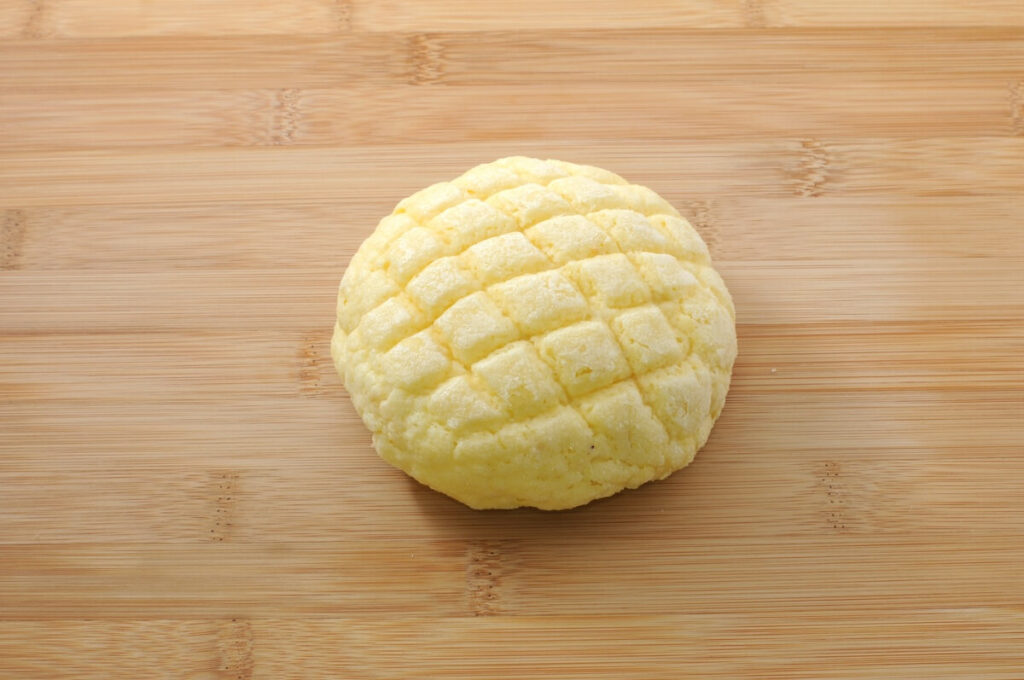
The Japanese language, while distinct in its core structure, has a long history of borrowing and adapting words from other languages. These 外来語 (gairaigo) or “borrowed words,” primarily come from Portuguese during the early trade period, followed by a wave of English loanwords after World War II.
Many gairaigo seamlessly blend into the Japanese soundscape, written in katakana with slight pronunciation adjustments. Konpyūtā (コンピューター) for “computer” and pan (パン) for “bread” are familiar examples.
Even fashion and entertainment are sprinkled with borrowed terms, with jinzu (ジーンズ) for “jeans” and aidoru (アイドル) for “idol” becoming commonplace. Some gairaigo have undergone subtle shifts in meaning or pronunciation, adapting to the Japanese soundscape. For example, the name Alice (アリス) is pronounced Arisu and has taken on a uniquely Japanese charm.
Also read: 12 Best Japanese Vocabulary Books for Language Learners
24. Saying “no” directly is impolite.

Unlike many Western cultures where directness is valued, Japanese culture prioritizes harmony and indirectness. A blunt “no” can be perceived as rude or insensitive, potentially damaging relationships and causing awkwardness.
This doesn’t mean Japanese speakers can’t express refusal. Instead, they rely on a repertoire of subtle strategies to convey their message politely.
Here are some ways Japanese people say “no” indirectly:
- ちょっと難しいですね (chotto muzukashii desu ne) – It’s a bit difficult.
- 今すぐは無理です (ima sugu wa muri desu) – It’s not possible right now.
- もっと良いタイミングがあれば… (Motto yoi taimingu ga areba…) – If there’s a better time…
- いいえ、結構です (iie, kekkou desu) – No, thank you
- 別の方法はありませんか? (betsu no houhou wa arimasen ka?) – Is there another way?
Opting for these phrases softens the blow while still communicating your reluctance. Body language also plays a crucial role, with averted eyes or apologetic gestures further emphasizing the indirectness.
25. Silence is golden.
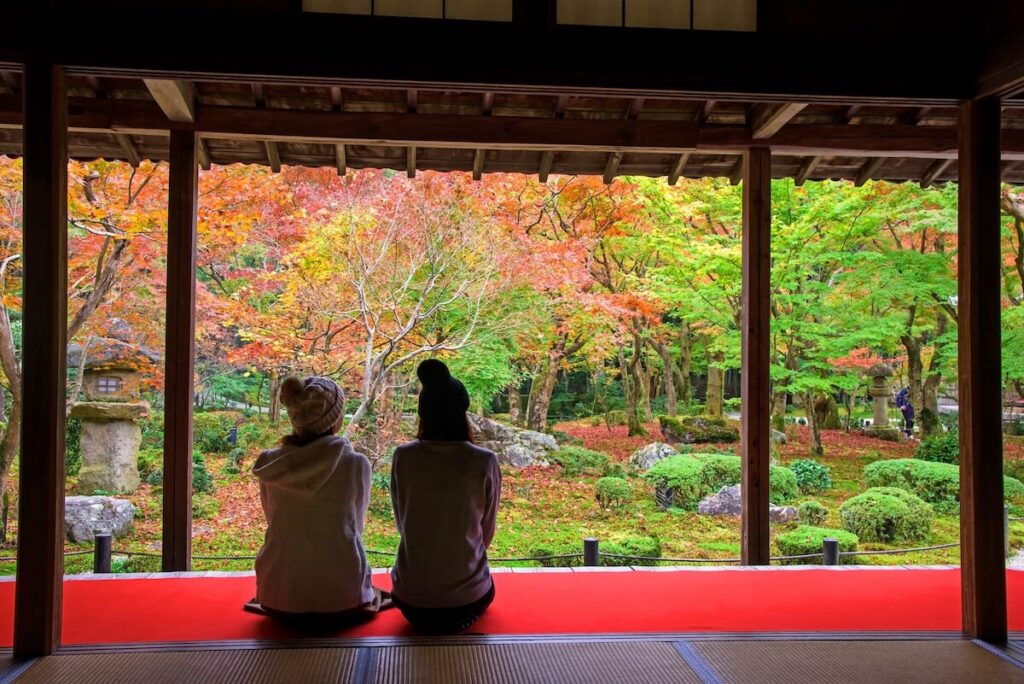
Speaking of indirectness, another way the Japanese language embraces indirectness and respect is through silence. It may seem weird to see this in a list of facts about language, but in Japanese culture, silence holds immense power and is a tool for communication.
Comfortable silences are, in fact, common in Japanese conversations. Imagine a conversation between two friends. One expresses a personal struggle, their words heavy with emotion. The other listens intently, offering no immediate advice or consolation.
This silence doesn’t indicate indifference; instead, it conveys empathy, respect for the speaker’s emotions, and a willingness to simply be present. The speaker might find more comfort in this quiet understanding than any spoken words could offer.
Silence also plays a crucial role in negotiations and business interactions. It allows space for reflection and deeper consideration of proposals instead of rushing into hasty decisions. When used strategically, silence can create an atmosphere of respect and trust.
Conclusion
If there’s anything I wish you’d take away from this article, it’s this: difficult as it may be, learning the Japanese language is never boring! Without a doubt, its rich history, oddities, and nuances make it even more fun to master this language.
Which of these facts do you find fascinating? Drop a comment below! And if you feel like taking your learning journey to the next level, check out this comprehensive list of Japanese learning resources.