
E aí! Ever wondered what Brazilians are really saying when they gather for a lively chat (i.e. a papo) or hit the streets for a night of fun (a rolê)? Well, get ready to dive into the vibrant world of Brazilian Portuguese slang.

Brazil is known for its vibrant culture, stunning landscapes, and, of course, its unique way of speaking Portuguese. While you can get by with textbook Portuguese, understanding the slang is like unlocking a secret code to connect with the locals on a whole new level.
In this post, I’ll introduce you to cool Brazilian words that you should definitely add to your language arsenal. So, let’s not waste any more time—partiu! (Let’s go!)
Coolest Brazilian Portuguese slang words
1. Beleza
Beleza literally means “beauty,” but its informal usage speaks volumes about Brazilian culture: it’s actually a common greeting or a way of replying “all right”. If someone asks you Beleza? they want to know how you’re doing.
– Já tô me arrumando, amigo. (“I’m getting ready, buddy.”)
– Beleza, mas se apressa. (“All right, but hurry up.”)
Read more: Beleza: What It Means & How to Use This Portuguese Word
2. Mano(a)

Mano is short for irmão, much like bro is short for brother. It’s how friends address one another in Sao Paulo. It can also be used as a filler word, much like you’d say “So…,”.
The feminine form mana does exist, but these days it’s not very common outside the LGBT+ community.
– Mano, que louco isso! (“Bro, that stuff’s crazy!”)
3. Legal

This word means… “legal”, a usage that is still widespread. But it’s also become synonymous with “cool,” so much so that it’s hardly considered slang anymore.
Massa, da hora, maneiro, and irado are instead relatively newer synonyms for “cool.”
– Seu amigo gringo é muito legal. (“Your foreign friend is really cool.”)
4. Cara
Cara means either “guy” or “face” (though not exactly flattering in this case), but in Rio it’s one of the most common filler words. It can be used like “dude”, but outside Rio this usage is sometimes seen as slightly rude.
– Cara, ontem à noite foi irado. (“Man, last night was awesome.”)
5. De boa

De boa means “chill” or “all good” depending on the context. It’s that state of mind everybody aspires to achieve!
– Ele é de boa, não julga. (“He’s chill, not judgmental at all.”)
6. Sextou

Sextou roughly translates to “thank God it’s Friday”; it’s a way of celebrating out loud the start of the weekend. Oddly, it literally means “It Friday’d.” But I swear it makes sense in Portuguese!
– Sextou, galera! Qual é a boa? (“It’s Friday, you guys! What’s good?”)
7. Partiu
Partiu is a past form of partir, or “to leave”. In this case, though, it’s ironically referring to a future action, as it means “let’s go.” Alternatively, you can also say bora, which is short for vamos embora.
– Tô pronto, gente! Partiu! (“I’m ready, guys! Let’s go!”)
8. Galera

Your galera, simply put, is your crew—even if originally, weirdly, galera means “galley.” Geral kind of means the same thing, but it’s often seen as nonstandard.
– Galera, vamos ficar todo mundo junto no festival. (“Guys, let’s stick together at the festival.”)
9. Se pá
Se pá is slang for a suggestion or “perhaps” where standard talvez often sounds dismissive. It’s often used to reply to an invitation in a wishy-washy sort of way.
– Um pagodinho mais tarde, se pá? (“Samba party later tonight, anyone?”)
10. Rolar
Rolar literally means “to roll”, but here it’s used to mean “happen” or “go on,” even if someone has to make it for the thing to happen.
– Vai rolar aquele bolo de laranja maravilhoso? (“Is that amazing orange cake gonna happen?”)
11. Rolê

Rolê means going out to have fun with your crew (or sometimes the place you’re headed for.) It most often refers to a night out, but any fun activity during the day would qualify too. Authentic Cariocas, or Rio natives, will stick to rolé instead.
Resenha is another great word, but it most often describes simply hanging out at home.
– Tem sempre um rolê novo em Botafogo. (There’s always a new hangout in Botafogo.)
12. Topar
Topar, or sometimes pilhar, is to be down for an invitation. Don’t be shy to topar all the rolês with the galera when you visit Brazil. You’ll be in for a bunch of fun!
– Trilha da Pedra Bonita amanhã? Eu topo! (“Pedra Bonita trail tomorrow? I’m down!”)
13. Colar
Colar is used in the same context as topar, but it actually refers to joining a group rather than accepting an invitation. If someone asks you to colar, they’re telling you to come along. It’s not hard to guess why: colar literally means “to glue.”
– Cola com a gente que é só sucesso. (“Come along and you won’t regret it.”)
14. Valeu

Valeu is a precious word to learn, as it can serve as both “thanks” and “cheers.” Pair it with one or two thumbs-up and you’ll easily pass yourself off as a Brazilian.
– Valeu, cara! Me ajudou demais! (“Thanks, man! That was really helpful!”)
15. Cria
Cria is, originally, the offspring of an animal. Here, though, it refers to youth from a quebrada (a poor neighborhood) or a favela (a slum), who make up most of Brazil’s youth. The concept spans a whole aesthetic that has been spilling onto the mainstream for more than a decade.
– O bigodinho de cria tá na moda. (“The cria-style stache is all the rage now.”)
16. Migué
A migué is an excuse, usually a lame one, that you mete—or “make up.” If a friend tells you they have no grana (see below) just to bail on you on that much-anticipated club night, that’s an eyeroll-worthy migué.
– Ah, sério que tu vai meter esse migué? (“Oh, c’mon, don’t give me that BS!”)
17. Grana

Grana is what (sadly?) makes the world go round—cash. There are lots of slang words for money like conto, pila, and dindim. But grana is by far the most common.
– Tô sem grana, amor. Vou ter que ficar em casa. (“I’m broke, sweetheart. I’ll have to stay in.”)
18. Mó
Mó is short for maior, or “larger”/“largest”/“greater”/greatest.” Though hardly written, it’s quite common in conversation when used as a synonym for “really” or “extremely.”
– Tu é mó cara de pau, né não? (“You really have no shame, do you?”)
19. Pão-duro(a)
If someone calls you pão-duro or pão-dura, they’re saying you’re not a fan of spending money—even though the phrase literally means “hard bread.”
Alternatively, you can say mão-de-vaca, which is even funnier because it means “cow’s paw.”
– Eu aprendi a ter controle financeiro, mas não virei pão-duro. (“I learned how to keep my finances in order, but I didn’t become cheap.”)
20. Contatinho

Contatinho is the diminutive form of contato, i.e. “contact.” In this case, though, it means a casual romantic interest that is even less consequential than a situationship.
– Meus contatinhos sumiram. (“My sneaky links are all gone.”)
21. Gato(a)
A gato is a cat, but when you call someone gato or gata you approve of how they look, if you know what I mean.
Gato(a) and its diminutive form gatinho(a) are some of the most common Portuguese pet names.
– Aquele cara é um gato! (“That guy is really handsome!”)
22. Ficar
Ficar is a generic verb that usually translates as “to stay.” Yet in slang usage, it means “to hook up”, including all the range of possibilities that hooking up allows for.
Someone you hook up with multiple times becomes your ficante, before they can move on to becoming namorados (i.e. boyfriend and girlfriend).
– Menina, e vocês ficaram ou não, afinal? (“Girl, did you guys hook up or not after all?”)
23. Cerva
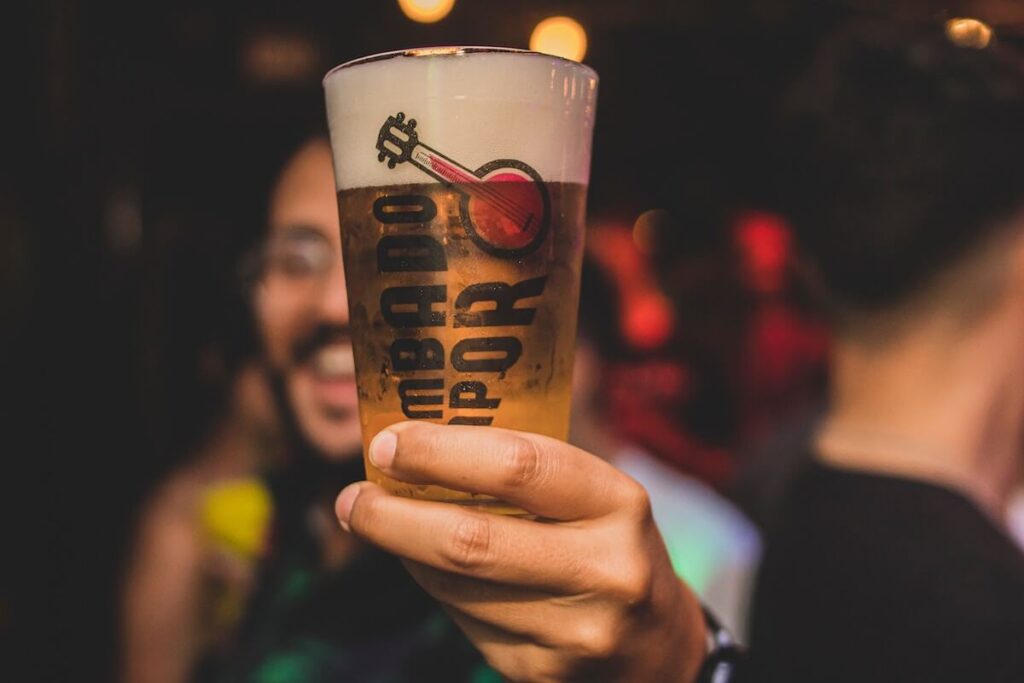
Cerva is short for cerveja, i.e. “beer” or Brazilians’ favorite drink—provided it’s stupid cold as we like saying (estupidamente gelada).
Unlike cerveja, though, it’s pronounced with an open E. In Sao Paulo, you may hear breja more often.
– Era só uma cerva gelada agora! (“A cold beer is all I could wish for right now!”)
24. Caô
Caô is Rio slang for BS, and someone who tells lots of caôs is a caozeiro or caozeira. In some cases, it can also mean “fight,” much like treta (see no. 29).
– Ah, qual é para de caô! (“Oh, c’mon, cut the cr*p!”)
25. Folgado(a)
Folgado(a) originally means “loose”, but when referring to a person it means a “mooch”, i.e. someone who is intrusive and/or likes to freeload. It has the same meaning, basically, as abusado(a). It’s not something you want to be known for, unless of course you are folgado!
– O folgado do seu irmão veio jantar de novo. (“Your freeloading brother came for dinner again.”)
26. Bolado(a)

Bolado in Rio, or pistola in Sao Paulo, simply means “angry” or “upset.” It’s the family-friendly word for puto(a), which means “p*ssed.”
– Não fala comigo que eu tô bolada contigo! (“Don’t talk to me cuz I’m mad at you!”)
27. Putz
Putz! is what you say when something disappoints you (usually unexpectedly) but don’t want to sound rude. It derives from a curse that literally means “the ***** who birthed [you],” which is actually quite common in everyday usage in both Brazil and the rest of Latin America (in its Spanish version).
– Putz! Esqueci de trazer o guarda-chuva. (“Geez! I forgot to bring my umbrella.”)
28. Maluco(a)
Maluco (for men) or maluca (for women), isn’t exactly the most politically correct Brazilian slang word out there, as it means “crazy.” The standard words for that would be “louco” and “louca.” It can be used as both a noun and an adjective.
In some contexts, however, saying um maluco doesn’t imply anything about someone else’s mental health or smarts: it can be used to refer to a random person as well.
– Ele não é nem maluco de dizer isso. (“He ain’t crazy enough to say that.”)
29. Treta

Treta is how the show Beef was called in Brazil, so it’s not hard to guess what it means. Yet unlike the English word, it typically doesn’t refer to a grudge or “bad blood,” but rather to a heated argument or actual fight.
– Se liga na treta que começou ali! (“Check out the fight that just broke out over there!”)
30. Perrengue
If you remember the Fyre Festival schadenfreude feast or this year’s Burning Man disaster, you know what perrengue is. This funny word is used to refer to a misfortune or some kind of stressful situation, either unexpected or that you deliberately want to avoid.
– Eu não quero passar perrengue viajando. (“I don’t want any trouble to happen during our trip.”)
31. Abafar
Abafar means “to muffle” or “to cover up,” and its slang usage is still pretty consistent with the original definition. It’s normally related to gossip: when someone says abafa! they’re expressing how juicy the gossip is by telling you not to spread it–except it’s ironic.
Deixa baixo (literally “keep it low”) is a newer phrase that is used to the same effect.
– Eu não tô crendo nisso! (“I can’t believe any of that!”)
– Abafa, mana. (“Leave it alone, girl.”)
32. Papo

A papo is good ol’ chat that you bate (the collocation is bater or ter um papo) with someone. The word is very visual, as papo and papada are both terms used to describe a double chin.
– Eu gosto dele porque ele é bom de papo. (“I like him because he’s a good talker.”)
33. Vacilo
The noun vacilo and the verb vacilar originally meant “hesitation”/”to hesitate” or “to shake.” These days, though, it’s normally used to refer to a faux pas, a blunder, or a more serious screw-up. Vacilação is a stronger version of vacilo, but it usually refers to an attitude than a single slip.
– Não vacila assim que eu te largo, hein! (“Don’t screw up like that or I’ll ditch you!”)
34. Xará
Xará is what you call someone who has the same name as you. It’s weird how there’s no equivalent word or phrase in English, but I guess Brazilians love an excuse to strike up a conversation, even if the topic is as inconsequential as your first name.
– Fala aí, xará! Tudo joia? (“What’s up, xará? All good?”)
35. Arrasar
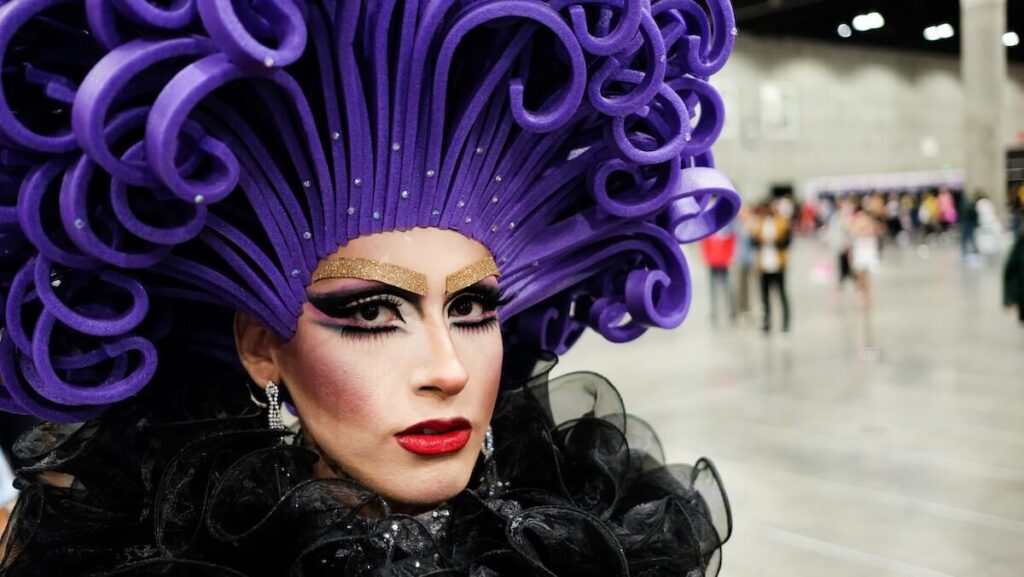
The verb arrasar, especially in the past form arrasou and the imperative arrasa, is quite similar in both usage and origin to “slay” as a synonym to “kill it” or “nail it.”
Originally meaning “to destroy” (as it’s still sometimes used to mean), arrasar was claimed by the LGBT+ community in the past couple of decades.
These days, though, servir (“to serve”) and entregar (“to deliver”) are more common in some situations, as arrasar may sound a little dated to some.
– Arrasa, mona! Quebra tudo! (“Kill it, queen! Slay!”)
36. Tankar
I included this word in our list as a tribute to Gen Z, because I don’t use this word myself–and I’m not sure they still do either. They probably find it cringey already.
Anyway, tankar comes the English term “tank,” which apparently is a type of character in online gaming. It means something like “holding on” in the face of a challenge or difficulty.
– Não tankei o que a sua mãe acabou de falar. (“I can’t even with what your mom just said.”)
Wrap-up

So there you have it, manos, minas, and monas! Brazilian Portuguese slang is not just a language within a language; it’s a vibrant, rhythmic expression of the Brazilian spirit.
From the nonchalant charm of beleza to the camaraderie of galera, these slang words are like keys to unlock the heart and soul of Brazil.
And while you’re at it, don’t forget to check out some of the favorite cool phrases of both Brazilians and the Portuguese and these resources for learning Portuguese.
Fun Brazilian Portuguese slang words – Pin it!

