Hebrew is a rich and beautiful language, with religious and cultural significance to millions of Jews around the world. Today, more people than ever from all sorts of backgrounds are getting curious about studying the tongue of the Song of Songs, the Talmud, and of modern-day Israel.
However, a burning question remains, a question that may turn that curiosity into apprehensiveness: how long does it take to learn Hebrew from scratch?

While that opens up a very big can of worms, there are objective, fair answers to this question. Today, let’s explore together how long it will take you to learn Hebrew – and why.
How long does it take to learn Hebrew?

This really isn’t an easy or simple question to answer and I hate to say “it depends” but it really does depend on several factors, which I’ll discuss in detail later.
Based on the Foreign Service Institute (FSI) scale (which we’ll also get to later), you need approximately 44 weeks or 1,100 class hours to reach “General Professional Proficiency” in Hebrew. This would be equivalent to intermediate level. Of course, this assumes that you’re an English speaker and haven’t learned any other language.
You can then assume that you’ll need about half this time (22 weeks or 550 hours) to reach the beginner level. Conversely, if you’re aiming for the advanced level (i.e., understanding more complex dialogues, communicating in a more comfortable manner), you have to put in double or triple the amount of time.
Again, these figures are not definitive. So, read on and find out what factors will affect your journey to fluency.
What to know about learning Hebrew
Fluency is a subjective concept
Okay, I promise I will not go on relativizing the very idea behind the question of “how long does it take to become fluent in Hebrew” throughout this whole article.
However, it should still be said that the goal raised by that question, namely fluency, is a fickle one to define, and there are a few reasons for that.
The basic one goes like this: while some speakers of any given language may be comfortable with a certain arbitrary level of speech in their close environment, others (imagine academics, scientists, musicians, photographers, and anyone else that dabbles in a lot of jargon in their daily life) would not be satisfied with the same vocabulary or grammar skills.
Hence, fluency is not a one-size-fits-all problem. But it gets even worse when you look at Hebrew in particular.
Hebrew, at least the Modern Hebrew spoken in contemporary Israel, exists in a mostly standardized form under the authority of the Academy of the Hebrew language.
There’s just one big problem with that: even the Academy isn’t prescriptive enough to declare unilaterally what is “fluent Hebrew”, let alone what differentiates a “fluent speaker” from anyone else!
Even more severely, the Hebrew spoken in Israel varies a lot – not merely in pronunciation or slang, but in a variety of co-existing registers that distinguish socio-economic groups, people from different regions, and more.
And don’t even get me started on Hebrew as it is spoken in the diaspora outside of Israel! What a Canadian Jew might consider to be perfectly fluent Hebrew follows a totally different set of standards and expectations compared to the educated urban neighborhoods of, say, Haifa or Herzliya.
Defining fluency for yourself
Following that thought, it’s imperative that you define your own learning goals before you get too serious about answering any questions about how many hours a week you need to learn Hebrew or anything of that sort.
If you are a religious student, for instance, all that might be necessary for you to feel fluent is a thorough reading comprehension of the ancient texts. However, if you are planning to study Hebrew to better connect with family, or a loved one, an entirely different strategy, regimen, and set of expectations are in order.
Think about this carefully and try to map out what your goals are in the most concise terms you can manage.
Measuring the difficulty of learning Hebrew

While we can’t really define fluency, things look a bit more well-defined when we ask the related question of how difficult Hebrew is to learn.
The short answer is that, like any other language, how hard it is to learn Hebrew for you will entirely depend on the language exposure you’ve had throughout your life.
I grew up in a multilingual home where Hebrew was always the dominant language – obviously, I had no big trouble learning it, but the same might not be true for others!
However, it goes further than that. Within some constraints, it is actually possible to put a number on Hebrew’s difficulty level.
The FSI Scale on the difficulty of learning Hebrew
If you’re an avid language learning enthusiast, you might have already heard of the FSI, the Foreign Service Institute.
A government agency tasked with instructing and training US diplomats and other foreign affairs workers, the FSI is one of the biggest and most well-funded institutions of its kind.
Because of the nature of their mission statement, it makes sense that the FSI’s many language courses would prize efficiency, cramming as much content into as short an amount of time as possible in order to get their students ready for deployment overseas.
That’s exactly the case, which is why FSI’s language training methods have garnered a lot of interest even among people entirely outside the foreign service community.
Each language that the FSI instructs its operatives in (Hebrew being one of them) receives a grade from the Institute by grouping it into a “category”. Languages in the same category follow similar curriculums and feature roughly the same course load.
Long story short, Hebrew belongs to Category III, the second-highest. This means that, according to the FSI, it should take you a total of 1,100 weeks of “diligent study” to achieve “Professional Working Proficiency” in the language.

Obviously, those standards were written with American-born, monolingual English-speaking foreign service personnel in mind. Hence, not only the register of Hebrew that is targeted here, but also the prerequisites the FSI assumes, may differ in significant ways from your own background and personal goals.
Still, even if you can’t identify with the demographic the FSI is aimed towards, you can take their ranking as a rough indicator of how much time it takes to learn Hebrew.
If you have already learned a different foreign language – say Italian – you can look that up and find out that FSI has ranked it a Category I. That is to say, it’s significantly easier (from the perspective of an English speaker) to learn, only requiring 600 hours of study.
Comparing languages you’re already familiar with while using the FSI’s numbers as a baseline can be a great way to quickly get a picture of what kind of difficulty level you might expect.
Just remember that it’s only a rough estimate and that everyone’s different!
Expressing your proficiency through the CEFR standard
There is one more way you can try to put a number on your Hebrew fluency – both in the present and in terms of formulating your future goals.
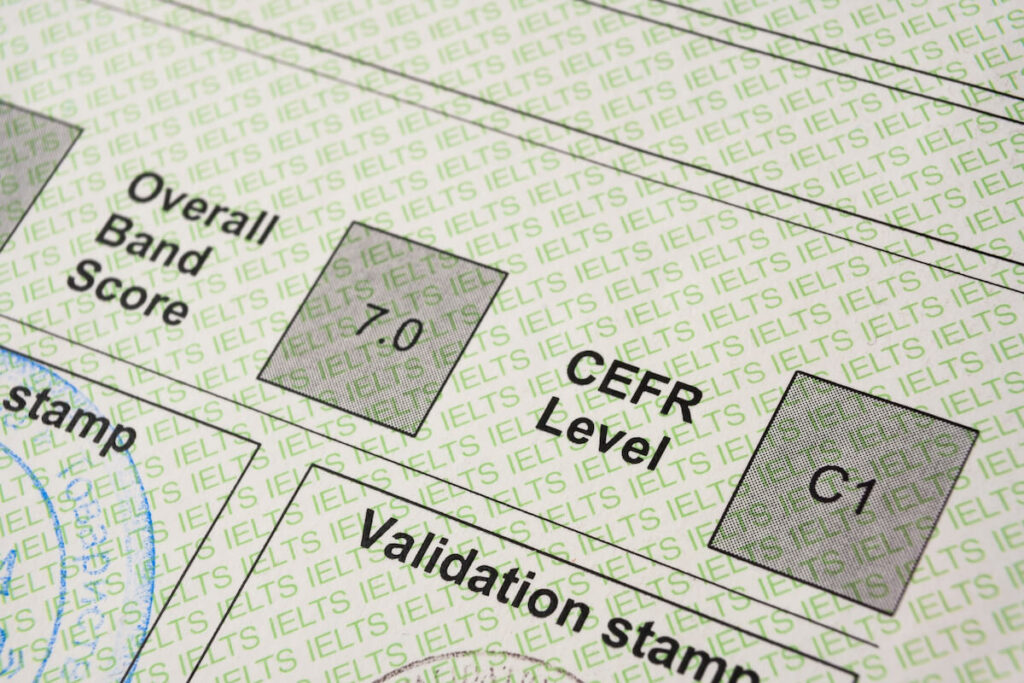
The Common European Framework of Reference for Languages, or CEFR for short, is a European Union universal standard for language fluency and learning that groups different levels of language skill into groups coded by number-letter combinations.
These start at A1, which constitutes a bare beginner’s level, and go up to C2, which describes “exceptional proficiency” beyond that of the average native speaker. This would include, for example, mastery of highly technical jargon or rarely-used literary or poetic language.
Each group’s proficiency level can be expressed by a variety of so-called “can do” statements.
For example, one such possible statement for level B1 could be: “At this level, I can understand the main point of many radio or TV programmes on current affairs or topics of personal or professional interest when the delivery is relatively slow and clear.”
You can use these statements in accordance with their respective proficiency levels to narrow down not just where you’re coming from, but also where you would like to be in the future while learning Hebrew.
There’s a misconception that, unless you reach the coveted C2 level, you’re not really a “fluent speaker”. As we have already seen, that’s all relative! Plenty of Hebrew learners will be perfectly content with achieving the equivalent of a B2 level – some might even do fine with less than that.
Important factors to consider
Now that you should have a fair grasp on how to define Hebrew fluency, set your own learning targets, and analyze your own sense of proficiency, let’s take a look at some of the most important factors that can determine your learning success.
Before you go on, remember that anyone can learn Hebrew, no matter where you’re coming from! There’s no such thing as a language that’s too difficult to learn – different people might just need different approaches and different amounts of time.
Pre-existing language knowledge

It is fairly self-evident that already knowing a language related to Hebrew will make learning and becoming fluent much easier. There aren’t many close relatives of Hebrew still around – even Modern Aramaic, a minority language spoken by ethnic Assyrians that comes fairly close, is still not similar enough to the point of being mutually intelligible to any large degree.
Still, some widespread Semitic languages, like Amharic and Arabic, for instance, are indeed similar enough that knowing one of them will definitely make a lot of the basic concepts behind Hebrew grammar, pronunciation, and other features seem easier to understand.
But even if you don’t know any languages belonging to the same family as Hebrew, it is a general rule that the more languages you already know, the easier it is to acquire a new one!
With that in mind, people raised bilingual or trilingual will definitely have a fair advantage over those who have spent most or all their lives only knowing one language, no matter which exactly that language or those languages are.
Age

It’s not the nicest thing to hear, but age does factor into language learning success. Thankfully, it’s a myth that you can be “too old” to become fluent in any language. However, research has shown that children and younger adults do have it easier.
The higher brain plasticity in earlier stages of life naturally lends itself to acquiring language skills super-fast. It’s the kind of nearly miraculous progress that you’ve probably heard being described as “soaking up foreign languages like a sponge”.
While that kind of brisk, effortless pace might be too high a bar to set for most adults, anyone of any age can learn and become fluent in Hebrew!
Persistence, time, and motivation

One of the reasons – and according to some researchers, the more important one – why kids actually pick up languages so much faster than the rest of us has to do not with their physiology, but with how they spend their day.
Simply put, most working-age adults today don’t have nearly as much time nor as much energy to dedicate towards learning Hebrew that their younger counterparts do. They might also find it harder to get themselves motivated to stick with any kind of study plan over the long term.
That’s what the research says. But of course, these general findings might not ring true for everyone.
I personally have found that I manage the time I dedicate to language study much better as an adult than I ever could when I was younger, and I have made much more significant progress with my target languages recently compared to my teens – despite every oh-so passionate attempt by my French teachers!
With that in mind, it’s very much true that those who are dedicated and highly motivated and are able to put in a lot of time into learning Hebrew each day will see results coming faster.
How to learn Hebrew fast
Now, let’s finish off this quick guide with a selection of my favorite tips on how to supercharge your Hebrew learning and reach your own proficiency goals faster. Incorporate these strategies as best you can, and I am sure you will be very pleased with the results trickling in!
Immerse yourself in many ways at once

If there’s a one-word key to unlocking language progress, it’s immersion. Immersing yourself in a language means, in simple words, interacting with that language in some way every day, or at least very often.
To really boost your Hebrew learning progress, consider using many means of immersion at the same time. For example, you can use Hebrew learning apps to practice your understanding of grammar while reading books to learn Hebrew in its more literary, flowery registers and listening to Hebrew podcasts to train your listening comprehension.
You can also find Hebrew tutors or enroll in Hebrew online courses.
Practice (healthy) commitment
Let me make it clear: no definition of Hebrew fluency will ever be achievable to you if you don’t put in the work. That sounds harsh, but it is true!
However, that doesn’t mean you should sacrifice absolutely everything to get an arbitrary set of daily hours of practice, or anything along those lines.
Rather, I suggest you craft yourself a kind of study plan that is easy to combine with your lifestyle, daily habits, and pre-existing knowledge.
Such a regimen, as opposed to a harsh, deliberately punishing, and overly challenging one, will be a lot easier to stick to and will feel more rewarding in the long run.
Make yourself passionate about Hebrew

To really reap the most benefits from regular practice, it’s also crucial that you maintain a high level of enthusiasm for the language you’re studying.
If you’re not feeling that motivated to learn Hebrew in the first place, it’s going to feel more and more like a chore to you as time goes by!
To really light that fire of passion for learning Hebrew, I recommend educating yourself more on the history of the language, the culture of Judaism and Israel, and the cornerstones of Hebrew literature, both Classical and Modern.
From there and from other sources (whether it’s Israeli soap operas or the romantic little cafés of Tel Aviv), you cannot just learn more about the way people use Hebrew. You can form a picture of a whole new world and culture to interact with and become a part of.
Ultimately, isn’t that the most exciting and appealing part about learning a new language?
Conclusion

Now, with everything you have learned today, you should be well capable of constructing your own self-assessment of how difficult Hebrew truly is.
You’ve seen how the answer to the question, “how long does it take to learn Hebrew” can change so wildly from person to person. With that in mind, be easy on yourself and pick and choose the best learning methods and resources that suit your own needs!
Also remember: even native speakers keep learning new things about their own language throughout their lives. That’s not called being uneducated or being not fluent, but in fact the opposite! Only by embracing the fact that learning is a never-ending journey can you truly make the most out of your experience.
Good luck with learning Hebrew! להתראות!