
Let’s be honest: learning English, or any language, can be a very daunting task. Therefore, it stands to reason that teaching English to speakers of a very dissimilar language, such as Chinese, raises certain challenges that you may not face with some other learners.

Think for a moment about how big China is! Now ask yourself, how many Chinese people have interacted with a foreigner?
These are just a couple of the obstacles that you must overcome to teach English to Chinese speakers. Let’s first touch on a few differences between English and Chinese before we look at how to teach them effectively.
What are the differences between the English and Chinese languages?
I believe the first thing that comes to your mind is the alphabet, right? Yes, we use different alphabets. Whereas 26 letters make up our Latin or Roman English alphabet, Chinese characters (hanzi 漢字) are used that represent words or phrases.

It is completely different, so to teach English to Chinese students you have to teach them an entirely new alphabet system. They do use pinyin, which is a Roman alphabet for helping kids learn, but the sounds won’t match English phonetics.
This then leads us to grammar, another hurdle to overcome, because there are no plurals in the Chinese language. Verb tenses — concepts like past, present, and future tenses — are also non-existent in Chinese.
There are many differences between English and Chinese because, as you may have noticed, they are very languages with different foundations and rules.
But don’t worry, I’m here to help! Below there are 14 practical tips to help you teach English to Chinese-speaking adults and children.
Tips to teach English to Chinese speakers
1. Have an understanding of the Chinese culture

We’ve established that the language is completely different, therefore it’s not surprising to learn that Chinese culture also has different traditions and beliefs from ours.
Therefore, it is important to learn or research the main Chinese cultural beliefs that can have a big influence on your lessons for you to over barriers in the classroom.
For example, in Asian countries, they have a lot of respect for the elderly and teachers. Children often have their parents telling them to do well, as well as their grandparents.
There is this fear of making mistakes which could mean that only the teacher speaks during the whole lesson. This is not what you want, so give many examples of how you would like the lessons to progress and establish that it’s okay to speak up and even make mistakes.
2. Knowing the language

No, I’m not telling you to go out and start learning Mandarin, but having at least a basic understanding of it will help you immensely.
Remember those differences mentioned earlier? Well, familiarising yourself with the key areas that will quickly bring about mistakes from your students will help you put a stop to them quickly.
Having a basic knowledge of Chinese grammar will help you create effective lessons. If you know that plurals are not used in Chinese, then in your lesson plan you can make sure you have a lot more drilling and examples to help them see how they are used in English.
3. Exercise a lot of patience

Like with all new things, you are going to need a lot of patience.
It can be very easy to get disappointed or frustrated with a lack of interaction or progress in your lessons.
However, do not stress! Take into consideration the big differences between the languages and cultures. Take your time to drill, repeat and repeat some more until they are comfortable.
Don’t forget that proverb: “All good things, come to those who wait”. You will be well rewarded when your English lessons for Chinese speakers are successful because they will be able to communicate effectively in English.
4. Identifying clear lesson objectives

Everyone wants to know if they have improved, or are improving. A key way to do that is to set clear lesson objectives.
Whether you establish objectives for every lesson or semester, make sure that you show your learners what you expect from them. This will help them to see their improvements and they will end up giving you more attention and respect.
You can ask them what they wish or hope to achieve from attending these English classes. Then, you can incorporate their hopes into the lessons, which would make the learners participate more.
Their Chinese educational system is very different, and as a result, you will be compared to their Chinese teachers.
Therefore, to avoid any doubts, misbehaviour, or attendance issues, ensure that you have effective goals and make sure at the end of the lesson you review that goal and show them that they have achieved it.
5. Developing a good routine

ESL for Chinese speakers is a big challenge. The English accent, the new interactive activities, and the goals that they have to achieve, etc. could all make them feel out of their depth.
To make them more comfortable, a good routine needs to be developed from the get-go. How can we do this? By using a lesson plan!
Create a lesson plan that states the objective of the lesson, and how you plan to reach that objective.
You could start off by asking standard “How are you?” questions or singing a hello song for kids, followed by the vocabulary that will be used in the lesson, accompanied by drilling, examples, and then interaction through a game, debate, conversation, etc.
Just make sure the structure does not change, which is why I recommend completing a lesson plan for each lesson.
Students will become familiar with the lesson structure and will know what to expect. If they know there is an interactive point, they are more likely to pay attention throughout the whole lesson.
It will avoid the need for an explanation of what you are going to do next in the lesson, hence reducing that teacher talk time. Learners will be able to adapt to your teaching methods a lot easier.
6. The use of repetition

We learn a lot by repeating an action or phrase. It is the same for our Chinese learners.
By repeatedly going over and over words or phrases, the learners will remember them and learn how and when to use them. This is a great way of teaching English vocabulary.
This technique is also used a lot in Chinese teaching methods, so your learners will already be familiar with it.
Of course, adding an interactive activity to help repeat and memorise the target language will be more effective and hold their attention span.
7. The use of visual cues
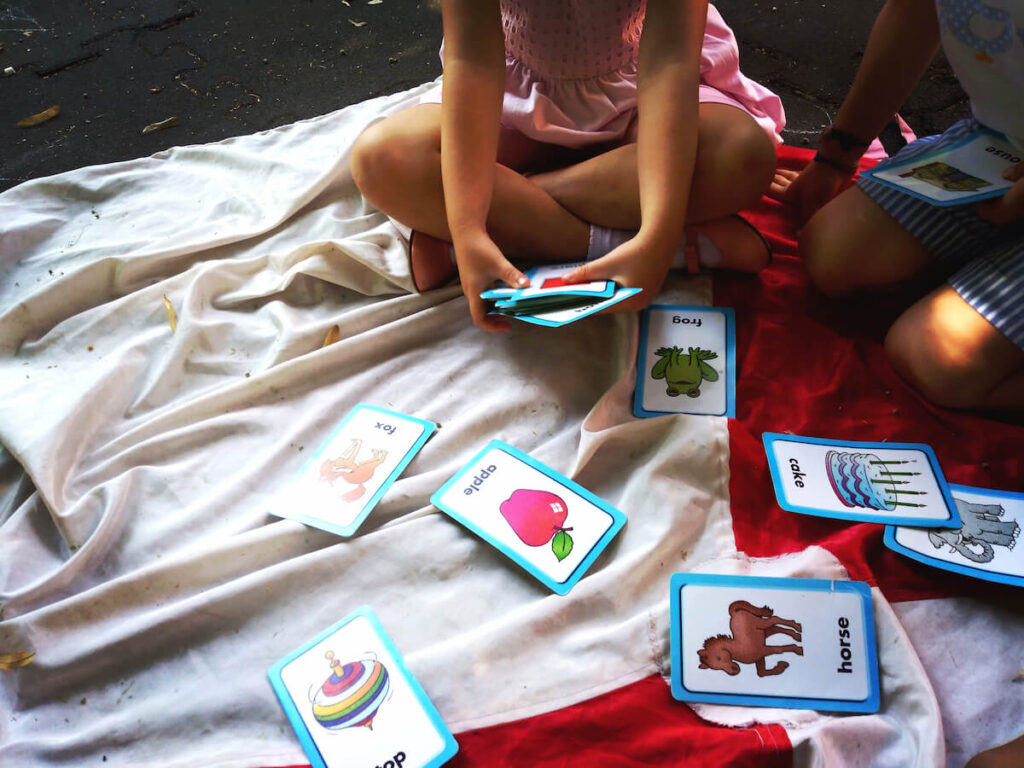
Both adults and young learners can benefit a lot from visual cues. Whether you use flashcards, body language, objects, gestures, and so on; just make sure you use them effectively.
Using that lesson plan, check what the target language is for that lesson, and rather than having to explain every word, prepare the visual aids you are going to need.
Another option is, if you are using flashcards, how about adding the English word and the Chinese symbol underneath the picture?
This will help the student to become more familiar with seeing the English alphabet, which in turn will help them to start identifying the different sounds. Great, isn’t it?
8. The importance of word stress and pronunciation

Pronunciation is tough for Chinese speakers. They struggle with the letters L vs R, V vs W, and the ‘th’ sound as well as other consonant clusters.
Chinese speakers tend to stress words equally when pronouncing English words, which can make them sound rather odd.
Teach them the word stress rules if needed and establish that pronunciation is a physical action. You may need to show them where to position their tongues to be able to make different sounds. Like any other muscle, the tongue needs to be trained.
Encourage them to practice in front of mirrors and play plenty of pronunciation games. Pay attention when playing games to draw students’ attention to different stress patterns.
Also read: How to Improve Your English Pronunciation: 13 Key Tips
9. The tone of the language
Chinese is a tonal language. What does this mean? The tone of a word will change the meaning and because there are five tones in Mandarin, a symbol can change its meaning five times. Wow! Right?
Now think about English, what does the tone do? It expresses our emotions and/or attitudes.
For example:
“You’re going to China.” and “You’re going to China?”
It can be confusing for the learners to understand the tone of what the person is saying.
Again, a lot of repetition and ‘context’ examples can help the students to grasp the difference.
10. Overcoming grammar confusion

Due to a lot of differences, English grammar for Chinese speakers can cause confusion. As you become familiar with the Chinese language, make a note of the differences. Be gentle but firm about the use of their dictionaries in class.
Make sure to teach using a variety of different examples and then practice by playing, or doing fun and engaging games and activities.
Use a range of activities that encourage interaction and practice of the English structure you are trying to teach.
11. Reading and writing in English for Chinese speakers

You have learned that a wide range of activities is needed to teach English to Chinese students. The same can be said for teaching reading and writing.
In order to motivate your students, think of something that they enjoy doing. For example, watching a movie, listening to music or stories, and reading the newspaper or news online. Now, how can you adapt them to encourage your students to read and/or write?
A few suggestions are to use dictating, re-writing a scene, completing worksheets, participating in quizzes, or writing reviews. Read aloud a short story or the news and then ask the students to practice reading aloud and then act it out.
This helps not only with their comfort level in speaking English but also with their word rhythm, stress, and pronunciation.
You can also follow these tips if you’re teaching business English.
12. Give encouragement and motivation

Chinese education can be very serious and competitive. The learners will probably expect the same method when learning English. Hence, when they encounter a different learning environment, it could be very demoralising for them because they are not sure how to respond or act.
From the beginning make sure that you demonstrate how an English class is delivered. Show them the objectives that they should achieve during each lesson or semester. Teach and encourage them to ask questions and model how to actively problem-solve a situation.
Through the development of a good routine and establishing concrete goals/objectives the Chinese speakers will feel motivated to continue learning especially when they notice their improvements.
Always remember to give praise, no matter how big or small the work is. Make the lessons fun, engaging, and beneficial to build a great rapport with your students and they will be motivated to continue learning English.
13. Be careful when giving corrections

Being corrected can make anyone feel stupid and lose their motivation for learning, but it is especially worse in China.
Be gentle when correcting any errors. Try to commend before you give that constructive criticism. For example: “Good job that was excellent, but remember that we say…”
You may prefer to pair or group your students, so you can monitor and correct more privately or even check if anyone has any questions.
Basically, bear in mind your students, and if you do notice them becoming withdrawn when correction is given, then build them back up by encouraging them and giving examples of when they said or did something well in English.
14. Resources for teaching English to Chinese speakers
There are a plethora of resources, English learning apps, and websites out there. However, it can be confusing to find the right ones. So, here are a few websites to start you off.
- K5 Learning offers free worksheets, flashcards, and workbooks for children from kindergarten to the 5th grade.
- Readworks.org has articles, voiceover readings, and vocabulary/comprehension questions for kindergarten to the 12th grade. A bonus is that it is free to sign up!
- ESLPals has many great lesson plans and step-by-step curricula for all levels and abilities. Some are free but you have to pay for others so make sure to check before downloading anything.
- thewordsearch.com has a variety of, that’s right, word searches. If you notice a few twitchy or bored students, give them one of these to engage them to the end.
Also, feel free to grab inspiration from our list of ESL games and lesson plan ideas.
As you do your own research, you will find websites that suit you better but I hope these few give you a little helping hand.
Final thoughts

After reviewing these tips, I hope you feel more positive and excited about teaching English to Chinese students.
Create fantastic lesson plans while making sure to pay attention to the grammar and cultural differences. Give plenty of examples and provide many fun and engaging activities or games.
By doing this, you will build a great rapport with your Chinese learners and earn their respect. This also helps them gain a pleasant foreign language experience!
Before you go, do check out our tips for teaching Chinese to English-speaking kids too!
Very useful. Three students online – from 17 to 50+. They are wanting conversational English. You understand keeping interest is not easy across the age differences. A trip shoe shopping finishes up with a visit to a fast food outlet….leaving all happy with the lesson! So, (space) thank you.