
New to teaching kids? I know what you may be thinking, “Teaching English to kids… impossible!”. They do not stop moving or talking when they are older, much less when they are toddlers.
It sounds frustrating and extremely stressful to boot! All those thoughts passed through my mind when I started, many years ago.

Teaching children can be extremely challenging, but at the same time, it is an incredibly fun and rewarding experience unlike any other. Once you overcome your anxieties, you will probably come to love your students.
Fret not, I’m here to help you make the lessons enjoyable for all. Below are ten effective tips on how to teach English to kids that will help you to achieve creative and memorable classes for your little ones.
What is it like to teach English to children?
Let’s start with the first thing that comes to mind: they have short attention spans.
Children get bored and distracted very easily even in their mother tongue, so when someone is speaking in a language they do not know, it can be that much harder to keep their focus on you.

In terms of motivation, it is highly unlikely that they have chosen to learn English. Unlike adult learners, children are signed up to learn English by their parents or learn it as part of their school program.
Interesting and fun things motivate kids. They remember things like these fondly and will then look forward to attending their English classes.
Another consideration is that each child learns differently. Therefore, a lot of patience and understanding are required. Motivate them by creating lessons that are fun and engaging. Fun activities, games, and songs are a must during each lesson.
Personally, I love teaching English to children! Tempus fugit, time flies as they say, and lessons always go so quickly when you are having fun. Not to mention, when they learn a new phrase or word and are able to use it, your heart literally explodes with pride.
Let us see how we can experience that feeling by looking at some tips.
Tips for teaching English to kids
1. Be well-prepared

Like with all lessons, preparation is the key!
Know the objective of your lesson, the vocabulary or language to be used, and the material needed to play those fun games to reinforce the language.
For every lesson, it’s important to have a clear idea of what you are teaching and what is needed. If something like a game is required, allot time to find a good one, or even make one if necessary.
A good tip to remember is to always prepare more activities than needed. Some activities may take up more time than you thought and others less time. To avoid being stressed because you have run out of things to do during the lesson, bring those backup games or activities.
If you are not naturally creative, being prepared helps you to review other resources to help you come up with an assortment of games or other activities to be used in the lessons.
2. Use lots of visuals

Visuals are a must when you teach English to kids. Since they naturally lack focus, it is vital that you have different things for them to look at. Visuals will help to catch their attention and hold it throughout the lesson.
Colorful visuals will capture the child’s attention. Flashcards will be your best friend, both large ones for the group and smaller ones for games.
Usually, for toddlers or younger learners, I tend to make the visuals larger and have a lot more props. They love to stare and touch – so why not provide those bigger visuals for them to focus on?
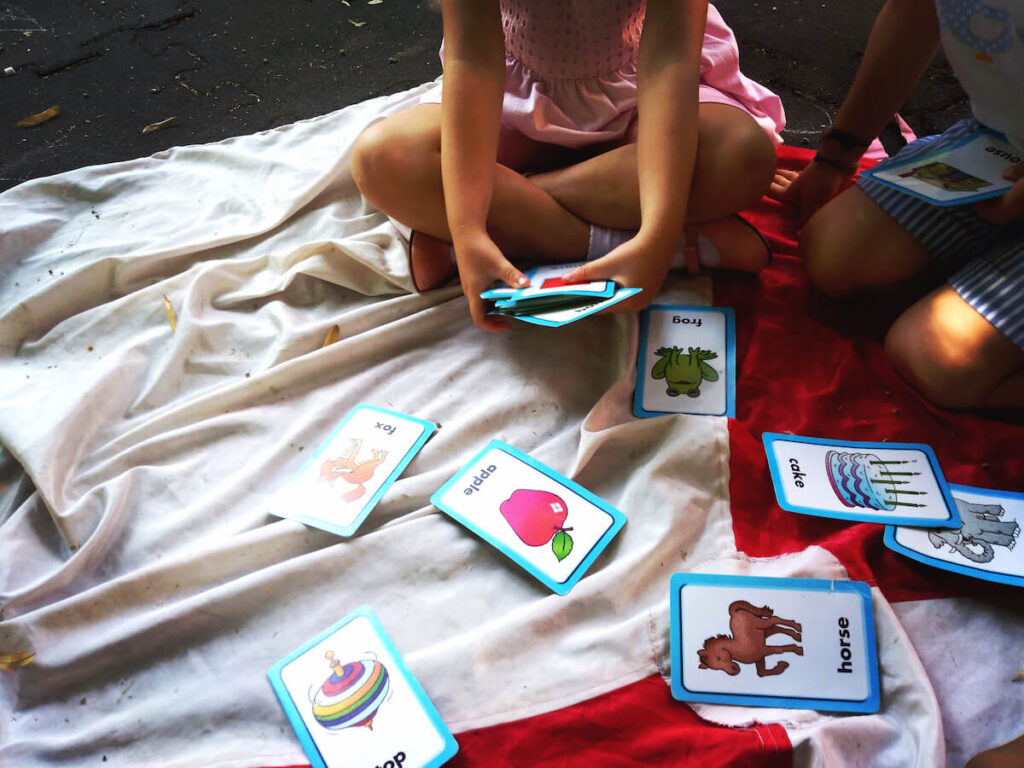
Also, children may not understand the vocabulary, so having a picture of the object with its name underneath can help them to develop their understanding better.
Finally, there are a variety of games that can be played using visuals. And now, with the help of technology, we can use many apps and interactive games online to keep everyone engaged.
Also read: How to Teach English Vocabulary: 13 Effective Ways
3. Use your lovely singing voice

If you open a kid’s English book, how many chapters or lessons have a song connected to them? The vast majority of them have!
Why is this? Clearly, they are saying that we need to sing! Kids learn so many words, expressions, grammatical structures, and dialogues through the different English songs taught to them.
I would recommend having a regular opening routine with songs to get the kids ready for class. Not only will they learn and feel more comfortable in English, but songs are also so much fun to learn.
What’s more, you can add some actions to the songs and watch the kids boogie. They will most definitely remember them!
You may feel embarrassed singing songs but not to worry, kids do not care. They will love it!
Still, if you are not comfortable with it, you can simply sing along and make big gestures. The bigger they are, the more the kids will enjoy it and join in. And besides that, they are speaking and singing in English! Try it out!
Also read: 16 Effective ESL Teaching Methods You Should Know
4. Keep it all simple
Keeping instructions and sentences simple is key to keeping the students continuously focused throughout the lesson. In addition, there will be no confusion when they have to complete an activity or participate in a game.
Instead of saying what might come naturally such as “Now, stop what you are doing and look at the board.” We can say something simple like, “Stop and look here.”

Using gestures and short but clear requests are much easier to understand. They will not bombard the young learner with too much of the language which they will not understand anyway.
Once the children start to recognise requests, you can then start to expand on their knowledge. Start making the sentences longer or use alternative words.

Another effective method is to write the sentences up on the board to help them practise their reading and pronunciation.
5. Make sure to keep the lessons fun
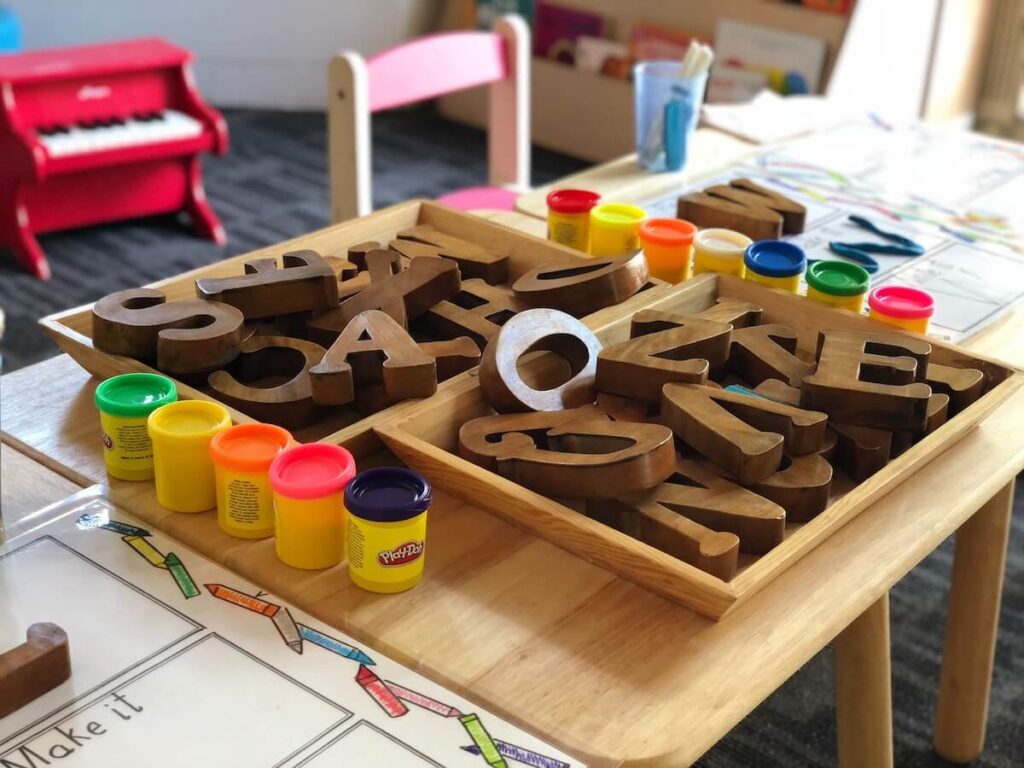
As mentioned earlier, children are motivated if they consider the lessons to be fun. In this case, they will not want to skip or miss a class.
How do we feel when something is monotonous? Bored, right?
When we are not engaged in a game or activity, we lack motivation, and this is doubly true for kids learning English. They will start daydreaming or even misbehaving, and you do not want that.
Keep the kids on their toes by making sure you have a variety of different activities and games in your lessons. Take note of the games you have used in your lessons, so as not to repeat them in the next lesson or play them too often.
There will always be games or activities that the children like more than others, so do keep a note of which ones they prefer. Be creative. Think of ways you can adapt them to make them slightly different each time. I guarantee it will keep the kids coming back for more.
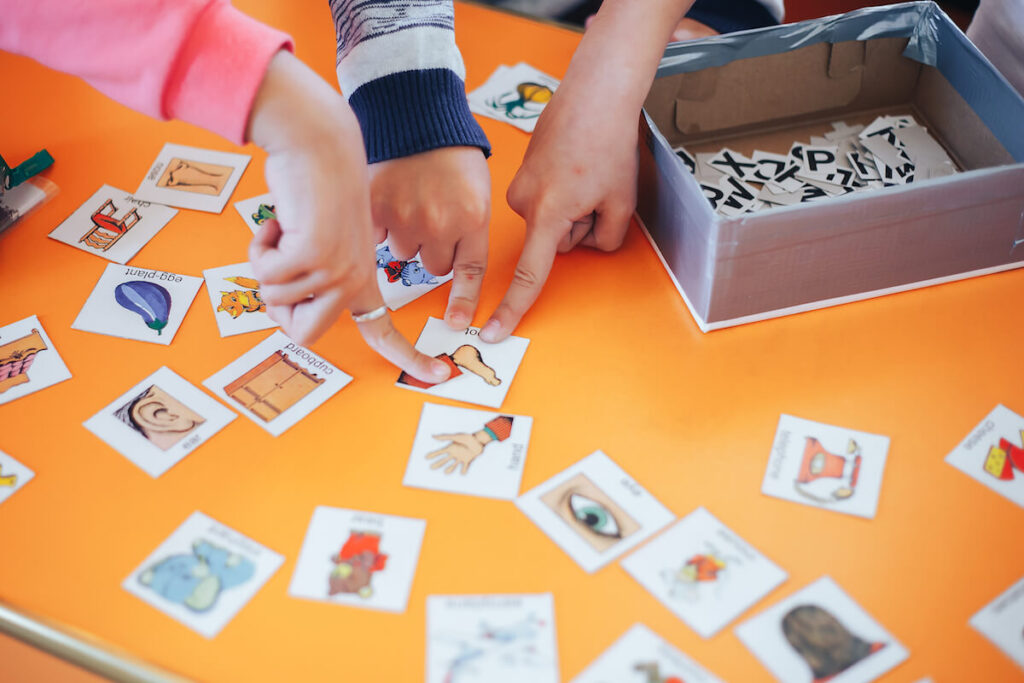
I will not lie to you, at first, it can be very time-consuming to create all the things you need. But once they’re done, you will have a vast array of tools that you can use again and again.
On top of that, as the children progress, you will find that you will naturally know how to change up the activity to keep them stimulated.
Don’t forget, you can find a wide range of online resources to help you.
6. Read stories

Here you will have a chance to use your magical voice again.
Stories are a great way for the child to use their imagination. When reading stories, use your voice to express everything in an exaggerated manner. Children and young learners will hang onto your every word.
Through stories, children learn the correct pronunciation and structures of English words and sentences. You are teaching them different expressions and how to use them.
Do not forget to keep it interactive. Before reading, ask the children about the images. What do they see? What colours do they see? Is the boy/girl happy, sad, or angry?
Keep the story intriguing, as if something big is going to happen. If the kids are older, ask them what they think is going to happen. Always involve the children – it will keep them engaged.
Ask yourself: What is the moral of the story? What activities can you do related to the story? How can I make it more interactive?
7. Be active through fun activities
Movement is essential when you teach English to kids. They have boundless energy, so use it to your advantage. Get the children up and do some fun activities together in English.
I’m sure you can think of many games you played as a kid. Some common games include:
- I spy
- Memory (a great game that can be played with anything)
- Charades
- Basketball (or any throwing game)
- Football
- Hangman
- Go fish
I’m sure you can think of some more, but remember you can adapt any game to benefit the children and meet the objective of the lesson.
Toddlers start by identifying the different objects, colours, actions, etc. However, older learners will be able to use their imagination more so you can incorporate more with them.
Interactive worksheets or online games are another fun activity for children to develop their English skills.

Role-playing is a good, fun activity. Younger learners become mesmerised when they see their teacher dressing up and acting out of character.
Wigs, funky glasses, and hats help the older children to step into a new character. Acting out the story that has just been read helps solidify the language that they have learned. You will be truly amazed by how much English children have picked up when you hear their role-playing.

Debating topics that the children enjoy is another great way to see how much English they have learned. Their little minds are always working, so they may surprise you.
This spoken English article has more effective ideas on how to teach spoken English to beginners. Just remember to keep the environment light and relaxed. None is being judged. It is all for fun!
8. Recap and review lessons

Children do not retain as much information as adults, therefore repetition is paramount to helping them learn English.
Throughout your classes, keep repeating the things you have covered in the previous lessons. A tip I found useful was including a review lesson. Every three or so lessons, just have a fun class reviewing the previous lessons to ensure that the kids remember.
Be careful though, because review lessons can feel long and strenuous if you just do the same thing. Be sure to make it enjoyable, include lots of fun activities, and maybe even introduce a new game.
Reviewing previous lessons helps the students to use the vocabulary and grammar points/structures more freely. Additionally, you notice what things the kids have picked up and what they need to work on more.
9. Establish rules and expectations

One thing that is very different from teaching adults is behaviour. Misbehaviour is going to be a problem in some cases. There will be lessons when things do not go the way you would have liked, so adjust your expectations.
You can, however, mitigate misbehaviour. As mentioned before, if children are bored, they fidget, lose concentration and start being distracted. So keep them active, as much as possible.
Still, even though your lessons can be very engaging, you may still have one or two challenging students who want to treat the classroom as a playground or give a rude comment or two.
From the beginning, classroom rules need to be established. Drawing pictures or a chart will help the children to know what is expected of them and the consequences if they do not follow them.
If a child is misbehaving, try to figure out why. Sometimes it could be because their level is higher or lower than the others, which can make them uncomfortable.
Once you identify the reasons, you can plan accordingly by preparing something extra or by sitting them next to someone who will challenge or encourage them.
There is the possibility that they just do not want to learn English. Simply tap the classroom expectations chart if they are disrupting your class too much. This will draw their attention to the outcome of their misbehaviour.
Do not be afraid to follow through with the consequences that you have stated on the chart. If you dilly-dally with discipline, then sadly, no one will take you seriously. Instead of a fun English class, it becomes a class you end up disliking.
10. Regularly praise and offer encouragement

We all need praise and encouragement, right? Well, young learners need it even more!
Have you noticed their little faces when you encourage or praise them? They light up or try that much harder to succeed.
Constant encouragement is a must. Remember, these children are learning a completely new language. They can not express themselves as they can in their native language, and they too become frustrated.
Do not let them struggle. Help them out as much as you can by supplying the words they need. Praise them for trying and encourage them to keep going.
Regularly praise the children when they try, or manage to achieve something, no matter how big or small. They will not want to give up and it will leave a positive impression on them.
Final thoughts

I hope all of these tips will help you become an effective kids’ teacher. Always consider the age of the children you are teaching and take some time to think of the child’s limitations. What do they excel at? What do they struggle with?
But above all, keep it fun and relaxed! Motivated children mean fun classes and happy parents and you will end up enjoying too.
Teaching children will provide you with a wider variety of experiences and open up more opportunities for you. If you feel ready to start looking at your options, this review from a VIPKID teacher gives a few more helpful tips on teaching young learners.