This article may contain affiliate links. As an Amazon Associate, I earn from qualifying purchases. For full information, please see the disclaimer here.
Whether you’re exploring the streets of Manila or relaxing by the shores of Boracay, one thing’s for certain: You’ll never get bored around these parts! (After all, we do like to boast that it’s more fun in the Philippines!)
Studying Tagalog, of course, is one way to better immerse yourself while traveling—and nowadays, there are enough educational apps, books, and podcasts to help with that!
That said, if it’s a Babbel Tagalog course that you’re looking for, then you might want to consider getting an alternative learning platform instead—because it falls short of these lessons. Read on to learn more.
What is Babbel and why look for an alternative?

What is Babbel?
Through the years, Babbel has become a widely-renowned language app—and for all the good reasons. Centered on long-term learning, it generates a holistic experience by combining light, interactive lessons with cultural insights and real-life applications.
Babbel features comprehensive courses, live classes, games, videos, podcasts, and more. In just 10-15 minutes a day, you’ll get tutorials on vocabulary, grammar, and conversation skills straight away, helping you progress much quicker than you’d think!
All in all, it’s a pretty dynamic platform that makes studying a new language more interesting and natural, compared to standard memory drills and lengthy texts. You can find more about it with this review.
Why get an alternative?
As of now, Tagalog isn’t on Babbel. The app only offers 14 languages—most of them European—so the likelihood of getting Tagalog lessons on Babbel is quite slim.
On top of that, each person is bound to have their studying preferences. So, if Babbel’s way of teaching isn’t right for you, then you best be looking for an alternative app.
Apps to learn Tagalog other than Babbel
Currently, there isn’t Babbel Tagalog and on Duolingo, it’s still a work in progress. Even so, there are many Tagalog learning apps out there that resemble the former’s playful interface and elaborate language courses.
Whether you’re a beginner or a pro, there’s certainly a platform that’ll meet your needs, starting with these three.
1. Mondly
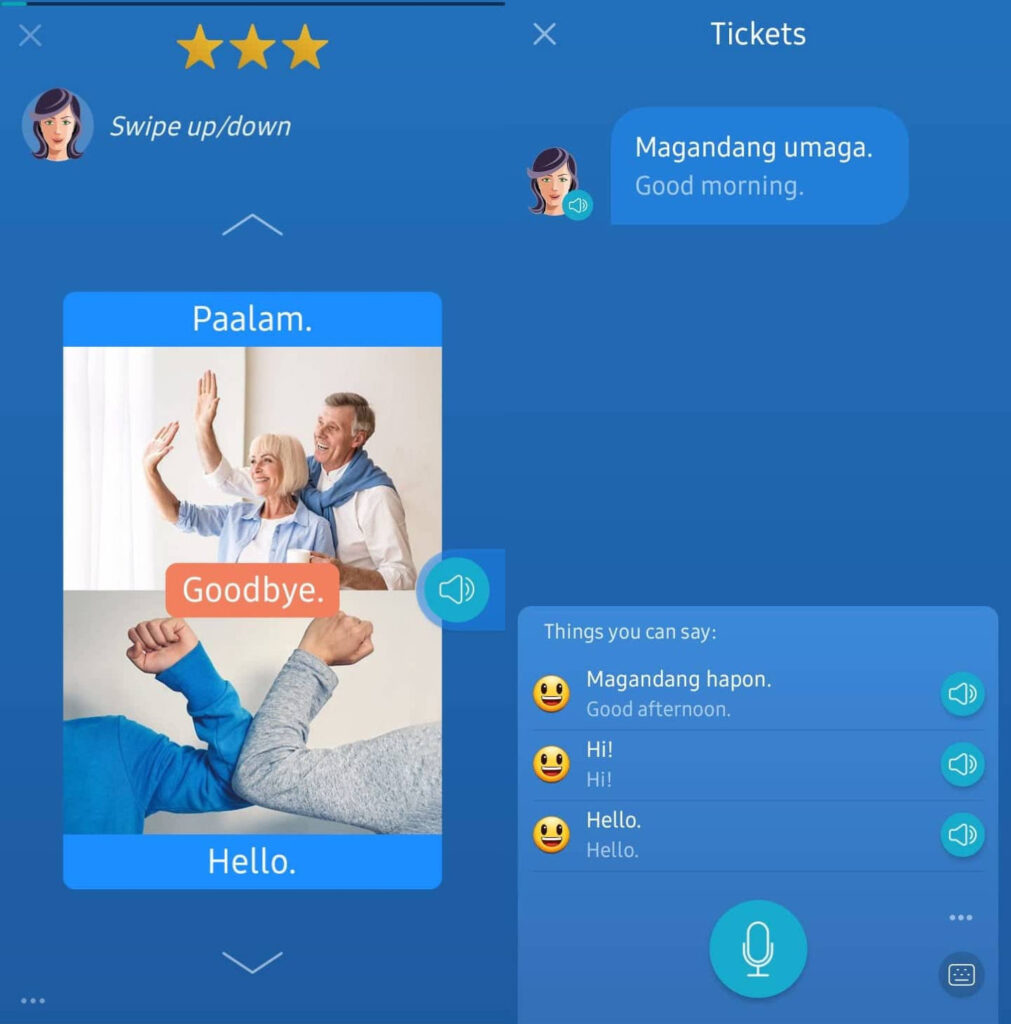
Mondly makes a great, near-alternative to Babbel. In fact, it also gives you 10-minute, bite-sized tutorials by the day, which cover the likes of reading, writing, listening, and speaking.
Should you want to dabble in the common greetings or need a crash course on situational phrases, then have no fear—because Mondly’s extensive, multi-level lessons have got your back. The app is packed with engaging games, high-quality audio, and a competitive leaderboard system to keep you on your toes!
Rest assured, through regular use, you’ll get the right amount of Tagalog lessons and assessments to prepare you for real-life situations.
Key features:
- Game-like vocabulary, grammar, and conversation lessons
- Caters to beginners, intermediates, and advanced students
- Comes with a hands-free integration
2. Pimsleur

To improve your conversation skills, Pimsleur’s Tagalog course is the way to go!
Unlike the previous apps, this primarily uses 30-minute audio to polish your vocabulary, grammar, and speech. This is so that you get an authentic and grounded perspective on the language.
Following the Pimsleur Method, the app slowly exposes you to how Tagalog is used in real-life situations, carefully building up from the previous recording. Some lessons even integrate digital flashcards and speed round games, which should be perfect for quick review sessions!
By combining a calculated approach with interactive study materials, beginners and advanced learners alike will definitely benefit from its intensive training.
Key features:
- Based on the scientifically-backed Pimsleur Method
- Daily 30-minute audio lessons
- Teaches you how to speak and understand conversational Tagalog
3. Drops

Drops could rival Babbel’s dynamic interface by its graphics alone! Pairing eye-catching illustrations with audio-supported flashcards, what you’ll get is an app that creates visual associations with Tagalog words and phrases.
In essence, it uses a gamified approach to teach you important words and phrases—wrapping up each lesson in only five minutes a day! With that, you can squeeze this through any free time you’ve got, or pair this with another Tagalog course.
To be fair, you won’t be fluent from this app alone. However, you’re bound to find its short, fast-paced quizzes to be quite addicting, which makes this a pretty decent learning supplement!
Key features:
- Beautifully designed flashcards with high-quality audio
- Daily five-minute lessons
- Teaches vocabulary through memory games
Other great resources to learn Tagalog
Immersion is the key to advancing your language proficiency. Should you like to develop your skills even further, check out some of these additional books, podcasts, and other resources to learn Tagalog.

Preply: While the platform only offers Tagalog for beginners and conversational Tagalog courses, these highly-rated Preply tutors can help enhance your Tagalog skills at affordable rates! You will also learn a lot about the Filipino culture.
italki: This platform features a wide variety of community and professional instructors whom you can arrange online classes with. By personalizing your lessons, your tutor can concentrate on any topic—whether that’s reading, writing, or speaking Tagalog—and give you the 1-on-1 assistance you need!

Cudoo: Focusing on native Tagalog vocabulary rather than foreign adaptation, Cudoo’s Tagalog courses are effective in developing conversational skills and providing cultural insights. The best part? You can learn at your own pace and receive certificates of completion!
Tagalog for Beginners: Tagalog for Beginners provides readers with a strong perspective on Philippine culture, language, and history. Designed for both heritage and native learners, this handy book contains realistic dialogues, activities, and an online audio supplement to fast-track your studies.

Glossika: With lessons focused on full sentences and a listening-first approach, you’ll be able to immerse yourself in the language and learn it in a way that’s both effective and enjoyable. This app gives complete context and is great for building conversational skills.
Skillshare: As of writing, there are only two Filipino/Tagalog courses on Skillshare. Offering lessons on vocabulary and basic grammar, they’re a great start nonetheless.

- Used Book in Good Condition

Tagalog-English/English-Tagalog Standard Dictionary: With over 20,000 entries, this handy bilingual dictionary will shed light on Tagalog idiomatic expressions, slang, loan words, and more. Best used as a supplement for other books, apps, or online courses.
Clozemaster: Clozemaster is loaded with games, media, and tutorials that best suit intermediate and advanced students. What’s special about this app is that it uses Cloze Tests—a form of context-based assessment—to test your understanding of Tagalog.
SBS Radio Filipino: Following the news can sharpen your conversation skills, and a great resource for that is SBS Radio Filipino, a podcast designed for overseas listeners. If you want to hear how the language is used in day-to-day situations, then tune in to this daily news program. (Plus, it’s always good to catch up on local affairs, so I highly recommend giving this a listen.)
Conclusion

There’s no doubt that Babbel has come a long way as a language learning platform. Simple yet intuitive, its fun lessons are left much-desired by aspiring Tagalog speakers, who are still hoping for a course in the near future.
Nevertheless, should you wish to study now, these alternative apps and extra resources can get you started straight away!